
Condenser repair often starts with small symptoms, not a total shutdown. For homeowners in Orlando and Lakeland, Al-Air is a residential HVAC company that regularly sees outdoor condenser problems show up first as weak cooling, long run times, or sudden breaker trips.
TL;DR: Summary
- Condenser repair is usually needed when your outdoor AC unit shows weak cooling, longer run times, new noises, breaker trips, moisture issues, or visible coil blockage.
- ENERGY STAR and the U.S. Department of Energy both note that dirty condenser coils reduce cooling performance, raise energy use, and make the system run longer.
- If poor cooling shows up with breaker trips, buzzing, or water and humidity problems, the issue is more likely to need prompt service than simple thermostat adjustment.
- In Central Florida, Al-Air sees late-day weak cooling, hot spots, and short cycling as practical warning signs that often point back to airflow, electrical, or condenser-related stress.
- Safe homeowner checks include clearing debris, trimming plants back at least 2 feet, and noting whether the outdoor unit is running, but refrigerant and electrical diagnosis should be left to a trained technician.
A condenser’s job is simple to describe and expensive to ignore: it releases heat from your home to the outdoors. When that heat transfer gets restricted by dirt, airflow blockage, electrical trouble, or refrigerant issues, comfort drops quickly in Florida’s long cooling season.
What does condenser repair usually mean?
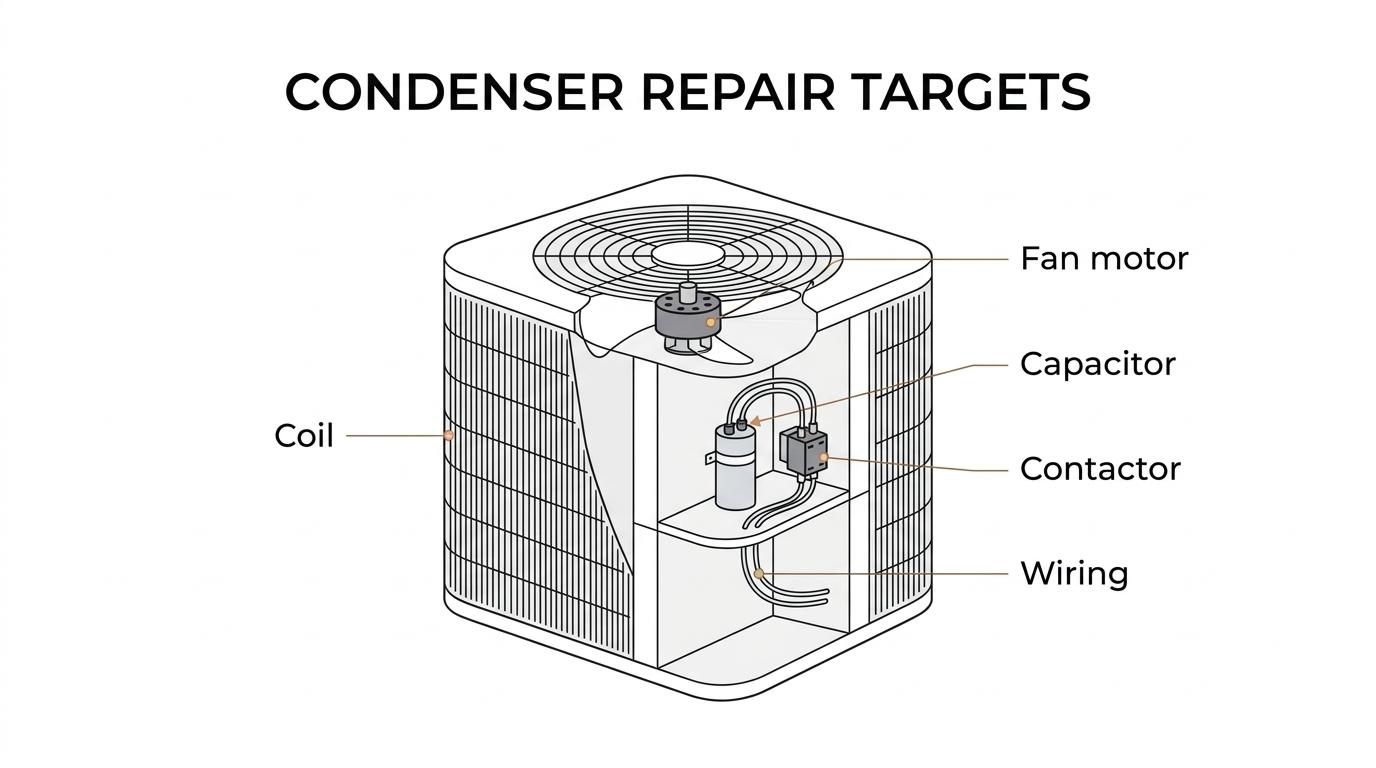
Condenser repair usually means fixing the outdoor AC unit, especially the condenser coil, fan motor, capacitor, contactor, or wiring. If the compressor or refrigerant circuit is involved, the work becomes more technical and the repair decision matters more.
The outdoor condenser includes the coil, fan, electrical components, and compressor housing that help move heat out of the refrigerant. If the coil is fouled, the fan is weak, or the contactor is failing, the system can still run while cooling less effectively. That is why many condenser problems hide in plain sight.
ENERGY STAR says dirty evaporator and condenser coils increase energy costs, make it run longer, increase energy costs, and shorten equipment life. The U.S. Department of Energy says fouled condenser coils elevate condensing temperature and reduce efficiency. Those two points explain why a house may still feel “somewhat cool” while the equipment is already under strain.
“Al-Air offers 24/7 live response, which matters when condenser trouble shows up as a hot house, breaker trips, or no cooling after hours.”
A common misconception is that “the AC still runs, so it cannot be serious.” In reality, partial operation is common in condenser trouble. The unit may start, hum, or spin while still failing to reject heat properly.
Why does a failing condenser get worse fast in Orlando heat?
High outdoor temperatures in Orlando and Lakeland raise the condenser’s workload. If airflow is already restricted by dirt, leaves, or bent fins, condensing temperature climbs, cooling drops, and the system runs longer.
Florida weather magnifies small condenser problems. A coil that is only moderately dirty on a mild day can become a real performance issue in peak afternoon heat. When outdoor temperatures rise, the condenser needs clean fins, strong fan airflow, and correct refrigerant conditions to keep heat moving out of the system.
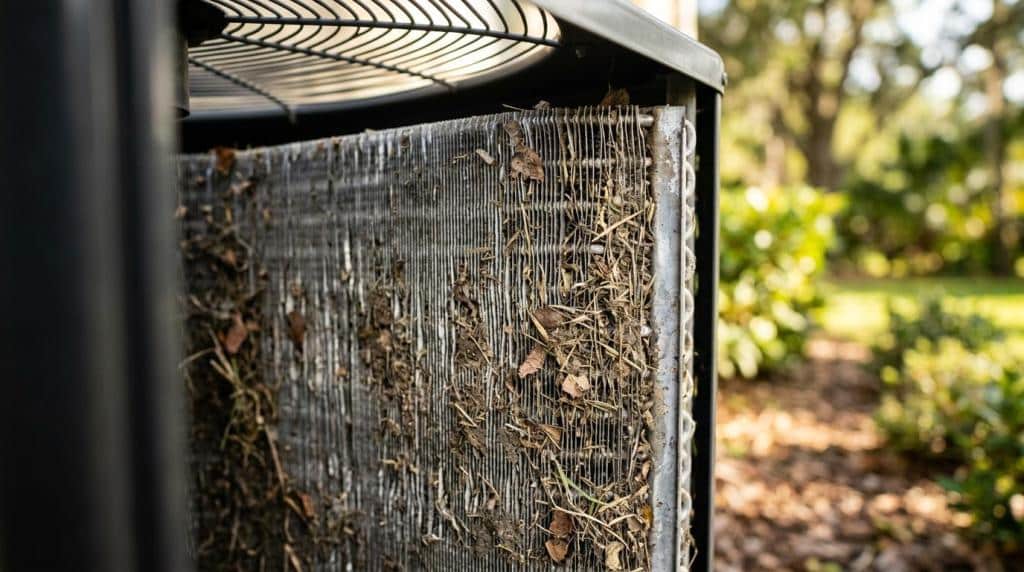
The DOE notes that dust, lint, leaves, and grass clippings can be drawn into condenser fins and lower coil effectiveness. That matters in neighborhoods with lawn service, storm debris, and dense landscaping. Pro tip: if the AC feels weaker late in the day than in the morning, the condenser may be losing ground under higher heat load, not “just struggling a little.”
What are the 9 warning signs you should not ignore?
In Al-Air’s Central Florida service area, the clearest condenser-repair warnings are weak cooling, long run times, new noises, breaker trips, moisture problems, and visible airflow restrictions around the outdoor unit.
One symptom can be minor. Several together usually point to a condenser issue that deserves attention soon.
- Cool-but-not-cold air: The system runs, but supply air feels less effective than normal.
- Long run times: The AC stays on far longer than usual, especially in the late afternoon.
- Hot spots in certain rooms: Uneven cooling can show up when overall system performance drops.
- Buzzing, clicking, grinding, or hard starts outdoors: These sounds often point to fan, capacitor, contactor, or compressor stress.
- Frequent breaker trips: Repeated trips can signal electrical overload or a failing component.
- Dirty coil or blocked airflow around the unit: Leaves, grass, cottonwood, or bent fins can cut heat transfer.
- Short cycling: The unit starts and stops too often instead of completing a normal cooling cycle.
- Water near the air handler or rising indoor humidity: Moisture symptoms can appear with broader cooling system trouble.
- Higher power bills without a clear reason: Reduced condenser efficiency often shows up on the utility bill.
If weak cooling, higher humidity, and long run times appear together, the likelihood of a real condenser-related problem goes up. If breaker trips are part of the pattern, treat it as more urgent.
How can you check the outdoor condenser safely before calling for service?
A safe condenser check is mostly visual. Power the system off, look for debris and plant overgrowth, and note any obvious coil dirt, bent fins, or fan problems without opening electrical panels.
Start with the simplest step: look at the area around the unit. The DOE recommends clearing debris and trimming foliage back at least 2 feet to allow airflow around the condenser. If bushes, vines, mulch, or stored items crowd the cabinet, airflow may already be restricted.
Next, inspect the coil surface and top discharge area. The DOE says a visual inspection is generally enough to tell whether a condenser coil needs cleaning. If the fins are packed with grass clippings, lint, or storm debris, that buildup is relevant. If the top fan discharge feels weak while the system is on, note it for the technician.
Last, check for signs that call for caution rather than DIY effort: burnt smells, repeated breaker trips, loud buzzing, or obvious oil residue. Pro tip: many homeowners assume a quick high-pressure rinse solves everything. It can also bend fins and worsen airflow if done carelessly.
Is it a dirty coil problem or a refrigerant problem?
Dirty coils and refrigerant issues can look similar, but they are not the same. Dirty condenser coils usually show visible buildup and rising run time, while refrigerant problems often come with poor cooling, icing, pressure abnormalities, or compressor stress.
If the outdoor coil is visibly dirty and the system has gradually lost performance, the coil is a strong suspect. If cooling dropped sharply, the lines are icing, or the compressor sounds strained, refrigerant charge or another sealed-system issue may be involved. That distinction matters because coil cleaning and airflow correction are very different from leak diagnosis and refrigerant repair.
The EPA notes that the equipment nameplate is usually on the outdoor condenser, which can help identify the refrigerant type. It also says homeowners can continue using central AC equipment that uses HCFC-22. A common misconception is that older refrigerant automatically means immediate replacement. It does not. If the system is otherwise repairable, the better decision depends on leak severity, parts condition, and total repair cost.
“Al-Air offers free estimates and clear, no-pressure guidance when condenser symptoms raise a real repair-versus-replacement question.”
Another misconception is that refrigerant gets “used up” like fuel. In a sealed system, low refrigerant usually points to a leak or prior service issue, not normal consumption.
What should you do if the AC breaker keeps tripping?
Stop resetting the breaker repeatedly. A tripping AC breaker can point to electrical stress, a failing capacitor or contactor, fan motor trouble, or a struggling compressor.
First, turn the thermostat off and let the system stay off. Repeated resets can force the equipment to restart into the same fault, which may increase damage. Next, note when the trip occurs. Does it happen at startup, after a few minutes, or during the hottest part of the day? That timing helps narrow the fault path.
Then check the easy airflow items indoors and outdoors. A clogged filter or blocked condenser can increase system strain, though it does not explain every electrical trip. ENERGY STAR says annual pre-season service should include tightening electrical connections and measuring voltage and current on motors. That is a reminder that breaker trips are not just “annoying”; they often sit at the intersection of electrical and mechanical trouble.
If a storm or surge happened recently, mention that. A common misconception is that the breaker itself is the root cause. Sometimes it is doing exactly what it should by interrupting a dangerous condition.
Is condenser repair usually cheaper than full AC replacement?
Yes, condenser repair is often cheaper when the issue is a capacitor, contactor, fan motor, wiring fault, coil cleaning need, or another isolated service item. Full replacement becomes easier to justify when the compressor is failing, major repairs keep stacking up, or the refrigerant path is costly to fix.
This is where trade-offs matter. A modest repair on a system with otherwise stable performance can make sense. A major condenser repair on an older system with recurring cooling complaints, high energy use, and humidity control problems may not. If the compressor is involved, the math changes quickly because compressor work is usually one of the most expensive AC repairs.
If the problem is visible coil fouling or airflow blockage, repair usually starts with cleaning, correction, and testing. If the problem includes compressor stress, repeated breaker trips, and poor cooling even after maintenance items are addressed, replacement may enter the conversation sooner.
How should you prepare for a technician visit and describe the symptoms?
The best prep is specific observation. Write down what the AC is doing, when it started, and whether the outdoor unit is running, noisy, dirty, or tripping the breaker.
Good notes can shorten diagnosis time because condenser problems often depend on pattern recognition. “It runs all day but cannot get below 78” is more useful than “the AC is bad.” “It trips the breaker after 10 minutes” is better still.
Before the visit, gather a few details:
- Start time: When the symptom first appeared
- Cooling pattern: Whether it is constant, only late in the day, or room-specific
- Outdoor behavior: Whether the condenser fan runs, hums, clicks, or stays silent
- Moisture signs: Water near the air handler, higher humidity, or drain concerns
ENERGY STAR also notes that a plugged condensate drain can cause water damage in the house and affect indoor humidity. That matters because moisture complaints sometimes seem unrelated to condenser repair, even when both symptoms come from the same declining cooling performance.
When should you call for same-day condenser repair?
Call the same day if the outdoor unit is silent, the breaker keeps tripping, the house is getting warmer, or you see water where it should not be. Al-Air treats those symptoms as higher priority because they can point to electrical stress or escalating cooling loss.
Same-day attention is wise when multiple symptoms pile up fast. Weak cooling alone may allow a short window for scheduled service. Weak cooling plus new outdoor noise is more concerning. Add breaker trips or water issues, and the risk profile changes.
If the house temperature is climbing, the system runs nonstop, and the outdoor unit looks dirty or obstructed, waiting often means higher operating cost and more wear. If the unit will not start at all, trips immediately, or smells burnt, turn it off and request service promptly. In Central Florida, that response can prevent a borderline problem from turning into a full no-cooling event.