
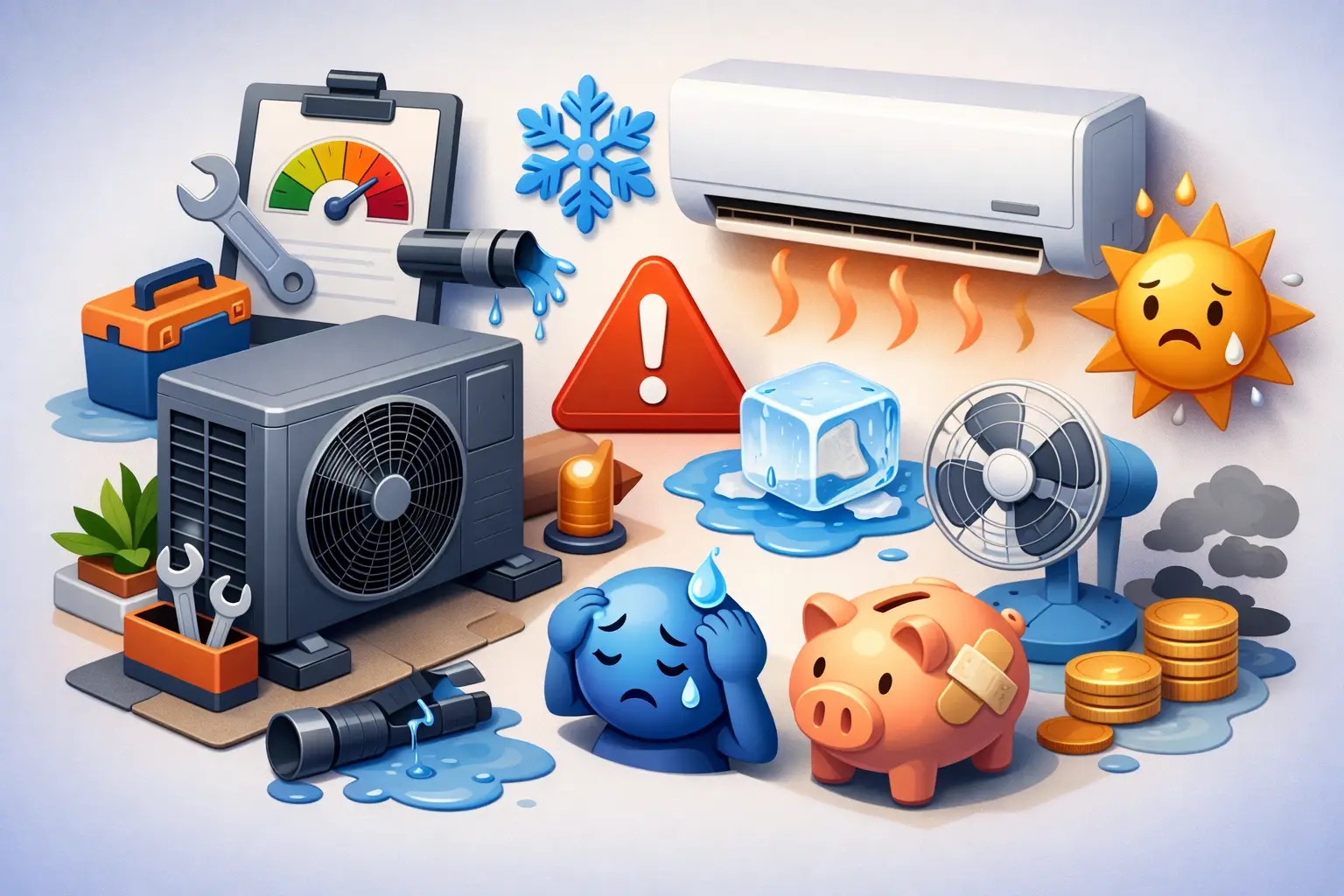
If your AC is limping through another Florida summer, you usually get warning signs before it quits for good. The best signs AC replacement is due are not always dramatic. Sometimes it is the steady climb in your power bill, a house that never quite cools down, or one repair call too many in the middle of a heat wave.
For homeowners in Central Florida and Tampa, this decision matters because air conditioning is not a luxury here. Your system works hard for most of the year, and when it starts falling behind, comfort, humidity control, and even indoor air quality can suffer fast. The goal is not to replace an AC too early. It is to recognize when continuing to repair it is costing you more money, more stress, and more downtime.
The best signs AC replacement should be on your radar
A lot of people wait for a total breakdown. That is understandable, but it is rarely the cheapest or least stressful path. An aging system often gives you months, sometimes years, of clues that it is nearing the end.
Your system is 10 to 15 years old and struggling
Age alone does not automatically mean replacement, but it does put the conversation on the table. In Florida, AC systems tend to wear out faster than they do in milder climates because they run longer and harder. If your unit is more than a decade old and you are seeing comfort issues, efficiency problems, or repeated repairs, replacement starts to make a lot more sense.
A well-maintained system can last longer. But once performance drops off, pouring money into an older unit often becomes a short-term fix instead of a real solution.
Repair calls are becoming routine
One repair every so often is part of owning an AC system. Two or three major repairs in a short stretch is different. If you have replaced a capacitor, then a blower motor, then dealt with refrigerant issues, you are not just having bad luck. You may be watching a worn-out system reach the point where parts keep failing one after another.
This is where homeowners get trapped. Each individual repair can seem cheaper than replacement. But when those costs stack up, plus time off work, emergency calls, and the risk of another breakdown next month, the math changes quickly.
Your electric bill keeps rising without a clear reason
If your usage habits have not changed but your cooling costs keep climbing, your AC may be losing efficiency. Older systems work harder to deliver less cooling, especially when coils are dirty, components are worn, or the unit was simply built to older efficiency standards.
In Florida homes, that drop in efficiency is hard to miss. A unit that runs longer every afternoon to reach the same thermostat setting is telling you something. Sometimes a tune-up can help. If the system is older and the bills stay high, replacement may be the smarter move.
When poor comfort points to a bigger problem
Many homeowners do not start with the equipment. They start with the rooms that never cool down, the sticky air, or the thermostat battles.
Your home has hot spots or weak airflow
If one room feels fine and another feels like a garage, your AC may not be distributing air properly. In some cases, the issue is ductwork. In others, the system itself is no longer moving enough air or producing enough cooling capacity to keep up.
Weak airflow from the vents is another red flag. That can be caused by anything from a blower issue to clogged ducts, but if it shows up alongside age and frequent repairs, replacement deserves a serious look. This is also where it helps to work with a contractor that understands both HVAC performance and related electrical demands, especially if a new system may require panel or circuit upgrades.
Humidity is staying high indoors
Florida homeowners know the difference between cool air and properly conditioned air. If your house feels clammy even when the AC is running, the system may not be removing humidity the way it should. That can leave your home uncomfortable and can also affect air quality, odors, and how hard your system has to work.
Sometimes this comes down to sizing or system design. Sometimes it is a sign of a unit that is wearing out and no longer controlling temperature and moisture effectively. Either way, an AC that cannot manage humidity in this climate is not doing the full job.
It runs constantly but never quite catches up
On the hottest days, it is normal for an AC to run longer. It is not normal for it to run nearly nonstop and still leave the house warm. If your unit seems to be in a permanent battle with the thermostat, that is often a sign of declining capacity, poor efficiency, or a system that is simply too old to keep up anymore.
There is some nuance here. Air leaks, insulation problems, dirty coils, and duct issues can all contribute. But when constant runtime shows up with age, noise, repairs, and high bills, replacement is often the cleanest answer.
Best signs AC replacement is more cost-effective than repair
Homeowners usually ask the same fair question: should I fix it one more time, or stop sinking money into it?
The repair estimate is too close to the value of the system
There is no single magic number, but a common rule is to be cautious when a major repair on an older unit starts costing a meaningful chunk of what a new system would cost. A compressor replacement on an aging system is the classic example. You can pay a substantial amount and still be left with an old unit where the next part may fail soon after.
If the system is newer and otherwise in good shape, repair may still be the right call. If it is older, inefficient, and already giving you trouble, that same repair can be money you never get back.
Your AC still uses outdated refrigerant
If your older system uses R-22 refrigerant, repairs can become much more expensive because that refrigerant is phased out and harder to source. A refrigerant leak on one of these systems is often the point where replacement becomes the practical choice.
This is not sales pressure. It is just reality. Paying to keep an outdated system on life support can be frustrating when a replacement gives you better efficiency, improved reliability, and easier access to parts going forward.
The system is noisy, smells off, or trips electrical issues
Banging, grinding, buzzing, and rattling are not background noise you should ignore. Strange sounds can point to motor issues, failing components, or major wear. Musty or burning smells deserve attention too, especially if they are paired with poor performance.
Then there are the electrical warning signs. If the system trips breakers, struggles on startup, or seems to be tied to power issues in the home, do not treat that as a minor inconvenience. Sometimes the AC is the problem. Sometimes the home electrical setup needs attention as well. Either way, it should be evaluated by licensed professionals who can look at the full picture without sending you to multiple companies.
What replacement can solve that repair often cannot
A new system is not just about avoiding the next breakdown. In many homes, it fixes problems the old unit never handled well in the first place.
A properly selected replacement can cool more evenly, control humidity better, lower operating costs, and reduce noise. It can also remove the stress of wondering whether the next heat wave will be the one that pushes your system over the edge. For some homes, replacement is also the right time to address related issues like duct performance, thermostat upgrades, or electrical capacity.
That last point matters more than many homeowners realize. If your new AC requires electrical work, you do not want finger-pointing between separate contractors. One team handling both HVAC and electrical work can make the process faster, cleaner, and a lot less frustrating.
How to make the call without guessing
If you are seeing one sign, your system may still have life left in it. If you are seeing four or five at once, age, weak airflow, rising bills, humidity problems, and repeat repairs, you are usually past the point of hoping for a cheap fix.
The right next step is a straightforward evaluation, not a sales pitch. You want to know what is failing, what a repair would realistically buy you, and whether replacement will lower your total cost and stress over the next several years. That is the kind of decision homeowners can make confidently when the estimate is clear, the options are explained plainly, and financing is available if needed.
At Al-Air, that is how we approach it – no runaround, no hidden fees, and no bouncing you between HVAC and electrical contractors when the job touches both.
If your AC has started giving you that feeling that it is one hot afternoon away from quitting, trust that instinct and get it checked before you are forced into a rushed decision.