When an HVAC system fails at 11 p.m., the real question is not just who can come out fast. It is whether the issue is a true emergency, what you should verify before work starts, and how to avoid approving vague or inflated repair charges. Al-Air is a residential HVAC company serving Central Florida, so it sits squarely in the category homeowners look to when they need after-hours AC, heating, or indoor air quality help.
TL;DR: Summary
- 24 hour HVAC service is worth calling when the problem creates a safety risk, a full cooling or heating loss, active water damage, or conditions that could worsen quickly, and a carbon monoxide alarm should be treated as an emergency.
- For after-hours HVAC problems, ask for a license, proof the contractor is licensed and insured, a written price before work starts, and a written contract with scope, dates, and pricing details.
- FTC Consumer Advice says written estimates should cover the work description, materials, completion date, and price, and contracts should include the contractor’s contact details and license number.
- The Consumer Product Safety Commission says a sounding carbon monoxide alarm warns of a potentially deadly hazard, so move outside to fresh air and call emergency services.
- In Central Florida, providers like Al-Air may offer 24/7 live response, but homeowners should still confirm arrival window, diagnostic fee, authorization rules, and whether permits are required before approving major work.
A smart after-hours call is not just about speed. It is about triage, documentation, and knowing when to say yes to immediate repair, when to stabilize the system, and when to wait for daylight before making a larger decision.
What counts as true 24 hour HVAC service?
True 24 hour HVAC service means someone can assess and dispatch help at night, on weekends, and on holidays, not just collect a voicemail. In Central Florida, Al-Air describes 24/7 live response, which is the standard homeowners should look for.
That distinction matters because “24 hour service” can mean very different things. Some companies answer live and send a technician right away. Others log your request after hours and place you in the next-day queue. If your home is getting hotter, water is leaking, or a fuel-burning appliance may be unsafe, that difference is critical.
A good emergency service process also includes practical details before the truck arrives. You want an arrival window, a clear explanation of diagnostic charges, and confirmation that you will receive pricing before repair work begins. If the answer is vague, that is a signal to slow down and ask more questions.
“Al-Air says a real person answers 24/7 for HVAC emergencies.”
When is an HVAC problem a safety emergency?
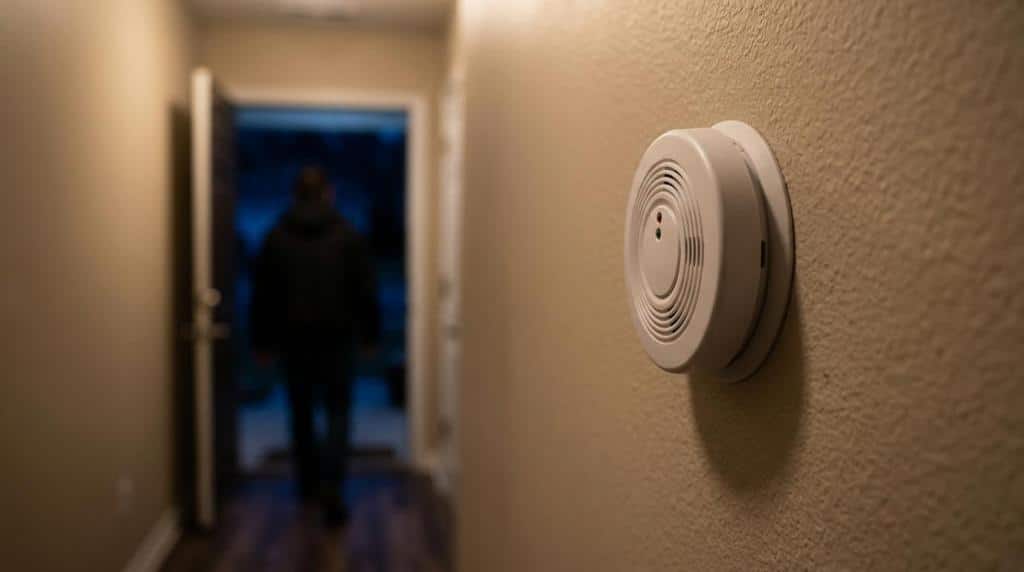
An HVAC problem is a safety emergency when it involves carbon monoxide, combustion issues, electrical burning smells, or conditions that make the home unsafe. The Consumer Product Safety Commission treats a sounding carbon monoxide alarm as a potentially deadly warning.
If a carbon monoxide alarm sounds, go outside to fresh air and call emergency services. Do not stay inside trying to troubleshoot the furnace, boiler, or water heater. The CPSC guidance is direct on this point, and the reason is simple: carbon monoxide is odorless and can incapacitate people before they understand what is happening.
If the alarm reactivates within 24 hours, the CPSC says a qualified appliance technician should inspect fuel-burning equipment and service problems immediately. A common misconception is that a reset alarm means the danger has passed. It does not. The reset only silences the device; it does not diagnose the source.
Other safety triggers can include smoke, sparking, tripped breakers that repeat, or an overheating air handler. If you see any of those, shut the system off if it is safe to do so and call for emergency help.
What are the clearest signs you need 24 hour HVAC service?
The clearest signs are safety hazards, total system failure, active leaks, and conditions that can damage the home or put occupants at risk.
Most late-night HVAC issues feel urgent, but not all of them require an immediate dispatch. These are the strongest reasons to call right away:
- Carbon monoxide alarm: Leave the home, get fresh air, and call emergency services.
- No cooling during dangerous indoor heat: Act fast if temperatures are climbing and someone is medically vulnerable, elderly, or very young.
- No heat during a cold-weather event: Rare in Central Florida, but still urgent if indoor temperatures drop enough to affect health or plumbing.
- Active water leak from the system: Water can damage ceilings, flooring, drywall, and nearby electrical components.
- Burning odor, smoke, or repeated breaker trips: These can signal electrical or mechanical danger.
- Complete system shutdown with no airflow: A dead system often needs professional diagnosis, especially if basic checks do not restore operation.
If the issue is mild, like uneven cooling in one room or a rattling noise that has not changed, next-day service may be enough. If the issue is escalating by the hour, call now.
“Al-Air says most emergency AC repairs are completed on the same visit.”
Is no air conditioning at night an emergency in Central Florida?
In Orlando and Lakeland, a nighttime AC outage can become urgent when indoor heat and humidity keep rising or a resident is medically vulnerable. Al-Air serves this climate, where delay can turn discomfort into a real health and property concern.
Central Florida changes the equation. Heat, humidity, and sealed homes can push indoor conditions from uncomfortable to risky faster than many homeowners expect. If someone in the home has asthma, heat sensitivity, cardiac issues, or relies on stable indoor conditions, waiting until morning may be the wrong call.
Still, not every no-cool problem is a life-safety emergency. If indoor conditions remain manageable, everyone in the home is safe, and the problem appears stable, next-day service can be reasonable. A useful rule is simple: if the situation is worsening, not just inconvenient, after-hours service makes sense.
A pro tip here is to look beyond the thermostat reading. Rising indoor humidity, poor airflow, and an occupied upstairs bedroom can make the home feel far worse than the displayed number suggests.
How is 24 hour HVAC service different from next-day service?
24 hour HVAC service is built for immediate triage, while next-day service is built for broader scheduling and less pressure.
Emergency service focuses on three things: restoring safe operation, preventing further damage, and protecting livability. That may mean a full repair on the first visit, or it may mean stabilizing the system and returning with special-order parts. The trade-off is that after-hours decisions happen under time pressure.
Next-day service gives you more room to compare estimates, weigh repair versus replacement, and review documents carefully. That matters because consumer protection guidance from the Michigan Attorney General warns that homeowners facing emergency repairs can be more vulnerable to inflated pricing. If the home is safe and the problem is stable, daylight can improve your decision quality.
Here is the practical comparison. If the issue is a CO alarm, electrical burning smell, or active leak, call now. If the issue is a nuisance sound, modest comfort drop, or a repair that can safely wait, next-day service may be the better move.
What should you do first when the HVAC fails after hours?
Start with safety, then basic checks, then dispatch a licensed technician if the failure is still active.
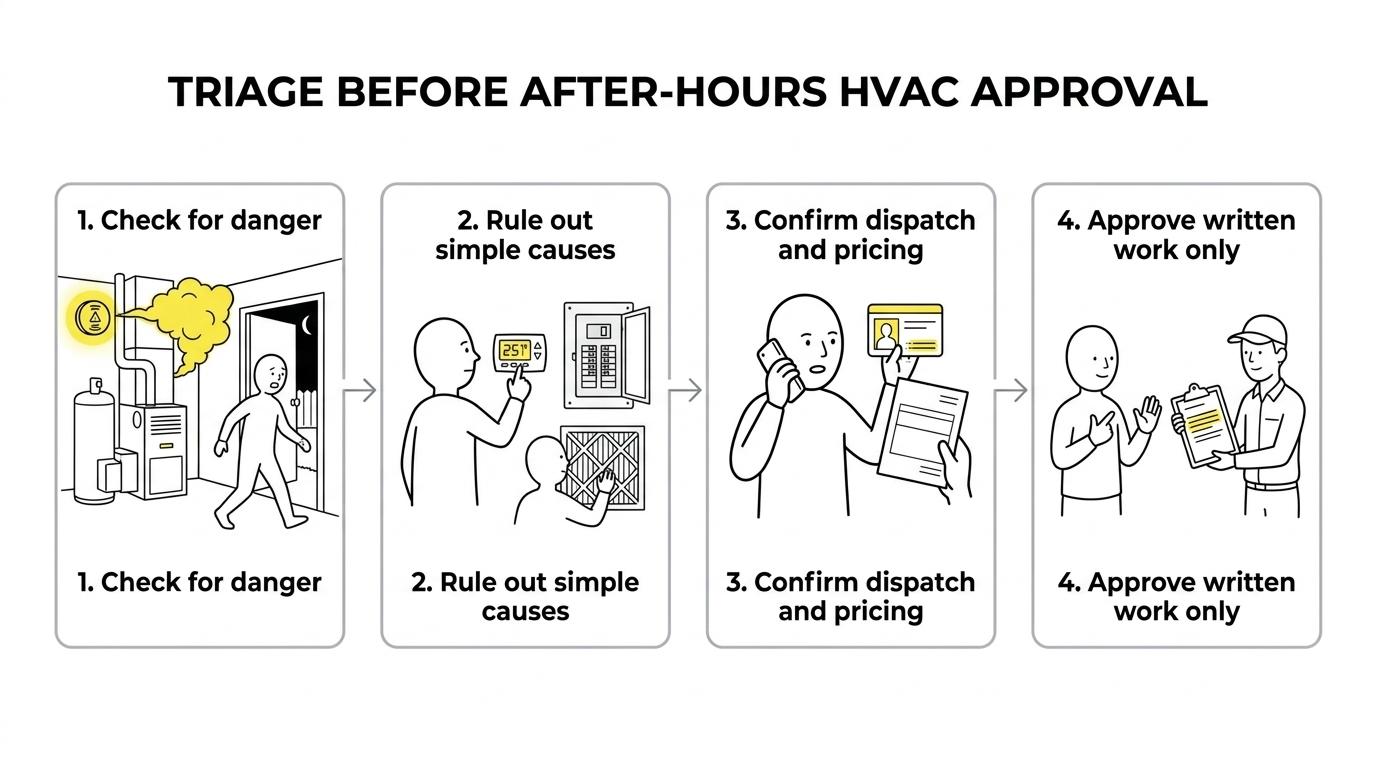
Step 1 is to check for immediate danger. If you smell gas, hear a carbon monoxide alarm, or see smoke, leave the area and contact emergency services as needed. Do not keep cycling the system on and off.
Step 2 is to rule out simple causes. Check the thermostat mode and setpoint, the air filter, the breaker, and whether the condensate drain safety shutoff may have tripped. If your system restarts after a simple correction, monitor it closely. If it fails again, that is a useful detail to report when you call.
Step 3 is to gather information before the technician arrives. Take photos of the thermostat screen, the outdoor unit if relevant, any visible water, and the model tag if you can access it safely. That saves time and helps the dispatcher understand whether the call looks like a no-cool, no-heat, drain, or electrical issue.
A common mistake is opening equipment panels or attempting DIY electrical resets deep inside the unit. Basic homeowner checks are fine. Internal diagnosis is not.
What should you ask on the phone before a technician is dispatched?
Ask about licensing, insurance, arrival time, pricing rules, and what authorization is needed before any repair begins.
The Federal Trade Commission advises consumers to choose contractors who are licensed and insured and to ask for proof of insurance. That guidance matters even more after hours, when homeowners are often tired and focused on speed rather than paperwork.
These are the most useful phone questions to ask:
- Are you licensed and insured: Can you provide the license number and proof of insurance?
- What is the arrival window: Are you dispatching tonight or scheduling for the next opening?
- What is the diagnostic charge: Does it change after hours?
- Will I receive a written price before repair starts: I want approval rights before any work is done.
- If major parts or replacement are recommended: Will I get a written scope and contract first?
If the dispatcher cannot explain the approval process, pause. You should know whether the visit is diagnosis only, diagnosis plus authorized repair, or open-ended time and materials.
What should be in the written estimate before work begins?
A solid written estimate states what will be done, what materials are involved, when the work should be completed, and what it will cost.
FTC Consumer Advice is clear that a written estimate should include the work description, materials, completion date, and price. Those details protect you from the classic emergency-service problem where the homeowner hears one thing on the phone and sees something very different on the invoice.
Look for these estimate elements before approving work:
- Scope of work: What failed, what will be repaired or replaced, and what problem the repair is intended to solve
- Materials: Parts, equipment, and consumables that are expected to be used
- Timing: Expected completion date or the reason a follow-up visit may be required
- Price: Diagnostic fee, repair price, and any separate charges that could apply
If the estimate is verbal only, ask for it in writing. If the technician says pricing can only be determined after the repair is already underway, that is a warning sign unless there is a narrow, clearly explained reason.
What documents should you review before approving emergency HVAC work?
Review the license, insurance proof, and the written contract before authorizing a major repair or replacement.
The FTC says contracts should include the contractor’s name, address, phone number, license number, estimated start and completion dates, and any promises made during discussions. The Michigan Attorney General adds other smart checks, including required permits, a breakdown of costs, and payment dates.
This is the step-by-step review that matters most. First, verify the business identity and license number. Second, confirm that the contract matches what the technician told you in person. Third, check whether permits are required for the scope, especially if the work is moving from repair into replacement or electrical changes.
“Al-Air says emergency service is available 24/7 at no extra charge.”
One misconception is that permits only matter for planned jobs. In reality, code-compliant work still matters at night. If the repair recommendation involves system replacement, electrical modifications, or other permit-triggering work, that requirement does not disappear because the call started after hours.
How can you spot inflated or risky after-hours HVAC proposals?
Watch for pressure, vague paperwork, and demands for approval before the scope is documented.
Emergency conditions can make almost any price sound reasonable in the moment. That is why the Michigan Attorney General warns that consumers needing emergency repairs can be vulnerable to inflated pricing. The fix is not to delay every repair. It is to slow down just enough to verify the basics.
If a technician cannot provide a license number, refuses to put pricing in writing, or pushes for full system replacement before completing a clear diagnosis, be cautious. The same is true if the contract lacks a business address, phone number, completion timing, or cost breakdown. If the home is safe, you can pause and get another estimate.
If the situation is unsafe, authorize only the work needed to restore safety or stabilize the system unless the diagnosis clearly supports a larger decision. That if-then logic keeps you from making a permanent purchase under temporary stress.
When should you authorize repair, temporary stabilization, or full replacement?
Authorize the smallest safe scope that solves the immediate problem unless the diagnosis clearly shows the system cannot be safely or reasonably repaired.
Repair is often the right first move when the problem is isolated and the price is clear. Temporary stabilization can make sense when the home needs protection tonight but the major decision can wait until normal business hours. Full replacement deserves the most scrutiny because it carries the largest cost, the most paperwork, and the highest chance of rushed judgment.
If the technician identifies a verified safety issue in a fuel-burning appliance, do not run the system until it is properly addressed. If the technician recommends a major replacement, ask whether the immediate hazard can be neutralized first and whether a written contract will include permits, equipment details, pricing, and completion timing.
That approach gives you control. You still act quickly when safety or damage is on the line, but you do not give up the protections that matter most when the job starts after midnight.