
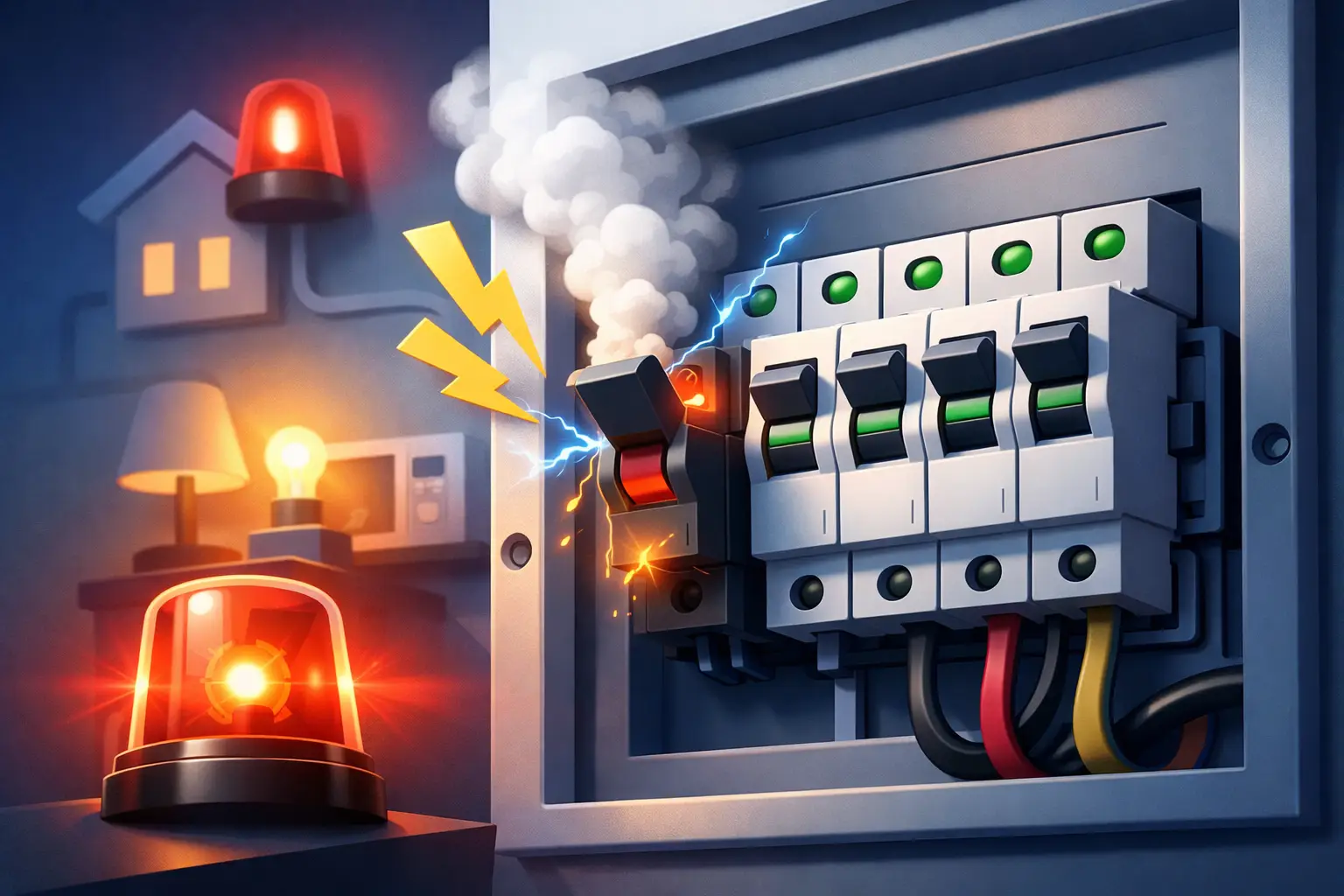
When an emergency breaker keeps tripping, it is not a nuisance to work around. It is your electrical system cutting power because it detected a condition that could overheat wiring, damage equipment, or create a fire risk. In a Central Florida home, that can be especially stressful when the breaker affects your AC, refrigerator, well pump, or essential lighting.
The right move is not to keep flipping it back on until it holds. Shut down what you can, pay attention to what was running when the power went out, and get the problem diagnosed before it turns into a larger repair. A breaker that trips once may have had a clear cause. A breaker that repeatedly trips is telling you something needs attention.
First, know which breaker is tripping
Homeowners often call the large switch at the top of the panel an “emergency breaker.” In most homes, that is the main breaker. It shuts off power to the entire electrical panel, and sometimes the entire house. Other times, the breaker that trips may be a dedicated circuit breaker serving one major appliance, such as an air conditioner, water heater, dryer, range, or garage equipment.
That distinction matters. A single circuit breaker that trips points toward an issue on that circuit or with the equipment connected to it. A main breaker that trips can point to a more serious panel, service, or whole-home electrical load issue. Either way, repeated tripping is not normal operation.
If you are unsure which switch moved, do not remove the panel cover to investigate. The inside of an electrical panel contains energized components even when individual breakers are off. A licensed electrician can inspect it safely and determine whether the issue is in the breaker, wiring, panel, or connected equipment.
What to do when the emergency breaker trips
Start by turning off or unplugging devices on the affected circuit, if you can do so safely. For a main breaker trip, turn off the major breakers in the panel before attempting a reset. This reduces the load when power is restored and can help prevent an immediate repeat trip.
To reset a standard breaker, move it firmly all the way to the OFF position first, then back to ON. If it trips again right away, leave it off. If it stays on until a particular appliance or system starts, turn that equipment back off and schedule service.
Do not hold a breaker in the ON position, tape it, replace it with a larger breaker, or reset it again and again. Those shortcuts can allow wiring to overheat. A breaker is sized to protect the wire behind the wall, not just to keep the lights on.
If you smell burning plastic, see smoke, hear buzzing or crackling from the panel, notice heat around the breaker, or see water near electrical equipment, keep clear of the area and shut off power only if it is safe to do so. Call for emergency electrical service. If there is an active fire or immediate danger, call 911 first.
Why an emergency breaker keeps tripping
A breaker can trip for several reasons, and the pattern gives a good electrician useful clues.
The circuit is overloaded
An overload happens when the circuit is asked to supply more electricity than it was designed to carry. Space heaters, countertop appliances, hair tools, portable AC units, and garage tools are common causes on smaller circuits. In Florida, portable cooling equipment can add a heavy load when a central AC system is already working hard.
An overload may be a simple usage problem, but it can also reveal an outdated layout. Older homes were not designed for the number of chargers, office equipment, kitchen appliances, and comfort systems many households use now. The fix may be as straightforward as moving equipment to different circuits, or it may require adding a properly sized dedicated circuit.
There is a short circuit or damaged wiring
A short circuit occurs when electricity takes an unintended path, often because wire insulation is damaged, a connection is loose, or a component has failed. The breaker may trip immediately when reset, or whenever a certain switch, outlet, appliance, or light is used.
Heat, moisture, pests, storm damage, age, and poor past repairs can all contribute. Central Florida humidity and water intrusion deserve particular attention around outdoor equipment, garage outlets, pool-area circuits, attic wiring, and HVAC disconnects. This is not a do-it-yourself diagnosis. Finding the damaged section requires proper testing, not guesswork.
A major appliance is failing
Sometimes the electrical system is doing its job and the appliance is the problem. An air conditioner with a failing compressor, blower motor, capacitor, contactor, or damaged wiring can trip its dedicated breaker. So can an electric water heater with a failed element, a dryer with a damaged heating component, or a refrigerator with a compressor problem.
If the breaker holds until your AC starts, do not assume the panel is at fault. The HVAC equipment and its electrical circuit need to be checked together. That is where one contractor who understands both systems saves time: no referrals, no runaround between an AC company and an electrician while your home gets hotter.
The breaker, panel, or service equipment has a problem
Breakers do wear out, though a failing breaker should never be assumed without testing. A loose connection, corrosion, overheated bus bar, damaged panel component, or improperly installed breaker can create intermittent trips and heat inside the panel.
Homes with older panels may also be running out of capacity. A new AC system, EV charger, hot tub, electric range, addition, or workshop can push an existing service beyond what it can comfortably support. A panel upgrade is not automatically the answer, but an honest load calculation can show whether your home needs more capacity or a targeted circuit upgrade.
A ground fault or moisture issue is present
Ground-fault protection is common in bathrooms, kitchens, garages, laundry areas, outdoors, and near pools. These devices are designed to trip quickly when they sense electricity going somewhere it should not. That fast response can prevent shock, but it also means moisture in an outdoor outlet, damaged cord, failing appliance, or wet junction box can shut off power.
Never bypass a GFCI or replace it with a standard outlet because it trips. The cause needs to be found and corrected, especially around water.
Clues that help speed up the repair
Before calling, make a quick note of what happened. Was the AC running? Did the trip occur during a storm? Does it happen when the dryer starts or when several kitchen appliances run at once? Did only one room lose power, or did the whole home go dark?
Also note any warning signs: flickering lights, outlets that feel warm, a panel that hums, a burning odor, discolored receptacles, or a breaker that will not stay on. These details help an electrician arrive prepared and focus testing where it matters.
Avoid opening outlets, swapping breakers, or pulling equipment apart to “see if it works.” Electrical faults can be hidden, and a temporary reset does not mean the problem is gone. It only means the breaker has not detected the same condition yet.
When to call an electrician right away
Call promptly if the main breaker trips more than once, a breaker trips immediately after reset, or a breaker controls critical equipment such as your HVAC system, refrigerator, medical equipment, or well pump. You should also call if the panel is hot, there is any odor of burning, or the issue began after water exposure, storm damage, or a recent electrical installation.
For an AC-related trip, the fastest path is a team that can evaluate both the unit and the circuit. Al-Air provides electrical and HVAC service under one roof, with in-house master electricians and emergency availability without an after-hours surcharge. You get a clear explanation of the problem and the repair options, not a handoff to another contractor.
A breaker is supposed to interrupt power when something is wrong. Let it do that job. Leave a repeatedly tripping breaker off, protect your home from a bigger problem, and have a qualified professional find the reason before you put the system back under load.