
You step in from an Orlando afternoon, kick off your shoes, and the thermostat says 74°F. It should feel comfortable. Instead, the air feels heavy. The couch feels slightly damp. Your sheets never quite feel crisp. You’re cool, but you’re not comfortable.
That’s one of the most common complaints homeowners have in Central Florida. The AC is running. The house is getting colder. But the sticky feeling won’t leave.
A lot of people assume that if the temperature is dropping, the system must be doing its whole job. It isn’t always that simple. In a humid place like Orlando, your air conditioner has two jobs at once. It lowers temperature, and it removes moisture from the air. When one part of that process falls behind, the house can feel cold and clammy at the same time.
That clammy feeling also affects sleep. If you keep waking up sweaty even when the thermostat looks fine, humidity may be part of the problem. This guide on why you get so hot when you sleep explains why your room can feel warmer than the number on the wall suggests.
That Cool But Clammy Feeling in Your Orlando Home
You get home after a long Orlando afternoon, lower the thermostat a couple more degrees, and wait for relief. The house gets cooler. Your skin still feels sticky. The air feels heavy, your towels stay damp longer than they should, and the bedroom never gets that dry, crisp feel that helps you sleep well.
That is a common Central Florida comfort problem, especially during the long stretch of muggy weather from late spring through early fall. In places like Kissimmee, Clermont, Davenport, and across Greater Orlando, homeowners often describe the same thing in different words. “Cold but damp.” “Cool, but not comfortable.” “Why does the AC run if the house still feels wet?”
The short answer is that temperature and humidity are not the same job, even though your comfort depends on both. A thermostat only reports temperature. It does not tell you whether the air inside your home still holds too much moisture.
That difference matters more in Orlando than it does in many other parts of the country. Outdoor air here stays humid for long stretches, afternoon storms add even more moisture, and every time a door opens, that damp air tries to move back inside. Your home is working against Florida humidity almost every day.
A good AC system is supposed to help with that, but homeowners are often surprised by how easy it is for the moisture side of comfort to fall behind. The system may cool the air enough to satisfy the thermostat before it removes enough water vapor to make the house feel dry.
That is why two homes can both read 74°F and feel completely different.
One feels comfortable. The other feels clammy.
If that sounds familiar, it helps to look at your system as part of the whole house, not just the box that blows cold air. Airflow, run time, insulation, duct leaks, and even the fan setting all affect how well your system handles moisture. That is also why many homeowners start with a general residential HVAC service in Orlando check when the house feels damp even though the AC seems to be cooling.
Humidity can also affect sleep more than people realize. If your room feels warmer than the thermostat says, this guide on why you get so hot when you sleep explains why moisture in the air can make nighttime comfort harder to maintain.
The question homeowners usually ask next is simple. Do air conditioners remove humidity, or are they only lowering the temperature?
How Your Air Conditioner Fights Humidity
You come inside after an Orlando afternoon thunderstorm, and the house is cool. The thermostat says 74. But your shirt still feels sticky, the sofa feels damp, and the air seems heavy.
That feeling usually comes down to humidity.
An air conditioner does more than lower temperature. It also removes moisture from the air while it cools. The two jobs happen at the same time, which is why a healthy AC system can make a room feel cooler than the thermostat number alone would suggest.
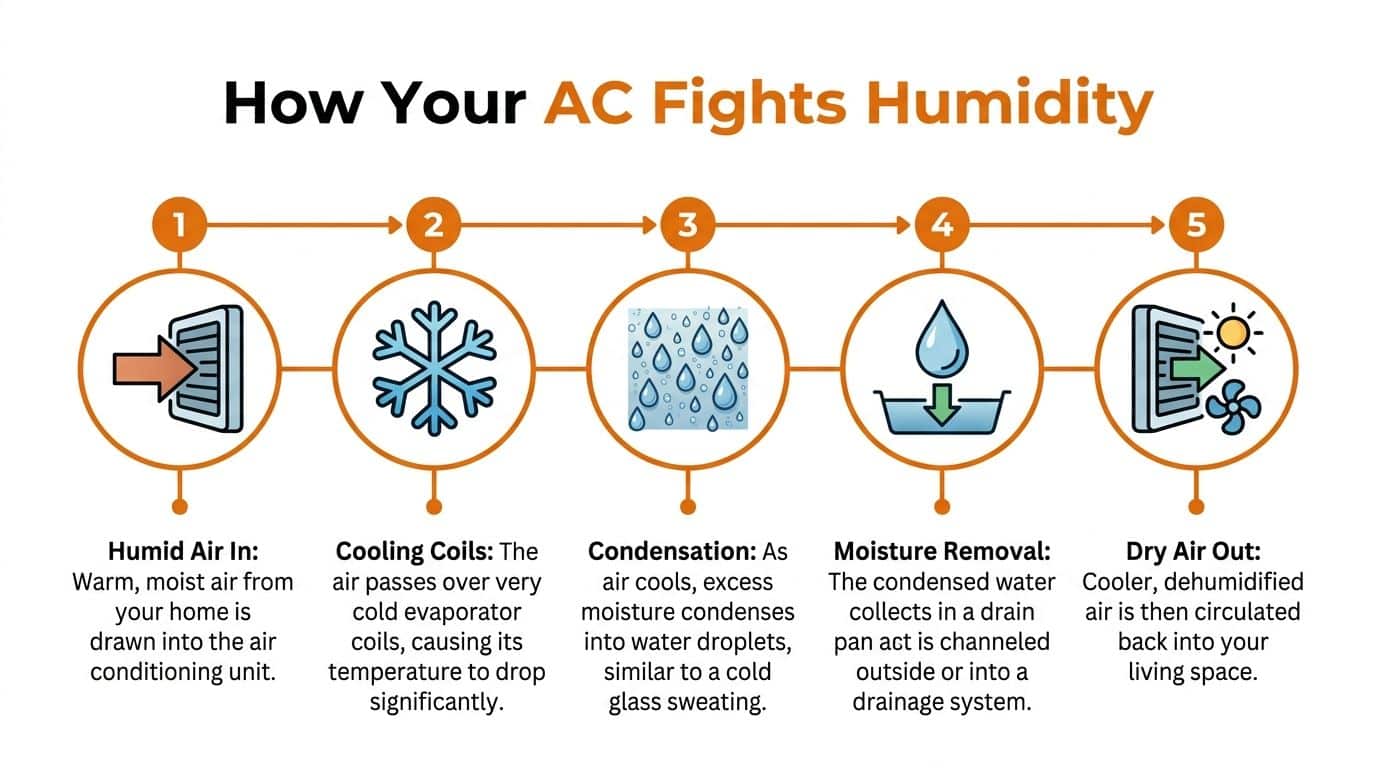
The simple version
A cold drink sweating on a Florida patio works like a small version of your AC coil.
Warm, humid air touches a cold surface. The moisture in that air turns into liquid water. On your drink, it beads up on the glass. Inside your AC, it forms on the evaporator coil, drops into a drain pan, and flows out through the condensate line.
Meanwhile, the system sends that cooled, drier air back into your rooms.
What’s happening inside the system
Here is the process in plain language:
-
Your AC pulls in indoor air.
That air contains both heat and water vapor. -
The air passes over a cold evaporator coil.
Refrigerant inside the coil absorbs heat from the air, which makes the coil cold enough to pull moisture out too. -
The air reaches its dew point.
That is the temperature where water vapor can no longer stay suspended as a gas. -
Moisture condenses on the coil.
The water collects, drips into the pan, and drains away instead of staying in your house. -
The blower sends conditioned air back through the ducts.
The air coming out is cooler and less humid.
If you want a basic refresher on the cooling cycle itself, this overview of how an aircon work pairs well with the moisture side of the story.
Why colder air feels drier
Air acts a bit like a sponge. Warm air can hold more moisture. As that air cools, its ability to hold water drops. Once it cools enough, the extra moisture has to go somewhere, so it turns into liquid on the coil.
That is the part many homeowners never get shown. Your AC is not drying the air with a separate drying feature. It is drying the air because cooling creates condensation when humid air hits a cold coil.
Why this matters so much in Orlando
In Central Florida, your system deals with a lot of moisture for much of the year. High outdoor humidity, frequent rain, wet lawns, pool use, and doors opening to the outside all add to the load. So your AC is not just battling heat. It is constantly trying to pull water out of the indoor air fast enough to keep up.
That is why two houses on the same street can both feel cool, yet only one feels comfortable.
Indoor comfort usually lands in a moderate relative humidity range. Once humidity climbs too high, rooms start feeling clammy, and the home can become more inviting to mold and musty odors. Orlando homeowners often notice those problems first in back bedrooms, closed-off spaces, and homes with older ductwork or airflow issues.
Humidity control has always been part of air conditioning
Air conditioning was developed to control moisture as well as heat. That history helps clear up a common misunderstanding. Dehumidification is not a bonus feature. It is part of the basic job.
So if your AC is cooling the house but the air still feels sticky, something in that moisture-removal process may be falling short. A local residential HVAC service in Orlando can help pinpoint whether the issue is airflow, drain problems, coil performance, sizing, or another system condition.
Key Factors That Weaken Your ACs Dehumidifying Power
You can set the thermostat to a comfortable number and still feel like the house has a light film of moisture on everything.
That happens a lot in Orlando. Afternoon storms, long wet stretches, and humid mornings can keep feeding moisture into your home even while the AC is running. If the system is not removing that moisture efficiently, the house may feel cool but not comfortable.
Short cycling cuts moisture removal
Your AC needs time to dry the air.
Here is the simple version. The first part of a cooling cycle lowers temperature. The longer part of that cycle does more of the drying. If the system shuts off too quickly, it may satisfy the thermostat before it has pulled much water off the indoor air.
That is why some Orlando homes feel better on a very hot day than on a warm, rainy one. On the hotter day, the AC often runs longer. On the rainy day, it may cool the house in short bursts and leave humidity behind.
Common causes of short cycling include:
- Oversized equipment that cools the thermostat area too fast
- A thermostat location that does not reflect the whole house
- Milder outdoor conditions that reduce run time even while indoor humidity stays high
The coil has to stay cold enough
The evaporator coil is the part that collects water from the air. It works a lot like a cold drink sweating on a patio table in July. If the surface is cold enough, moisture forms on it and drains away.
If the coil is not operating at the right temperature, that moisture removal slows down. You may still get cool air from the vents, but the house keeps that sticky feel people notice in Florida homes.
Low refrigerant, airflow problems, or a dirty coil can all interfere with this step.
Dirty filters and weak airflow
Air has to pass across the coil at the right pace.
Too little airflow can cause performance problems. Too much airflow can also reduce drying because the air moves across the coil so quickly that less moisture drops out. A clogged filter, blocked return, dirty blower components, or closed supply vents can all upset that balance.
This one fools a lot of homeowners because the system may still cool the house enough to seem normal at first.
Watch for clues like these:
- Some rooms feel cooler than others
- Bedsheets or towels feel slightly damp
- Bathroom humidity hangs around longer than it should
- Musty smells show up after the AC stops running
Duct leaks bring Florida humidity back inside
Ductwork is supposed to carry conditioned air where you want it. If it has leaks, especially in a hot attic, it can also pull humid air into the system or lose dry air before it reaches your rooms.
A return-side leak is often the bigger problem. It can suck in attic air that feels like a damp sponge for much of the year in Central Florida. So even if the indoor unit is doing a decent job removing moisture, the house can still feel muggy by the time that air reaches the living space.
Older Orlando homes and homes with aging flex ducts see this problem often.
Thermostat and fan settings matter more than people expect
Fan settings can change how dry your house feels.
If the thermostat fan is set to On instead of Auto, the blower keeps moving air after the cooling cycle ends. That can send some of the moisture sitting on the coil back into the home before it drains away. In a humid climate like Orlando, that small setting can make bedrooms feel clammy overnight and make the whole house feel less crisp during rainy weather.
A quick symptom guide
| Problem | What you notice indoors |
|---|---|
| Short cycling | Air cools quickly, but the house still feels clammy |
| Poor airflow | Rooms feel stuffy and moisture lingers |
| Leaky ducts | Comfort changes from room to room, with some areas feeling damp |
| Coil or refrigerant issue | The AC runs and cools, but the air never feels dry |
| Fan setting issue | The home feels muggy soon after a cooling cycle ends |
A lot of these problems build slowly, which is why homeowners often blame the weather first. Routine AC maintenance for Orlando humidity control can catch airflow issues, drainage problems, coil trouble, and duct concerns before your house starts feeling cool and clammy every afternoon.
AC Dehumidification vs Dedicated Dehumidifiers
You set the thermostat to a comfortable temperature, but the house still feels sticky. That happens in Orlando all the time, especially during rainy stretches, warm spring evenings, and early fall days when outdoor moisture stays high but the AC does not need to run much.
Your air conditioner and a dehumidifier do related jobs, but they are not the same tool.
An AC lowers humidity as part of the cooling process. A dehumidifier is built to remove moisture even when the house is already cool enough. That difference matters in Central Florida, where high humidity often hangs around long after the hottest part of the day.

When your AC is enough
On a hot Orlando afternoon, a properly working AC usually handles both cooling and moisture removal well enough. As warm indoor air passes over the cold evaporator coil, water vapor turns into liquid and drains away. It works a lot like a cold drink sweating on a patio table. Moisture in the air hits a cold surface and collects as water.
If the system runs long enough and the house is reasonably sealed, that process can keep the indoor air feeling comfortable without any extra equipment.
When the AC falls short
The trouble starts on days that are humid but only moderately warm.
Your thermostat may be satisfied before the system has removed enough moisture. The temperature looks fine on the wall, but your skin tells a different story. Sheets feel damp. Floors feel a little tacky. The house feels cool but clammy.
That is a common Orlando pattern during afternoon storms, shoulder seasons, and long stretches of wet weather.
Dry mode as a middle option
Some ductless and split systems include Dry Mode. As Fujitsu General explains, that setting is designed to focus more on moisture removal with gentler cooling than standard cool mode.
For a single room or a small zone, Dry Mode can help when the air feels muggy but you do not want to keep dropping the thermostat. It is not a whole-house answer for every home, but it can be useful in the right setup.
Side-by-side comparison
| Option | Best use case | Main strength | Main limitation |
|---|---|---|---|
| Central AC | Hot, humid summer weather | Cools and removes moisture at the same time | Works best when there is enough cooling demand |
| Dry Mode | Mild, muggy days in a room or zone | Pulls moisture without as much cooling | Only available on some systems and usually not for whole-home control |
| Portable dehumidifier | One problem area, like a bedroom, garage room, or closed office | Targets a specific space | Needs emptying or drainage and does not treat the whole house |
| Whole-home dehumidifier | Ongoing humidity issues across the house | Controls moisture independently from the AC | Requires added equipment and professional installation |
When a whole-home unit becomes the better choice
Some Orlando homes have a moisture problem more than a cooling problem.
That is often true in larger homes, houses with multiple occupants, homes that stay closed up during summer storms, or properties where humidity stays high even after the AC has been serviced. In those cases, a whole-home dehumidifier gives you control your air conditioner cannot always provide on its own. It keeps removing moisture even when the thermostat is already satisfied.
For homeowners who are tired of chasing comfort by lowering the temperature, that can be a better fix than making the house colder than it needs to be.
Some homes feel uncomfortable because of moisture first, not temperature first.
A practical way to decide
If your home feels muggy mainly on very hot days, your AC may already be the right tool and may just need proper service, setup, or airflow correction.
If your home feels damp during rainy weeks, mild evenings, or seasons when the AC barely runs, a dedicated dehumidifier usually makes more sense. That is the point where many Orlando homeowners benefit from local guidance, because the right answer depends on how your home handles Florida humidity day after day. Al-Air can help you figure out whether the issue is equipment performance, house conditions, or a true need for added dehumidification.
Actionable Tips to Lower Humidity in Your Orlando Home
By late afternoon in Orlando, your house can be 74 degrees and still feel like a damp towel. That sticky feeling usually means the temperature is acceptable, but the moisture level is not.
The good news is that many homes improve with a few practical changes before you spend money on new equipment.
Set the fan to Auto
Start here first.
Your AC removes moisture when humid air passes over the cold indoor coil and the water drains away. If the thermostat fan is set to On, the blower keeps running between cooling cycles and can push some of that damp air back into the house. Harmon Mechanical explains how fan settings affect AC humidity removal.
For many Orlando homeowners, that one setting change can make the air feel less swampy within a day or two.
Replace dirty filters on time
A dirty filter slows airflow, and slow, strained airflow hurts moisture removal.
A simple comparison helps here. Your AC needs a steady stream of indoor air moving across the coil, much like a car radiator needs airflow to do its job. When the filter is packed with dust, the system has a harder time pulling moisture out of the air. In Central Florida, where systems run hard for months, that problem shows up fast.
Check the filter regularly and replace it when it looks dirty, especially during the long cooling season.
Use bathroom and kitchen exhaust fans
Your AC is already dealing with outdoor humidity that sneaks in every time doors open, especially during rainy Orlando afternoons. Long showers, boiling pots, and busy kitchens add even more moisture indoors.
Use the bathroom fan during showers and let it run a little longer after. Do the same in the kitchen when cooking. It is easier to vent moisture out right away than ask your AC to catch up later.
Keep the condensate drain clear
When your AC pulls water out of the air, that water has to leave through the condensate drain line. If that path backs up, the system cannot get rid of moisture as cleanly as it should.
Watch for these clues:
- Water near the indoor unit
- A musty smell around the air handler
- A drain pan that stays wet too long
- Humidity that seems worse even though the AC is cooling
During routine service, ask for the drain line to be inspected and cleaned. If you want a local service checklist built for Central Florida conditions, Al-Air covers that in its guide to expert AC service in Orlando, Tampa, and Lakeland.
Check for duct leaks, especially in older Orlando-area homes
Some humidity problems start outside the living space.
If ductwork leaks in a hot attic, the system can pull in damp Florida air before it ever reaches your rooms. That is common in older homes around Kissimmee, Clermont, and parts of Greater Orlando. One room may feel fine while another stays sticky all evening.
If one side of the house always feels more humid, or comfort drops during stormy weeks, duct leakage deserves a closer look.
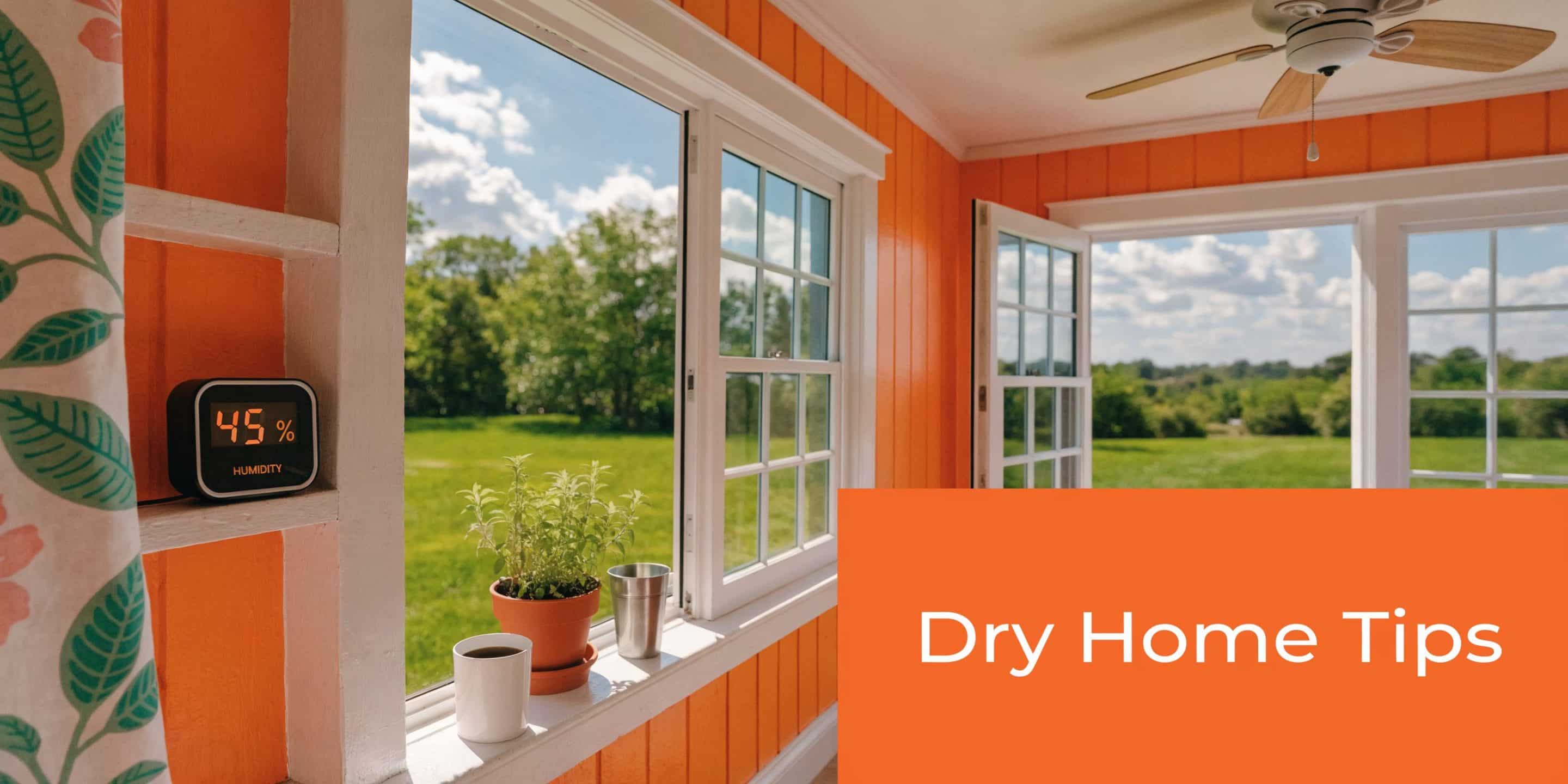
Use a hygrometer so you are not guessing
Your skin notices comfort. A hygrometer shows what the air is doing.
These small monitors are inexpensive and helpful because they give you a number to track. That matters in Orlando, where outdoor humidity stays high for much of the year. If the reading stays high for days, you know the issue is more than a passing feeling. If the reading looks normal but you still feel uncomfortable, airflow or room balance may be the underlying problem.
Stop chasing the thermostat
A lot of homeowners keep lowering the temperature, hoping the house will feel drier. Sometimes that works for an hour. Then the house feels chilly and still clammy.
A steadier approach usually works better:
- Choose a reasonable temperature
- Leave the fan on Auto
- Let the system run normally for a few days
- Check humidity along with temperature
That gives the AC a fair chance to remove moisture instead of reacting to constant thermostat changes.
This walkthrough gives a useful visual explanation of moisture control and comfort habits:
Cut down on indoor moisture sources
Small habits matter in Florida homes because the air outside is already loaded with moisture.
Try these practical changes:
- Keep windows closed during humid mornings and rainy weather
- Use lids on simmering pots
- Make sure the dryer vents properly
- Check door seals and weatherstripping for humid air leaks
- Avoid air-drying clothes indoors unless the space is well ventilated
Each one helps a little. Together, they can make the house feel noticeably less sticky.
Schedule maintenance before summer humidity peaks
In Orlando, the best time to deal with humidity problems is before the heavy summer pattern settles in.
A tune-up helps the system remove moisture the way it was designed to. Clean coils, proper airflow, and a clear drain line all matter. If your AC has been cooling but not drying well, preseason maintenance is often the simplest next step.
Signs You Need Professional HVAC Service from Al-Air
Some humidity problems go past homeowner fixes.
If you’ve changed the filter, switched the fan to Auto, kept vents open, and the house still feels damp, the system may need a trained diagnosis.
Musty odors that keep returning
A persistent musty smell usually means moisture is lingering somewhere it shouldn’t.
That could be around the air handler, inside ductwork, near insulation, or around a drain issue. If the smell returns soon after cleaning, it’s time to stop treating it like a surface problem.
Water around the indoor unit
Any visible pooling deserves attention.
The issue might be a clogged condensate line, a drainage problem, or something else affecting how the system sheds moisture. Waiting on water problems rarely makes them cheaper.
The system runs but the house never feels dry
This is one of the clearest comfort signals.
If the AC seems active but the air still feels heavy for days at a time, you may be dealing with short cycling, duct leakage, airflow trouble, or a coil issue that needs testing rather than guessing.
Ice on refrigerant lines or the coil
Ice is not a sign that the system is “extra cold.”
It points to a problem. Low airflow and refrigerant-related issues are common suspects. Either way, a frozen system won’t manage humidity the way it should.
If you see ice, water, or repeated clammy comfort, skip the trial-and-error approach and get the system checked.
One room feels fine and the next feels damp
That uneven feeling often points to distribution trouble.
A professional can determine whether the cause is leaking ducts, balancing issues, blocked returns, or a larger equipment mismatch. If you want a local overview of service options and system help, this guide to expert AC service in Orlando, Tampa, Lakeland your 2026 comfort guide is a helpful place to start.
Achieve Perfect Comfort and Peace of Mind
So, do air conditioners remove humidity?
Yes. That’s part of their basic job. As your system cools indoor air, it also pulls moisture out through condensation on the evaporator coil. That’s why a healthy AC doesn’t just make the house colder. It makes it feel drier and more comfortable.
In Orlando, that second part matters just as much as the first.
A home can hit the target temperature and still feel lousy if humidity stays too high. That’s why the details matter. Fan settings matter. Filter condition matters. Duct leakage matters. Runtime matters. Sometimes the fix is simple. Sometimes the house needs a more deliberate humidity-control plan.
The good news is that sticky indoor air usually leaves clues.
The house feels clammy after the cycle ends. The bedrooms feel damp at night. The towels never dry fully. A musty odor lingers near the air handler. Those aren’t random annoyances. They’re signs that the moisture-removal side of your comfort system needs attention.
For most homeowners, the smartest next steps are straightforward:
- Use Auto fan mode
- Keep filters clean
- Watch for drainage issues
- Use exhaust fans during showers and cooking
- Look into duct sealing if humidity keeps creeping back
When those steps don’t solve it, professional testing can pinpoint what your AC is doing well and where it’s falling short.
A dry, comfortable home isn’t about blasting colder air. It’s about balancing cooling, airflow, and moisture removal so the house feels right when you walk in the door.
If your Orlando-area home feels cool but still clammy, Al-Air Corporation can help you get to the root of it. Their team serves Greater Orlando and surrounding areas with HVAC repair, maintenance, system replacement, duct-related comfort improvements, and clear, no-pressure guidance. If you want your home to feel cool, dry, and dependable year-round, reach out to Al-Air for an evaluation and free estimate.