
You’re standing in the kitchen, the thermostat is set lower than usual, the AC is humming, and the house still feels sticky. In Orlando, that’s more than annoying. The heat builds fast, the humidity hangs in the air, and a system that sounds like it’s working can still leave the whole house uncomfortable.
When homeowners ask why is my ac running but not cooling, the answer usually falls into one of two buckets. Either the system can’t move enough air, or it has a deeper mechanical problem that needs testing. The good news is that a few safe checks can tell you a lot before you schedule service.
That Unsettling Feeling When Your AC Runs But Your Home Gets Hotter
A lot of national advice treats this like a generic summer problem. It isn’t generic in Central Florida. Our systems fight heat and moisture at the same time, and that changes how failures show up inside the home.

In Greater Orlando, the frustrating part is that the AC can sound perfectly normal while cooling performance drops off. A homeowner hears the indoor unit, maybe even the outdoor unit too, but the air at the vents feels weak or lukewarm. Then the thermostat gets lowered another degree, and nothing improves. The house just gets more damp and uncomfortable.
Florida heat changes the way AC trouble feels
Florida adds a layer of confusion because failures don’t always look the way people expect. According to Pruett Air Conditioning’s discussion of AC systems that run without cooling, extreme heat of 95°F+, humidity of 70-90%, and rapid temperature swings create conditions that disproportionately freeze evaporator coils, even though that sounds backwards on a hot day.
That matters here because a frozen coil doesn’t announce itself clearly. Many homeowners assume ice is only a winter problem. In reality, heavy humidity can load the system with moisture, and once airflow or refrigerant conditions slip, that moisture can freeze on the coil and block heat transfer.
Local reality: In Orlando, a system can fail “cold” in the middle of a brutally hot afternoon. That’s one reason a running AC can still leave the house hotter by the hour.
What you should focus on first
Start simple and stay safe. Check the controls, the filter, airflow around the house, and obvious signs like ice or unusual sounds. If one of those easy items is the cause, you can often correct it quickly. If not, those checks still help narrow down whether the issue is airflow, drainage, power, or a sealed-system problem.
The goal is to avoid two bad moves. One is ignoring the problem while the system strains. The other is trying to force cooling by dropping the thermostat lower and lower, which usually doesn’t fix anything and can make icing worse.
Your 15-Minute Homeowner HVAC Checklist
Before assuming the worst, give the system a calm, methodical once-over. You don’t need tools for this, and you don’t need to open any electrical panels inside the equipment. Think of it as the phone-call checklist a technician would want you to run before service is scheduled.
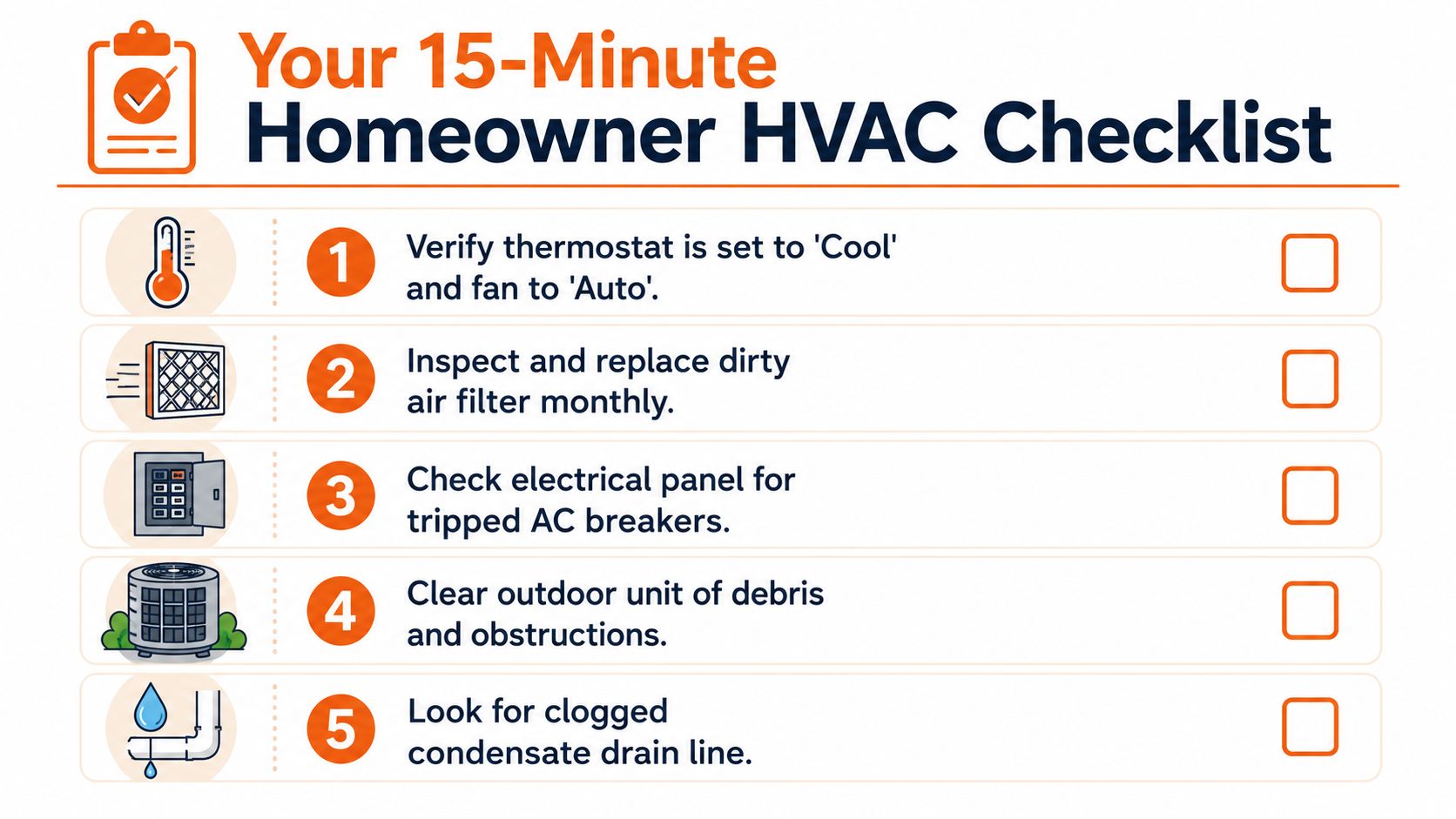
Check the thermostat first
This sounds basic because it is. It also solves more calls than generally expected.
- Mode setting: Make sure it’s on Cool, not Heat or Fan.
- Fan setting: Set the fan to Auto for normal operation. If it’s on On, air may circulate even when the cooling cycle isn’t providing cooling.
- Temperature setting: Lower the setpoint a little below current room temperature and wait a few minutes.
If the screen is blank, replace the batteries if your thermostat uses them. If the display works but the system behaves oddly, note what you see before calling. That detail helps narrow things down.
Check the breaker and the outdoor unit
Next, head to the electrical panel. If the AC breaker is tripped, reset it once. If it trips again, stop there and call for service. Repeated trips point to an electrical or mechanical issue, not a simple glitch.
Then walk outside and look at the condenser.
- Clearance matters: Pull away leaves, grass clippings, or yard debris.
- Shrubs and stored items: Make sure nothing is crowding the sides.
- Sound check: Listen for buzzing, clanking, or a fan that sounds strained.
If the breaker won’t stay on, or the outdoor unit hums without moving air properly, don’t keep cycling power. Repeated resets can make a bad situation worse.
Look at the filter and the drain area
If your filter is easy to access, inspect it now. If it looks gray, packed with dust, or loaded with pet hair, it’s a likely problem. A dirty filter can choke airflow fast in a Florida cooling season.
Also glance around the indoor unit for signs of water near the drain setup. Moisture around the air handler often points to a condensate problem that deserves attention before it becomes ceiling or flooring damage.
Property owners who want a broader house-wide routine can borrow ideas from Edinhart Property Management's checklist. It’s useful because AC trouble often gets worse when routine upkeep slips in several small areas at once.
What this quick check tells you
This checklist does two things. It catches the easy fixes, and it helps separate “something simple is off” from “a major component probably needs testing.”
If the thermostat is correct, the breaker stays on, the outside unit is clear, and the filter still looks rough, move to airflow next. That’s where many cooling complaints start.
Is Your AC Suffocating? Solving Airflow Issues
Your AC can have power, a correct thermostat setting, and a running outdoor unit, then still fall behind for one simple reason. It cannot move enough air through the system.

In Orlando, airflow trouble shows up fast. Our systems run long hours, humidity stays high, and a partially blocked return or dirty filter can push an already hard-working unit into weak cooling, longer run times, and in some cases an iced coil. That last part catches homeowners off guard in Florida. Hot day outside, ice inside.
Start with the filter
If I am talking a homeowner through the first meaningful check after the basics, I usually start here. A loaded filter is one of the most common airflow restrictions, and it is one of the few problems you can fix safely in a few minutes.
Check it this way:
- Turn the thermostat off before removing the filter.
- Find the filter slot or return grille where it sits.
- Slide the filter out and look at both sides. If it is packed with dust or pet hair, replace it.
- Match the size on the frame when buying the new one.
- Follow the airflow arrow so it points the right direction during installation.
A clean filter matters more in Central Florida than many homeowners expect. High humidity keeps the system running longer, which means the filter loads up faster, especially in homes with pets, remodeling dust, or frequent foot traffic.
Simple rule: If the filter looks dirty enough to make you hesitate, replace it.
Check how the house is breathing
Air has to leave the supply vents and make its way back through the return side. If that loop gets blocked, the system struggles even when the equipment itself is still working.
Walk the house and look for restrictions that are easy to miss:
- Open supply registers fully instead of closing rooms off.
- Keep return grilles clear of furniture, curtains, storage bins, and rugs.
- Check large rooms first because couches and beds often end up blocking airflow paths.
- Look for one room that feels much weaker than the others, which can point to a duct or vent problem.
If you are unsure which vents are supposed to blow air and which are supposed to pull air back, our guide on supply vents versus return vents will help you identify them correctly.
One mistake I hear a lot is, “We closed a few vents to force more air into the rooms we use most.” In real homes, that often creates pressure problems and poorer circulation. The house feels less balanced, not more.
Watch for Florida-style airflow trouble
Here is the trade-off. A small airflow problem in a milder climate might stay a comfort issue for a while. In Greater Orlando, where AC systems fight heat and moisture for much of the year, that same restriction can snowball into water around the air handler, muggy indoor air, or frost on the refrigerant line.
Weak airflow and rising humidity often show up together. If the air feels cool for a moment but the house still feels sticky, the system may be moving too little air to remove heat and moisture the way it should.
This walkthrough is worth watching if you want a visual on basic homeowner checks before a service call.
Airflow fixes can solve weak cooling, uneven rooms, and some humidity complaints. They will not solve refrigerant loss, an electrical problem, or a failing motor. If you replace the filter, clear the vents, and airflow still feels weak, the issue is no longer a simple housekeeping problem.
When Simple Fixes Arent Enough Major AC Components
If the filter is clean, the vents are open, and airflow still is not right, the problem usually moves beyond homeowner maintenance. The system can sound normal and still fail where it matters most. In Orlando, that often shows up during the hottest, stickiest part of the day, when the equipment has the least room for error.
Frozen evaporator coils
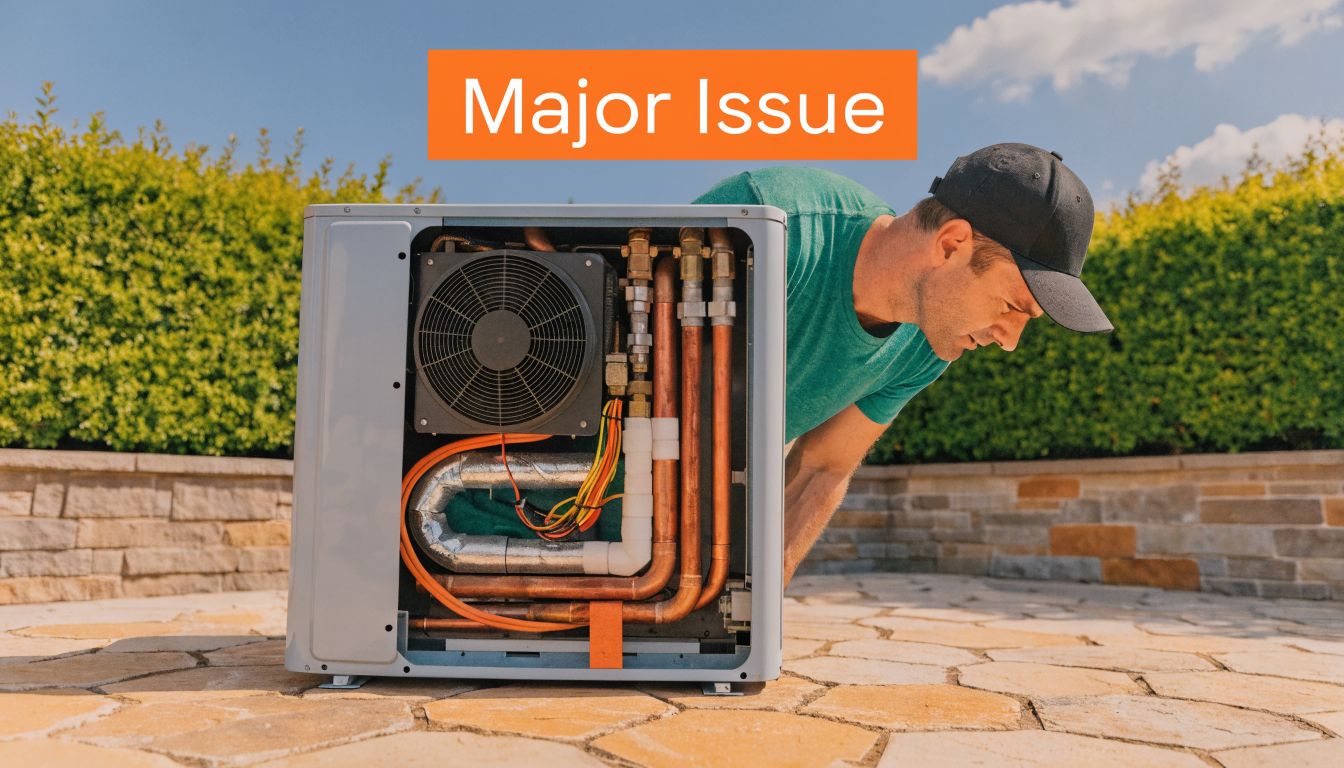
A frozen indoor coil surprises homeowners because it happens in extreme heat, not cold weather. But in Florida, high humidity keeps feeding moisture to the coil. If airflow is low or the refrigerant charge is off, that moisture can freeze on the coil instead of draining away. Once ice starts building, cooling drops fast and airflow gets weaker as the blockage grows.
Town Oil’s explanation of frozen evaporator coils gets the basic mechanism right. When airflow drops, the coil surface can fall below freezing, condensation turns to ice, and heat transfer falls off. In the field, we also see humidity make the problem worse here than many national guides suggest. A system in Greater Orlando can go from “cooling a little” to “barely moving air” much faster because there is so much moisture in that air stream.
Common signs include:
- Weak airflow at multiple vents: The blower may be running, but air delivery keeps dropping.
- Ice or frost on the refrigerant line or indoor unit: Sometimes homeowners spot this near the air handler first.
- Long run times with poor comfort: The thermostat setting stays the same, but the house keeps warming up.
- Cooling that fades after starting normally: It may feel fine early in the cycle, then struggle as ice builds.
If you suspect a frozen coil, turn the thermostat from Cool to Off and set the fan to On. Let the system thaw fully before trying cooling again. Do not keep forcing it to run. That can strain the compressor and turn a manageable repair into a much more expensive one.
If it freezes again, suspect a sealed-system problem
Refrigerant is not a routine top-off item. If the charge is low, the system likely has a leak that needs to be found and repaired properly.
That is why repeat freezing matters. One icing event can start with neglected airflow. A second freeze-up after the basic airflow checks are handled often points to a refrigerant issue, metering problem, or another fault inside the refrigeration circuit. Homeowners who want a quick orientation can review the main parts of a central AC unit to see how the indoor coil, outdoor condenser, and refrigerant lines work together.
A proper repair is more than adding refrigerant. The technician has to confirm pressures, locate the leak, repair the failed point, evacuate the system, and weigh in the charge to manufacturer specifications.
What professionals actually test
According to HelloNation’s summary of HVAC leak diagnosis and repair methods, leak diagnosis may include thermal imaging, pressure testing, and electronic leak detection or dye tracing. After the leak is found, the repair process includes evacuation, repair or replacement of the failed part, pulling a deep vacuum, and recharging the system correctly.
DIY refrigerant handling is not safe homeowner work. It also creates legal and warranty problems.
Electrical and mechanical failures
Some no-cooling calls have nothing to do with ice or refrigerant. The outdoor fan motor may be failing. A capacitor may be too weak to start the compressor. A contactor may chatter. The compressor itself may be overheating or drawing more amperage than it should.
The clues usually show up in the sound and behavior of the unit:
| Symptom | What it often suggests |
|---|---|
| Buzzing from the outdoor unit | A capacitor, contactor, or motor issue |
| Clanking or rattling | Loose or damaged mechanical parts |
| Screeching or grinding | A motor or bearing problem |
| Burning smell | Electrical trouble that needs immediate attention |
| Breaker keeps tripping | A short, grounded component, or equipment pulling too much current |
This is the point where phone advice has limits. A bad capacitor and a failing compressor can sound similar to a homeowner, but the repair cost and urgency are very different. In Florida heat, waiting too long can also leave the house humid enough to create a second problem indoors, even before the temperature gets unbearable.
Budgeting for Repairs and Preventing Future Breakdowns
A lot of Orlando homeowners ask the same question once the house starts warming up. Is this a small maintenance issue, or am I about to pay for a major repair in the middle of a Florida heat wave?
The most useful way to budget for AC trouble is to separate low-cost upkeep from repair work caused by strain. A neglected filter, blocked return, or dirty outdoor unit can push the system harder for days or weeks before anything fails. In Central Florida, that strain builds faster because the system is fighting both high temperature and heavy humidity. Once that extra runtime leads to a frozen coil, a failed motor, or water problems around the air handler, the bill usually changes fast.
A simple way to think about repair costs
Some cooling problems stay minor because the equipment itself is still healthy. Others start small and turn expensive because the unit keeps running under bad conditions.
| Type of expense | What it usually means |
|---|---|
| Basic upkeep | Filter changes, clearing debris, keeping airflow open |
| Repair after prolonged strain | Diagnosing failed parts, correcting damage, and restoring proper operation |
That difference matters. Spending a little time on routine care is usually cheaper than paying for emergency service after the system has been starved for airflow during a 95-degree Orlando afternoon.
If the diagnosis points to a damaged evaporator coil, it helps to review AC coil replacement considerations before approving the work. Coil repairs and coil replacement are not small decisions, and the right answer depends on system age, refrigerant type, and whether the rest of the equipment is still in good shape.
Prevention in Florida is mostly about reducing stress on the system
Homeowners can do a lot here without opening equipment panels or touching electrical parts.
- Check the filter on a regular schedule. During peak cooling season in Florida, filters can load up faster than many homeowners expect.
- Keep supply and return vents open. Closing vents rarely saves money and often creates airflow problems instead.
- Clear the outdoor unit. Leaves, grass, and overgrown plants trap heat right where your system needs to reject it.
- Watch indoor humidity, not just temperature. If the house feels damp or clammy, the AC may be losing performance before it fully stops cooling.
- Pay attention to new sounds or longer run times. Those changes often show up before a breakdown.
I tell homeowners this all the time. The expensive call usually starts as a smaller warning that got ignored because the unit was still running.
Professional maintenance also has real value, especially in Florida. Technicians can catch coil buildup, weak electrical parts, drainage trouble, and airflow issues before they turn into a no-cooling call on the hottest week of the summer. If you are also seeing flickering lights, tripped breakers, or other power-related warning signs around the home, it helps to understand when to seek electrical help.
Budgeting for AC ownership is less about guessing the exact repair bill ahead of time and more about lowering the odds of a bad one. In Orlando, where systems run hard for long stretches, prevention pays off faster than it does in milder climates.
When to Call the Pros Al-Air Corporations Promise
There’s a point where more homeowner troubleshooting stops being helpful. If the house is still hot after the basic checks, the next move should protect the equipment and your safety.
Call a professional if you notice any of the following:
- Ice on the indoor unit or refrigerant lines
- A breaker that trips again after one reset
- Burning smells
- Loud buzzing, screeching, grinding, or clanking
- Water where it shouldn’t be around the air handler
- Very weak airflow even after replacing the filter
- A system that runs constantly without bringing the temperature down
Problems that should never be DIY
Refrigerant is at the top of that list. As noted earlier, low refrigerant always means there’s a leak, and the accepted diagnostic process includes pressure testing, thermal imaging, electronic leak detection, repair, evacuation, and precise recharge. This is not optional work for a licensed professional. It’s also one of the clearest examples of why “just top it off” is the wrong approach.
Electrical symptoms deserve the same caution. If your AC is tripping breakers, giving off a burnt smell, or making the lights flicker when it starts, that crosses into a safety issue as much as a comfort issue. Homeowners who want a plain-language guide to broader warning signs can understand when to seek electrical help before deciding whether the issue might involve the home’s electrical side as well.
What homeowners should expect from a service call
A good service visit should feel clear, not mysterious. The technician should ask what the system is doing, confirm what you already checked, inspect the equipment, test likely failure points, and explain the findings in plain English.
For homeowners in Greater Orlando, that local context matters. A system in this climate doesn’t just need to lower temperature. It has to manage long runtimes, heavy humidity, and the strain that comes with near-constant summer operation. The same symptom in another state can point to a different priority here.
At Al-Air, the promise is straightforward. Homeowners get clear communication, punctual arrivals, transparent options, and free estimates before work begins. Certified technicians and master electricians are available around the clock for urgent breakdowns in Orlando, Clermont, Davenport, Kissimmee, Poinciana, Tampa, Hillsborough, and Pasco County because cooling problems in Florida don’t wait for a convenient time.
If you’ve gone through the safe checks and your answer to “why is my ac running but not cooling” is still unclear, that’s usually the sign to stop guessing. The goal then is to diagnose the actual cause before the heat, humidity, and continuous runtime turn a repairable issue into a larger one.
If your AC is running but your home still isn’t cooling, Al-Air Corporation can help you pinpoint the problem and restore comfort fast. Whether it’s a clogged airflow path, a frozen coil, an electrical fault, or a sealed-system issue, the next step is a clear diagnosis and practical repair options.