
Your thermostat says the house is cool, but your skin says otherwise. The air feels sticky. The floors feel a little damp under bare feet. Maybe the windows fog in the morning, or the bedrooms smell musty by late afternoon. Meanwhile, the AC keeps running and the power bill keeps climbing.
That's a familiar Orlando complaint. A lot of homeowners assume the air conditioner is cooling, so it must be working. Not always. In Florida, comfort depends on temperature and moisture control. If the system handles one and fails at the other, the house can still feel miserable.
When people search for high humidity in house with ac running, they're usually dealing with a problem that has a clear cause. Sometimes it's a simple setting. Sometimes it's airflow, duct leakage, or an AC that was sized wrong from the start. The good news is that you can troubleshoot this in a practical order, starting with easy checks and moving toward the tests a technician should handle.
Why Your Orlando Home Feels Muggy Even With the AC On
You walk in from an Orlando afternoon storm, and the house should feel better than outside. Instead, the air feels sticky, the AC is running, and the thermostat says everything is fine. That usually means the system is lowering temperature faster than it is removing moisture, or the house is pulling humid outdoor air back in.
In this climate, comfort depends on humidity control as much as temperature. A home can read 74 degrees and still feel unpleasant if indoor moisture stays too high. If you want a quick primer on how cooling and moisture removal are supposed to work together, our guide on how air conditioners remove humidity lays out the basics.
Cooling the air is only half the job
In Central Florida, the AC has to do two things at the same time. It has to cool the air and condense moisture off the indoor coil long enough to dry the house out. If either part slips, you feel it fast.
I see this a lot in Greater Orlando homes during our long wet season. The temperature drops, but the air still feels heavy. Homeowners often assume the thermostat is off by a few degrees. The actual problem is usually excess indoor moisture, not a bad temperature reading.
What muggy indoor air usually looks like
Humidity problems tend to show up in ways homeowners can spot before any meter comes out:
- Condensation on window glass or around supply grilles
- Musty odors in bedrooms, closets, or hallways
- Cold air from the vents, but no real comfort
- Sticky floors or damp-feeling surfaces in the morning
- Wood trim, doors, or flooring swelling during wetter weeks
Homes with older windows can show these symptoms sooner because warm, moist air and cooler indoor surfaces meet more easily around weaker seals. If you are already evaluating envelope upgrades, even a resource outside Florida like replacement windows in Garden City ID shows the kind of window replacement work that improves air sealing and reduces moisture intrusion.
Orlando homes face a tougher humidity load
Afternoon rain, high dew points, and long cooling seasons put more strain on AC systems here than in drier parts of the country. A house can gain moisture all day through small duct leaks, attic bypasses, worn door weatherstripping, bath fans, or a thermostat fan setting that keeps circulating moisture after the compressor shuts off.
That is why this problem is so frustrating. The equipment may still cool well enough to satisfy the thermostat while the home stays clammy.
The good news is that this is usually diagnosable
A muggy house with the AC on usually points to a short list of issues. Wrong fan settings, restricted airflow, duct leakage, drainage problems, oversized equipment, and house air leaks are the common ones in Orlando. Some are simple enough to check yourself in a few minutes. Others need measurements at the coil, blower, drain, ducts, and return side of the system.
The smart approach is to work the problem in order, starting with easy checks that cost little or nothing, then moving to the tests a technician should handle. That keeps you from spending money in the wrong place and gets you to the underlying cause faster.
The Hidden Culprits Behind Indoor Humidity
Most humidity complaints come from a short list of problems. Homeowners often focus on the thermostat because that's what they can see. The actual cause is usually hidden in system sizing, airflow, drainage, or air leakage.

Oversized equipment is one of the biggest offenders
A lot of people think bigger AC means better cooling. In Florida, that can backfire fast. An oversized AC cools the air too quickly and shuts off before it runs long enough to remove enough moisture. That's called short-cycling.
Oversized AC units affect 20% to 30% of residential systems, can make a home feel 5°F to 10°F warmer than the thermostat setting, and can increase energy bills by up to 25% in humid climates according to this analysis of humidity and central AC performance.
Dehumidification is a marathon, not a sprint. A unit that blasts cold air for a short burst may satisfy the thermostat, but it won't stay on long enough to wring moisture out of the air.
Air leaks feed the problem all day
Even a good AC struggles if the house keeps pulling wet outdoor air inside. In Orlando homes, that often happens through:
- Leaky ductwork in hot attics
- Poor door seals
- Window gaps
- Unsealed wall penetrations around plumbing or wiring
- Garage-to-house leakage
If the return side of the duct system leaks, it can draw in humid attic air and send it right through the house. If the supply side leaks, you lose conditioned air and create pressure imbalances that pull outside moisture indoors.
This is one reason envelope work matters. If you're looking at window performance as part of a broader moisture-control plan, resources like replacement windows in Garden City ID show the kind of sealing and window-upgrade thinking that applies to humidity control in any climate, even though Orlando homes need Florida-specific HVAC diagnosis.
Airflow problems hurt moisture removal
Your AC coil has to see the right amount of air for the right amount of time. Too little airflow can create one set of issues. Too much can reduce moisture removal. That's why humidity problems often show up alongside basic maintenance neglect.
Common causes include:
- Dirty air filters that choke airflow
- Dirty evaporator coils that insulate the cooling surface
- Low refrigerant that changes coil conditions
- Blower settings that move air too fast for proper latent removal
- Clogged condensate drains that interfere with moisture leaving the system
If you want a more detailed technical explainer on that cooling-versus-dehumidifying balance, this guide on whether air conditioners remove humidity lays out the fundamentals well.
A house can be cool on paper and uncomfortable in real life when moisture removal falls behind.
The thermostat can quietly make things worse
Many homeowners don't realize the fan setting matters. If the fan runs when the cooling cycle is off, moisture sitting on the evaporator coil can get blown back into the house instead of draining away. That leaves the home feeling damp even though the AC just ran.
The important point is that muggy indoor air usually isn't random. The system is either too big, moving air wrong, leaking air, failing to drain moisture properly, or pulling in humidity from outside. Once you understand those failure points, troubleshooting gets a lot more efficient.
Your First Line of Defense DIY Checks and Quick Fixes
Before you schedule a service call, check the easy stuff. A surprising number of humidity complaints come down to settings, filters, drainage, or obvious leakage around the house. These aren't deep repairs. They're first-pass checks that can either solve the problem or narrow it quickly.
Check the thermostat fan setting first
This is the fastest fix on the list, and it gets missed all the time. The fan should usually be set to AUTO, not ON. When it's left on ON, the blower can keep moving air across a wet evaporator coil after the cooling cycle ends. That can put moisture back into your living space.
The ON setting can add 5% to 10% RH, and switching to AUTO can prevent more than 1,300 hours of excessive humidity per year in a typical Florida home according to this guide on AC humidity control and thermostat fan settings.
If you have a smart thermostat like a Nest or Ecobee, check for fan schedules or post-cycle fan behavior too. Those settings can sometimes keep air moving longer than you want.
Look at the filter, not just the thermostat
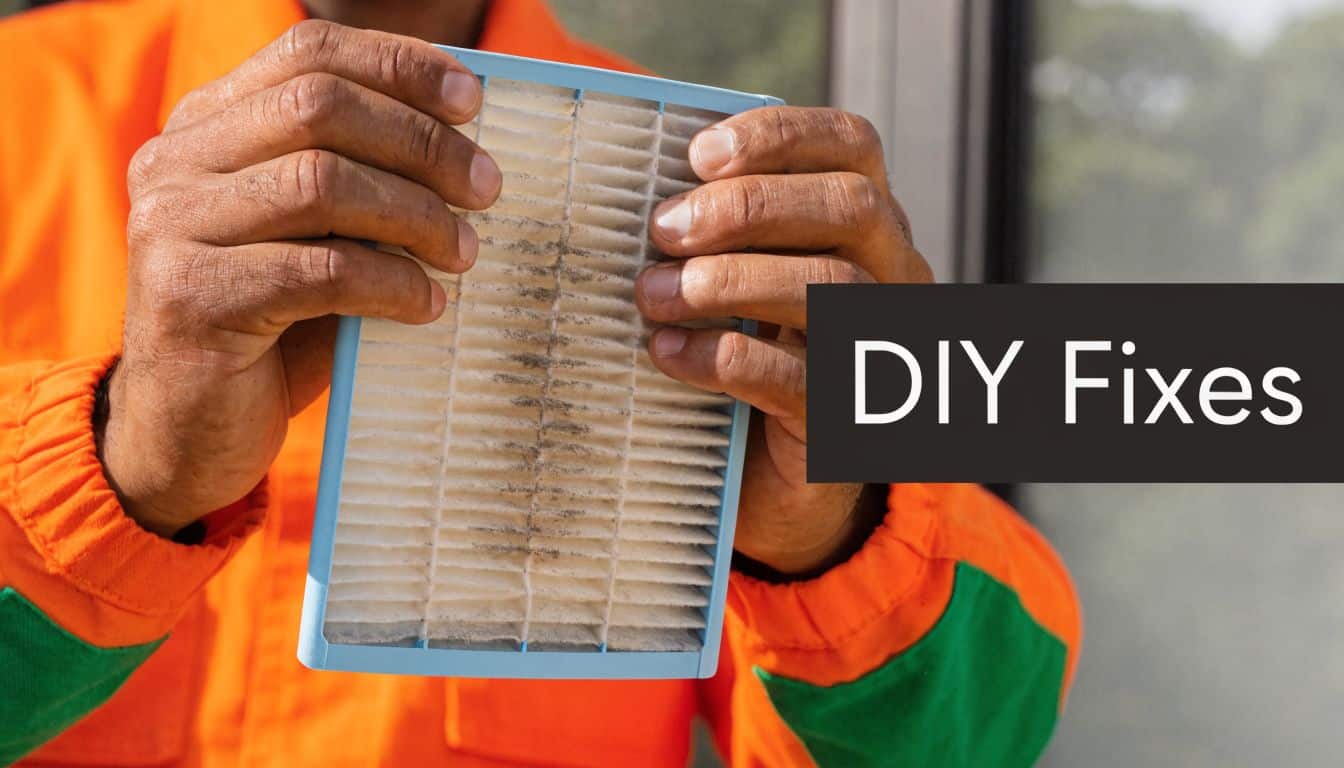
A dirty filter changes how the whole system breathes. Reduced airflow can interfere with cooling and dehumidification, and in worse cases it can contribute to coil icing.
Pull the filter out and hold it up to a light source.
- If light barely passes through, replace it.
- If the filter is bent, damp, or gray with dust, replace it.
- If you've been remodeling, have pets, or run the AC constantly, expect it to load up faster.
Make sure the replacement filter matches the size printed on the frame. Don't guess. A filter that doesn't fit tightly can let unfiltered air bypass around it.
If you want a broader homeowner checklist while you work through basic issues, this air conditioner troubleshooting guide is a useful companion.
Inspect the drain line and drain area
Your AC removes moisture by condensing it, then draining it away. If the drain line starts clogging, water can back up, sit in the pan, or create musty smells around the air handler.
Look for these signs:
- Water near the indoor unit
- A full or slimy drain pan
- Musty odor near the closet or garage air handler
- A safety switch that has shut the system down intermittently
If your setup has a visible PVC condensate line, you can check for obvious blockage at the outlet. Some homeowners carefully clear minor buildup with a wet/dry vacuum at the outside drain termination. If you're not comfortable doing that, leave it alone and have it serviced. You don't want to crack fittings or create a leak inside the house.
Quick check: If the house feels muggy and you also smell mildew near the air handler, inspect the condensate side before assuming the equipment is failing.
Walk the house like moisture would
Humidity often enters through the same weak points over and over. Don't overcomplicate this. Walk room to room and pay attention to where outside air likely sneaks in.
Focus on:
- Exterior doors that don't seal tightly at the threshold
- Windows with worn weatherstripping
- Rooms that feel different from the rest of the house
- Attic-access hatches that aren't well sealed
- Doorways to the garage that leak warm air
Your body is a decent sensor here. If one room always feels heavier or warmer, that's a clue. If curtains move when interior doors close, pressure imbalance may be part of the issue.
Reduce moisture the house is making on its own
Sometimes the AC is already behind, and daily habits pile on more moisture.
A few practical changes help right away:
- Run the bathroom exhaust fan during and after showers
- Use the kitchen exhaust fan when boiling water or cooking
- Don't air-dry laundry indoors
- Keep blinds closed during the hottest, wettest part of the day
- Check that the dryer vent is exhausting outdoors properly
Indoor plants, aquariums, and frequent door openings can add to the load too. None of these are usually the root cause by themselves, but they matter when the system is already struggling.
Know when a DIY check has done its job
If you changed the fan setting, replaced the filter, checked drainage, and tightened up obvious leakage points, the home should at least start trending drier. If it doesn't, that tells you something useful. The issue is probably deeper than a simple homeowner fix.
That's when professional measurements matter. Not guesses. Measurements of airflow, charge, static pressure, run behavior, and duct leakage.
Temporary Relief Strategies for Florida's Humidity Peaks
Sometimes you can't solve the root cause the same day. Maybe the AC company is scheduled for tomorrow. Maybe a part has to be ordered. Maybe the system is limping through one of those brutal Orlando stretches when the outdoor air feels wet before sunrise and stays that way well into the evening.
In that situation, the priority changes. You're not fixing the system yet. You're reducing discomfort and protecting the house.
Use a dehumidifier on purpose
A portable dehumidifier can make a room feel better fast, especially in a bedroom, living area, or closed section of the house. It won't solve oversized equipment, duct leaks, or a refrigerant issue, but it can lower indoor moisture while you wait on a proper repair.
Place it where the problem is most noticeable, not in a hallway nobody uses. Keep doors and windows closed in that zone so you're treating a defined space instead of chasing moisture through the whole house.
Whole-home dehumidifiers are even better when the house has a persistent humidity load. They remove moisture directly without relying on the AC alone to do all the work.
Cut back on indoor moisture production
When the AC is already struggling, small habits matter more than people think.
A few moves help immediately:
- Shorter showers with the bath fan running
- Lids on boiling pots
- No indoor line-drying
- Limit frequent door openings
- Water indoor plants only as needed
If one family member loves long, hot showers and another is simmering a big pot of pasta while the laundry dries inside, the house can feel noticeably heavier by evening.
During a humidity spike, comfort improves fastest when you reduce new moisture and remove existing moisture at the same time.
Isolate the worst areas
If the entire house feels muggy, don't try to make every room perfect with temporary measures. Pick the rooms that matter most for sleep and daily comfort. Bedrooms first. Main living space second.
Close off unused rooms if the system allows it without causing airflow problems. The goal is practical relief, not a perfect whole-house balance in the middle of a humidity event.
Protect surfaces that don't like moisture
If you've noticed swelling doors, tacky wood trim, or musty closets, keep air moving in those areas with ceiling fans or standalone fans. Fans don't remove moisture, but they help prevent stale pockets from building up while you wait on a permanent fix.
This is also a good time to keep closet doors cracked open, avoid storing damp towels indoors, and watch for condensation at windows or supply grilles. Those are signs the house is still carrying too much moisture.
When to Call a Professional What Al-Air Technicians Look For
By the time an Orlando homeowner gets to this point, the pattern is usually clear. The thermostat says the house is cooling, but the air still feels sticky by midafternoon, bedrooms stay damp at night, and the AC seems to run without delivering real comfort. That is usually the point where a humidity problem stops being a simple settings issue and starts needing measured diagnostics.
In Central Florida, I tell homeowners to call for service sooner if the house feels muggy during our long wet season, especially from late spring through early fall. Outdoor air is carrying so much moisture that a small AC performance problem can show up indoors fast. What feels like “the AC just can't keep up” is often a fixable issue with airflow, drainage, charge, duct leakage, or equipment sizing.
Signs the problem is beyond DIY
A professional visit makes sense if you notice any of these:
- The house stays muggy even after changing the fan to AUTO and replacing the filter
- Ice forms on refrigerant lines or the indoor coil
- Airflow is weak in multiple rooms
- The system shuts off quickly and restarts often
- You smell mildew near the air handler or supply vents
- The condensate setup keeps backing up
- Comfort is uneven room to room for long periods
- The AC cools, but the house never feels dry
Those symptoms point to problems that need instruments, not guesswork. Frozen coils, blower performance issues, low refrigerant, pressure imbalances, and attic duct leaks can all leave a house cool on paper and uncomfortable in real life.
What a technician actually checks
A good humidity call should answer one question first. Is the system removing moisture the way it was designed to?
To get that answer, an Al-Air technician checks the equipment while it is running and compares actual readings against what the system should be doing in your home. That usually includes:
- Airflow testing to confirm the blower is moving enough air across the coil
- Static pressure readings to find restrictions in the filter, coil, or duct system
- Temperature split across the evaporator coil
- Refrigerant charge verification
- Condensate drainage inspection
- Duct leakage and pressure imbalance review
- Cycle behavior, especially in homes where the system may be oversized
In Orlando homes, duct problems show up often. Hot, humid attic air can get pulled into return leaks, and supply leaks can dump conditioned air where it does no good. If your technician finds heavy dust buildup, leakage, or contamination inside the duct system, it may be worth reviewing the benefits of professional air duct cleaning and related airflow improvements as part of the solution.
Equipment sizing matters too. A Manual J load calculation helps confirm whether the system matches the house. If the unit is too large, it can satisfy the thermostat too quickly and shut off before it removes enough moisture. That is a common reason a home feels cold and clammy at the same time.
If the temperature drops fast but indoor air still feels damp, airflow, runtime, and equipment sizing usually deserve as much attention as refrigerant levels.
Repairs, upgrades, and the real trade-offs
Some humidity problems need straightforward repair work. A blocked drain line, dirty coil, weak blower, or leaking return can all hold humidity inside the house. Those are usually more cost-effective fixes than replacement, especially if the system is otherwise in decent shape.
Some homes need more than repair. If the equipment is oversized, poorly matched, or aging out, a better answer may be a variable-speed system or a dedicated whole-home dehumidifier. Variable-speed equipment runs longer at lower output, which gives the coil more time to pull moisture out of the air. In Florida, that longer, steadier runtime often improves comfort more than a unit that blasts cold air and shuts off quickly.
That does not mean every muggy house needs a new system. It means the diagnosis has to come first.
Common HVAC humidity issues and estimated Orlando repair costs
Here's a practical way to sort the common problems we see in the field:
| Symptom | Likely Problem | DIY or Pro? | Estimated Cost (Orlando, FL) |
|---|---|---|---|
| Thermostat satisfies, but house still feels clammy | Fan set wrong, oversized system, or poor dehumidification setup | DIY first, then Pro if unresolved | Varies by diagnosis |
| Weak airflow and muggy rooms | Dirty filter, blower issue, or duct restriction | DIY for filter, Pro for system testing | Varies by diagnosis |
| Musty smell near air handler | Dirty drain, standing water, or microbial buildup | Pro recommended | Varies by diagnosis |
| Water around indoor unit | Condensate drain blockage or drain pan issue | DIY visual check, Pro for clearing or repair | Varies by diagnosis |
| AC turns on and off too fast | Oversized unit or control issue | Pro | Varies by diagnosis |
| Frozen indoor coil or ice on line | Airflow restriction or refrigerant problem | Pro | Varies by diagnosis |
| Humidity problem with visible duct damage or attic leakage | Duct leaks pulling in humid air | Pro | Varies by diagnosis |
| Coil cleaning, duct sealing, blower correction, or similar humidity-related repair | Deferred maintenance or system performance issue | Pro | Often a few hundred dollars to a couple thousand, depending on scope |
That cost range is why early diagnosis matters. Humidity problems rarely stay contained to one part of the system. Left alone, they can lead to musty odors, microbial growth, stained ceilings near drain failures, and damage to wood finishes, closets, and furnishings.
What to expect from a good service visit
A solid technician should explain the problem in plain language. You should hear what was measured, what reading was out of range, how that affects moisture removal, and whether the recommendation solves the cause or only one symptom.
Ask direct questions. Is this a maintenance problem, an installation problem, or normal equipment wear? If repair is recommended, ask what comfort issues may remain afterward. If replacement is recommended, ask what problem the new setup fixes that the old one cannot.
That kind of conversation matters in Orlando. High outdoor humidity puts weak systems on display fast, and the right fix is usually the one that improves moisture control, not just temperature.
Preventive Maintenance A Year-Round Plan for Your Orlando Home
A lot of Orlando homeowners call after the same pattern. The AC kept the house cool enough last summer, then by July or August the air started feeling sticky by midafternoon, the closets smelled damp, and the system never seemed to catch up after our daily storms. In this climate, preventive maintenance is what keeps a small humidity issue from turning into a comfort problem, a drain backup, or a repair bill.

Spring prep before the long cooling stretch
Spring is the best time to prepare for Orlando's wet season because the system is still under manageable load. Once the heat and humidity settle in, small airflow or drainage problems show up fast.
A good spring checklist includes:
- Schedule a professional tune-up before daily cooling demand ramps up
- Check the condensate line for slow draining or partial clogs
- Clear leaves, mulch, and debris from the outdoor unit
- Inspect the filter and replace it if it is loaded with dust
- Test thermostat settings, especially making sure the fan is set to Auto
- Look for visible duct issues in accessible attic areas
Clean coils, proper airflow, and tight ductwork all help the system remove moisture the way it was designed to. In Florida, neglected humidity problems can lead to musty odors, swollen trim, stained drywall near drain issues, and other damage that costs far more than routine service. Regular maintenance also gives a technician a chance to catch a weak blower motor, a dirty evaporator coil, or a drain problem before summer exposes it.
Summer habits that keep humidity from creeping back
Summer is monitoring season. The equipment may still be running every day, but performance can slip little by little, especially during stretches of afternoon rain and very high outdoor moisture.
Keep an eye on:
- Filter condition during heavy use
- Drain line performance after long run cycles
- Any increase in musty smells
- Uneven room comfort
- Longer run times with the house still feeling damp
If your home has a history of dust buildup, weak airflow, or certain rooms that always feel stuffy, it helps to understand how duct condition affects comfort. These air duct cleaning benefits are worth reviewing if you are trying to decide whether inspection or cleaning belongs in your humidity-control plan.
A Florida AC system can cool the house and still fall behind on moisture removal. Homeowners usually feel that in their skin first. The thermostat says one thing, but the house feels clammy.
Fall and winter are for correction
The milder months give you room to fix what summer exposed. That is the time to address the room that stayed muggy, the supply vent with weak airflow, or the drain line that needed repeated clearing.
Use fall or winter to:
- Address unresolved duct or airflow problems
- Seal air leaks around doors, windows, and attic penetrations
- Review whether the system short-cycles
- Consider upgrades if the current equipment never controlled humidity well
- Clean and inspect the air handler area
For some Orlando homes, this is also the right time to price out a whole-home dehumidifier or talk through whether the current system is oversized for the house. Those are not first-step fixes for every home, but they can make a real difference when the basic maintenance items are already in good shape.
A practical yearly schedule for Orlando homes
The best routine is simple and repeatable. Service the system in spring. Watch performance closely through summer. Use the cooler months to correct anything that showed up under peak humidity.
That approach works because Orlando weather is hard on equipment and unforgiving of small problems. A minor airflow restriction in March can feel like a major comfort issue in August. Staying ahead of it helps keep the house dry, protects finishes and furnishings, and reduces the odds of getting surprised by a repair during the hottest part of the year.
Enjoy Lasting Comfort and Peace of Mind
If you have high humidity in house with ac running, you're not dealing with a mystery. You're dealing with a system, airflow, drainage, or infiltration problem that can be narrowed down in a logical order. Start with the fan setting, filter, drain, and obvious air leaks. If the house still feels damp, it's time for measured diagnostics, not guesswork.
The goal isn't just colder air. It's a home that feels dry, comfortable, and healthy through Orlando's toughest weather.
If your home still feels muggy after the basic checks, Al-Air Corporation can help you pinpoint the cause and fix it the right way. Their local team serves Greater Orlando with AC diagnostics, repairs, maintenance, and system upgrades, and they offer free estimates before work begins. If you want reliable humidity control instead of another season of sticky air and rising bills, schedule a maintenance check or estimate with Al-Air.
1 thought on “High Humidity In House With AC Running: Fix It”
Comments are closed.