

When an air conditioner is running but the house still feels warm, it is easy to assume the worst. In many Orlando homes, though, the first problem is often much simpler: a setting change, a dirty air filter, blocked airflow, or a drainage issue that interrupts normal cooling. Starting with the basics can save time, reduce strain on the system, and help you know when a repair call is truly needed.
AC Not Cooling in Orlando: First Checks Before You Schedule Service
A central air system cools by moving indoor air across the evaporator coil, pulling out heat and humidity, and releasing that heat outdoors. If any part of that process is interrupted, the system may run longer, cool unevenly, or blow air that feels only slightly cool.
The good news is that several of the most common causes can be checked safely without opening panels or handling electrical components. The U.S. Department of Energy points to thermostat settings, clogged filters, and blocked drains among the first items to inspect, and those basics still apply in humid Central Florida conditions.
Thermostat settings can make an AC seem broken
Before looking at the equipment itself, confirm that the thermostat is calling for cooling. It sounds obvious, but mode changes, dead batteries, schedule settings, and accidental temperature adjustments are common reasons an AC appears to stop cooling.
Set the thermostat to Cool and lower the temperature a few degrees below the current room reading. If the fan is set to On, the blower may run constantly even when the system is not actively cooling, which can make the air feel warmer than expected. Switching the fan setting to Auto helps you judge whether the system is cycling correctly.
If the thermostat screen is blank, replace the batteries if your model uses them. If the display is active but the reading seems off, give it a moment and compare how the room actually feels. A thermostat that is not reading correctly can cause short cycling or long run times.
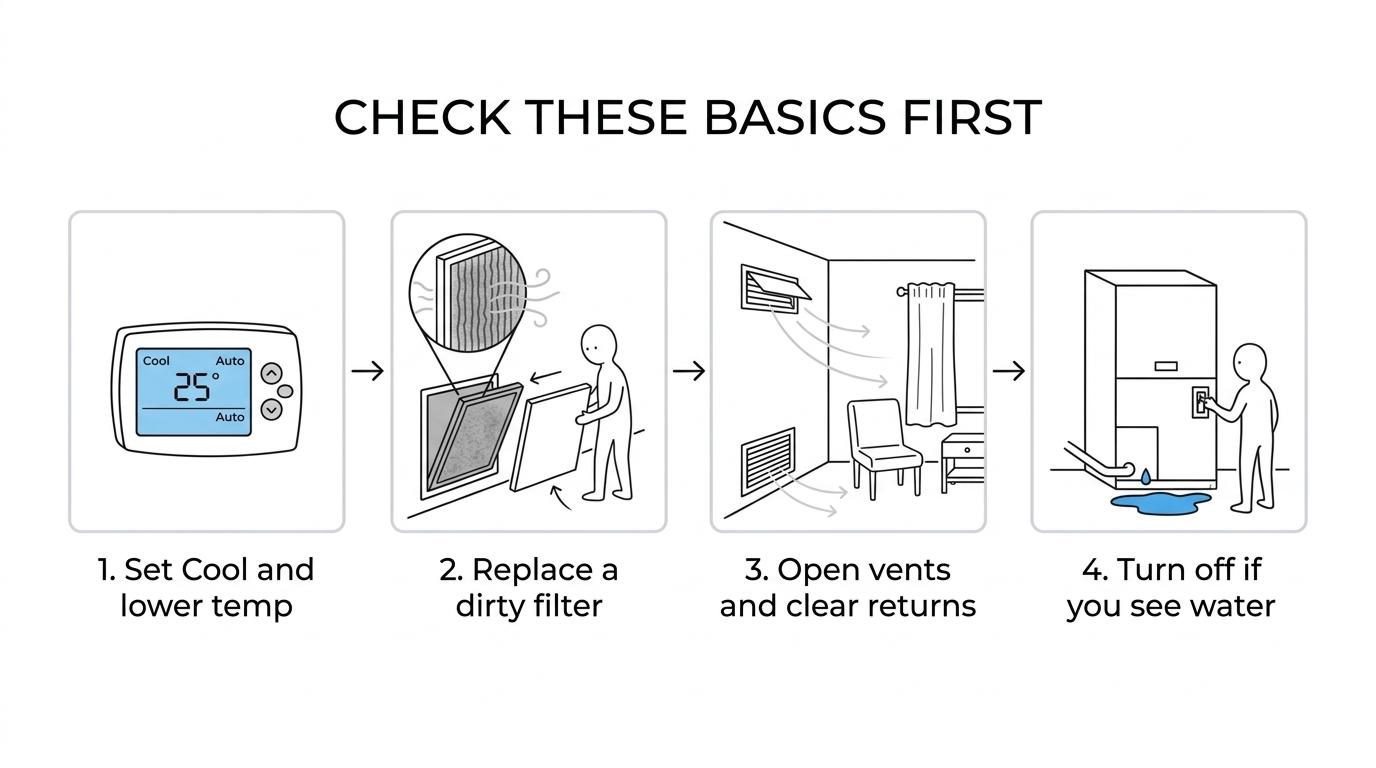
After checking the thermostat, move through these quick basics:
- Cool mode
- Fan on Auto
- Lower setpoint
- Fresh batteries
- Schedule override if needed
A clogged filter can choke cooling performance fast
A dirty air filter is one of the most common reasons an AC is not cooling well. The Department of Energy notes that a clogged filter restricts airflow, cuts efficiency, and reduces the system’s ability to cool the air properly. In practical terms, less air moves across the evaporator coil, which means less conditioned air reaches the rooms in your home.
In Orlando, where AC systems run hard for long stretches, filters can load up faster than many homeowners expect. Dust, pet hair, renovation debris, and high seasonal use all add up. If the filter looks gray, packed, or visibly dusty, replacing it is one of the smartest first steps you can take.
A neglected filter can also lead to a colder-than-normal coil. When airflow drops enough, the evaporator coil can begin to freeze. Once that happens, cooling falls off even more, and the system may eventually blow warmer air.
The chart below can help you match what you notice with what to check first.
| What you notice | What to check first | Safe first action |
|---|---|---|
| AC running, weak airflow | Filter condition | Replace dirty filter |
| Some rooms warm, some cool | Supply vents and returns | Open vents, clear obstructions |
| Outdoor unit running, indoor air not cool | Thermostat mode and filter | Confirm Cool mode, inspect filter |
| Water near indoor unit | Condensate drain issue | Turn system off and inspect drain area |
| Ice on refrigerant line or indoor coil area | Airflow restriction or refrigerant issue | Turn system off and call for service |
Indoor airflow restrictions often hide in plain sight
Even with a clean filter, your system can struggle if air cannot circulate freely through the house. Walk room to room and check the supply vents. Closed registers, rugs over floor vents, drapes pressed against wall grilles, and furniture blocking returns can all reduce performance.
Return air is just as important as supply air. If a large return grille is blocked by a bookcase, sofa, or stacked storage bins, the system may pull less air back to the air handler. That can lead to low airflow, uneven temperatures, and longer run cycles.
This check matters even more in homes where comfort issues seem limited to one side of the house or one specific room.
A few airflow checks are worth doing before you assume a major system failure:
- Supply vents: Make sure they are open and not blocked by furniture or curtains.
- Return grilles: Keep them clear so air can move back to the system.
- Interior doors: Leave them open if closing them noticeably changes room temperatures.
- Ceiling fans: Use them to support comfort, but remember they do not lower the thermostat reading.
The outdoor condenser needs space to release heat
Your air conditioner cannot cool the house well if it cannot dump heat outside. The outdoor condenser unit needs open airflow around it. Leaves, weeds, fencing, and stored items packed too closely around the unit can trap heat and lower performance.
Take a look at the condenser from a safe distance. If the top fan is running and air is blowing upward, that is a helpful sign, though it does not confirm everything inside the system is working correctly. If the unit is coated with yard debris or surrounded by overgrowth, gently clear the area around it.
Do not spray the unit aggressively, remove panels, or try to straighten fins without the right tools. A homeowner visual check is useful. Internal cleaning and mechanical diagnosis should be handled by a trained technician.
Condensate drain problems can stop cooling or cause system shutdowns
Air conditioners do more than cool. They also remove indoor humidity, and that moisture has to drain away through the condensate line. If the drain clogs, water can back up into the drain pan and trigger a float switch that shuts the system off to prevent overflow.
The Department of Energy includes drain checks among the basic troubleshooting steps for a reason. In humid Florida weather, condensate issues are especially common. A blocked drain can leave you with an AC that starts and stops, fails to cool normally, or stops altogether.
Look near the indoor air handler for standing water, dampness, or signs of overflow. If you see water where it should not be, turn the system off and arrange service. Running the unit while drainage is impaired can lead to water damage and mold concerns around the equipment.
Keep an eye out for these warning signs:
- Water near the air handler: A clogged condensate drain may be backing up.
- Frequent shutoffs: A float switch may be interrupting operation.
- Musty smell near the unit: Moisture buildup may be lingering in the drain area or pan.
Ice on the evaporator coil points to a deeper cooling problem
If you notice ice on the refrigerant line near the indoor unit, or visible frost around the coil area, turn the system off. Frozen coils are a symptom, not the root problem. The usual drivers are poor airflow, very dirty filters, blocked returns, or refrigerant issues.
When ice builds up, the coil cannot absorb heat properly. That means the system cools less while running more, which is the opposite of what you want during an Orlando summer afternoon.
Do not keep forcing the system to run. Letting the ice melt and then restarting without fixing the cause often leads to the same result. A technician can determine whether the issue started with airflow restriction or with the refrigerant side of the system.
Low refrigerant, duct leakage, and installation problems are common bigger-picture causes
If the thermostat is correct, the filter is clean, the vents are open, and the drain is clear, but the AC still is not cooling, the problem may be more technical. Low refrigerant charge, refrigerant leaks, duct leakage, dirty coils, or compressor trouble can all reduce cooling capacity.
Low refrigerant is not a maintenance item like topping off windshield fluid. Refrigerant circulates in a closed system. If the charge is low, there is usually a leak or another system problem that needs professional attention. Signs can include weak cooling, hissing sounds, ice on the coil or line, and longer run times.
Duct problems are another frequent cause of poor cooling. According to Building Science Education resources associated with the Department of Energy, many residential HVAC systems perform poorly because of installation issues, including improperly designed or leaking duct systems. If cooled air is escaping into the attic or crawlspace, the rooms inside the house may never get the airflow they need.
This is also why some homes seem to have had comfort issues from the very beginning. Equipment size, refrigerant charge, airflow setup, and duct sealing all matter. A system can be newer and still fail to cool properly if one of those fundamentals was off from day one.
What not to do when your AC is not cooling
A careful first check helps. Guesswork repairs usually do not.
If your system is underperforming, avoid these common mistakes:
- Keep lowering the thermostat far below normal
- Run the system with a frozen coil
- Open electrical panels
- Add refrigerant without diagnosis
- Ignore water around the indoor unit
Pushing the system harder rarely fixes the issue. It usually adds wear, raises energy use, and can turn a smaller repair into a larger one.
When professional AC repair makes sense for an Orlando home
If you have already checked the thermostat, replaced the filter, cleared the vents, and looked for drainage problems, and the house is still not cooling, it is time for a trained technician to step in. That is especially true if you notice ice, warm air from the vents, short cycling, breaker trips, or sudden jumps in electric bills.
A professional diagnosis can confirm whether the problem is tied to refrigerant charge, coil condition, blower performance, duct leakage, compressor operation, or control issues. It can also reveal whether the system has been struggling with an installation-related airflow problem that has gone unnoticed for a long time.
For homeowners in Orlando and nearby Central Florida communities, speed matters during hot and humid weather. Clear guidance, on-time service, and code-compliant work help take the guesswork out of an AC that will not cool. When the easy checks do not restore comfort, getting the system tested properly is the fastest path back to a cooler home.