
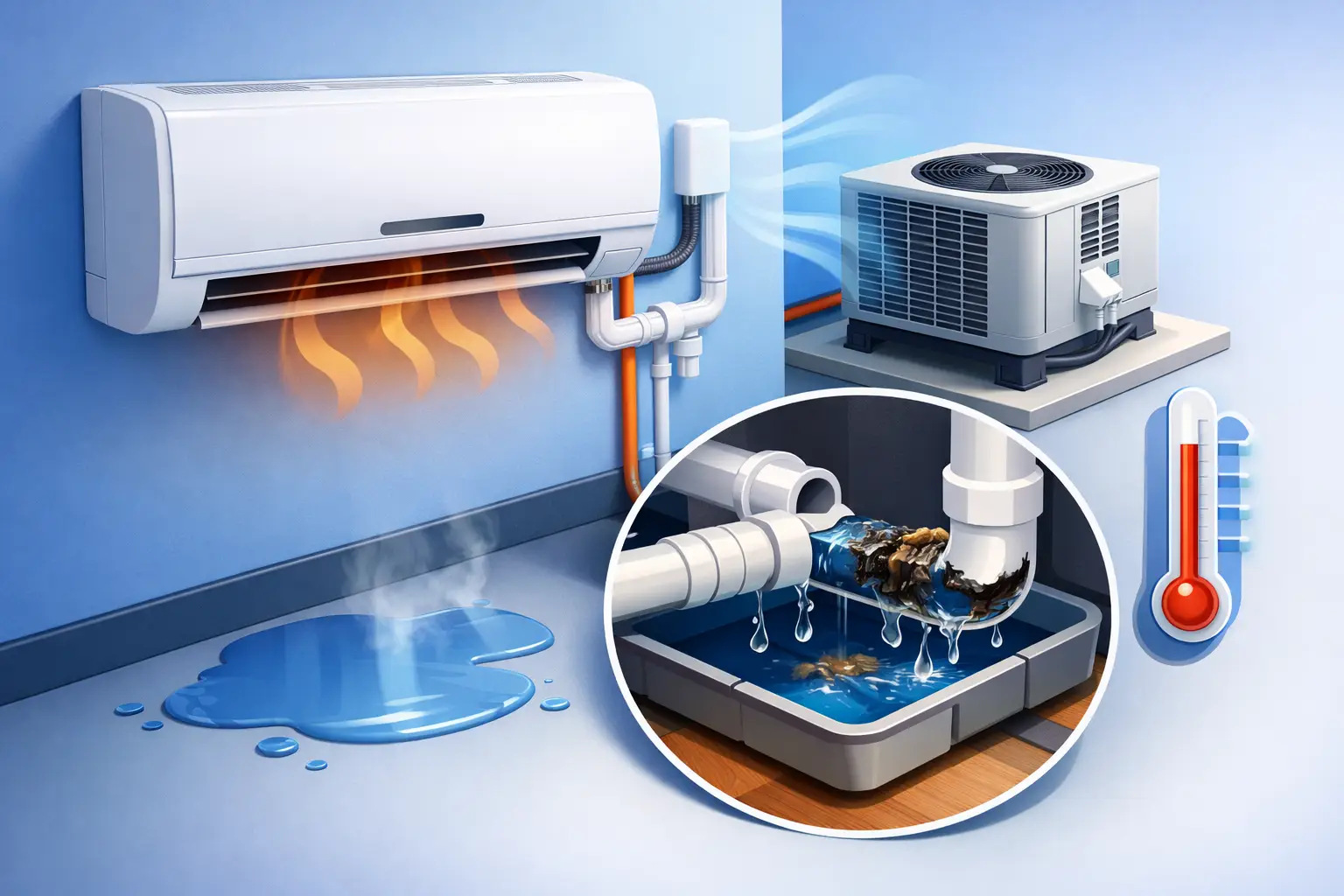
Your AC was cooling fine, then suddenly it stopped, the thermostat still looks normal, and now there’s water where it should never be. If you’re asking, can clogged drain line stop AC, the short answer is yes. In many Florida homes, a blocked condensate drain line can trip a safety switch and shut the system down to prevent water damage.
That shutdown is not a random glitch. It is your system trying to protect your home.
Can a clogged drain line stop AC operation?
Yes, it can. As your air conditioner runs, it pulls humidity out of the air. That moisture collects as condensation and drains away through the condensate line. When that line clogs with algae, sludge, dirt, or debris, the water backs up into the drain pan.
Once the pan fills, many systems are designed to shut off. A float switch or safety switch detects the rising water level and cuts power to the system before the overflow can damage ceilings, walls, insulation, or flooring. In other words, the AC may not be broken at all. It may be doing exactly what it was built to do.
That said, not every system reacts the same way. Some units shut down completely. Some keep the fan running but stop cooling. Older systems without a working safety switch may continue operating and leak water instead. That is why the symptoms can look a little different from one home to the next.
Why this happens so often in Florida
In Central Florida and the Tampa area, AC systems run hard for most of the year. More runtime means more condensation. More condensation means more opportunity for buildup in the drain line.
Florida’s humidity is a big part of the problem. When your system is constantly pulling moisture out of the air, even a small restriction in the line can turn into a backup fast. Add dust, microbial growth, and deferred maintenance, and a clogged drain line becomes one of the more common reasons an AC suddenly stops cooling.
This is especially common during the hottest months, when homeowners assume the issue must be low refrigerant or a failed compressor. Sometimes it is more straightforward than that.
Signs your AC stopped because of a clogged drain line
A clogged drain line usually leaves clues. The most obvious one is standing water in or around the indoor unit. You may also notice water stains near the air handler, a full auxiliary drain pan, or dripping around the closet, attic platform, or garage installation area.
Another common sign is an AC that will not turn on even though the thermostat is set correctly. If the float switch has been triggered, the system may look like it has power but refuse to cool. In some cases, the outdoor unit will not kick on at all.
You might also notice musty odors. When water sits in the pan or line, it creates a damp environment where buildup grows quickly. That smell does not always mean mold inside the ductwork, but it does mean moisture is sitting where it should not.
If your filter is dirty, airflow is weak, or the evaporator coil is starting to freeze, the situation can get more complicated. Reduced airflow can increase condensation problems, and a frozen coil can create extra water once it melts. That is why a proper diagnosis matters.
What actually clogs the drain line?
Most drain line clogs are not caused by one dramatic event. They build up over time.
The usual culprit is a mix of dust, dirt, algae, and slime inside the PVC drain line. If the system has gone too long without maintenance, that buildup gets thick enough to slow or block drainage. A dirty air filter can contribute by letting more debris move through the system. Poor installation can also play a role if the drain line has improper slope, low spots, or connection issues.
Sometimes the clog is near the access point and fairly easy to clear. Other times it is deeper in the line, or the backup has already caused secondary issues like water damage, corrosion, or a failed switch. That is where a simple drain problem becomes a bigger repair call.
Can you fix it yourself?
Sometimes, yes – carefully.
If you are comfortable around the system, the first step is to turn the AC off. That matters for both safety and preventing more water from accumulating. From there, check the drain pan and visible drain line access point. Some homeowners use a wet/dry vacuum on the outside drain termination to pull out the clog. In mild cases, that can restore flow.
You may also be able to flush the line through the cleanout with water or a manufacturer-approved cleaning method. The key word is careful. Pouring the wrong chemical into the line, forcing pressure through a brittle fitting, or missing a damaged pan can turn a manageable issue into a more expensive one.
If the system still will not restart after the line appears clear, there may be another problem. The float switch could still be tripped, the drain pan may be damaged, the coil may be frozen, or there may be an unrelated electrical or HVAC fault. At that point, guessing usually costs more time than it saves.
When it is time to call a pro
If there is active leaking, repeated shutdowns, signs of ceiling or drywall damage, or you cannot confirm the line is fully clear, call for service. The same goes for systems in attic installations, where water problems can spread fast and repairs get expensive quickly.
A professional should not just clear the line and leave. The real job is confirming why it clogged, checking whether the safety switch is working, inspecting the drain pan, verifying proper drainage, and making sure the system is cooling correctly afterward.
That matters because a clogged line is sometimes the first visible symptom, not the only issue. Low airflow, a dirty evaporator coil, poor installation, or neglected maintenance may have helped create the blockage in the first place. If those problems stay in place, the drain line may clog again soon.
For homeowners who want no referrals and no runaround, this is where a company like Al-Air makes practical sense. If the shutdown turns out to involve both HVAC performance and an electrical safety issue, you are not stuck coordinating multiple contractors.
How to keep it from happening again
The best prevention is regular maintenance. A tuned-up system drains better, runs cleaner, and is less likely to shut down over something that started small.
Routine service should include inspection of the condensate line, drain pan, float switch, air filter, and evaporator area. Keeping the filter changed on schedule also helps reduce the dust and debris that contribute to drain buildup. If your system sits in an attic or closet, it is smart to glance at the area occasionally for water stains or dampness.
If your AC seems to stop cooling every summer around the same time, do not treat that as normal. Repeated condensate backups usually point to a maintenance or drainage issue that has not been fully solved.
The bigger risk is not just losing cooling
When people ask, can clogged drain line stop AC, they are usually focused on comfort. That makes sense in Florida heat. But the bigger risk is often water damage.
A backed-up drain can stain ceilings, damage framing, soak insulation, and create conditions for microbial growth. If the system is in a secondary drain pan and the safety switch fails, the leak can go unnoticed longer than you would think. What starts as a simple clog can turn into repairs far beyond the AC itself.
That is why quick action matters. If your system shuts down and you see any sign of water, treat it like a real issue, not a wait-and-see problem.
What to do right now if your AC stopped
Start by turning the system off at the thermostat. Check around the indoor unit for standing water, a full drain pan, or visible leaking. If you know where the condensate drain line exits outside, see whether water is draining at all.
If the line looks clogged and you are comfortable trying a basic wet/dry vacuum pull, that may be enough to get things moving. But if the unit does not restart, if the pan keeps filling, or if there is any question about water damage or electrical safety, schedule service right away.
In Florida, an AC shutdown is never convenient. The good news is that a clogged drain line is usually fixable, and in many cases the system itself is still fine. The key is handling it before a simple drainage problem turns into a wet ceiling, a damaged air handler, or another miserable night without cooling.