
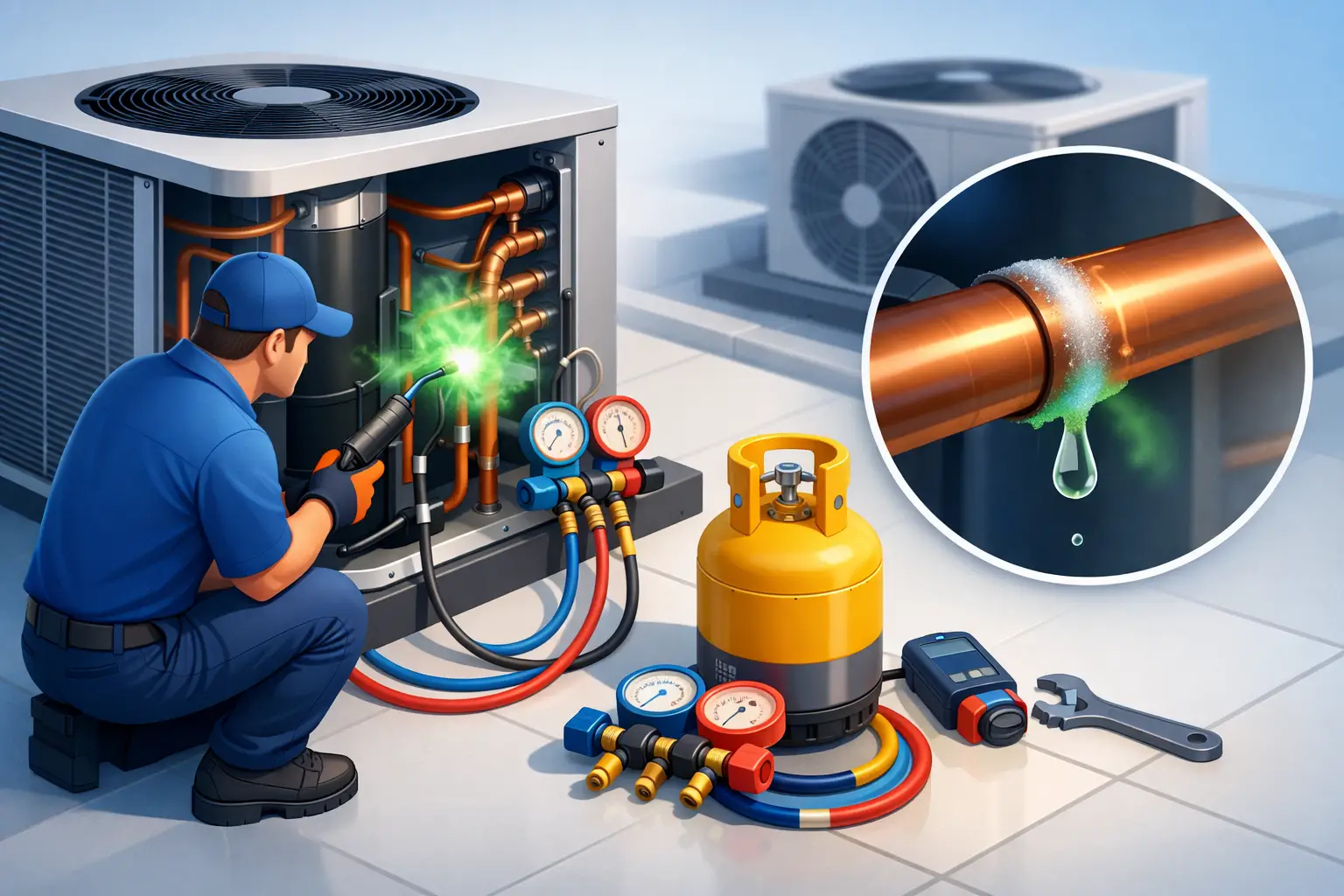
Your AC can still be blowing air and still have a refrigerant leak. That is what makes this problem easy to miss. If you are wondering how to spot refrigerant leaks before your system quits in the middle of a Florida heat wave, the key is to pay attention to small changes early – weaker cooling, longer run times, ice on the line, and higher electric bills.
A refrigerant leak is not a cosmetic issue. It affects comfort, efficiency, and the health of your AC system. Left alone, it can lead to frozen coils, compressor damage, and a much more expensive repair than it needed to be.
Why refrigerant leaks are a bigger deal than they look
Refrigerant is the chemical your AC uses to absorb heat from inside your home and release it outside. If the system loses refrigerant, it cannot cool properly. The unit may keep running, but it has to work harder and longer to hit the temperature on the thermostat.
In Central Florida, that matters fast. Air conditioners already run hard for much of the year. A system that is low on refrigerant can go from “a little off” to “not keeping up at all” pretty quickly, especially during long stretches of high heat and humidity.
There is another point homeowners often miss. Refrigerant does not get “used up” like gas in a car. If levels are low, there is usually a leak somewhere in the system. Topping it off without finding the source is a temporary patch, not a real fix.
How to spot refrigerant leaks at home
Some signs are obvious. Others blend in with general AC trouble. The best approach is to look at the pattern, not just one symptom.
Your AC is blowing, but not cooling like it should
This is usually the first red flag. Air may still be coming out of the vents, but it feels warmer than normal or takes much longer to cool the house. You may also notice certain rooms staying uncomfortable even though the system keeps running.
That does not always mean a refrigerant leak. Dirty filters, airflow restrictions, duct issues, or thermostat problems can cause similar symptoms. But if cooling performance has dropped and nothing else obvious explains it, low refrigerant should be on the list.
The system runs longer and your bill climbs
When refrigerant levels drop, the AC loses efficiency. It has to stay on longer to remove the same amount of heat from your home. That extra run time usually shows up on your utility bill.
A higher bill by itself is not proof of a leak. Florida weather, insulation issues, and aging equipment can all raise operating costs. Still, if your electric bill jumps at the same time your comfort drops, that combination is worth taking seriously.
Ice on the refrigerant line or evaporator coil
This one surprises people. Many assume ice means the system is extra cold and working well. It usually means the opposite.
Low refrigerant can cause the evaporator coil temperature to drop too far, which leads to condensation freezing on the coil or refrigerant line. You might see frost or ice buildup near the indoor unit or on the copper line outside the air handler area.
If you spot ice, turn the system off and call for service. Keep in mind that ice can also be caused by airflow problems, so the cause still needs to be diagnosed properly. Either way, running the system in that condition can make things worse.
You hear a hissing or bubbling sound
Refrigerant leaks sometimes make noise. A small leak can create a hissing sound as refrigerant escapes under pressure. A larger one may sound more like bubbling.
These sounds are not always easy to catch, especially with a noisy outdoor unit or a busy household. But if you hear a persistent hiss near the refrigerant lines, coil, or condenser, it is a sign worth checking.
The indoor air feels more humid than usual
Your AC does more than cool the air. It also removes humidity. When refrigerant levels are off, the system may struggle to dehumidify properly, leaving the house feeling sticky even when the thermostat setting looks normal.
In Florida, homeowners often notice this before they notice temperature changes. If the home suddenly feels muggy and the AC seems to be running constantly, a refrigerant issue could be part of the problem.
Common places where refrigerant leaks happen
Most homeowners are not going to open up the system and hunt for the exact leak location, and that is the right call. But it helps to know where problems commonly show up.
Leaks often develop in the evaporator coil, refrigerant line set, fittings and joints, service valves, or the outdoor condenser coil. Corrosion is a frequent cause, especially over time. Vibration, wear, poor installation, and age can also play a role.
This is one reason professional diagnosis matters. The symptom may look simple, but the repair can vary a lot depending on where the leak is and how severe it is.
What not to do if you suspect a leak
Do not ignore it and hope it holds through the season. Refrigerant problems usually get worse, not better. Continued operation can put strain on the compressor, which is one of the most expensive parts in the system.
Do not assume adding refrigerant is the full answer. If there is a leak, the refrigerant has to be escaping from somewhere. Without locating and repairing the source, the issue will come back.
And do not try a DIY refrigerant fix. This is not like changing a filter or cleaning a drain line. Refrigerant handling requires the right tools, training, and licensing. There are safety concerns, legal requirements, and a real risk of misdiagnosing the problem.
How HVAC pros confirm refrigerant leaks
If you schedule service, the technician will usually start by checking system pressures, temperature split, airflow conditions, and visible signs like oil residue around the lines or coil. From there, leak detection may involve electronic tools, UV dye, soap bubble testing, or nitrogen pressure testing depending on the situation.
That “it depends” part matters. A slow leak in an older coil is different from a loose fitting or damaged line set. In some cases, the repair is straightforward. In others, replacing a coil or discussing full system replacement makes more financial sense, especially if the unit is older and already struggling.
A trustworthy contractor should explain the options clearly. You should know what failed, what it will take to fix it, and whether the repair is likely to hold up.
When repair makes sense and when replacement is smarter
Not every refrigerant leak means you need a new AC. If the system is in otherwise good shape and the leak is isolated, repair can be the right move.
But age matters. So does refrigerant type. If you have an older system, a major leak in the coil can push you into a gray area where repair is technically possible but financially questionable. Spending heavily on a system near the end of its life is not always the best use of your money.
This is where straight answers matter. A good service company will not push replacement when a repair is reasonable. They also should not pretend a costly patch is a smart long-term solution if it is likely to fail again.
How to reduce the chance of future leaks
You cannot prevent every refrigerant problem, especially in aging equipment, but regular maintenance helps catch issues earlier. During a tune-up, technicians can spot pressure changes, inspect coils and connections, and find early warning signs before the system loses enough refrigerant to affect comfort.
Keeping filters clean and airflow consistent also helps reduce stress on the system. It will not stop corrosion or every mechanical failure, but it does give your AC a better chance of operating the way it should.
For homeowners who rely on their AC most of the year, routine maintenance is often the difference between a manageable repair and a mid-season breakdown.
When to call for help
If your AC is short on cooling, running nonstop, building ice, or making hissing sounds, do not wait for a full failure. Those are all signs the system needs professional attention. In Florida heat, a small refrigerant problem can turn into a major comfort issue fast.
At Al-Air, this is the kind of problem we see every day – homeowners trying to figure out whether their AC just feels off or whether something is actually wrong. If the signs are adding up, getting it checked early usually saves time, money, and stress.
If your house is not cooling the way it should, trust what you are noticing. AC systems usually give warnings before they quit completely, and catching those warnings early is how you stay ahead of bigger repairs.