
A ceiling stain near the hallway. A small puddle by the indoor unit. A drip you hear at night but can't place during the day. For a lot of Florida homeowners, that's the moment the air conditioner stops feeling like background equipment and starts feeling like a threat.
The frustrating part is that the leak often doesn't start where you see the damage. Water can travel along framing, insulation, drywall, or the outside of the air handler before it finally shows itself. By the time a stain appears, the actual trouble may be sitting inside a part often overlooked: the air conditioner condensation pan.
That pan has one job. It catches the moisture your AC pulls from the air and sends it safely away. When it does that job, you never notice it. When it doesn't, you get ceiling damage, damp insulation, musty smells, electrical risk, and a repair that gets more expensive the longer it sits.
This is similar to the way hidden bathroom leaks can fool homeowners into chasing the wrong cause. If you're dealing with interior moisture and want a good parallel example outside HVAC, this guide to expert help for leaking Melbourne showers shows how small water failures can create much larger structural problems when they go unchecked.
That Mysterious Water Stain What It Means for Your AC
Most homeowners don't wake up wanting to learn about condensate management. They learn because something looks wrong. The stain shows up after a humid week. The AC still cools, so it doesn't feel urgent. Then the spot grows, paint bubbles, or water starts dripping from a vent area or ceiling corner.
In many homes, that trail leads back to the air conditioner condensation pan or the drain system connected to it. The AC removes moisture as part of cooling. That water has to go somewhere, and if the pan or drain line stops handling it properly, your house becomes the backup container.
Why this gets missed
The pan is usually out of sight. In Florida homes, the indoor unit may be in an attic, garage closet, utility room, or another tucked-away spot. Homeowners often focus on whether the thermostat says the right number, not whether the unit is draining correctly.
That's why leaks from this system catch people off guard. The cooling can seem normal while the water side is failing.
Practical rule: If you see a new water stain anywhere near the path of your ductwork, air handler closet, or ceiling below the attic unit, treat it like an AC drainage issue until proven otherwise.
What that stain can mean
A water mark doesn't automatically mean the pan itself is cracked. It can also point to:
- A clogged primary drain line that makes water back up into the unit
- A full or wet secondary pan that's catching overflow
- A shutoff switch problem that didn't stop the system in time
- A damaged pan that lets water escape before it ever reaches the drain
- A separate moisture source such as a roof leak or plumbing leak
That's why guessing wastes time. The stain is a symptom, not the diagnosis.
Why Florida homes are different
Florida air handlers deal with long cooling seasons, high humidity, and regular moisture removal. That means the condensate system doesn't get much rest. The pan isn't handling an occasional drip. It's part of a working drainage system that runs hard for much of the year.
When homeowners ignore the first signs, they usually don't save money. They just trade a drain inspection for drywall repair, paint work, insulation replacement, or electrical troubleshooting later.
How Your Condensate Pan Protects Your Home
Think about a cold glass of iced tea on a hot day. Water beads up on the outside because warm, moist air touches a cold surface and releases moisture. Your air conditioner does the same thing on purpose. The evaporator coil gets cold, humid indoor air passes across it, and water condenses out of that air.
That water must be collected and moved out of the house. That's where the condensate system comes in.

The main parts working together
The primary condensate pan sits inside or directly under the air handler where the evaporator coil drains. This is the first collection point. Under normal operation, water lands here briefly and flows into the primary drain line.
The primary drain line carries that water away. If this line stays clear and properly pitched, the pan doesn't hold much water for long.
The secondary drain pan sits under the unit as backup protection. If the primary pan or drain system fails, this pan is supposed to catch the overflow before it reaches your ceiling, framing, or flooring.
The secondary drain line or visible overflow outlet acts like a warning signal. In many systems, it's routed where you can see it.
The float switch is the safety shutdown device. If water rises too high, the switch cuts power to cooling so the unit stops making more condensate.
If you want a good visual of how this ties into the rest of the system, this overview of the parts of a central AC unit helps place the pan, coil, and air handler in context.
Why Florida humidity changes the stakes
The amount of condensation an AC produces is directly tied to humidity. In central Florida, where summer humidity often hovers between 70-90%, an undersized or poorly maintained pan can quickly become overwhelmed, as noted in this breakdown of HVAC condensate drain pans and humidity impact.
That matters because generic advice often treats condensate like a minor side effect of cooling. In Florida, it isn't minor. Your AC is doing serious dehumidification for much of the year, and the condensate system has to keep up.
What the pan is and isn't designed to do
A lot of homeowners assume the pan is supposed to store water. It isn't. The pan is more like a transfer station than a tank. Water should collect briefly, then drain.
When I inspect systems with leak complaints, one of the most common misunderstandings is this: homeowners see standing water and think, "Well, that's what the pan is for." No. Standing water means the drainage process has slowed, stopped, or is starting to fail.
A healthy condensate system moves water out fast enough that backup protection rarely has to prove itself.
How the safety layers work
When everything is installed and maintained properly, the sequence is simple:
- Warm humid air hits the cold coil
- Water forms on the coil
- The primary pan catches it
- The drain line removes it
- The secondary pan and shutoff protect the home if the primary path fails
If any one of those layers breaks, the next layer has to save the house. If two layers fail together, that's when homeowners end up dealing with soaked drywall or an emergency shutdown in the middle of a hot day.
Common Condensate Pan Problems in Florida
Florida exposes weak spots in condensate systems fast. Heat, humidity, biological growth, and year-round runtime all work against pans and drain lines. The failures usually fall into a few predictable categories, but they don't all look the same when they start.
Clogs that start small and turn messy
A condensate drain line is dark, damp, and constantly exposed to moisture. That makes it a perfect place for slime, buildup, and debris to collect. Once the line narrows, water slows down. Once it stops moving, the pan fills.
The early version of this problem is easy to miss. You may hear a faint drip, notice a little water in the secondary pan, or catch a musty smell near the air handler. Later, the overflow becomes obvious.
This also ties into your home's comfort. If you want a broader look at why moisture control matters, this guide on how air conditioners remove humidity explains the bigger picture.
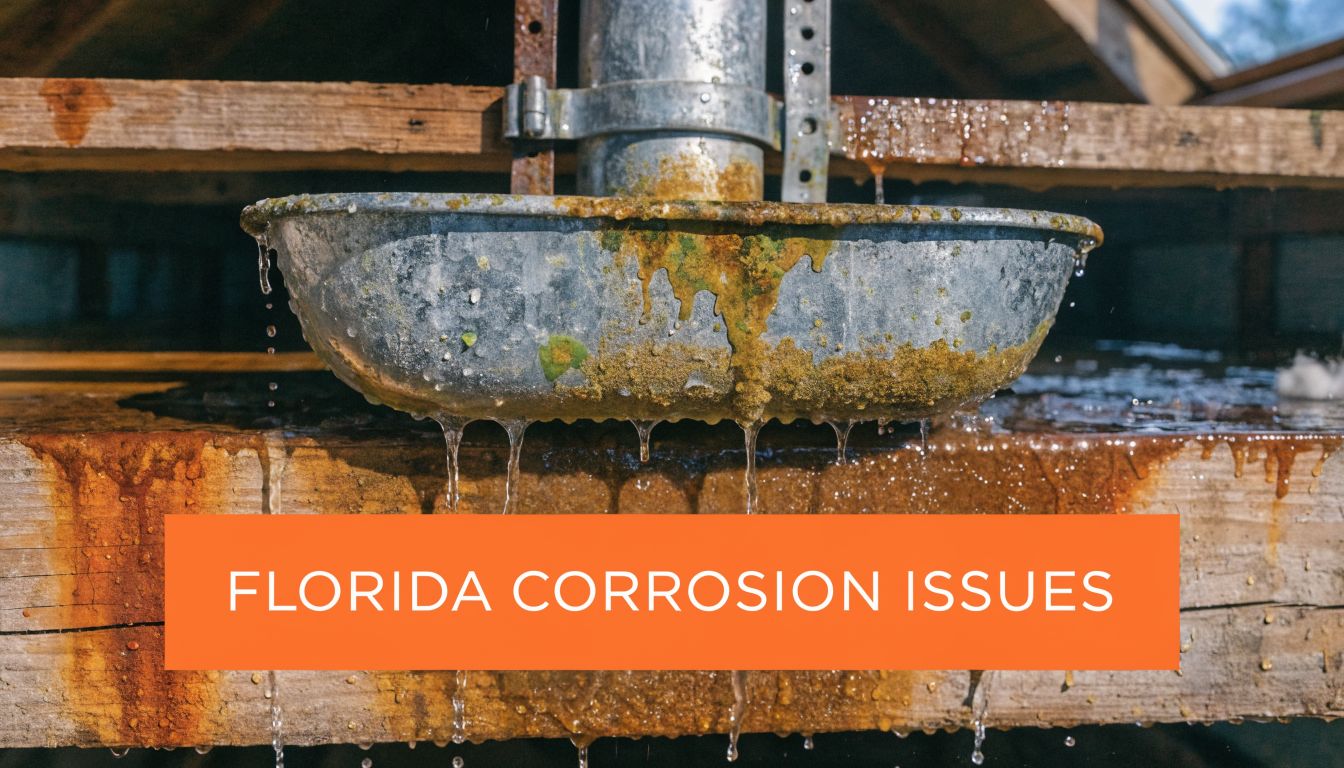
Rust and corrosion in older metal pans
Metal pans can last a long time, but they don't last forever. Once coatings wear down and moisture keeps sitting in the same areas, corrosion starts eating through the surface. The pan may look stained at first, then pitted, then thin enough to leak.
The trouble with rusted pans is that they often fail at the worst point. A tiny hole can let water drip onto framing, insulation, drywall, or electrical parts without creating a dramatic overflow you can spot right away.
Plastic pans that crack from thermal stress
This is one failure many homeowners never see coming. In the Greater Orlando region, plastic condensate pans experience accelerated deterioration from thermal cycling. Hot air from the furnace during winter heating causes the plastic to lose moisture and become brittle. Combined with Florida's high humidity, this stress creates micro-cracks that expand, allowing water to escape and damage electrical components. Proactive inspection every 12-18 months is critical to prevent this structural failure, according to this explanation of how condensate drain pans work.
That means a pan can look "mostly fine" until you get close enough to see hairline cracks, brittle corners, or slight warping. By then, the failure may already be active.
Field note: A cracked plastic pan often leaks sideways, not just downward. Water can travel along the cabinet or framing and show up far from the actual break.
Biological growth and dirty standing water
Standing condensate water doesn't stay clean for long. Once the system stops draining properly, bacteria and fungal growth can develop in the pan and nearby components. Homeowners usually notice the smell before they see the water.
A musty odor near supply vents or around the air handler closet is often the first clue. The concern isn't only odor. Moisture around the coil compartment and drain area can affect indoor air quality and make a small drainage issue feel like a whole-house comfort problem.
Why Florida homes need a tighter inspection mindset
The same setup that might limp along for a while in a drier climate can fail much faster here. In Florida, I don't like "wait and see" thinking on any drainage issue. Water problems almost never improve on their own.
The trouble pattern usually looks like this:
- First stage. Minor blockage, small rust spot, or hidden crack
- Second stage. Water appears in the secondary pan or around the unit
- Third stage. Ceiling stains, musty odors, float switch shutdowns, or cabinet damage
- Last stage. Structural repair, electrical risk, and larger HVAC work
Catching the problem early is less about luck and more about knowing what failure looks like before it becomes obvious.
Signs Your Condensate Pan Needs Attention Now
Homeowners usually get a warning before major overflow happens. The problem is that the warning doesn't always look dramatic. It may be a drip in the wrong place, a smell that comes and goes, or an AC that suddenly stops running even though the thermostat is calling for cooling.
The best approach is to use a simple sensory checklist. Look, listen, and smell.
What to look for outside the unit
Start with what you can safely see without opening equipment panels.
- Visible water in the secondary pan. Backup pans should be dry under normal conditions. If you see water there, the primary side isn't doing its job.
- Ceiling or wall stains. Even a light discoloration below an attic unit deserves immediate attention.
- Puddles near the air handler closet or garage unit. Water on the floor rarely stays "minor."
- Rust streaks or mineral marks. These often show that water has been escaping for longer than you think.
Many secondary drain lines are designed to exit in plain view, such as over a window, to act as a visual alarm. However, many homeowners don't know where to look or what it signifies. Ignoring visible dripping from a secondary line is a critical mistake because it's the final warning sign before the pan overflows and causes significant water damage to ceilings and walls. Regular visual checks are your best early-warning system, as explained in this video discussion of secondary drain visibility and overflow warning signs.
If you want a simple plumbing-side explanation of how condensate piping behaves, the Harrlie Plumbing condensate pipe guide is a useful companion read, especially for understanding why drainage path issues matter.
What to listen for
Drainage trouble often announces itself with sound before it creates visible damage.
Listen for:
- New dripping in the attic or utility closet
- Gurgling near the drain line
- Intermittent water sounds after the unit shuts off
- A sudden silence from the AC when it should be running
That last one matters. If your system shuts down on a hot day, don't assume the whole unit has failed. A float switch may have stopped cooling because water rose too high. That's a protection event, not a random electrical glitch.
If the AC is off and the house is warming up fast, check for drainage trouble before assuming you need a new thermostat or major equipment repair.
What to smell
Musty odor near return vents, the indoor unit, or certain rooms can point to moisture sitting where it shouldn't. The smell may be strongest when cooling first starts. That often means stagnant water or biological growth is present in the condensate area.
A clean, properly draining system shouldn't make the house smell damp.
When the sign is subtle but urgent
Some of the worst water damage starts with a symptom homeowners talk themselves out of. A tiny stain. One wet spot in a secondary pan. A drip from a pipe outside that "only happens sometimes."
If you're seeing any of those and you know where your indoor unit is, don't wait for the problem to become obvious. Condensate issues are one of those repairs where early action is cheaper, cleaner, and much less disruptive.
DIY Maintenance vs Professional HVAC Service
There are a few safe things homeowners can do to reduce risk. There are also jobs that should stop at the edge of the cabinet. Knowing the difference matters because a simple maintenance step can help, but a confident DIY mistake can create a larger leak or an electrical hazard.
What you can safely do yourself
Homeowner maintenance should stay external and visual. The goal is prevention and early detection, not deep repair.
Start with a visual inspection. Check the area around the indoor unit, the secondary pan if it's visible, and the drain line exit outside. You're looking for standing water, obvious rust, dirt buildup, algae-like slime, or signs of overflow.
Use a wet/dry vacuum at the outside drain termination. This is one of the safer and more effective homeowner tasks. If the line has a minor clog near the outlet, suction from a shop vac can sometimes pull it free.
Replace dirty filters on schedule. Good airflow supports proper coil performance and helps reduce the chain of problems that can contribute to excess water issues.
Watch the warning points. If your system has a visible secondary drain outlet, add it to your routine walk-around after heavy cooling days.
For broader preventive care, a regular house air conditioner maintenance plan helps catch these issues before they reach the ceiling.
What you should not do
Don't open the air handler cabinet unless you're trained and equipped to work around electrical components and internal HVAC parts. Don't bypass a float switch. Don't start prying on a brittle pan to "see if it's bad." Don't pour random chemicals into the system because an online forum said it worked.
Those shortcuts create the two things homeowners want least: hidden damage and an uncertain diagnosis.
DIY vs. Professional Condensate System Tasks
| Task | DIY (Homeowner) | Call a Pro (Al-Air Technician) |
|---|---|---|
| Check for visible water | Yes. Safe visual inspection around unit and pan area. | If water is persistent, recurring, or hidden inside cabinet. |
| Clear exterior drain outlet with wet/dry vac | Yes. A reasonable first step from outside access only. | If suction doesn't restore drainage or clog returns quickly. |
| Replace return air filter | Yes. Follow system size and airflow requirements. | If filter changes don't resolve icing, leaks, or humidity issues. |
| Inspect pan for obvious cracks or rust | Yes, if visible without opening equipment. | If pan is inside cabinet, hard to access, or visibly damaged. |
| Test or replace float switch | No. | Yes. This involves safety controls and electrical handling. |
| Repair or replace condensate pan | No. | Yes. Correct fit, access, and drainage setup matter. |
| Correct drain slope or install overflow protection | No. | Yes. This is installation and code work. |
Why code compliance makes this a professional job
Florida building codes require more than "something that catches water." Secondary drain pans must be at least 1-1/2" deep and extend 3" wider than the unit. Code also requires protective measures such as a float-activated shutoff switch meeting UL 508 standards or a separate, properly sloped drain line. That code framework is outlined in this review of Florida attic condensate rules and overflow protection.
For homeowners, that means replacement isn't just about finding a pan that physically fits. The installation has to protect the house properly. For landlords and property managers, the stakes are even higher because overflow protection also affects liability.
Bottom line: If the fix involves wiring, cabinet access, pan replacement, drain reconfiguration, or safety device testing, that's professional HVAC work.
What works and what doesn't
What works is simple, repeatable maintenance. Visual checks. Clean filters. External drain suction with a wet/dry vac. Prompt service when something changes.
What doesn't work is waiting for a shutoff to "reset itself," ignoring water in the emergency pan, or treating a recurring clog like a one-time fluke. Repeated symptoms usually mean the system needs cleaning, repair, or a hardware replacement somewhere in the condensate path.
Condensate Pan Repair and Replacement Costs
When homeowners ask about condensate pan cost, what they're really asking is whether this is a small service call or the start of a bigger repair. The honest answer depends on access, pan condition, and whether the problem is the pan itself or the drainage system around it.

Repair or replacement
Small issues sometimes allow a limited repair. A technician may determine that the pan isn't the primary problem and that the correct fix is clearing a blockage, correcting pitch, or restoring proper drainage. In some cases, a minor crack in an accessible secondary pan can be addressed temporarily while you plan the permanent solution.
But most failing pans don't age gracefully. Once a pan is brittle, rusted through, warped, or repeatedly leaking, replacement is usually the more dependable route.
What changes the final price
Several job conditions affect how simple or difficult the work becomes:
- Unit location. An attic air handler is usually harder to access than a garage or utility closet unit.
- Which pan failed. A secondary pan under the unit is typically easier than an internal primary pan tied closely to the coil section.
- Material and fit. Standard pans are more straightforward than unusual sizes or tight-clearance installations.
- Related repairs. A pan issue often comes with drain cleaning, switch testing, or water-damage checks.
- System age. Older equipment can make pan replacement less practical if multiple parts are already deteriorating.
A straightforward secondary pan replacement may run in the range of $250-$600 for a straightforward secondary pan replacement. That's a planning example, not a universal quote. Final pricing varies with access, configuration, and what the technician finds during inspection.
What a quote should include
A good HVAC quote should spell out the actual scope, not just "replace pan."
Look for details such as:
- Diagnosis of the leak path
- Whether the primary or secondary pan is affected
- Drain line cleaning or testing
- Float switch inspection
- Any code-related correction needed
- Whether surrounding insulation or framing shows water impact
This kind of walkthrough helps you compare estimates fairly.
For a visual look at how technicians approach pan replacement in the field, this video gives helpful context:
When replacement may point to a larger decision
Sometimes the pan repair is simple. Sometimes the pan is the part that reveals an older system has several overlapping problems. If the unit is hard to service, the drain design is poor, and multiple components are worn, your technician may discuss whether repairing the condensate system alone still makes sense.
That's not upselling by itself. It's what happens when one failed part exposes the condition of the whole installation.
Trust Al-Air for Fast and Reliable AC Repairs
Condensate issues don't stay contained for long. A small drainage failure can turn into damaged drywall, damp insulation, musty indoor air, and an AC shutdown at the worst possible time. Homeowners in Greater Orlando deal with enough humidity already. The cooling system shouldn't add water problems to the list.
Al-Air Corporation handles these problems with the kind of local experience that matters. The company serves homeowners across Greater Orlando, including Clermont, Davenport, Kissimmee, Poinciana, Tampa, Hillsborough, and Pasco County. That means technicians are working in the same climate conditions that drive these leaks in the first place.
Why local experience matters
Florida condensate problems aren't identical to what technicians see in drier regions. Long cooling seasons, heavy humidity, attic installations, and overflow risk all change how a proper inspection should be done. A good technician doesn't just stop at "the line was clogged." They check the pan condition, drainage path, safety shutoff, and signs of hidden water damage.
That kind of inspection protects more than comfort. It protects the house.
What homeowners need during a leak call
When water is involved, people don't want vague answers. They want to know:
- Where the water is coming from
- Whether the AC is safe to run
- What needs repair now
- What can wait
- What the options will cost before work starts
Al-Air's approach lines up with that reality. Certified technicians, clear communication, transparent options, free estimates, and round-the-clock help for urgent breakdowns make a real difference when a ceiling stain or active leak has you trying to make decisions fast.
If your air conditioner condensation pan is leaking, your secondary drain is dripping in plain view, or your unit shut off and you suspect overflow protection kicked in, getting a professional inspection quickly is the smart move.
Frequently Asked Questions About Condensate Pans
How often should a condensate pan be checked?
At minimum, homeowners should visually check accessible parts of the condensate system during routine filter changes and any time they notice unusual water, odor, or shutdown behavior. If the indoor unit is in the attic or another hard-to-see location, regular professional maintenance is the safer approach.
In Florida, frequent cooling and heavy humidity make it especially important not to ignore long gaps between inspections.
Is standing water in the pan normal?
A little moisture during operation isn't unusual. Standing water that remains is not something to shrug off. The pan is supposed to move water through the drain path, not store it for long periods.
If you can clearly see water sitting in a secondary pan, treat that as a warning sign.
Should I pour bleach into the drain line?
Homeowners hear mixed advice on this. The problem is that chemical shortcuts get treated like universal solutions when they aren't. Some technicians use cleaning agents in controlled ways, but as a homeowner, it's smarter to avoid experimenting inside the system unless your HVAC contractor has given you specific instructions for your setup.
A wet/dry vacuum at the outdoor drain exit is usually the safer first step for a minor suspected clog. If the clog comes back, call for service.
Is vinegar better than bleach?
Same answer in principle. People often want one simple liquid solution for every drain issue. Real systems don't work that way. The right approach depends on the line material, severity of buildup, access, and whether the blockage is even near the area you're treating.
If the line is repeatedly backing up, the answer usually isn't stronger DIY chemistry. It's a proper inspection and cleaning.
Why did my AC suddenly stop cooling when it was working fine earlier?
One common reason is that the float switch shut the system down because water rose too high in the condensate area. That's a protective response designed to stop overflow before it causes more damage.
When that happens, don't keep forcing the system to run. Find out why the water level rose in the first place.
A shutdown tied to condensate overflow is often the system protecting your home, not the system failing without warning.
What is a condensate pump?
A condensate pump is used when water can't drain by gravity to a suitable discharge point. It collects water and pumps it out through a line to the proper location. These are more common where the equipment layout doesn't allow natural drainage.
In many Florida attic setups, gravity drainage is more typical, but some homes and retrofit situations still use pumps.
Can a bad condensate pan affect indoor air quality?
Yes. When water sits in the pan or nearby drain components, that damp environment can support moldy or musty conditions. Homeowners often notice it as an odor near vents or near the indoor unit first.
The pan itself isn't "blowing mold into the house" in a simple one-step way, but drainage failure can contribute to moisture problems inside the air handler area. That's enough reason to take it seriously.
Can I keep running the AC if the secondary drain is dripping?
You shouldn't ignore it. A visible secondary drain is often the last warning before overflow damage reaches ceilings or walls. The system may still cool for the moment, but the backup path is telling you the primary path has a problem.
That's not a sign to wait until the weekend.
How do I know if the pan is cracked or if the line is clogged?
Homeowners usually can't confirm that from symptoms alone. A clogged line often causes backup and overflow, while a cracked pan can let water escape even when the drain line is partly functional. Both can create similar stains or puddles.
A technician typically determines the difference by inspecting the pan condition, water path, and drainage performance together.
Is replacing the pan always worth it on an older system?
Not always, but often. If the rest of the system is still in serviceable condition and the failure is isolated to the condensate setup, replacing the pan can make perfect sense. If the unit is older, difficult to access, and showing multiple signs of wear, your contractor may discuss bigger-picture options.
The key is getting a diagnosis based on the whole installation, not just the wet spot.
If you've spotted water near your indoor unit, a ceiling stain under the attic, or a visible secondary drain drip, Al-Air Corporation can help you pinpoint the cause and fix it before minor moisture turns into major damage. Their certified team serves Greater Orlando homeowners with clear communication, free estimates, and fast repair support when condensate problems can't wait.