
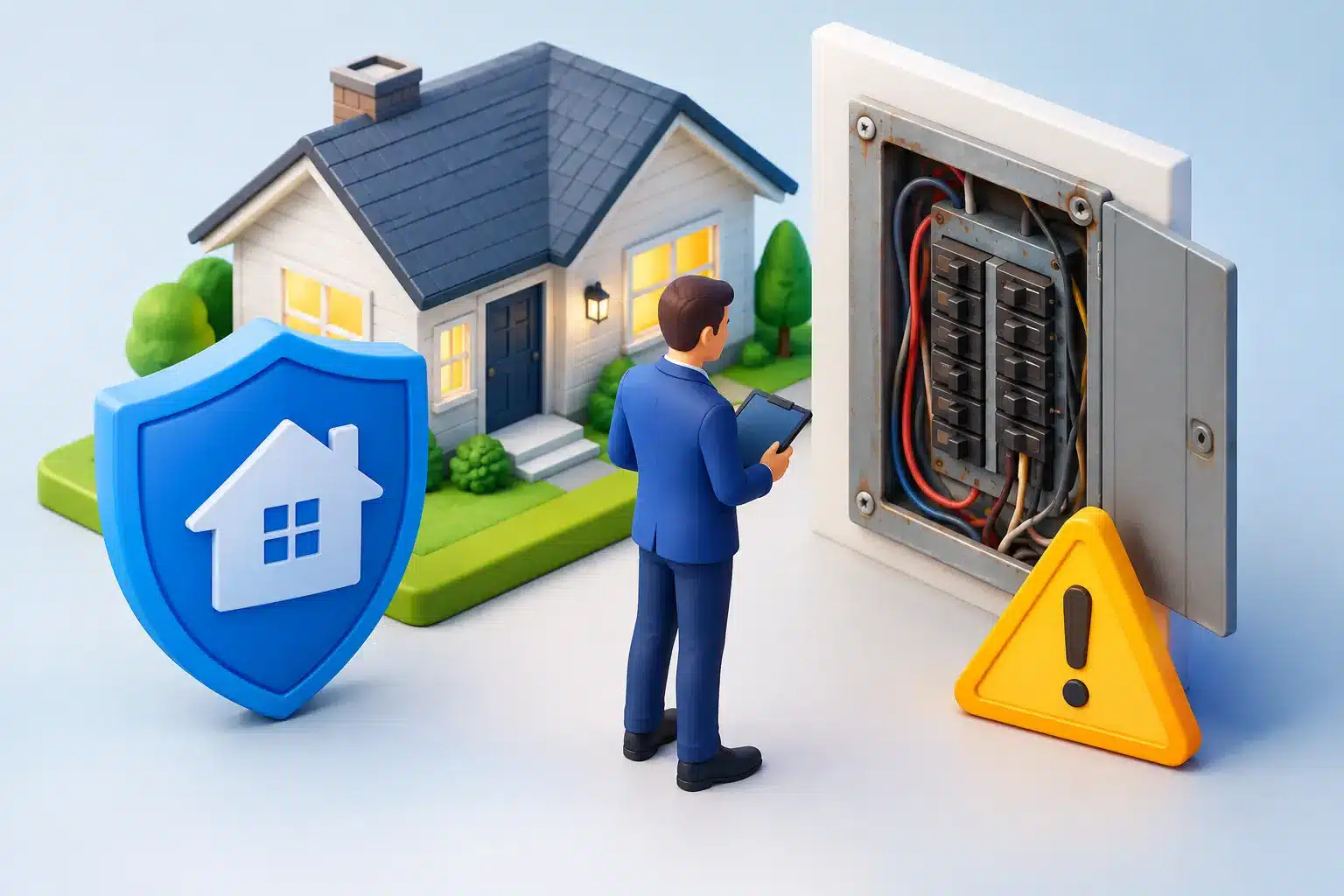
A new insurance notice can turn an ordinary weekday into a stressful one: replace the electrical panel, provide documentation, or risk losing coverage. Insurance issues with old panels are common in Central Florida and Tampa homes, particularly properties built decades ago that still rely on original electrical equipment. The good news is that a notice is not automatically a sign your home is unsafe. It is a prompt to get clear answers, understand the condition of the panel, and address the problem before a deadline creates unnecessary pressure.
For homeowners, the practical concern is simple. You need safe, code-conscious work from a licensed electrician, a clear estimate before work starts, and documentation that helps you move forward with your insurer. No guessing, no referrals, no runaround.
Why insurers flag older electrical panels
Insurance companies assess risk across thousands of homes. An aging panel can raise concerns because it is the control center for every circuit in the house. If breakers fail to trip, connections overheat, moisture damages components, or the system is overloaded, the chance of an electrical fire or equipment damage can increase.
Age alone is not always the deciding factor. A well-maintained panel from a reputable manufacturer may still be serviceable, while a newer panel with corrosion, loose connections, improper wiring, or signs of overheating can be a real concern. Insurers may also look at the panel brand, the presence of fuses instead of breakers, electrical capacity, and findings from a four-point inspection.
Florida adds a few local realities. Humidity, storm exposure, salt air in coastal areas, and heavy year-round air conditioning use can all put more demand on a home’s electrical system. A panel that seemed adequate years ago may struggle after an AC replacement, pool equipment addition, kitchen remodel, or EV charger installation.
Insurance issues with old panels are not all the same
The phrase old panel covers several very different situations. Some homes simply have a panel that is nearing the end of its useful life. Others have equipment associated with known reliability concerns, such as certain Federal Pacific Electric, Zinsco, Sylvania-Zinsco, or fuse-box installations. Insurers often scrutinize these more closely because of their history and the difficulty of verifying safe operation from a visual inspection alone.
Then there are condition problems. Rust inside the enclosure, water intrusion, scorched breaker connections, missing knockouts, doubled-up wires where they do not belong, or breakers that do not match the panel are all issues an electrician may find. Those are not cosmetic details. They can affect how safely electricity moves through the home.
Capacity is another factor. Many older homes were built with 100-amp service or less, before central air systems, large kitchen appliances, home offices, and electric vehicle charging became common. A 100-amp panel is not automatically unacceptable. It depends on the home, the actual load, the condition of the equipment, and what you plan to add. But if the panel is full, overloaded, or cannot support a new HVAC system, an upgrade may be the sensible option.
What an insurance company may ask you to provide
Every carrier has its own underwriting rules, so the exact request varies. You may receive a renewal letter, an inspection report, a request for photos, or a deadline to complete repairs. Read it carefully. It may call for a licensed electrician’s evaluation, a panel replacement, proof of permit closure, or paid invoices showing the work was completed.
Do not assume a general home inspection report is the final word. Inspectors can identify visible concerns, but they do not always perform the detailed diagnostic work of a licensed electrician. If the report uses broad language such as repair as needed or panel requires further evaluation, schedule an electrical assessment promptly. Waiting until the final week can limit your options and make a routine upgrade feel like an emergency.
Keep copies of the electrician’s written findings, estimate, permit information when applicable, final invoice, and clear photos of the completed panel. If your insurer needs a specific form completed, ask early rather than submitting paperwork that does not answer its question.
When a panel upgrade makes sense
A panel upgrade is not a one-size-fits-all fix, and no honest contractor should present it that way. If the existing panel is safe, has sufficient capacity, and is accepted by your insurer, repairs or updated breakers may be enough. Replacing a panel only because it looks old is not always the best use of your budget.
An upgrade becomes more likely when the panel is a flagged brand, has damage or unsafe wiring conditions, lacks room for needed circuits, or does not support the home’s electrical load. It can also make sense when you are replacing an aging air conditioner. High-efficiency equipment may need dedicated circuits, properly sized breakers, and electrical components that meet current installation requirements.
That is where using one contractor for HVAC and electrical can reduce friction. Instead of coordinating separate companies and hoping the electrical side is ready when the AC installation begins, the work can be evaluated together. For Florida homeowners facing a failed AC system in summer, that coordination can matter as much as the equipment itself.
Avoid quick fixes that create bigger problems
When an insurance deadline is close, homeowners understandably look for the fastest and least expensive answer. But electrical work is one area where shortcuts can create more trouble than they solve. Swapping breakers without addressing panel damage, installing mismatched components, hiding corrosion, or adding circuits to an already overloaded panel can put your home and coverage at greater risk.
Be cautious about any recommendation made without an on-site assessment. A reliable electrician should inspect the panel, service equipment, visible wiring conditions, grounding and bonding, load requirements, and the scope of the insurer’s request. You should understand what needs to be corrected, what is optional, what permits may be required, and what the total price includes.
If a full replacement is the right answer, ask whether the estimate covers the panel, breakers, labeling, grounding upgrades, permit coordination, inspections, and restoring power safely. A low initial number can become expensive if essential work appears later as an add-on.
How to handle an insurance notice without the stress
Start by checking the deadline and the exact language in the insurer’s notice. Then arrange an evaluation with a licensed electrical professional who can explain the findings in plain English. If replacement is needed, get a written scope of work and make sure the documentation will support the insurer’s requirements.
It also helps to think one step ahead. If you have been considering a new AC system, EV charger, generator connection, hot tub, or home addition, mention it during the electrical evaluation. Completing related work together may be more efficient than upgrading the panel now and reopening it later for additional circuits.
Budget matters, especially when a panel issue appears unexpectedly. A clear estimate lets you compare the cost of a repair against a replacement without pressure. Financing may be useful for a larger upgrade, but the decision should still be based on the condition of your system, your insurance requirement, and your home’s future electrical needs.
A safer panel also makes future home decisions easier
Electrical panels rarely get attention until an insurer, buyer, inspector, or failed breaker forces the issue. Taking care of a legitimate concern now can remove a coverage obstacle, reduce the chance of an inconvenient failure, and make future HVAC or home upgrades far less complicated.
If you receive a notice, treat it as a reason to get facts instead of a reason to panic. A qualified local electrician can tell you whether your panel needs a targeted repair, a full replacement, or simply the right documentation to show that your home’s electrical system is in good shape.