

You step in from an Orlando afternoon, shut the front door, and feel that wave of cool air hit your face. It feels simple. Thermostat down, house cool, problem solved.
But inside your system, one hidden part is doing the hardest job of all. If you've ever wondered what does an evaporator coil do, the short answer is this: it's the indoor component that pulls heat and moisture out of your air so your home feels cool instead of sticky.
That matters a lot in Central Florida. In a dry climate, cooling alone can feel decent. Around Orlando, Clermont, Davenport, and Kissimmee, comfort depends on both lower temperature and lower humidity. If the evaporator coil isn't doing its job well, your house can feel clammy even when the AC seems to be running nonstop.
Your AC's Unsung Hero The Evaporator Coil
You come inside after a sticky Orlando afternoon, lower the thermostat, and wait for that dry, cool relief. If the house still feels damp or takes too long to cool, the part deciding your comfort is often the evaporator coil.
The evaporator coil is the indoor coil hidden inside your air handler or furnace cabinet. It does the hard indoor work of air conditioning by absorbing heat from the air your system pulls in. If you have ever reviewed the parts of a central AC unit, you have probably noticed how little attention this piece gets compared with the outdoor unit. That is partly because homeowners rarely see it unless a technician opens the cabinet.
That hidden location causes a lot of confusion. Many Orlando-area homeowners know the big box outside is part of the AC, but they are less sure what is happening indoors besides air blowing through vents. A simple way to separate the parts is to remember that the evaporator coil is the cold indoor coil, while the outdoor coil releases the heat your system collected from inside.
It helps to picture the whole AC system like a relay team. The blower moves household air. The evaporator coil pulls heat and moisture from that air. The outdoor unit carries that heat away and dumps it outside.
Florida makes this part matter even more.
In Central Florida, comfort is not only about temperature. Humidity changes how a room feels on your skin, how long towels stay damp, and whether the house starts to smell musty. A healthy evaporator coil helps with all of that, which is why coil problems often show up as clammy rooms, longer run times, and water concerns around the air handler before a homeowner ever thinks, "something is wrong with the coil."
If you want a simple big-picture explanation of how the full cooling cycle works, DLG Electrical's easy aircon guide gives a helpful overview. Here in Orlando, though, the humidity load is heavier than in many other places, so the evaporator coil has to do more than cool the air. It has to help dry it out enough for your home to feel comfortable.
That is one reason local maintenance matters. In the Al-Air Corporation service area, from Orlando to Kissimmee and Clermont, we often see systems that are still producing some cool air but are falling behind on moisture removal. For a homeowner, that difference can feel subtle at first, then very frustrating.
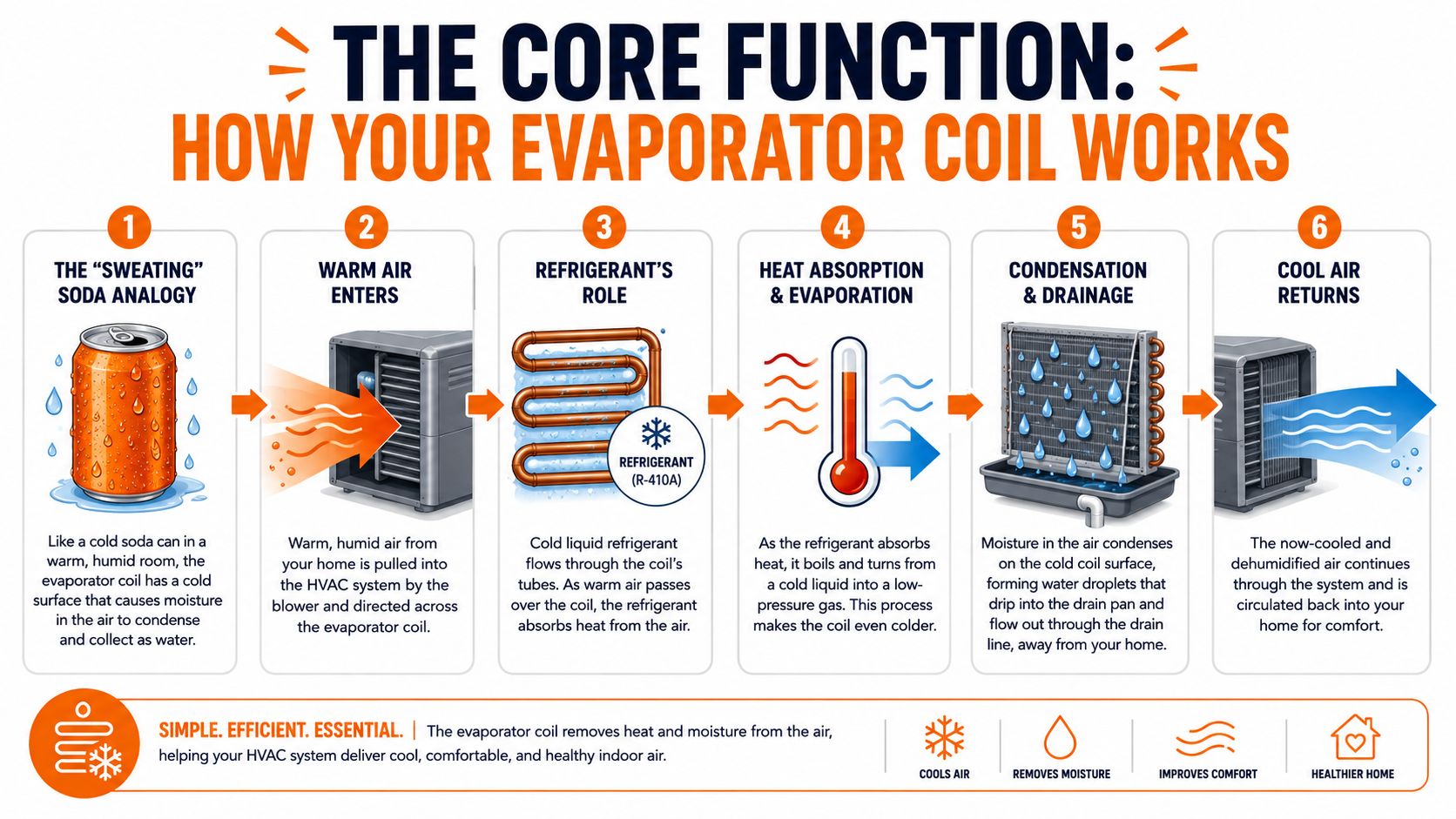
The Core Function How Your Evaporator Coil Works
On a July afternoon in Orlando, you set the thermostat to 74, the AC is running, and the house still feels a little sticky. That usually means the system is trying to do two jobs at once. It has to remove heat, and it has to pull moisture out of the air. The evaporator coil is the part that starts both jobs.
A cold drink can on a humid day shows the same basic science. Water beads up on the outside because humid air touches a cold surface and drops some of its moisture. Your evaporator coil does that inside the air handler while also pulling heat out of the air passing over it. Lennox's evaporator coil glossary describes it as the indoor heat exchanger where refrigerant boils from liquid to vapor as it absorbs heat from return air.
What the coil actually is
In many systems, the evaporator coil is shaped like an A, so technicians often call it an A-coil. It sits inside the indoor unit above or beside the blower. Refrigerant flows through small tubes, and thin metal fins help that refrigerant make better contact with the air moving across the coil.
More contact area means faster heat transfer.
That matters because the coil itself is not “blowing cold” into the house. The blower moves warm household air across a cold coil surface, and the refrigerant inside the coil absorbs that heat. As noted earlier, this indoor coil is one of the key points where the refrigeration cycle does its work.
What happens, step by step
The process is easier to follow if you track the air and the refrigerant separately.
- Warm, humid air from your home returns to the system. This is the air your AC needs to treat.
- The blower pushes that air across the evaporator coil. The coil is colder than the air.
- Heat moves from the air into the refrigerant. The refrigerant absorbs that heat and changes from a cooler liquid to a vapor.
- Some of the moisture in the air condenses on the coil. It forms water droplets, then drains away through the condensate system.
- Cooler, drier air goes back into your rooms. That is why the house feels more comfortable when the coil is working properly.
- The refrigerant carries the captured heat outdoors. The rest of the system releases that heat outside and prepares the refrigerant to repeat the cycle.
Two ideas help clear up the part that confuses many homeowners.
First, air conditioners move heat. They do not create cold in the way a space heater creates heat.
Second, the coil also removes water from the air. In Florida, that dehumidifying job has a huge effect on comfort. If you want a closer look at that part of the process, Al-Air explains how air conditioners remove humidity in plain language.
Why this process matters so much in Orlando
In drier climates, a system can cool a room and still leave the air feeling fairly comfortable. Around Orlando, Winter Garden, Clermont, and Kissimmee, high outdoor humidity puts much more pressure on the evaporator coil. Even when the temperature drops, the home can still feel muggy if the coil is dirty, airflow is restricted, or the system is not draining condensation the way it should.
That is why local homeowners often notice coil trouble as a comfort problem first. The house may feel cool-ish instead of cool and dry. Towels stay damp longer. Rooms feel clammy by evening. Those are everyday signs that the coil may be struggling with moisture removal, not just temperature control.
For another simple overview of how the whole refrigeration cycle fits together, DLG Electrical's easy aircon guide is a helpful companion resource. In Central Florida homes, though, the evaporator coil has to handle a heavier humidity load than many systems in milder, drier areas, which is one reason Orlando homeowners benefit from local service and coil-focused maintenance from teams like Al-Air Corporation.
More Than Just Cool Air Coil Health and Your Home
A lot of Orlando homeowners notice evaporator coil trouble in a very ordinary way. The thermostat says the house is cooling, but the air still feels sticky by late afternoon, the bedrooms feel stuffy, and a faint musty smell starts showing up near the vents. That points to a comfort problem that goes beyond temperature alone.

The evaporator coil affects how your whole home feels. A clean coil with proper airflow helps your AC remove heat and moisture at the same time. A dirty coil acts like a cold glass wrapped in a towel. The glass is still cold, but it cannot do its job as well because the surface is blocked. Your AC runs into the same problem when dust and grime cover the coil.
That matters even more in Central Florida. In Orlando, Winter Garden, Clermont, and nearby areas, indoor comfort depends heavily on moisture removal. If the coil cannot pull enough water out of the air, the house can feel clammy even when the thermostat reading looks close to normal.
The result shows up in everyday life. Sheets feel a little damp. Towels take longer to dry. Some rooms feel cool but not comfortable.
Why coil health affects more than comfort
The evaporator coil also has a direct effect on system performance and conditions inside the home. When the coil is struggling, the AC often runs longer to reach the set temperature. That adds wear to parts that should not have to work overtime. In a humid Florida house, longer run times with poor moisture removal can also leave surfaces and air ducts in a damp environment that supports odor and mildew problems.
If you want a clearer picture of the moisture side of the job, Al-Air explains how air conditioners remove humidity in simple terms.
A neglected coil can lead to problems such as:
- Longer cooling cycles: Heat transfer slows down, so the system has to run more to do the same job.
- Clammy indoor air: The temperature may drop, but the house still feels muggy.
- Condensation and drainage trouble: Water removed from the air has to drain away properly. If it does not, you may notice moisture around the unit.
- Musty odors: The coil area stays dark and damp, which gives mold and mildew a place to grow.
One short way to sum it up is this. A healthy evaporator coil helps your AC make the home feel cool and dry. A struggling coil often leaves the house cool and damp, which is a common comfort complaint in Orlando homes.
That is one reason local maintenance matters so much. Florida systems deal with a heavier humidity load for much of the year, so coil condition has a bigger effect here than it does in many drier parts of the country. For homeowners in the Orlando area, regular service from a local company like Al-Air Corporation helps catch coil-related comfort issues before they turn into water damage, air quality concerns, or expensive repairs.
Spotting Trouble Common Evaporator Coil Problems
Most evaporator coil problems don't announce themselves with a flashing warning light. They show up as comfort complaints, odd smells, weak airflow, water around the unit, or ice where ice definitely doesn't belong.
The key is knowing which signs suggest a simple check and which ones mean it's time to stop troubleshooting and call a technician. Homeowners can safely notice symptoms. Diagnosing refrigerant issues, opening sealed sections, and repairing coil leaks are professional jobs.
The three problems that show up most often
One issue is dirt buildup. Dust on the coil and restricted airflow make heat transfer harder. Another is a frozen coil, which can happen when airflow drops or refrigerant problems develop. The third is a refrigerant leak, which often creates weak cooling and can eventually lead to icing and system stress.
Here's a practical scan table you can use.
Diagnosing Common Evaporator Coil Issues
| Symptom You Notice | Potential Problem | Recommended Action |
|---|---|---|
| AC runs, but the house doesn't get cool enough | Dirty coil, low airflow, or refrigerant issue | Check the air filter first. If the filter is dirty, replace it. If comfort doesn't improve, schedule professional service. |
| Vents are blowing weak air | Airflow restriction from a clogged filter, dirty coil, or blower issue | Replace the filter and make sure vents are open. If airflow still seems weak, have the system inspected. |
| Ice or frost on the indoor coil or refrigerant line | Frozen evaporator coil caused by airflow trouble or refrigerant problem | Turn the system off and call a technician. Running it while frozen can worsen damage. |
| Water pooling near the indoor unit | Condensation isn't draining correctly, or ice has melted off the coil | Shut the system off if water is spreading. A technician should inspect the drain and coil condition. |
| Musty smell when the AC starts | Mold or mildew growth around the coil or drain area | Replace the filter and schedule cleaning or inspection if the odor keeps returning. |
| Hissing or bubbling sounds near the air handler | Possible refrigerant leak | Don't ignore it. Contact an HVAC professional for diagnosis and repair. |
| House feels coolish but still damp | Coil may not be removing humidity effectively because of airflow, cleanliness, or refrigerant issues | Check the filter, then schedule service if the sticky feeling continues. |
| System seems to run longer than usual | Reduced heat transfer from a dirty coil or other performance problem | Compare airflow room to room and inspect the filter. If the pattern continues, have the coil and system checked. |
What you can check yourself
A few homeowner checks are safe and worthwhile:
- Air filter condition: If it's dirty, airflow across the coil drops.
- Supply vent output: Put your hand near several vents. If one room is normal and others are weak, airflow may be uneven.
- Visible water: Look around the indoor unit for puddles or signs of recent overflow.
- Odor pattern: Musty smells when the AC starts can point to moisture-related growth around the coil area.
A frozen coil isn't a “wait and see” problem. Turn the system off and get it checked.
What you shouldn't try on your own
Don't pry open sealed coil sections, add refrigerant, or force ice off the coil. That can damage delicate fins, worsen a leak, or create a larger repair.
If you suspect a coil problem and the house is getting warmer by the hour, the safest move is to stop running the unit continuously and get a professional diagnosis.
Maintaining and Replacing Your Evaporator Coil
A lot of coil trouble starts without warning. The AC still runs, the house still gets somewhat cool, but it takes longer, feels stickier, and your system has to work harder than it should. In Orlando-area homes, that pattern matters because high humidity puts extra pressure on the evaporator coil for much of the year.
The coil does two jobs at once. It pulls heat out of the air, and it removes moisture, much like a cold drink can collecting water on a humid Florida afternoon. For that to happen, warm household air has to keep moving across a clean, cold coil surface. If airflow drops or the coil gets coated with dust and grime, heat transfer slows down and moisture removal can suffer too.
What homeowners should do regularly
Homeowner maintenance is simple, but it makes a real difference:
- Change the air filter on schedule: A clogged filter restricts airflow to the coil.
- Keep return grilles open and clear: Furniture, boxes, and rugs can reduce the air your system needs to move.
- Watch for indoor comfort changes: If the house starts feeling cool but damp, the coil may not be doing its full job.
- Look around the indoor unit: Water stains, damp spots, or recurring odors deserve attention.
A routine helps. Even though it was made for a different climate, this home upkeep schedule for Utah is still a handy example of how small seasonal checks can prevent larger home and HVAC problems.
What belongs on a technician's list
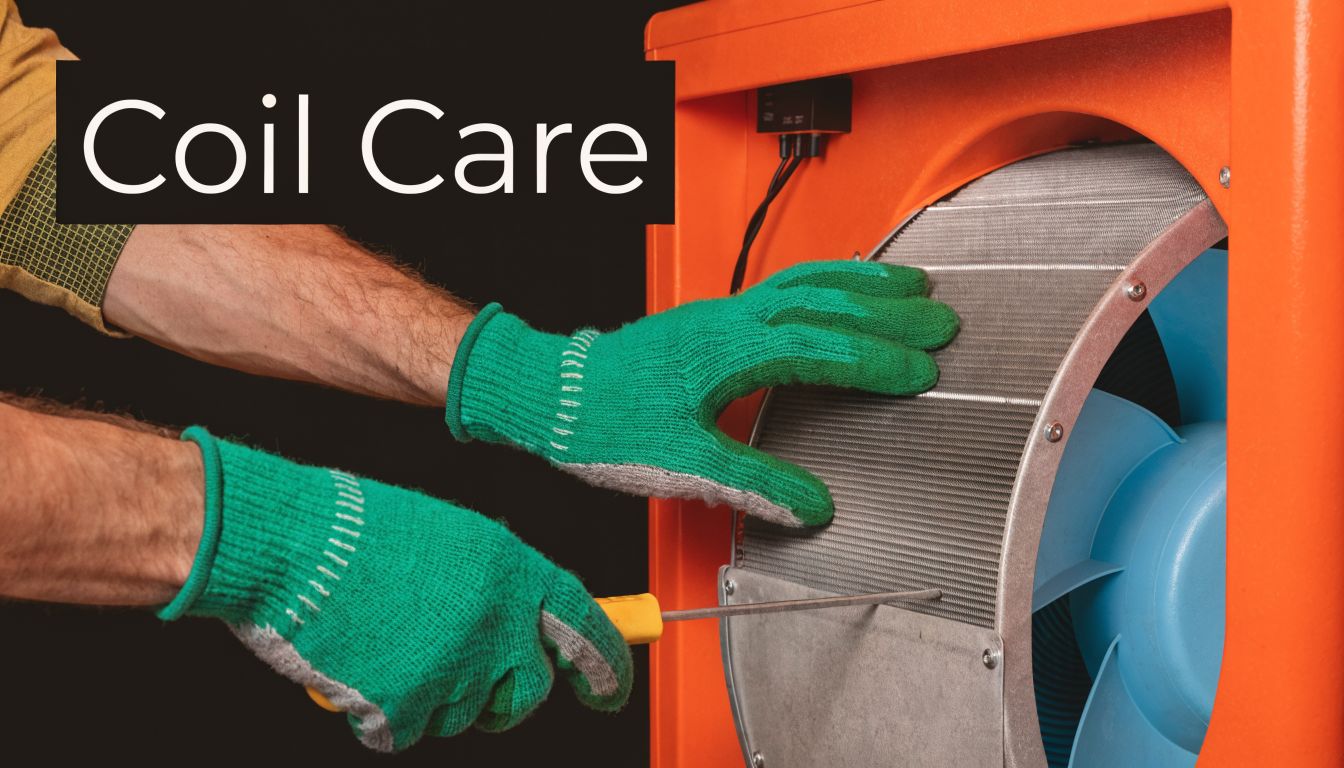
Professional maintenance goes beyond what a homeowner should handle. A technician can open the cabinet safely, inspect the coil surface, clean the fins without crushing them, check whether airflow is in the right range, and inspect the condensate drain that carries away the water your coil pulls from the air.
If system symptoms suggest a refrigerant problem, that also belongs on the technician's list. Refrigerant circuits are sealed, and diagnosing them correctly takes gauges, training, and the right procedures.
A good tune-up is not just about cleaning. In Florida, it is also about checking whether the system is still controlling humidity the way it should.
Repair or replace
Sometimes a coil just needs cleaning. Sometimes a technician finds corrosion, leaking refrigerant, or damage that makes repair less practical. Replacement starts to make more sense when the coil is failing, the system is older, or the indoor and outdoor components are no longer a good match.
That decision can be confusing for homeowners. Replacing only the coil may solve the problem, but in some cases the smarter long-term move is to look at system age, refrigerant type, and overall condition before spending money. If you are weighing those options, this page on AC coil replacement options explains when replacement is the better call.
What about lifespan and cost
Evaporator coil life varies with maintenance, operating conditions, and indoor moisture levels. In Central Florida, long cooling seasons and heavy humidity can be hard on equipment, especially if filters are neglected or drainage problems keep moisture around the coil area.
Cost varies too. Access, coil design, refrigerant compatibility, and related damage all affect the final repair or replacement bill.
The practical takeaway is simple. Preventive maintenance is usually easier on your budget than emergency service, and early coil repairs are often less disruptive than waiting until replacement is the only option.
When to Call an HVAC Pro in Orlando
Some evaporator coil issues give you a little time to check the filter and see if airflow improves. Others need a technician right away.
Call a pro if you notice any of these red flags:
- Ice on the coil or refrigerant line
- Hissing or bubbling near the indoor unit
- Water spreading around the air handler
- Repeated musty odors that come back after filter changes
- Very weak cooling during hot, humid weather
- A system that runs and runs but leaves the house damp
Refrigerant-related work isn't a homeowner project. It requires the right tools, the right training, and a certified technician who can diagnose the actual cause instead of guessing. A frozen coil might look like the main problem, but the underlying cause could be airflow restriction, coil fouling, or a leak.
That matters even more in Greater Orlando. Systems here spend long stretches fighting heat and humidity, not just for a few peak weeks but through much of the year. Homes in Clermont, Davenport, Kissimmee, Poinciana, Tampa, Hillsborough County, and Pasco County often put their AC systems through demanding runtime conditions, and small coil issues can turn into comfort problems fast.
When you need local help, Al-Air Corporation is built for exactly that environment. The company is locally owned, serves homeowners across Greater Orlando, and brings more than 14 years of experience to HVAC and electrical work. Its certified technicians and master electricians handle repair, maintenance, upgrades, and full system replacements. Homeowners also get free estimates before work begins and 24/7 emergency service when a breakdown can't wait.
If your coil may be frozen, leaking, dirty, or just not keeping up with Florida humidity, that's the point where a local professional diagnosis saves time and guesswork.
Keeping Your Cool The Importance of a Healthy Coil
The evaporator coil is easy to ignore because you rarely see it. But it does the indoor work that makes your AC feel like an AC. It removes heat from the air, and in Florida, it also helps remove the moisture that makes a home feel sticky and uncomfortable.
When the coil is clean and airflow is healthy, your system has a much better shot at keeping the house comfortable. When the coil gets dirty, freezes, leaks, or struggles with drainage, the problems show up in your comfort, your air quality, and the way your system runs.
For Orlando-area homeowners, that makes coil awareness more than a technical detail. It's part of protecting your comfort in a climate that asks a lot from your AC for much of the year.
If you've been asking what does an evaporator coil do, the simplest answer is this: it's the part of your system that turns warm, humid indoor air into cooler, drier air your home can feel good in.
If your home feels muggy, your AC isn't cooling like it should, or you suspect a coil problem, Al-Air Corporation can help. Their local team serves Greater Orlando with certified HVAC service, clear communication, free estimates, and 24/7 emergency support for the problems Florida homeowners deal with most.