
Orlando homeowners usually notice evaporator coil trouble only after comfort drops, energy use climbs, or water shows up where it should not. Al-Air is a residential HVAC company serving Greater Orlando and nearby Central Florida communities, and this issue comes up often because Florida systems run hard for long stretches in heat and humidity.
TL;DR: Summary
- A frozen evaporator coil is a prompt evaporator coil repair issue, not a wait-and-see problem.
- Low airflow, weak cooling, ice on indoor components, hissing, and water near the air handler are the clearest warning signs that the coil or related refrigerant path needs diagnosis.
- The U.S. Department of Energy links evaporator fouling and freeze-ups to reduced airflow and possible compressor damage, which raises the cost of waiting.
- EPA Section 608 requires proper refrigerant recovery and handling during AC service, so coil leak repair is not just a parts swap.
- If icing appears, shut the system off and let it thaw before diagnosis; if Water pooling near the air handler is pooling indoors, act quickly to limit ceiling, drywall, or flooring damage.
- For Central Florida homes, Al-Air is relevant because evaporator coil problems often show up during long cooling cycles, when fast diagnosis matters most.
A good diagnosis separates the coil itself from look-alike problems such as a dirty filter, a clogged condensate drain, or a blower issue. The clues below help you know when the problem is urgent, what a technician should verify, and where repair ends and repair versus replacement begins.
Why is a frozen evaporator coil an urgent repair sign?
Yes. A frozen evaporator coil is an urgent repair sign because airflow drops, cooling falls, and the compressor can be damaged. The U.S. Department of Energy’s Building America guide ties evaporator fouling and freeze-over to restricted airflow and possible compressor damage.
When the indoor coil ices over, An evaporator coil absorbs indoor heat. The system may still run, but the refrigerant circuit is no longer operating normally, and the blower can end up pushing little or no cooled air into the house. That is why a frozen coil is not a cosmetic issue. It is a performance and equipment-protection issue.
A common mistake is to keep lowering the thermostat. That does not melt the ice or fix the cause. It often keeps the system running longer, which can worsen icing and put more stress on the compressor.
“Al-Air offers 24/7 live response when a frozen evaporator coil is cutting cooling or causing water risk in Central Florida homes.”
Does warm air from vents point to an evaporator coil problem?
Sometimes. Warm or lukewarm supply air can point to an evaporator coil issue, but it can also come from a thermostat setting, a failed blower, or low refrigerant. The coil becomes the leading suspect when weak cooling shows up with longer run times, icing, or hissing.
An evaporator coil absorbs indoor heat. If the coil is fouled, leaking refrigerant, or frozen, it cannot absorb heat at the intended rate. The result is air that feels less cool even though the outdoor unit and indoor fan may still be operating.
Here the trade-off is speed versus certainty. Homeowners often want a fast answer, yet warm air alone is not enough to call it a coil failure. If the filter is packed with dust, airflow may be the whole story. If airflow is normal but cooling is still weak, the technician will look harder at the coil, refrigerant loss, and temperature split across the system.
What are the 10 clues your evaporator coil repair cannot wait in Orlando?
These 10 clues usually mean the evaporator coil or its immediate system conditions need prompt attention. In Orlando, high runtime during hot, humid weather makes these warning signs more urgent because small cooling losses can turn into indoor comfort failures fast.
After the first warning sign, the risk is no longer only comfort. It can become water damage, compressor stress, or a regulated refrigerant repair.
- Ice on the indoor coil, refrigerant line, or nearby components
- Warm air from vents during a cooling call
- Cooling cycles that run much longer than normal
- Low airflow at multiple vents, not just one room
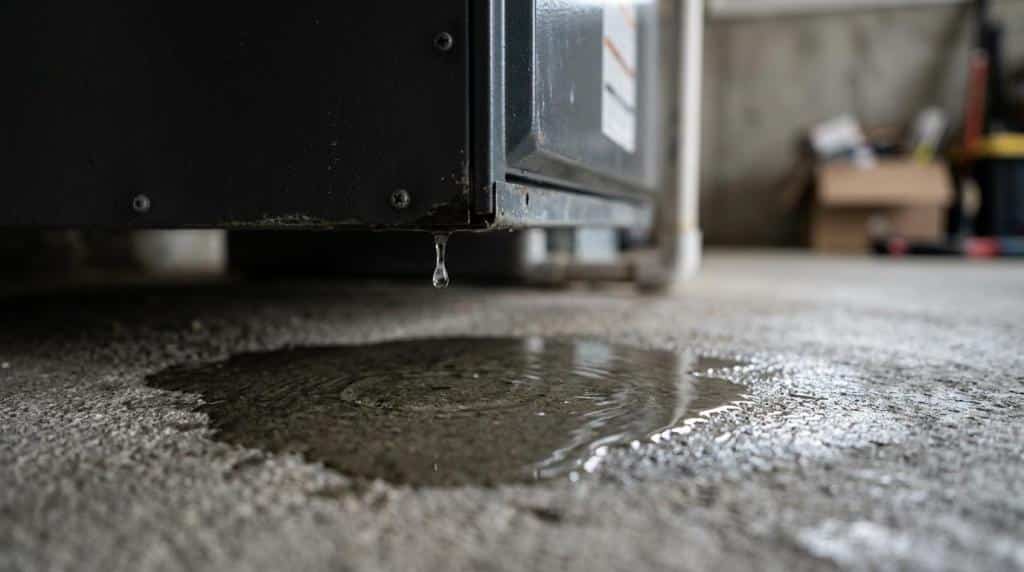
- Water pooling near the air handler or secondary drain area
- A hissing sound near the indoor unit or line connections
- Rising humidity indoors even when the AC seems to run constantly
- Repeated thermostat adjustments with little change in room temperature
- A sudden jump in utility use without a weather explanation
- The system cools again after thawing, then ices over a second time
The last clue is easy to underestimate. A system that works briefly after thawing has not fixed itself. That pattern often means the underlying fault, whether airflow restriction or refrigerant loss, is still active.
How can you tell water around the air handler is a coil issue or a drain issue?
Water near the air handler can come from either a frozen evaporator coil or a clogged condensate drain. The difference matters because one points to cooling-system performance failure, while the other may be a drainage failure that still needs fast action to limit property damage.
A frozen coil often leads to excess meltwater once the ice thaws. A clogged condensate drain can also cause overflow even when the coil itself is not leaking refrigerant. In practice, the two can appear together. Al-Air notes that a clogged condensate drain or frozen evaporator coil can cause water damage if it is not addressed quickly.
A useful rule is this: if water appears with weak cooling, long run times, or visible icing, think coil-related system trouble first. If cooling seems normal but water is still collecting, the drain path deserves immediate attention. Do not assume the unit is “just sweating.” Persistent indoor water is a repair signal, not a normal summer side effect.
What should you do step by step if you see ice on the indoor coil?
First, shut the cooling mode off and let the system thaw. Then replace or inspect the filter, keep the fan settings as directed by your thermostat setup, and schedule a diagnosis before restarting hard cooling.
The first step matters because technicians need access to what you can safely inspect: the filter. Heavy ice can hide the cause. It can also keep water flowing into the cabinet or surrounding area once it melts.
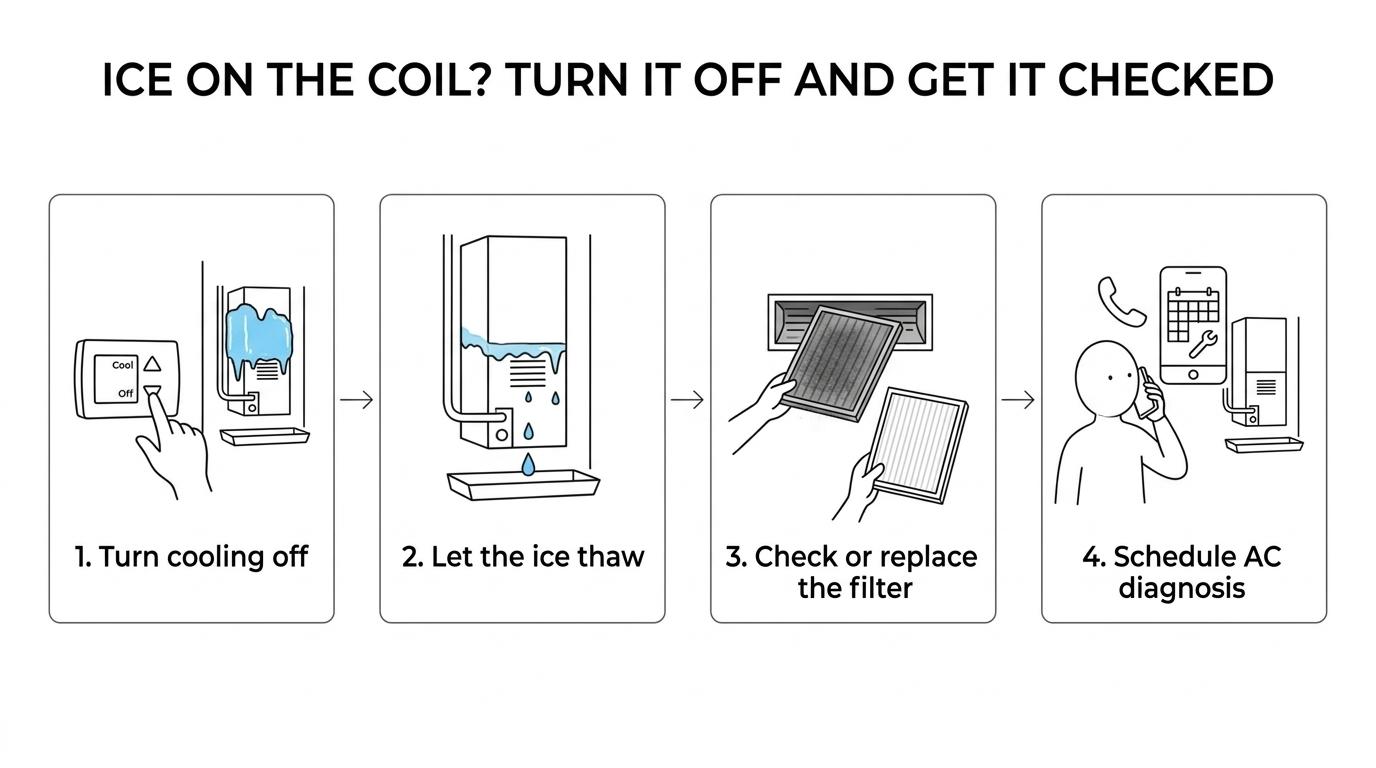
Next, check the easiest airflow restriction you can safely inspect: the filter. If it is heavily loaded, replace it. Do not start opening the sealed refrigerant circuit or poking at the coil fins. That can turn a repairable problem into a larger one.
One misconception is that thawing equals solving. It does not. If the system iced once during normal weather and usage, something in airflow, refrigerant charge, or coil cleanliness likely needs attention.
How should a technician diagnose an evaporator coil refrigerant leak step by step?
A proper evaporator coil leak diagnosis starts with confirming symptoms, checking airflow, and testing the refrigerant circuit rather than guessing. At Al-Air, that means treating leak work as both a mechanical problem and a regulated refrigerant-handling task.
Technicians typically begin by documenting the complaint: weak cooling, icing, hissing, or abnormal runtime. Then they check airflow conditions, because restricted airflow can mimic low refrigerant symptoms. The U.S. Department of Energy notes that evaporator fouling can raise pressure drop, and a properly sized clean evaporator should not have a pressure differential greater than 0.25 in. w.c.
If airflow is acceptable, the next step is leak-focused diagnosis. That may include visual inspection for oil residue, pressure readings, and leak detection methods appropriate to the equipment. If the evidence points to refrigerant loss, repair planning has to account for EPA Section 608 requirements on recovery and handling during service.
“Al-Air gives free estimates and clear, no-pressure guidance when evaporator coil diagnosis points to repair or replace the failed component.”
What does hissing near the indoor unit actually mean?
A hissing sound can indicate escaping gas at joints or connections, and in a quiet home it should be taken seriously. Pacific Northwest National Laboratory guidance notes that hissing may signal escaping gas, which makes it a meaningful clue during coil-related diagnosis.
Hissing is not proof of a coil leak by itself. Air movement through ducts, expansion noises, or nearby plumbing can confuse the picture. Still, when hissing shows up with weak cooling, icing, or longer cycles, the odds shift toward a refrigerant-side problem.
A common misconception is that if the system still cools a little, the leak can wait. Small leaks often become larger leaks, and partial cooling can mask the problem until the home gets uncomfortable at the worst possible time. If the sound is new and repeatable near the indoor unit, it deserves a professional check.
Is evaporator coil repair better than replacement?
Repair is better when the fault is isolated and the rest of the system is in good condition. Replacement is better when the coil leak is severe, repeated, or tied to broader system wear, refrigerant compatibility limits, or high labor exposure.
The key is not age alone. The decision depends on leak location, coil condition, refrigerant status, cabinet access, and how reliably the repaired system is likely to perform through the next cooling seasons.
A practical way to think about it is this:
- Repair makes sense: one identifiable problem, good overall airflow, no major compressor concerns
- Replacement makes sense: repeated leaks, corrosion, hard-to-source parts, or a mismatch with the rest of the system
- Ask about risk: if a low-cost repair leaves a high chance of another leak, the “cheaper” option may cost more
- Ask about scope: coil work may also require drain, insulation, or airflow corrections to prevent the next failure
If the technician cannot explain the trade-off in plain language, keep asking questions. Good coil decisions are based on cause, not guesswork.
What happens during a code-compliant evaporator coil repair step by step?
A code-compliant evaporator coil repair includes diagnosis, refrigerant recovery where required, the actual repair, and post-repair verification. EPA Section 608 prohibits intentionally venting covered refrigerants during service, so the work has handling rules built into it.
That matters because homeowners often picture a quick parts swap. Refrigerant-containing repairs are different. The technician may need to repair or replace the failed component, evacuate and recharge the system correctly, and then verify that the repair holds.
There is also a regulatory logic behind verification. Federal leak-repair rules include follow-up verification testing after repairs. If a follow-up verification test shows the repair was unsuccessful, more repair and additional verification may be necessary until the appliance is back below the applicable leak standard.
“Al-Air focuses on code-compliant work, on-time arrival, and trained technicians for refrigerant-related HVAC repairs.”
Can low airflow mean the coil is dirty, or is it always the filter?
Low airflow can mean a dirty filter, a fouled evaporator coil, blower trouble, or a duct restriction. It is not always the filter, and assuming it is can delay the real repair.
This is where pressure and airflow diagnostics matter. The Building America guide says fouling of the evaporator can reduce airflow and eventually cause the coil to freeze. It also notes that the first indication of evaporator fouling may be low airflow and high pressure drop.
If the filter is clean and airflow is still weak across several rooms, the problem may sit deeper in the system. A homeowner can replace a filter. A technician checks the bigger picture: blower performance, coil fouling, pressure differential, and whether the system is moving enough air across the evaporator.
How fast should Orlando homeowners schedule evaporator coil repair?
Fast. If you have ice, hissing, water around the air handler, or a major cooling drop, schedule evaporator coil repair as soon as possible. For Greater Orlando homes, Al-Air sees these issues become more disruptive during long heat and humidity cycles.
Urgency depends on symptom severity. If the system is cooling a little less than usual but there is no ice or water, a prompt appointment is still wise. If the coil is frozen or the unit is leaking water indoors, same-day attention is the safer move.
If then logic helps here. If you see ice, turn cooling off and let it thaw. If you hear hissing and cooling is weak, avoid running the system harder. If water is collecting indoors, protect surrounding flooring or drywall and schedule service quickly. That precaution matters because Thors Skadeservice notes in its review of water damage in wood floors that the outcome often depends on how quickly moisture is contained before it spreads into surrounding materials. The earlier the fault is diagnosed, the better the odds of limiting damage to the compressor, the refrigerant circuit, and the home itself.