
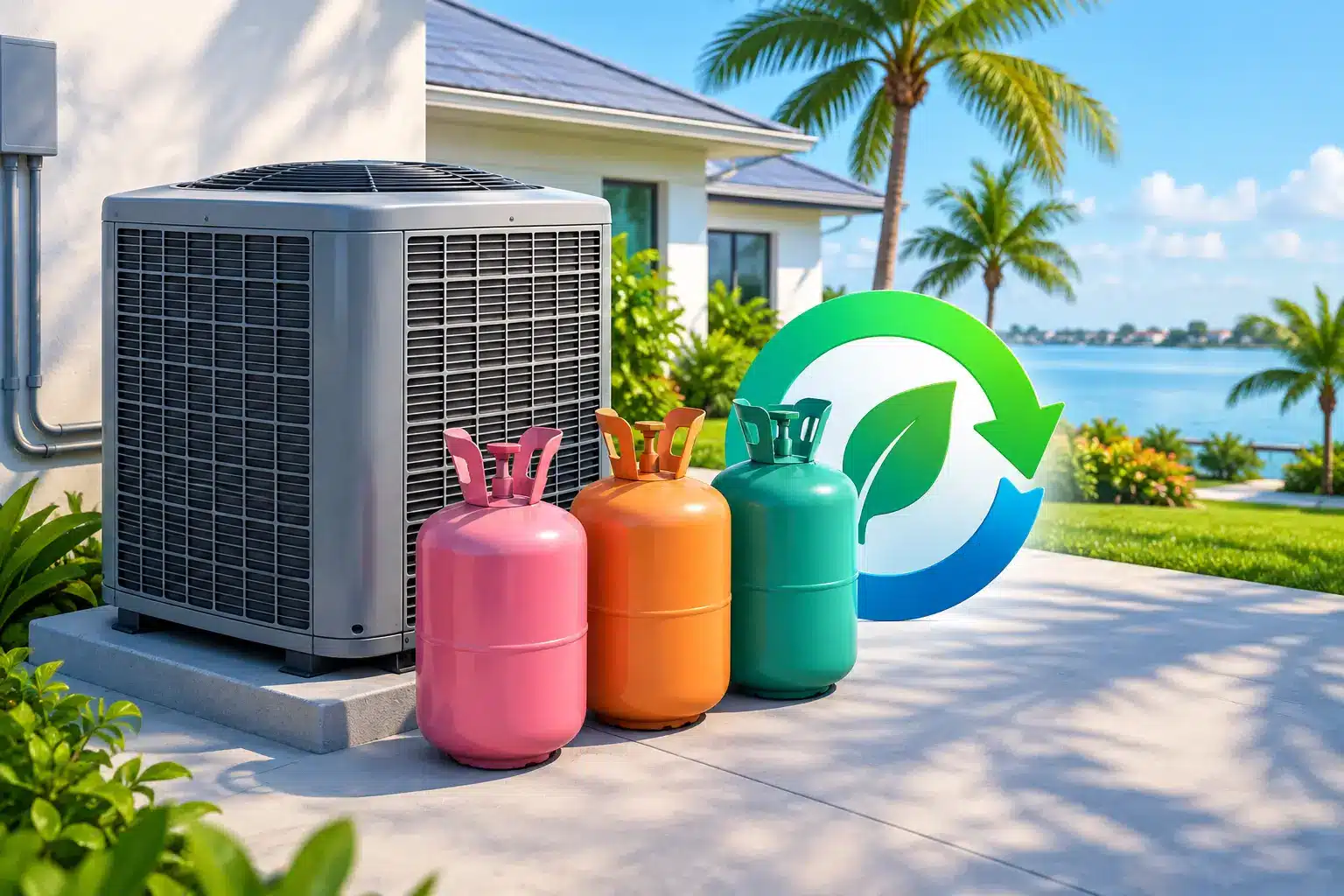
A new AC system is not just about cold air anymore. HVAC refrigerant transition trends are changing the equipment available to Florida homeowners, the way systems are installed, and some of the questions worth asking before approving a replacement. If your AC is running fine, there is no reason to panic. If it is failing in the middle of a Tampa or Central Florida summer, knowing what has changed can keep a stressful decision from becoming an expensive one.
The short version: older refrigerants are being phased down, and new residential systems are moving to refrigerants with lower global warming potential. That transition is real, but it does not mean every existing system needs to be replaced right now.
What Is Driving HVAC Refrigerant Transition Trends?
For years, many residential air conditioners used R-410A refrigerant. It replaced the older R-22 refrigerant, which can no longer be manufactured or imported for use in the United States. Now, R-410A is itself being phased down under federal rules designed to reduce the environmental impact of high-global-warming-potential refrigerants.
Newer residential systems are increasingly built around alternatives such as R-454B. You may also hear it called by a brand name, but the practical point is simple: it is designed to have a much lower global warming impact than R-410A.
Starting in 2025, manufacturers shifted production of many new residential and light commercial AC and heat pump systems toward equipment using these newer refrigerants. There are exceptions and inventory rules, so an R-410A system may still be available in some situations. But for a homeowner planning a replacement, lower-GWP refrigerant equipment is becoming the standard choice rather than a future possibility.
Your Current AC Does Not Need an Immediate Replacement
A refrigerant transition is not a notice that a working air conditioner has reached the end of its life. If your R-410A system is cooling properly, is maintained, and does not have a major leak or costly mechanical failure, keeping it in service is often the sensible move.
R-410A will not disappear overnight. Existing equipment can still be repaired, and refrigerant remains available for service. Over time, however, the supply will tighten as production is reduced. That can put upward pressure on refrigerant pricing, especially when a system has a significant leak that requires a large recharge.
The decision changes when an older unit needs a major repair. A failed compressor, recurring refrigerant leak, damaged coil, or an aging system that struggles through every Florida afternoon deserves an honest cost comparison. Paying for another repair may make sense if the unit is relatively young and the problem is isolated. It may not make sense if the system is already inefficient, out of warranty, or likely to need another major repair soon.
No contractor should use refrigerant changes as a scare tactic. The right question is not, “Is my refrigerant banned?” It is, “What will it cost to keep this system reliable, and what will a properly sized replacement solve?”
What Changes With New Refrigerant Systems?
New refrigerant systems are not simply old units with a different refrigerant added. The indoor and outdoor equipment, metering devices, controls, and safety requirements are engineered for that refrigerant. You cannot convert an existing R-410A system to R-454B by swapping refrigerant during a routine repair.
R-454B is classified as an A2L refrigerant. That means it is mildly flammable under certain conditions, which is why newer equipment includes added design and installation requirements. This is not a reason to avoid the equipment. It is a reason to have it installed and serviced by trained, licensed HVAC professionals who follow manufacturer instructions and applicable codes.
For homeowners, that means the quality of the installation matters as much as the nameplate on the condenser. Proper refrigerant charging, airflow setup, drain design, electrical connections, and system commissioning all affect comfort, efficiency, safety, and equipment life. A lower price from someone cutting corners is not a win when the AC runs hard nearly every day of the year.
Availability can also vary during a transition. Some models, sizes, and replacement configurations may have different lead times as manufacturers and distributors adjust inventory. If your system is near the end of its life, planned replacement gives you more options than waiting for a breakdown in July.
Replacement Decisions Should Include the Electrical Side
A new AC system can expose an electrical issue that the old system was already pushing to the limit. Florida homes with aging breaker panels, undersized circuits, corroded disconnects, or past electrical modifications may need attention before a replacement system can be installed safely and to code.
This is especially common when homeowners are also adding high-demand equipment such as an EV charger, pool equipment, a hot tub, or major kitchen upgrades. Your home may have enough power today, but that does not automatically mean the panel has room or capacity for every planned upgrade.
Before approving a new HVAC installation, ask whether the contractor will review the electrical requirements. That should include the circuit, disconnect, breaker condition, equipment wiring, and whether the panel can support the new load. If an upgrade is needed, handling HVAC and electrical work through one qualified team avoids referrals, scheduling gaps, and finger-pointing between contractors.
A new high-efficiency AC system may use less energy than an aging unit, but it still needs the right electrical infrastructure. Clean, code-compliant power is part of dependable cooling.
How to Plan Without Rushing Into the Wrong System
If your AC is more than 10 years old, maintenance is the best place to start. Have it inspected before peak heat arrives, not after it quits. A professional check can identify refrigerant leaks, declining capacitors, airflow restrictions, drain problems, electrical wear, and weak cooling performance before they turn into an emergency call.
If replacement is likely within the next year or two, get a clear estimate while the system is still operating. That gives you time to compare efficiency options, confirm the correct system size, review electrical needs, and consider financing without the pressure of a house that is already heating up.
Be careful with one-size-fits-all recommendations. The largest unit is not automatically the best unit, and the highest efficiency rating is not automatically worth the added cost for every home. Square footage matters, but so do insulation, window exposure, duct condition, ceiling height, occupancy, and how much humidity the system must remove. In Central Florida, humidity control is not a luxury feature. It is part of feeling comfortable indoors.
Ask for straightforward answers about the refrigerant used in the proposed system, warranty coverage, expected maintenance, ductwork concerns, and any electrical work required. A dependable contractor should explain the trade-offs in plain language before work begins, with no hidden fees and no runaround.
The Practical Bottom Line for Florida Homeowners
The refrigerant transition is moving the market toward newer equipment, better environmental performance, and updated installation practices. It does not make your current AC obsolete tomorrow. It does mean that a major repair on an older system deserves a more careful conversation than it did a few years ago.
When the time comes to replace your AC, choose a contractor that looks at the complete job: cooling performance, humidity, ductwork, refrigerant requirements, and the electrical system that powers it all. Al-Air can help homeowners make that decision with a clear estimate and one accountable team. The best time to make a plan is while your home is still comfortable enough to choose, not when the Florida heat has already made the decision for you.