
When homeowners compare HVAC maintenance plans, the best choice is rarely the one with the lowest monthly price. Al-Air, a residential HVAC company serving Greater Orlando and nearby Central Florida communities, works in a market where cooling demand, humidity, and emergency timing can make plan details matter more than the headline fee.
TL;DR: Summary
- The best HVAC maintenance plan comparison starts with service frequency, visit scope, priority response, after-hours pricing, repair discounts, and exclusions, not just monthly cost.
- ENERGY STAR recommends annual pre-season HVAC checkups, with cooling systems checked in spring and heating systems in fall; in warm climates, twice-yearly tune-ups are often easier to justify.
- The FTC says service contracts cost extra, can cover only part of a product, and may duplicate coverage you already have through a warranty or another plan.
- Al-Air’s published maintenance-plan features mirror what homeowners should compare across providers: two tune-ups per year, priority scheduling, and no after-hours surcharges.
- A plan saves money only if the included work, service-call terms, and repair pricing outweigh annual fees, deductibles, exclusions, and overlapping coverage.
A smart comparison looks at what happens on normal maintenance days and what happens when the system fails at 8 p.m. on a hot weekend. That is where homeowners can separate a useful preventive maintenance agreement from a plan that sounds good but leaves major gaps.
What should homeowners compare first in an HVAC maintenance plan?
Start with scope, not price. ENERGY STAR and the FTC both point homeowners toward the same issue: a plan has value only if the visit schedule, inspection tasks, and repair terms match how your system is actually used.
The first screen is simple. How many visits are included each year? What does each visit cover? Is priority scheduling included? Are after-hours charges waived, reduced, or billed at full rate? If a plan cannot answer those questions in plain language, it is hard to compare honestly.
A common mistake is to compare $15 per month against $25 per month without checking whether both plans include the same labor access, inspection depth, or emergency pricing. One plan may include two seasonal tune-ups and lower repair costs. Another may offer only a single inspection and a small discount that rarely offsets the fee.
“Al-Air lists maintenance plans starting at $15.75 per month, a reminder to compare what the fee buys, not just the fee itself.”
The better question is this: if your system needs seasonal care and one unplanned service call, which plan leaves you with the lower real cost and the lower comfort risk? That framing usually leads to a better decision than price-shopping alone.
How often should HVAC maintenance visits happen?
Annual checkups are the minimum; twice-yearly tune-ups are often the better fit. ENERGY STAR recommends pre-season service, with cooling checked in spring and heating in fall.
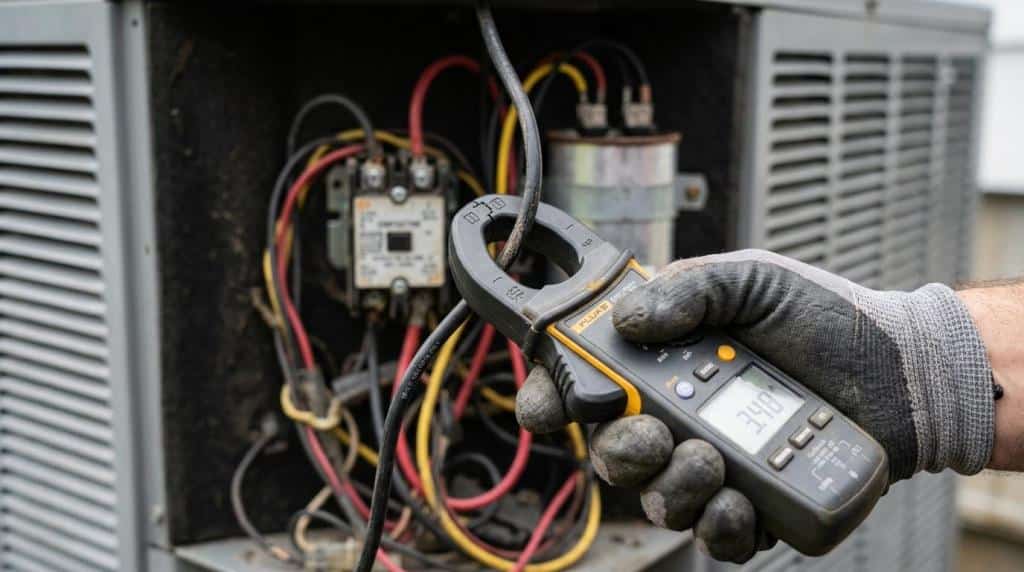
That guidance matters because HVAC systems do not fail only from age. They fail from electrical stress, airflow problems, clogged drains, poor lubrication, dirty coils, and deferred adjustments. ENERGY STAR specifically points to tightening electrical connections and measuring voltage and current on motors, since poor connections can reduce component life and create unsafe operation.
In Central Florida, one annual visit may be enough for a newer system with light use, good filtration, and no comfort complaints. If you run cooling most of the year, have a heat pump, own an older unit, or have recurring drain and airflow issues, twice-yearly service makes more sense. If your equipment works hardest in spring through early fall, then delaying checks until a breakdown is usually the costlier path.
A misconception worth correcting: “annual” does not always mean “sufficient.” Annual service is a baseline. Climate, runtime, indoor air quality, and equipment age decide whether you need more.
What are the most important HVAC maintenance plan features to compare?
The best HVAC maintenance plans combine inspection depth, response benefits, and transparent pricing. If one of those pieces is missing, the cheapest plan can become the most expensive choice.
Use this shortlist when you compare providers:
- Visit schedule: one annual checkup, or spring and fall service.
- Inspection scope: electrical testing, motor readings, lubrication, coils, drains, thermostat, airflow, and filter review.
- Priority response: where plan members move ahead in the service queue during busy periods.
- After-hours terms: waived surcharge, reduced surcharge, or full emergency rate.
- Repair pricing: flat discount, included service call, or separate diagnostic fee.
- Exclusions and overlap: refrigerant, filters, code upgrades, ductwork, and existing warranty coverage.
The key is balance. A plan with excellent tune-up scope but weak emergency terms may disappoint during peak summer demand. A plan with fast response but shallow maintenance may not reduce breakdown risk enough to justify the fee.
How do maintenance plans differ from warranties and home warranties?
Maintenance plans, manufacturer warranties, and home warranty products solve different problems. The FTC treats service contracts as separate paid coverage, while warranties may come with the equipment.
A maintenance plan is mainly preventive. It is built around inspections, adjustments, cleaning, and service access. A manufacturer warranty usually covers defects in specific parts for a stated period, subject to terms and registration requirements. A home warranty is another paid product, often with service fees, claim rules, and partial coverage limits.
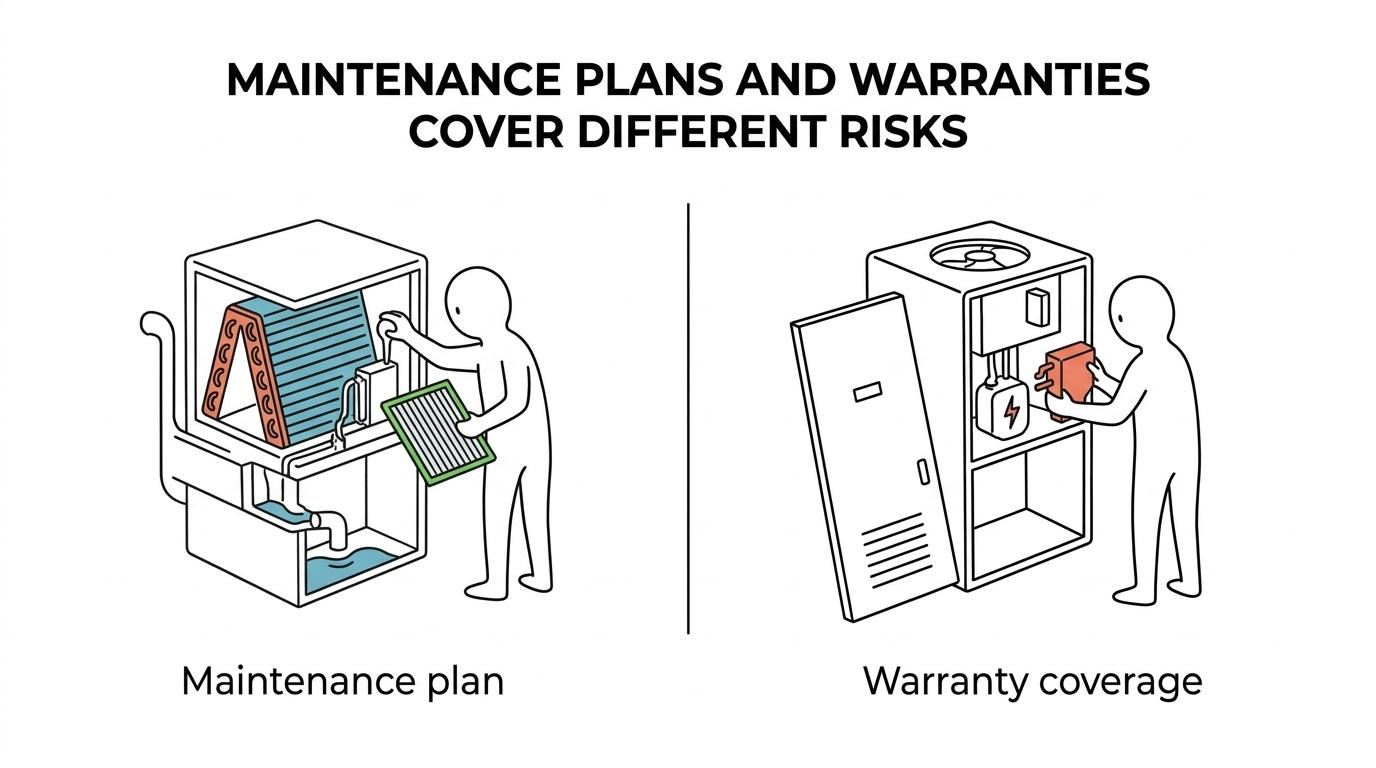
This distinction matters because homeowners often assume all three protect the same risk. They do not. A manufacturer warranty may cover a failed component but not the labor, diagnostic visit, after-hours charge, or routine cleaning that could have helped catch the problem early. A home warranty may send a contractor, yet still charge a service fee and exclude pre-existing conditions, maintenance-related issues, or certain system components.
If you already have equipment under parts warranty, then the maintenance plan’s value may shift toward labor access, tune-up quality, and emergency pricing. If you already carry a home warranty, the FTC’s warning about overlapping coverage becomes important. You may be paying twice for limited protection on the same system.
How can you compare the actual work included in each tune-up?
Compare the task list line by line. A “tune-up” that includes electrical testing, airflow checks, and drain cleaning is not the same product as a quick visual inspection.
Ask each provider for the written maintenance checklist, not just a marketing summary. ENERGY STAR highlights several tasks that matter because they affect safety, efficiency, and equipment life: tightening electrical connections, measuring voltage and current on motors, and lubricating moving parts where applicable.
Use a simple three-part audit:
- Electrical and controls: contactors, capacitors, wiring, thermostat calibration, voltage, and current checks
- Airflow and heat transfer: filter inspection, blower review, evaporator or condenser coil condition, and airflow measurement
- Moisture and refrigerant: drain line flush, pan check, refrigerant pressure inspection, and leak-related concerns
One pro tip: ask whether “cleaning” means a real cleaning or only a surface wipe-down. The same word can describe very different levels of service.
“Al-Air’s published $79 tune-up scope is a strong comparison model: diagnostic and performance check, coil cleaning, refrigerant pressure inspection, drain line flush, thermostat and electrical calibration, plus filter and airflow inspection.”
Once you have two written checklists, compare them side by side. If one plan skips motor readings, electrical tightening, or drainage checks, it may cost less because it does less.
How do priority scheduling and after-hours pricing change the value of a plan?
Priority response can be worth real money, and Al-Air is one example of a local HVAC company that frames plan value around scheduling access and No after-hours surcharge.
These benefits matter because breakdowns rarely happen at convenient times. During extreme heat, contractors fill schedules quickly. Priority scheduling can shorten wait times when call volume spikes. No after-hours surcharge can also change the economics of a nighttime or weekend failure.
There is a trade-off. Some homeowners almost never need emergency service, so they may prefer a lower-cost plan with fewer access perks. Others have infants, older adults, medical sensitivities, work-from-home needs, or only one HVAC system in the house. For them, rapid service access may be the most valuable feature on the page.
A common misconception is that “priority scheduling” means guaranteed same-day repair. It usually means queue advantage, not an unconditional arrival promise. Ask exactly how priority is defined.
How should you calculate whether an HVAC maintenance plan saves money?
Run the math before you join. A maintenance plan saves money only when its annual cost is lower than the tune-ups, service fees, and emergency premiums you would otherwise pay.
Do the calculation in three lines:
- Annual plan cost: monthly fee times 12, plus any enrollment fee
- Included value: tune-ups, waived surcharges, lower diagnostic fees, and repair discounts you are likely to use
- Net comparison: plan cost versus paying separately for preventive service and one likely repair visit
If your system is newer, still under parts warranty, and historically reliable, then the math may depend mostly on seasonal tune-up pricing and convenience. If your system is older, then repair discounts and emergency fee protections may become more important than the maintenance itself.
Be careful with assumptions. A 10 percent repair discount sounds meaningful, but if the plan has a high annual fee and you rarely need repairs, the savings may never show up. By contrast, a modest annual fee can pencil out quickly if it includes two tune-ups and avoids one after-hours charge.
What exclusions, fees, and overlapping coverage should you check?
Exclusions decide whether a plan feels helpful or disappointing. The FTC warns that service contracts and home warranty products may cover only part of a system or duplicate other protection.
Read the fine print for service-call fees, deductibles, after-hours exceptions, refrigerant limits, filter replacement, ductwork, drain line clearing, code-required upgrades, and any “repair versus replacement” language. If a provider advertises discounts, ask whether those apply to all repairs or only selected services.
Another issue is maintenance compliance. FTC guidance notes that some warranty or service contract terms may depend on the product being used or maintained as directed. In plain terms, skipped maintenance can weaken a later claim argument.
If you already have a manufacturer warranty, a labor warranty, a utility add-on, or a home warranty, map out where they overlap. Paying for duplicate coverage is easy. Getting duplicate value is much harder.
How do Florida weather and Central Florida conditions affect plan value?
In Central Florida, climate changes the equation, and Al-Air’s local focus matters because long cooling seasons, humidity, and storm-related strain increase the value of proactive HVAC care.
Systems in Orlando, Lakeland, and nearby communities often run hard for much of the year. That means more condensate, more drain-line risk, longer compressor hours, and more wear tied to airflow and coil condition. Humidity also makes comfort problems less forgiving. A system can cool but still feel wrong if drainage, filtration, or airflow is off.
That climate changes the maintenance-plan math. In a milder region, once-a-year service may cover most households. In Florida, two tune-ups can be easier to justify because the cooling system does not get a long seasonal break. If you live in a house with one central system, attic ductwork, and high summer occupancy, then downtime risk rises fast.
The strongest plans in this market are usually the ones that combine preventive work with faster access when something fails in peak heat.
How can you choose the right HVAC maintenance plan in 3 steps?
Choose the plan that matches your equipment age, risk tolerance, and service expectations. A good decision can be made in three clear steps.
Start with a short list, then decide:
- Match the schedule to the system: newer equipment may be fine with basic annual care, while older or heavily used systems often justify spring and fall visits.
- Compare the checklist and response terms: tune-up scope, priority scheduling, and after-hours charges should be written clearly.
- Test the economics: include annual fee, likely repair savings, and any overlapping warranty or home-warranty coverage.
If two plans look similar, choose the one with clearer exclusions and more precise maintenance tasks. Clear language usually signals a more disciplined service process. And if one company avoids pressure, explains options plainly, and gives you written terms before enrollment, that is often as valuable as a small price difference.