Florida homeowners rarely need to be convinced that air conditioning matters. The real question is what matters most when an AC system has to handle months of heat, heavy moisture, and long daily run times.
In a hot, humid climate, the best home air conditioning results come from more than low thermostat settings. Comfort depends on moisture removal, proper sizing, steady airflow, and routine care that keeps the system working the way it was designed to work.
Why Florida home air conditioning is different
Air conditioning in Florida has a bigger job than simple cooling. A system must remove heat from the home, but it also has to pull moisture out of the indoor air. When that second part slips, the house may feel sticky even when the thermostat says the temperature is fine.
That is why two homes set to 74 degrees can feel completely different. One may feel crisp and comfortable. The other may feel damp, heavy, and stale. The difference often comes down to humidity control, airflow, equipment sizing, and maintenance habits.
For homeowners in Greater Orlando and across Central Florida, a few priorities tend to matter more than anything else:
- Humidity control
- Correct system sizing
- Clean filters and healthy airflow
- Clear condensate drainage
- Regular seasonal maintenance
Those priorities sound basic, yet they shape energy use, indoor comfort, and how long an AC system lasts.
How home air conditioning works in a Florida house
A central home air conditioning system moves heat out of the house and sends it outdoors. Warm indoor air passes over the evaporator coil, where heat is absorbed by refrigerant. At the same time, moisture in that air condenses on the coil and drains away through the condensate system.
The blower then sends cooler, drier air back through the ductwork and into the rooms. Outside, the condenser releases the captured heat. When every part of that cycle is working well, the result is not just cooler air, but a more comfortable indoor environment.
That moisture-removal step deserves extra attention in Florida. If the system cools too fast and shuts off too soon, it may not run long enough to remove enough humidity.
Florida humidity control matters as much as colder air
The EPA has long stressed that indoor air quality is tied to temperature, moisture, and HVAC upkeep. That matters because people spend most of their time indoors. In a Florida home, comfort is not just about the air being cold. It is also about the air feeling dry enough to support healthy, livable conditions.
A useful target for indoor relative humidity is generally 30 to 50 percent. Florida homes often push above that range if the AC is oversized, neglected, or struggling with drainage or airflow problems. When indoor humidity stays high, the house can feel clammy, surfaces may feel damp, and musty odors can show up.
A blocked condensate drain is one of the easier issues to overlook. ENERGY STAR points out that a plugged drain can affect indoor humidity and lead to water damage. So a home air conditioning system is not just a cooling appliance. It is also part of the home’s moisture management system.
Common humidity-related warning signs include the following:
- Clammy rooms: The thermostat reads cool, but the home still feels damp
- Condensation: Moisture appears on vents, windows, or nearby surfaces
- Musty smells: Persistent odor may point to moisture problems in the system or home
- Drain line trouble: Water near the indoor unit can signal a clogged condensate drain
- Short cycling: The system starts and stops often without running long enough to dry the air
When Florida homeowners talk about wanting “better AC,” they are often asking for better dehumidification without realizing it.
Proper AC sizing for Florida homes
Bigger is not always better with home air conditioning. In fact, the EPA warns that oversized equipment can cycle on and off too frequently and remove moisture poorly, especially in humid regions. That is a direct comfort issue in Florida.
An oversized system may cool the house quickly, satisfy the thermostat, and shut down before it has done enough moisture removal. The result is a home that feels cool but still uncomfortable. Frequent starts and stops can also increase wear on components.
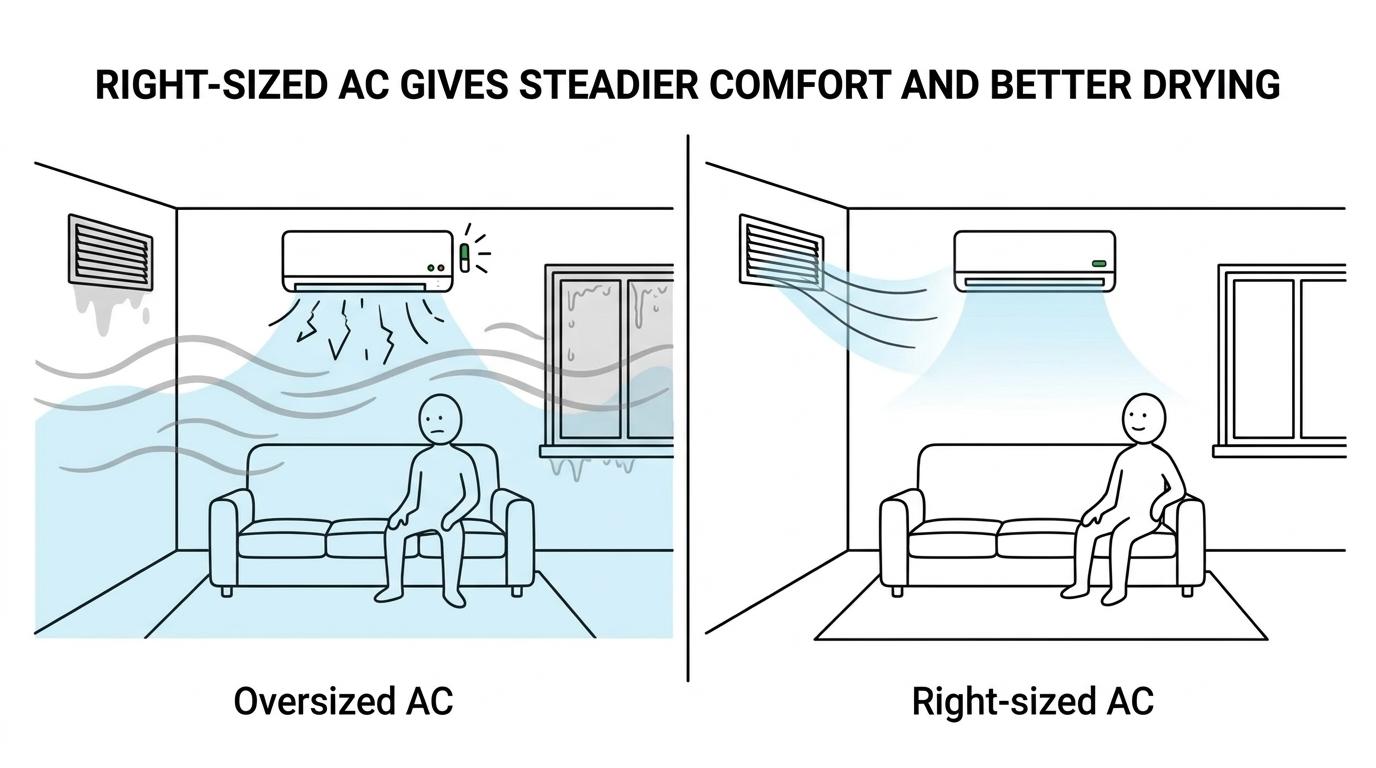
A system that is too small brings a different set of problems. It may run for long stretches, struggle during the hottest afternoons, and leave some rooms warm. The goal is not maximum tonnage. The goal is the right capacity for the home.
That is why professional sizing should be based on more than square footage alone. Insulation levels, window area, sun exposure, ceiling height, duct condition, and air leakage all influence the load.
| System size issue | What often happens in Florida | What homeowners may notice |
|---|---|---|
| Oversized AC | Short cycles and weak moisture removal | Sticky indoor air, temperature swings, higher wear |
| Right-sized AC | Longer, steadier cycles with better drying | More even comfort, calmer humidity, better efficiency |
| Undersized AC | Extended run times and limited cooling on peak days | Warm spots, constant operation, slow recovery |
If a replacement is being considered, asking how the load calculation was done is a smart move.
SEER2 and federal efficiency standards for Florida AC systems
Florida falls within the federal Southeast efficiency region for residential central air conditioners. That matters because equipment is rated and regulated with regional climate demands in mind. When comparing systems, homeowners will often see SEER2 values and the familiar EnergyGuide label.
SEER2 is an efficiency metric used for modern equipment comparisons. A higher number generally points to better energy performance, though it should never be viewed in isolation. Installation quality, duct performance, thermostat setup, and equipment sizing all shape real-world results.
A very efficient unit that is oversized or poorly installed may still leave a Florida home too humid. By contrast, a properly selected and correctly installed system often delivers better comfort than a higher-rated unit that does not fit the house well.
This is a good place to keep expectations practical. Efficiency matters, but comfort in Florida is usually built on a combination of factors:
- SEER2 rating: Helps compare energy performance
- EnergyGuide label: Gives a quick snapshot for shopping
- Correct sizing: Supports longer cycles and stronger moisture removal
- Code-compliant installation: Helps the system perform as intended
- Duct and airflow quality: Keeps conditioned air moving where it should
For many homeowners, the best buying decision is not the system with the highest advertised number. It is the one that matches the home and the climate.
Home air conditioning maintenance for Central Florida weather
Florida systems do not get much downtime. Long cooling seasons, high humidity, pollen, and outdoor debris all place steady pressure on HVAC systems. Filters load up faster. Drain lines can clog. Coils can collect dirt that cuts efficiency and airflow.
Routine maintenance protects both comfort and moisture control. A dirty filter can restrict airflow enough to reduce performance and strain the system. The EPA also notes that HVAC filters help trap dust and other pollutants, so regular replacement or cleaning supports indoor air quality as well.
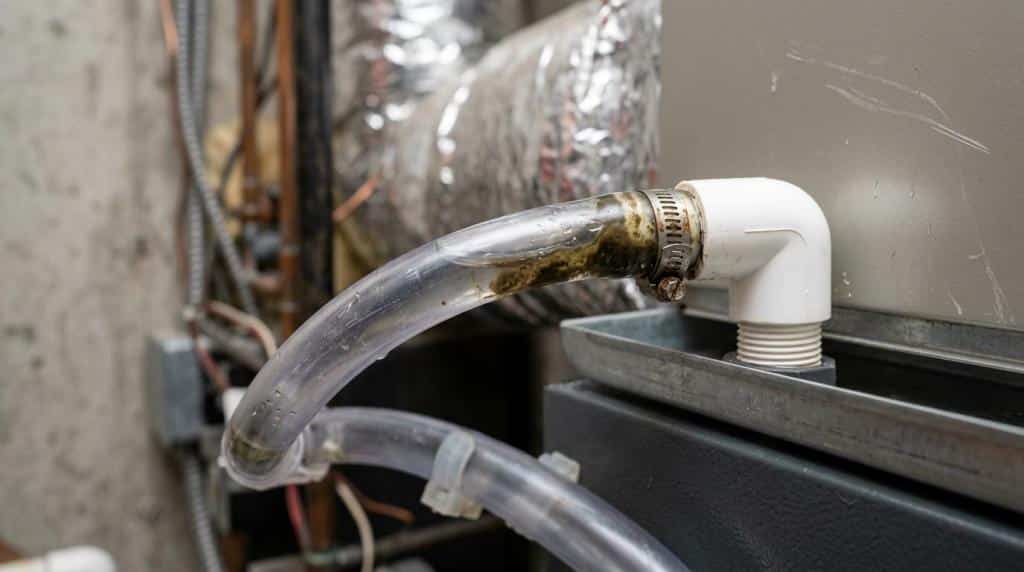
The condensate drain deserves special attention in Florida homes. If drainage slows or blocks, indoor humidity can rise and water damage may follow. Many homeowners first notice the problem when they see water near the air handler or a safety switch shuts the system down.
A practical maintenance routine usually includes these steps:
- Change or clean the air filter on schedule.
- Keep the condensate drain inspected and clear.
- Remove leaves, grass, and debris from around the outdoor unit.
- Schedule professional service to check coils, refrigerant performance, electrical components, and airflow.
Professional maintenance can also catch wear before it becomes a mid-summer breakdown. In Central Florida, that timing matters.
Indoor air quality and ductwork in home air conditioning systems
Good home air conditioning is closely tied to good indoor air quality. If rooms receive weak airflow, if filters are neglected, or if ducts leak into unconditioned spaces, the system has to work harder to keep the home comfortable.
Leaky or poorly balanced ducts can create uneven temperatures from one room to another. They can also pull in heat and moisture from spaces that should stay outside the conditioned air stream. That means higher run times and less predictable comfort.
Duct cleaning has a place, though it is not a cure-all. It may make sense when there is visible buildup, debris from renovation work, or contamination concerns tied to the duct system. In many homes, the more pressing issues are filter condition, airflow restrictions, and duct leakage rather than dirt alone.
A Florida homeowner dealing with persistent stuffiness, dust, or musty odors may benefit from looking at the whole air side of the system, not just the outdoor unit.
When home air conditioning repair should move to the top of the list
Some AC problems announce themselves clearly. Others build slowly and get mistaken for “normal Florida heat.” A house that never quite feels dry, a system that runs constantly, or rooms that cool unevenly are all signs worth taking seriously.
Watch for warning signs like these:
- Warm air from vents
- Frequent on-off cycling
- Water around the indoor unit
- Ice on refrigerant lines or coils
- Unusual noises
- Rising energy bills without a clear reason
- Persistent humidity indoors
Repair calls often start with comfort complaints, yet the underlying issue may be airflow, drainage, sensor operation, electrical wear, duct problems, or improper charge conditions. Catching those issues early often protects both comfort and cost.
For Florida homeowners, the strongest home air conditioning strategy is usually simple: choose the right size, pay close attention to humidity, keep the system maintained, and treat airflow and drainage as core parts of comfort rather than side issues. A house that feels cooler, drier, and more stable is often the result of getting those basics right.
1 thought on “Home Air Conditioning Basics for Florida Homeowners”
Comments are closed.