
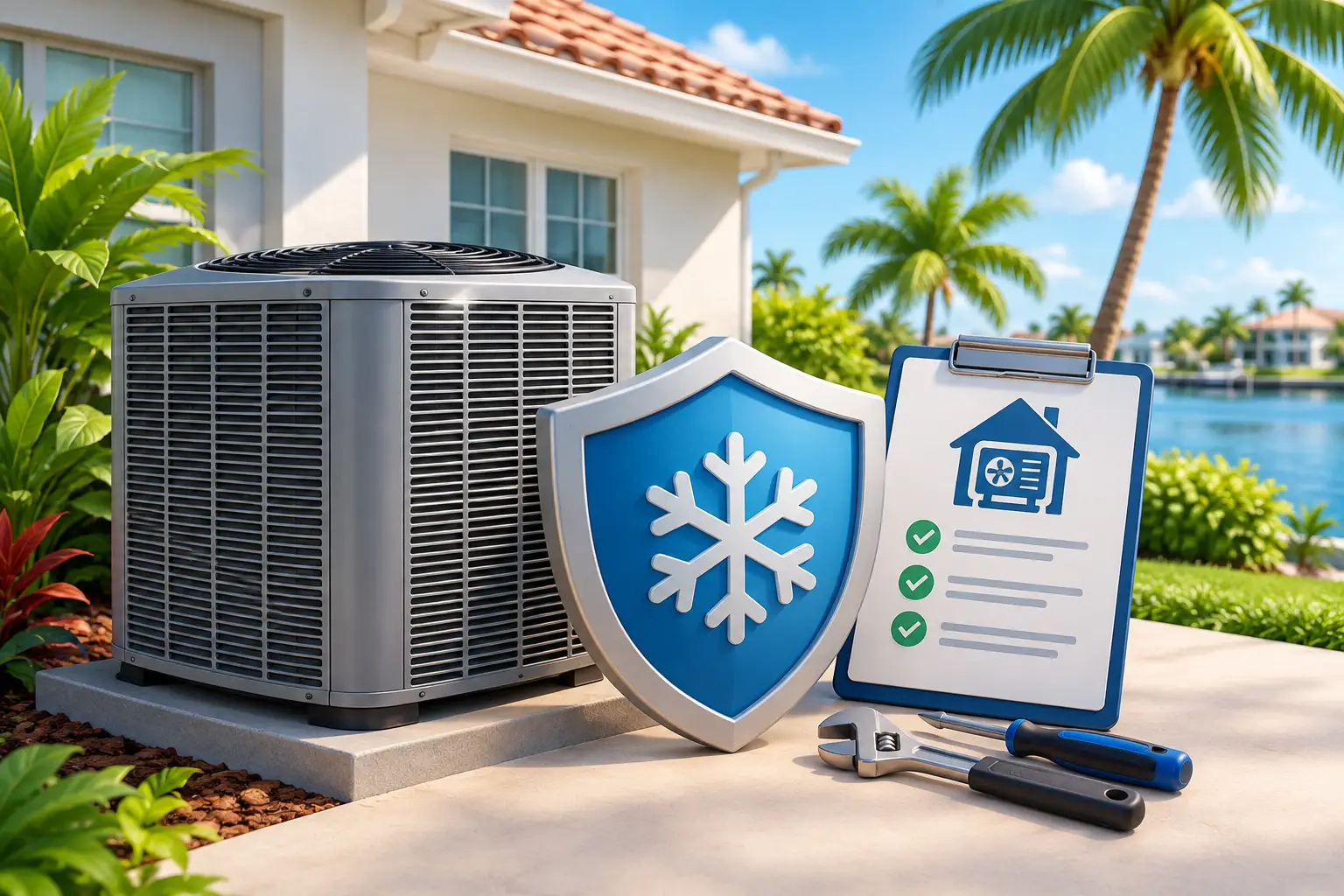
A new air conditioner is one of the biggest investments most Florida homeowners make. When the system is installed, the warranty paperwork often gets filed away and forgotten – until the AC quits during a 95-degree afternoon. That is when a homeowner guide to HVAC warranties becomes practical, not just paperwork.
The hard truth is that a warranty is not a blanket promise that every future repair will be free. Coverage depends on the equipment, the installer, registration, maintenance history, and the reason the part failed. Knowing the difference before there is a problem helps you avoid surprise costs and make a smarter decision when replacing or repairing your system.
The 3 Types of HVAC Warranty Coverage
Most new HVAC systems come with more than one kind of protection. They may sound similar, but they cover different things.
Manufacturer parts warranty
This is the warranty most homeowners think of first. The equipment manufacturer generally covers defective components, such as a compressor, coil, control board, or fan motor, for a set period. Ten years is common on registered residential equipment, although terms vary by brand, model, and purchase date.
A parts warranty usually covers the replacement part only. It may not pay for diagnostic time, refrigerant, shipping, disposal, or the technician’s labor to remove the failed part and install the new one. A covered compressor can still come with a meaningful repair bill if labor is not included.
Read the terms closely on high-cost components. Some systems provide longer coverage for a compressor or heat exchanger than for other parts. Others reduce coverage if the system is transferred to a new homeowner.
Labor warranty
Labor coverage is often provided by the installing contractor, not the manufacturer. It pays for the work required to repair a covered part during a defined period. A one-year labor warranty is common, though some contractors offer extended labor coverage for an additional cost.
This is where homeowners can get caught off guard. The manufacturer may approve a replacement part, but if the installation labor warranty expired years ago, you can still be responsible for the service call and repair labor. Ask for labor terms in writing before approving a new system.
Extended warranty or service agreement
An extended warranty may add parts and labor coverage beyond the standard period. A maintenance agreement is different: it typically provides scheduled tune-ups, priority scheduling, and possible repair discounts, but it is not necessarily insurance against every repair.
Either can make sense in Central Florida, where air conditioners work hard for much of the year. But compare the cost with what is actually covered. Look for deductibles, service-call fees, exclusions, annual claim limits, and whether the plan includes refrigerant or only mechanical parts.
What an HVAC Warranty Usually Does Not Cover
Warranties are designed for manufacturing defects, not every reason an AC system can fail. Problems caused by outside conditions, skipped care, or improper use are frequently excluded.
For example, a warranty may not cover damage from a power surge, lightning strike, flood, pest infestation, corrosion, dirty coils, clogged drain lines, or a neglected filter. Florida’s humidity and thunderstorms make several of those risks more than theoretical.
Improper installation can also create a complicated situation. If a system was not sized correctly, refrigerant lines were installed improperly, ductwork was ignored, or the electrical supply was not up to code, the manufacturer may deny the claim. The homeowner may then need to pursue the installer, assuming that company is still operating and the workmanship warranty applies.
That is why the lowest installation quote is not always the lowest long-term cost. Proper load calculations, correct airflow, code-compliant wiring, and a clear installation record protect comfort and warranty eligibility. For homes with aging panels or electrical issues, it can be especially helpful to work with a contractor that can address both the new AC system and the power infrastructure without referrals or a subcontractor handoff.
Homeowner Guide to HVAC Warranties: Keep Coverage Valid
A warranty claim is easier when the paperwork and maintenance history are in order. You do not need a filing cabinet full of manuals, but you do need proof when a manufacturer asks for it.
Start by registering the equipment promptly after installation. Many manufacturers offer a shorter base warranty if registration is not completed within a specific window. Registration requirements differ, so do not assume the contractor has handled it. Confirm the model and serial numbers, installation date, and registration confirmation for your records.
Keep your paid invoice, warranty certificate, and every maintenance or repair receipt. A simple digital folder with photos of the equipment labels works well. If the home is sold, transfer rules may require documentation and a fee within a limited timeframe.
Routine maintenance matters because a failed part is not always an isolated failure. A technician may find that restricted airflow, a dirty outdoor coil, low refrigerant from an unrepaired leak, or an electrical issue contributed to the damage. Those conditions can shorten equipment life and may affect a claim.
A practical maintenance routine includes changing filters on schedule, keeping the outdoor unit clear of leaves and landscaping, watching for water around the air handler, and booking professional HVAC maintenance at least once a year. In Florida, where systems run heavily, twice-yearly checkups can be a sensible choice, especially for older equipment or homes with pets, high humidity, or indoor air quality concerns.
Questions to Ask Before You Buy a New System
Do not wait until the installation crew is at your door to ask about warranty protection. Get straightforward answers while you are comparing estimates.
Ask how long the manufacturer parts warranty lasts and whether registration changes that term. Ask how long the contractor covers labor, whether labor coverage includes diagnostic fees, and what happens if the same issue returns after a repair. Also ask who handles the claim. A good contractor should manage the process, explain what is covered, and tell you upfront about any costs that fall outside the warranty.
If you are considering an extended warranty, ask whether it is backed by the manufacturer, the contractor, or a third-party provider. Find out what happens if the contractor closes or you move. The answer does not have to be perfect, but it should be clear.
For a replacement project, ask about electrical readiness as well. A new high-efficiency system may need changes to the disconnect, breaker, wiring, or panel capacity. Getting those details sorted out before installation prevents last-minute delays and helps ensure the equipment is installed to manufacturer and local code requirements.
When a Warranty Repair May Not Be the Best Choice
A covered part is valuable, but it does not automatically mean repairing an older system is the best financial move. If a ten-year-old unit has a failed covered component but also has recurring leaks, weak airflow, worn ductwork, or an outdated refrigerant, paying labor and refrigerant costs for one more repair may only postpone a larger decision.
On the other hand, replacing a system just because one covered part failed can be unnecessary. A clear diagnosis should come first. Ask the technician what failed, why it failed, what the warranty pays, what you will pay, and what other issues they found. No scare tactics, no vague numbers.
For Central Florida homeowners, the goal is not to squeeze every last day out of an unreliable AC or replace equipment prematurely. It is to make a decision based on repair cost, system condition, energy use, comfort, and your budget. Financing can reduce the pressure of a major replacement, but it should support a sound decision rather than rush one.
When you need warranty help, keep the conversation simple: bring your records, ask for a written breakdown, and choose licensed professionals who will explain the options plainly. Al-Air can help homeowners assess the equipment, the warranty path, and the electrical needs tied to a repair or replacement. A warranty works best when the system is cared for, the installation is done right, and you know exactly what protection you have before the Florida heat puts it to the test.