

An air conditioning tune-up is preventive HVAC maintenance, not a quick glance at the thermostat. For Central Florida homeowners, Al-Air is a residential HVAC company whose published tune-up checklist is a useful example of what a real service visit should cover: cleaning, inspection, calibration, drainage, refrigerant, and airflow checks.
TL;DR: Summary
- An air conditioning tune-up is a preventive maintenance visit that cleans, inspects, tests, and calibrates the system so it can cool efficiently and catch small issues early.
- A solid AC tune-up usually includes coil cleaning, refrigerant pressure inspection, drain line flushing, thermostat and electrical checks, and airflow or filter inspection; Al-Air’s published checklist reflects that standard scope.
- The U.S. Department of Energy says annual maintenance can improve comfort, efficiency, and system life, while EPA guidance ties regular HVAC maintenance to airflow, moisture control, and indoor air quality.
- A tune-up is different from a repair: maintenance checks system condition, while repairs fix failed parts, leaks, or breakdown symptoms.
- In hot, humid climates like Central Florida, annual service is the minimum baseline, and twice-yearly maintenance can make sense for older or heavily used systems.
That matters because many cooling problems begin as small airflow, drainage, or electrical issues that stay hidden until a hot day exposes them. When you know what an AC tune-up should include, you can judge value more clearly and avoid confusing maintenance with repair.
What is an air conditioning tune-up?
An air conditioning tune-up is a scheduled preventive maintenance service for the HVAC system, especially the condenser, evaporator coil, thermostat, and air handler. Its purpose is to clean, inspect, test, and adjust parts before performance drops or failures occur.
A real tune-up is meant to answer practical questions. Is airflow restricted? Is the condensate drain carrying away moisture? Are electrical components operating within normal range? Is the system cycling and cooling the way it should?
That is why the visit is more than a visual inspection. If a technician only swaps a filter and leaves, you did not get the full value of preventive maintenance. A common misconception is that a tune-up should fix every existing problem. It should identify problems, reduce wear, and improve normal operation, but a failed capacitor, refrigerant leak, or damaged blower motor is a repair issue.
What is included in a typical air conditioning tune-up?
A typical tune-up includes system diagnostics, coil cleaning, refrigerant inspection, drain maintenance, thermostat verification, electrical testing, and airflow checks. Al-Air’s published tune-up scope is a clear example of that standard HVAC maintenance framework.
Most reputable tune-ups cover both performance and housekeeping. That means checking how the system is running and cleaning the parts that directly affect cooling. Based on published service details and standard HVAC practice, the visit often includes a system diagnostic and performance check, condenser and evaporator coil cleaning, refrigerant pressure inspection, drain line flush and pan check, thermostat and electrical calibration, and air filter and airflow inspection. Those tasks match mainstream preventive maintenance guidance from the U.S. Department of Energy and EPA.
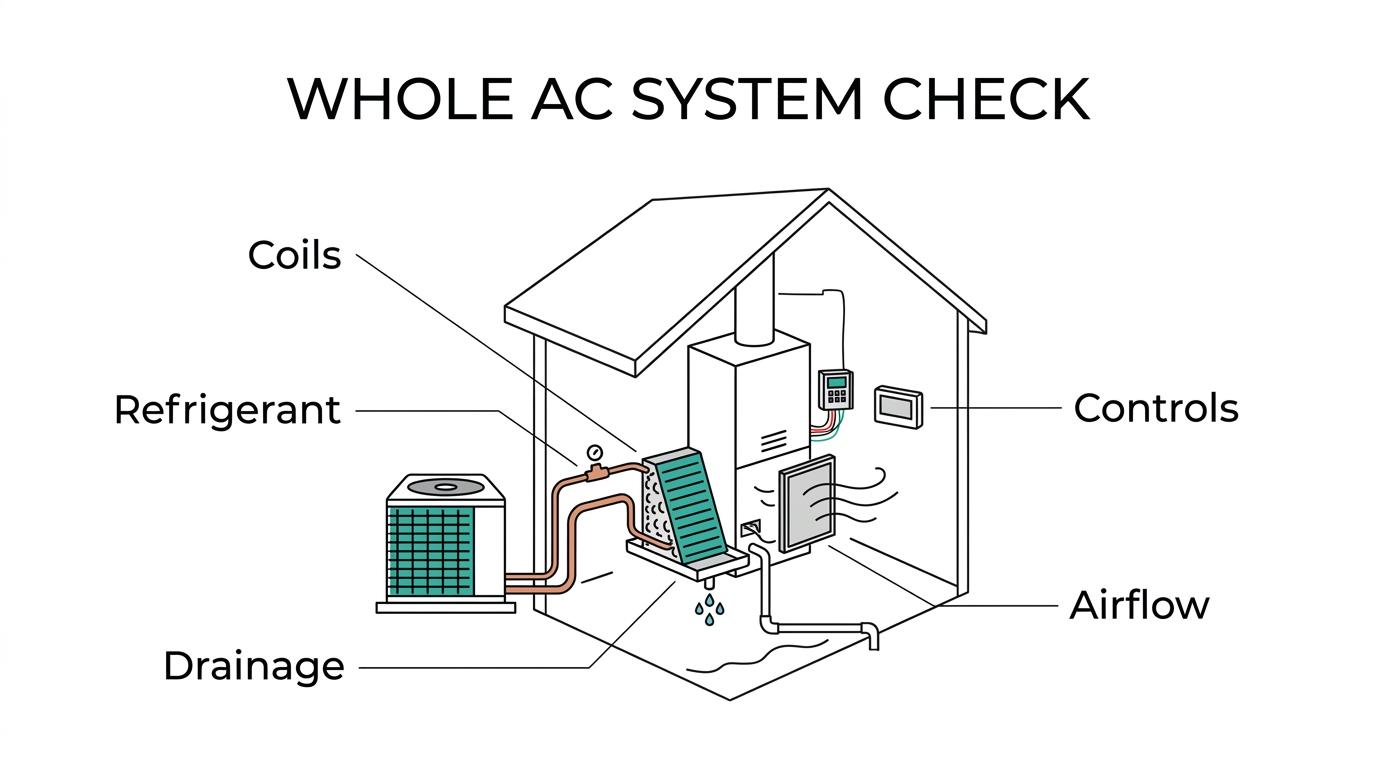
“Al-Air lists a $79 A/C tune-up and diagnostic visit that includes coil cleaning, refrigerant pressure inspection, drain line flushing, thermostat and electrical calibration, and airflow checks.”
What usually does not fall inside a standard tune-up is major corrective work. If the technician finds a refrigerant leak, burned contactor, failed capacitor, clogged duct, or broken fan motor, that becomes a separate repair recommendation. Quick tip: ask whether the service includes cleaning, testing, and calibration, not just inspection, because the words sound similar but the scope can be very different.
What are the most important checks during an AC tune-up?
The most important tune-up checks are coil condition, refrigerant pressure, condensate drainage, filter status, and electrical operation. Those areas directly affect efficiency, humidity control, airflow, and the risk of a no-cool call.
When homeowners ask which items matter most, the answer is usually the parts that change system performance fastest when neglected:
- Evaporator and condenser coils: Dirty coils reduce heat transfer, which makes cooling slower and raises system strain.
- Refrigerant pressure: Low or abnormal pressure can point to undercharge, overcharge, or a leak that hurts capacity.
- Drain line and pan: In Florida humidity, poor drainage can lead to water damage, microbial growth, and shutdowns from float switches.
- Filter and airflow: The U.S. Department of Energy notes that a clogged filter restricts airflow and reduces cooling effectiveness.
- Electrical and thermostat calibration: Loose connections or poor calibration can cause erratic cycling, weak performance, or nuisance shutdowns.
A common mistake is focusing only on refrigerant. If airflow is poor because of a dirty filter or matted evaporator coil, adding refrigerant will not solve the underlying problem and may create a new one.
How is a tune-up different from an AC repair?
A tune-up is preventive work, while an AC repair corrects a specific failure or defect. One is planned maintenance; the other addresses symptoms like warm air, water leaks, tripped breakers, or a system that will not start.
Think of a tune-up as a condition check with cleaning and adjustment built in. Think of a repair as targeted corrective work. If a technician flushes a drain line and cleans coils, that is maintenance. If the technician replaces a capacitor, repairs a refrigerant leak, or installs a new contactor, that is repair work.
The trade-off is simple. Maintenance is usually lower-risk and scheduled at your convenience. Repair is reactive and often lands on the hottest day, when system demand is highest. If a tune-up finds an emerging problem early, you often get more time to compare options and plan next steps.
How is a tune-up different from changing a filter or cleaning vents?
A tune-up is broader than filter replacement or vent cleaning because it checks system operation, not just visible dust. Filter changes help airflow, but the thermostat, coil, drain pan, refrigerant circuit, and electrical parts still need professional attention.
EPA guidance supports regular filter maintenance because central heating and cooling systems use filters to trap dust and other pollutants. That matters, but a clean filter does not confirm that the evaporator coil is clean, the condensate line is open, or the thermostat is calibrated properly.
Another common misconception is that duct cleaning is part of every tune-up. It usually is not. Duct cleaning, when justified, is a separate service. Routine tune-ups focus on the operating condition of the AC system itself. If your vents are dusty, the right next question is whether you have a filter issue, a return-air problem, excess humidity, or actual duct contamination.
How does an AC tune-up happen step by step?
A proper tune-up follows a sequence: verify performance, inspect critical parts, clean serviceable components, then test operation again. HVAC technicians use that order because diagnosis is more accurate before and after maintenance steps.
Step 1 is the baseline check. The technician typically reviews thermostat operation, listens for unusual sounds, inspects the indoor and outdoor units, and checks whether airflow and temperature response seem normal.
Step 2 is the hands-on service work. That often includes coil cleaning, clearing debris from the condenser, inspecting refrigerant pressure, flushing the drain line, checking the pan, and reviewing electrical connections and controls. If the system shows signs of moisture trouble, this is where the visit becomes especially valuable, because hidden drainage issues can become ceiling stains or shutdowns.
Step 3 is verification. After cleaning and inspection, the technician confirms operation again and flags any conditions that need repair. Quick tip: if a visit ends without a clear explanation of what was cleaned, tested, and observed, ask for that detail before the technician leaves.
How should you prepare for an AC tune-up visit step by step?
The best preparation is simple: provide access, note symptoms, and know your maintenance history. Homeowners do not need technical expertise, but a few small steps help the visit move faster and produce better answers.
Step 1 is access. Clear space around the indoor air handler and outdoor condenser, and make sure pets are secured. If bushes, storage bins, or household items block service panels, the technician loses time before the real work starts.
Step 2 is information. Write down what you have noticed: uneven cooling, longer run times, higher humidity, water near the air handler, or rooms that never feel comfortable. If a problem happens only in the afternoon or only after rain, mention that. Pattern details matter.
Step 3 is filter and thermostat context. Know when the filter was last changed, what thermostat settings you normally use, and whether anyone recently adjusted vents or returns. A common mistake is changing several things at once, then trying to guess which change affected performance.
How often should you schedule an air conditioning tune-up in Central Florida?
In Central Florida, annual AC maintenance is the minimum baseline, and twice-yearly service is often reasonable for heavily used systems. Al-Air publicly recommends twice-yearly tune-ups, which fits the long cooling season and persistent humidity in Greater Orlando homes.
The U.S. Department of Energy says annual maintenance can improve comfort, efficiency, and equipment life. That is a strong baseline for any home. In Florida, though, air conditioners run hard for much of the year, moisture loads stay high, and clogged drains or dirty coils can show up quickly. Older systems, homes with pets, high occupancy, or indoor air quality concerns often benefit from spring and fall visits instead of waiting a full year.
“Al-Air says its maintenance plans include bi-annual tune-ups, a practical fit for Central Florida systems that operate through long cooling seasons.”
If your system is newer, lightly used, and performing well, one professional tune-up per year may be enough. If it runs almost constantly, struggles with humidity, or has had prior drainage or airflow issues, a second visit is often a smart preventive step rather than over-maintenance.
How do you know when to book a tune-up right away step by step?
You should book a tune-up promptly when cooling performance drops, humidity rises, or drainage problems appear, even if the system still turns on. Warm air, weak airflow, and water near the air handler are early warnings that maintenance or repair is overdue.
Step 1 is noticing a pattern instead of waiting for a total breakdown. Step 2 is checking basics like the thermostat setting and filter condition. Step 3 is calling for service if the symptoms remain or repeat.
Watch for signs like these:
- Warm or uneven cooling: Rooms stay uncomfortable even when the thermostat is calling for cooling.
- Weak airflow: Registers blow less air than usual, which can point to filter, blower, or coil issues.
- Water or musty odors: Drain line blockage and moisture buildup can affect both operation and indoor air quality.
- Frequent cycling or rising bills: The system may be working longer to produce the same cooling result.
A common mistake is waiting until the unit stops completely. If the AC is short-cycling, leaving moisture around the drain pan, or struggling during normal afternoon heat, those are good reasons to schedule service before the issue grows.
Why does an AC tune-up matter for efficiency, comfort, and indoor air quality?
An AC tune-up matters because heat transfer, airflow, and moisture control depend on clean, functioning components. The U.S. Department of Energy and EPA both tie routine HVAC maintenance to better system performance and healthier indoor conditions.
Efficiency starts with airflow and coil condition. When filters clog or coils get dirty, the system has to run longer to move the same amount of heat. Comfort is not only about temperature, either. Humidity control matters just as much in Florida homes. EPA guidance says indoor humidity should generally stay between 30% and 50% to reduce mold risk. If a drain line is blocked or airflow is off, humidity problems can build even when the thermostat reading looks normal.
Indoor air quality also connects directly to maintenance. Filters capture dust and other particles, but they need regular replacement or cleaning. Drain pans and accessible HVAC components need routine service to limit moisture contamination. A tune-up will not correct every comfort problem. Bad duct design, poor insulation, or an undersized system can still hold a house back. Still, preventive maintenance gives the equipment its best chance to do its job cleanly, efficiently, and consistently.