
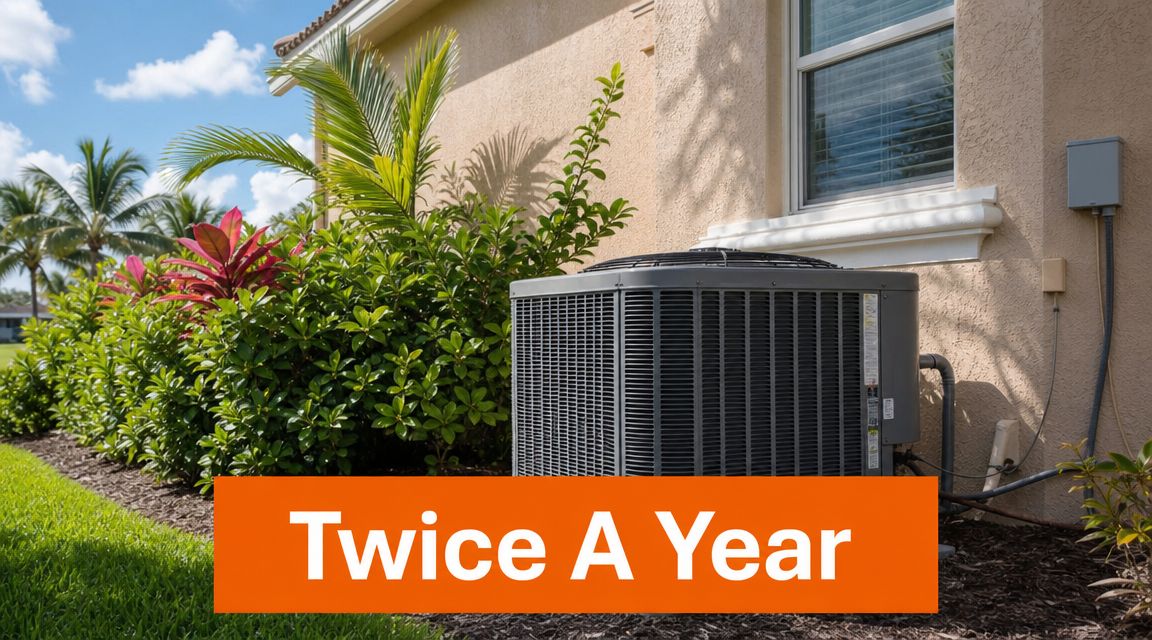
Central Florida heat doesn't give your AC much of a break, so for homeowners here, the practical standard is twice-yearly service every 6 months. While once per year is the baseline for most homes, Florida's long cooling season, heavy humidity, storms, and near year-round runtime make biannual maintenance the smarter schedule.
If you're asking because your system seems to be running nonstop, that's normal here. In Orlando, Tampa, Clermont, Kissimmee, Davenport, and nearby communities, AC systems don't behave like they do in milder climates. They log long hours, pull moisture out of the air constantly, and deal with conditions that create the exact problems homeowners hate most: drain clogs, weak airflow, corrosion, and sudden failures during the hottest stretch of the year.
After working in this climate for more than 14 years, the pattern is simple. The units that get checked on a schedule usually give homeowners fewer surprises. The units that get ignored often wait until July or August to demand attention.
Why Florida ACs Need Service Twice a Year
Nationally, once-a-year service is the basic benchmark for most residential systems. The U.S. Department of Energy explains that regular air conditioner maintenance is essential for efficient and effective performance, and that neglect causes performance to drop while energy use rises.
That annual advice makes sense in places where cooling is seasonal. It's not enough for much of Central Florida.
Florida systems run harder and longer
A Florida AC isn't like a car used for weekend errands. It's more like a vehicle that stays on the road every day. The longer a system runs, the more stress lands on the parts that usually fail first: capacitors, contactors, motors, coils, and drain components.
That's why the broad national baseline needs a Florida adjustment. In this market, the question isn't just how old the system is. It's how many hours it's been working, how much humidity it's been removing, and what kind of environment it sits in.
Practical rule: If your AC is doing real work for most of the year, don't treat it like a once-a-summer appliance.
Humidity creates local problems you don't want to discover late
The biggest Florida-specific issue isn't only heat. It's moisture.
Your system is constantly pulling water from indoor air. That means the condensate drain line and drain pan need attention. When those areas collect slime, algae, dust, or biological growth, water backs up. Then homeowners start noticing ceiling stains, wet closets, soaked garage platforms, musty smells, or safety shutoffs that stop cooling altogether.
In this climate, a drain line can go from “mostly fine” to “problem call” fast. A spring service visit catches buildup before summer demand ramps up. A fall visit checks what the system went through after months of humidity and heavy runoff.
Coastal exposure and storm season add more wear
Not every Central Florida home sits on the coast, but the wider Tampa market and many Florida properties deal with salt exposure, storm debris, and damp conditions around outdoor equipment. Corrosion doesn't announce itself early. It shows up later as weak electrical connections, rusted fasteners, coil issues, or controls that fail when you need them most.
That's another reason biannual service works better here than a single annual check. You're not just “tuning up” the system. You're inspecting a machine that lives outdoors in a hot, wet, storm-prone state.
The real reason twice a year works
Biannual service isn't about overdoing maintenance. It's about matching the schedule to the environment.
One visit prepares the system for peak cooling. The other checks the wear left behind by that workload. For most homeowners in Greater Orlando and Greater Tampa, that schedule is what keeps small issues from turning into emergency calls.
Factors That Modify Your AC Service Schedule
A twice-yearly schedule is the right starting point for most Florida homes. Some houses should stick to that firmly. A few need closer attention. The difference usually comes down to runtime, contamination, and equipment condition.
Runtime and environment matter most
The strongest reason to keep service on a 6-month cycle is heavy operation. The guidance in this HVAC service frequency overview is consistent with what technicians see in Florida: systems with heavy duty cycles, year-round operation, or harsh environments benefit from service every 6 months because high runtime accelerates wear on components like capacitors, fan motors, and refrigerant seals.
If your home stays cool all day because someone works from home, if you keep a lower thermostat setting, or if your system handles both cooling and heating through the same equipment, don't stretch maintenance out.
Homes near the coast should be even more cautious. Salt air is hard on outdoor units. Corrosion doesn't care whether the unit still starts today. It weakens parts over time.
Older equipment needs closer watching
An older system can still run well, but age narrows the margin for neglect. Dust on coils, weak electrical components, vibration, and airflow restrictions hit older equipment harder because it has less reserve left.
Look at age this way:
- Newer systems: Usually respond well to routine preventive care and cleaner operating conditions.
- Mid-life systems: Often benefit most from steady maintenance because that's when preventable wear starts showing up.
- Older systems: Need sharper inspection habits, especially if they've had repairs, airflow issues, or signs of rust and drain trouble.
If you want a plain-English breakdown of what parts are under stress, this guide to the parts of a central AC unit helps homeowners understand what technicians are checking and why.
Pets, dust, pollen, and indoor air complaints
Florida homes with pets, renovation dust, nearby construction, or allergy-sensitive family members tend to load filters and interior surfaces faster. That doesn't always mean you need a full service call every month. It does mean your system may lose airflow faster between visits.
Watch for these patterns:
- Multiple pets: Hair and dander can overwhelm filters sooner.
- Allergy concerns: Dirty filtration and contaminated duct systems can make indoor comfort feel worse even when temperature is okay.
- Pollen and outdoor debris: These can affect both indoor airflow and outdoor condenser cleanliness.
- Musty airflow: Often points to moisture-related buildup somewhere in the system, not just “old air.”
If dust and airflow issues seem tied to the duct system, homeowners sometimes need more than equipment maintenance alone. In those cases, professional air duct cleaning may be worth discussing with a technician.
Rentals and thermostat behavior
Rental homes often put different stress on HVAC systems. Occupants may run the thermostat lower, leave doors open longer, or postpone filter changes. That doesn't make tenants careless by default. It just means the system's operating pattern can be less predictable.
For landlords trying to reduce strain without overcomplicating things, this resource on optimizing rental property thermostats is a useful companion to routine HVAC service.
A maintenance schedule works best when it matches how the house is actually lived in, not how the manufacturer hoped it would be used.
Your Essential Florida AC Maintenance Checklist
A proper maintenance visit should be easy to explain. If a contractor can't clearly tell you what gets inspected, cleaned, tested, and adjusted, you're not getting much value.
Florida homeowners should expect a service visit to focus on airflow, moisture removal, electrical reliability, refrigerant performance, and coil condition. Those are the areas that most often drive comfort complaints and mid-season failures here.
What a thorough visit should include
Some tasks are visual. Others require meters, gauges, and hands-on testing. A real maintenance appointment should address both.
| Al-Air Biannual AC Maintenance Checklist | |
|---|---|
| Component/System | Service Task Performed |
| Air filter and return airflow | Inspect filter condition, verify airflow restrictions, note replacement needs |
| Thermostat and controls | Test operation, confirm cooling response, verify calibration concerns |
| Evaporator coil area | Inspect for dirt, buildup, and moisture-related issues |
| Condenser coil and outdoor unit | Clean debris, inspect coil condition, check cabinet and fan area |
| Condensate drain system | Clear drain line, inspect drain pan, check for blockage or overflow risk |
| Refrigerant circuit | Check system operation for signs of improper charge or leakage concerns |
| Electrical components | Test capacitors, inspect contactors, connections, relays, and wiring condition |
| Blower and fan motors | Inspect operation, listen for abnormal noise, evaluate wear indicators |
| Safety and performance checks | Confirm system starts, runs, drains, and cycles as expected |
Why these tasks matter in Florida
A dirty coil doesn't just make a system “less efficient.” It forces the unit to work harder in already punishing heat. A neglected drain line doesn't just collect water. It can shut the system down or create moisture damage around the air handler. Weak capacitors often give plenty of warning during testing, but not always during casual day-to-day use.
That's why preventive maintenance beats waiting for symptoms.
For homeowners comparing service options, this breakdown of house air conditioner maintenance is useful because it shows what routine care should involve beyond a quick filter glance.
What doesn't count as real maintenance
Be cautious if the visit is over in a flash and you never hear about drain condition, coil cleanliness, electrical testing, or refrigerant-related observations. In Florida, that usually means the most failure-prone areas weren't checked with enough care.
If the technician didn't inspect the drain, test the electrical side, and evaluate coil condition, the visit probably missed the problems that strand people in summer.
The True Value of Consistent AC Maintenance
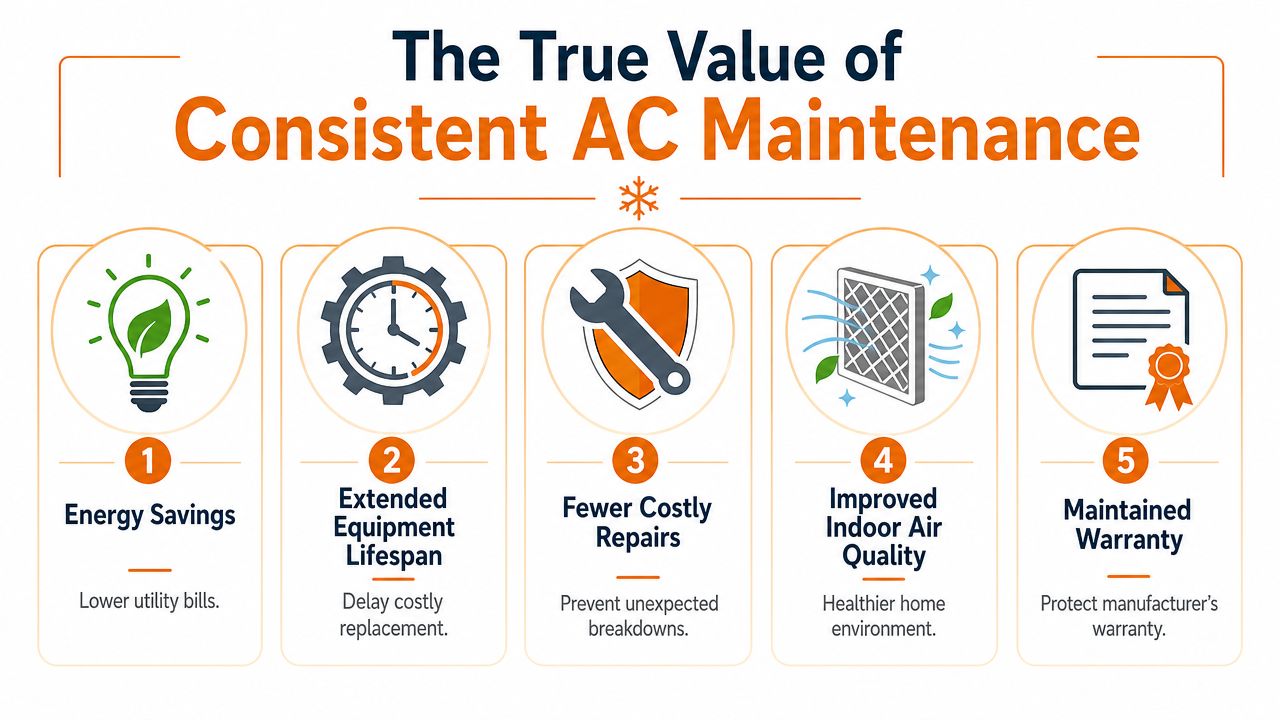
Homeowners usually ask about maintenance because they want to avoid a repair bill. That's part of it, but the bigger value is control. Regular service gives you more control over energy use, comfort, timing, and replacement decisions.
Lower strain usually means lower operating cost
When coils are cleaner, airflow is healthier, and controls are working properly, the system doesn't have to fight for every degree of cooling. That matters in a Florida summer when your unit may run for long stretches day after day.
If you're looking at the whole-home side of efficiency, not just HVAC service, it also helps to review other ways to improve energy efficiency around the house.
Maintenance helps delay replacement pressure
A neglected system often reaches the same conclusion homeowners hate hearing: it's still running, but it's becoming unreliable. Regular maintenance doesn't make equipment last forever, and no honest technician should promise that. What it does do is reduce preventable wear, catch failing parts earlier, and help you get more stable performance from the equipment you already own.
That's especially important if your unit is older and you're trying to postpone a major purchase. If the system is near the end, then AC replacement options become the right conversation. If timing is the issue, financing options from $89/mo may help some homeowners plan the change without waiting for a total breakdown.
Here's a useful visual summary:
Indoor air quality and electrical safety are part of the picture
A maintained system usually does a better job supporting cleaner indoor conditions because airflow stays more consistent and moisture issues are less likely to linger unnoticed. That matters in homes where occupants already notice musty smells, dust complaints, or rooms that never seem to feel quite right.
Maintenance also intersects with electrical safety. AC systems rely on breakers, disconnects, wiring, capacitors, and controls that all need to be in sound condition. When technicians find larger electrical concerns around the HVAC circuit or inside the home, those may call for licensed work such as electrical service work, electrical panel upgrades, electrical rewiring, or even related improvement projects like lighting fixture installation.
Maintenance plans can make the schedule easier to keep
For homeowners who know they're more likely to remember service if it's already scheduled, maintenance plans are one practical option. Al-Air Corporation offers preventive maintenance in the Central Florida and Greater Tampa market, which can help keep spring and fall visits on a set rhythm rather than waiting until the system starts showing stress.
When to Schedule Your AC Service in the Orlando Area
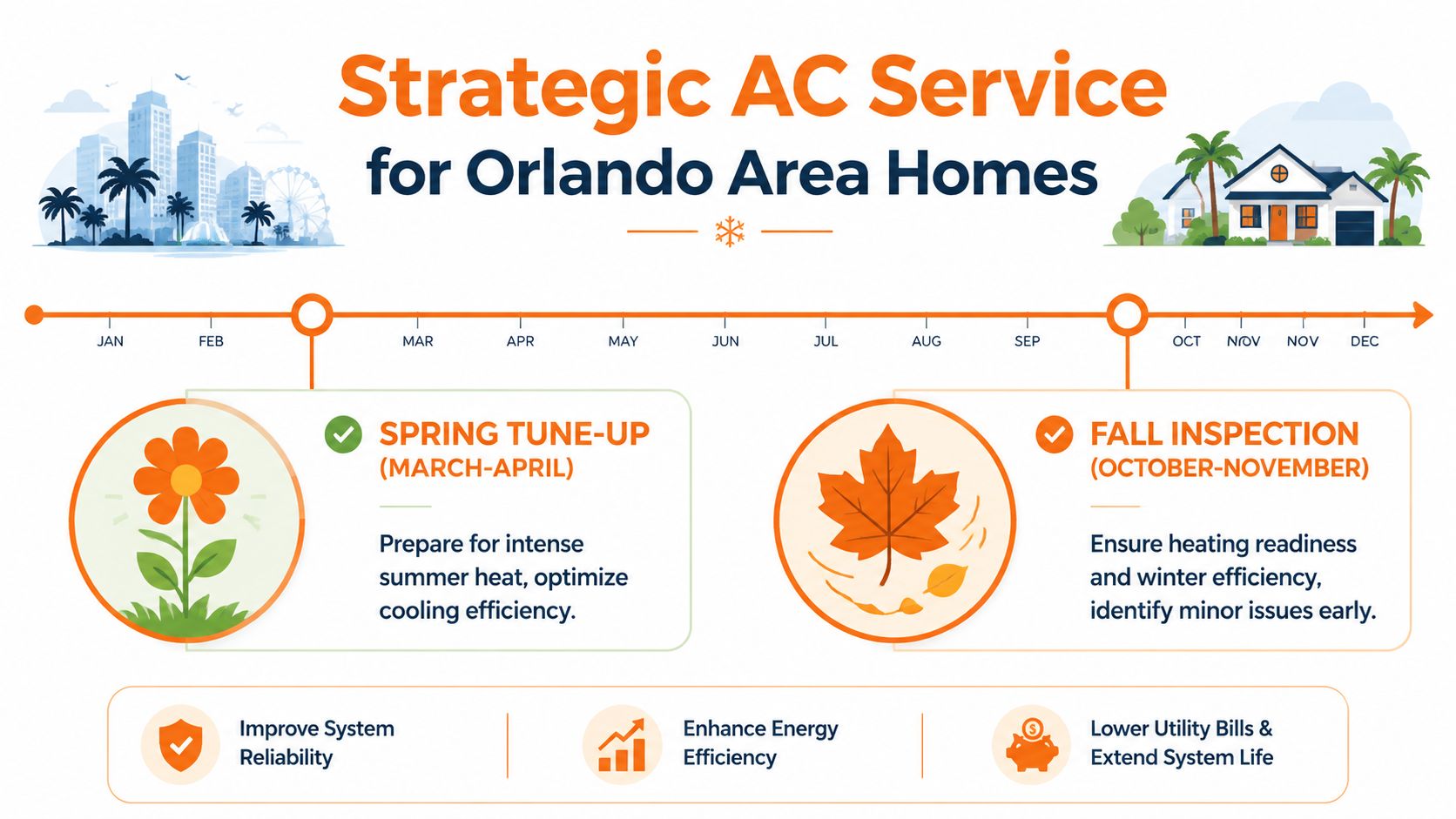
The best schedule in this market is simple. Book one visit in spring and one in fall.
Spring service should happen before the real heat settles in
For most Orlando-area and Tampa-area homeowners, March through April is the sweet spot for the first visit. That timing gives the system a chance to be cleaned, tested, and corrected before the heavy summer load starts.
The advantage isn't only mechanical. It's also practical. When your system fails in the middle of peak heat, service calendars get tighter, parts delays feel longer, and your house gets uncomfortable fast.
A spring visit is where technicians often catch:
- Drain problems early: Before humid weather pushes more water through the system.
- Weak electrical components: Before long run cycles expose them.
- Outdoor coil debris: Before the condenser has to reject heat at full summer demand.
- Cooling performance concerns: Before they become emergency calls.
If you're trying to line up service in the local market, this guide to expert AC service in Orlando, Tampa, and Lakeland can help you think through timing.
Fall service is the cleanup and inspection visit
The second visit fits best in October through November. By then, your AC has spent months fighting heat, humidity, and storm season. A fall inspection gives the technician a chance to check what the summer did to the system.
That visit matters because some issues don't become obvious while the unit is surviving the season. After summer, it's easier to evaluate residue in the drain system, coil condition, electrical wear, and whether the heat side of a heat pump is ready for the occasional cold snap.
Don't wait for the first truly hot week or the first cool night. Schedule before the rush, not during it.
Common AC Maintenance Questions from Florida Homeowners
Can I maintain my AC myself?
Partly, yes. Fully, no.
The key distinction is between homeowner upkeep and professional service. Daikin's guidance explains that homeowners can replace filters and keep the outdoor unit clear, while refrigerant work, electrical tasks, and deep cleaning require a licensed professional. That matches what works in the field.
What homeowners should handle:
- Check the filter regularly: In Florida, monthly checks are smart because heavy runtime and indoor air conditions can load filters quickly.
- Keep the outdoor unit clear: Remove leaves, weeds, and debris that restrict airflow.
- Pay attention to warning signs: Musty smells, weak airflow, water around the air handler, and unusual noises all deserve attention.
- Watch your thermostat behavior: If the system runs longer than normal or struggles to satisfy the set temperature, don't ignore it.
What should stay with a licensed technician:
- Refrigerant diagnostics and repairs
- Electrical testing and component replacement
- Deep coil cleaning
- Drain clearing when backups or repeated clogs are involved
- Performance testing and system-level diagnosis
Is once a year ever enough in Florida?
For some homes with lighter seasonal use, once a year may keep things acceptable. But for most Central Florida homeowners, it's not the schedule I'd recommend. The climate is too demanding, and the common local failure points show up too often between annual visits.
If your system runs hard, your house stays occupied most of the day, or your property deals with heavy humidity, pets, trees, or coastal exposure, twice-yearly service is the safer standard.
Are maintenance plans worth it?
They can be, especially for homeowners who don't want to keep track of scheduling on their own.
The value isn't that a plan magically prevents every repair. It's that planned visits happen on time, small issues get a better chance of being caught early, and you're less likely to drift into the “we'll deal with it later” pattern that usually ends with a breakdown in the hottest weather.
For busy households, second homes, and rentals, a maintenance plan often makes more sense than relying on memory.
What are the signs my AC needs service sooner?
Don't wait for total failure. Call sooner if you notice any of the following:
- Water where it shouldn't be: Around the air handler, drain line, or ceiling below the unit
- Warm or weak airflow: Especially if the thermostat is set correctly
- Musty odors: Common with moisture and drain-related problems
- Frequent cycling: System turns on and off in a way that feels abnormal
- Outdoor unit looks dirty or overgrown: Restricted airflow hurts performance
- Noise changes: Buzzing, clicking, rattling, or humming that wasn't there before
One issue doesn't always mean major damage. It does mean the system is asking for a closer look.
What if my AC breaks down anyway?
Even well-maintained systems can fail. Parts wear out, storms happen, and older units sometimes choose bad timing no matter how careful you've been.
If your AC stops cooling, first check the thermostat setting, filter condition, and breaker position. If those basics look normal, don't keep forcing the system to run. Shut it down if you see ice, water overflow, or obvious electrical concerns, then schedule professional help.
For repair situations, homeowners can book AC repair service calls when the problem is active and needs diagnosis.
Does HVAC maintenance affect other home systems?
Sometimes it does. HVAC problems can expose weak electrical circuits, panel limitations, unsafe disconnects, or wiring issues near the air handler or condenser. In older Florida homes, those problems may sit unnoticed until the cooling system starts drawing heavy summer load.
That's one reason homeowners doing bigger upgrades should think about the house as a system, not just the AC box outside.
If your system is due, don't wait for the next heat wave to find out what's been building inside it. Al-Air Corporation serves Central Florida and Greater Tampa homeowners with HVAC and electrical service backed by more than 14 years of local experience. Call Al-Air at (407) 506-5957 or schedule service online to book your next AC maintenance visit.