
When your AC quits in Central Florida, same-day service is not just about comfort. Al-Air, a residential HVAC company serving Orlando and nearby communities, is one example of why homeowners should screen for booking speed, licensing, and refrigerant credentials before the truck arrives.
TL;DR: Summary
- The best same-day AC repair booking starts with three checks: confirmed arrival timing, Florida HVAC license verification, and EPA Section 608 certification if refrigerant work may be involved.
- In Florida, you can verify a contractor through the DBPR search portal at MyFloridaLicense.com by name, license number, city, county, or license type.
- EPA Section 608 certification is required for technicians who service or repair equipment that could release regulated refrigerants, including most HFC-based residential AC systems.
- Al-Air publicly lists same-day availability, 24/7 phone or text contact, and online booking, which makes response confirmation and after-hours pricing fair questions to ask before booking.
- Ask about diagnostic fee, after-hours surcharge, stocked parts, make-and-model coverage, and whether repair or replacement is more practical if the system has multiple defects.
A fast appointment only helps if the company can actually diagnose the problem correctly and do the work legally. These seven booking questions, plus a few verification steps, help you filter urgent AC service without guessing.
When does same-day AC repair make sense?
Yes, same-day AC repair makes sense when cooling has stopped, indoor temperatures are climbing, or water or electrical issues could damage your home. In Orlando and Lakeland heat, waiting even one extra day can turn a simple repair into a bigger equipment or moisture problem.
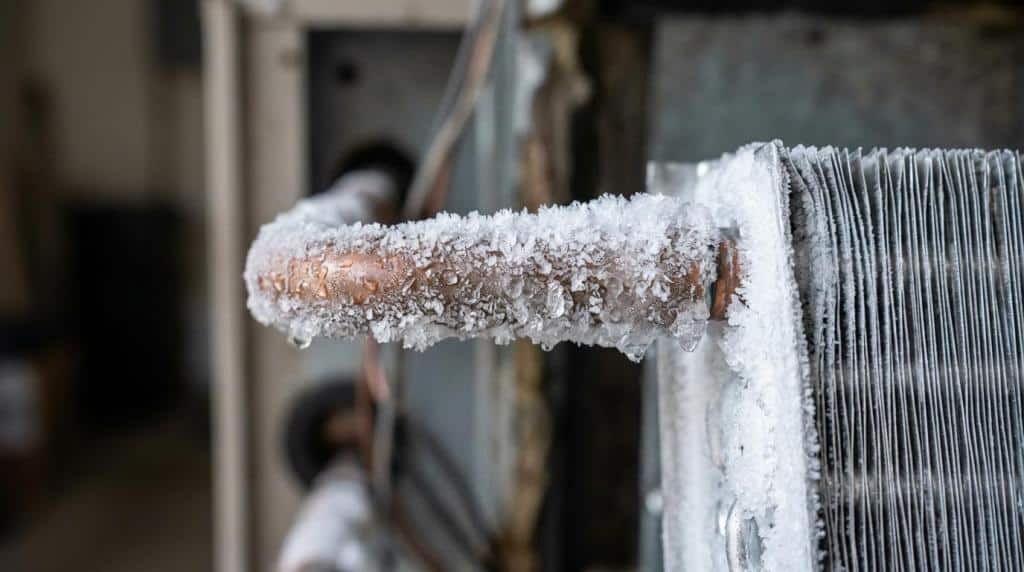
If the system is blowing warm air, will not turn on, trips the breaker, leaks water, or makes sudden grinding or buzzing noises, same-day service is usually the right move. A frozen coil also counts, even if the unit still runs, because continued operation can strain the compressor and hide airflow or refrigerant problems.
A common misconception is that every AC issue is an “emergency” in the same sense. If your home is still holding a safe temperature and the unit is cooling part of the house, same-day daytime service may be enough. If a child, older adult, or someone with a medical condition is inside, the urgency changes fast.
How fast should a company confirm your appointment?
A same-day appointment should be confirmed quickly, not vaguely. In Central Florida, Al-Air advertises same-day availability plus 24/7 phone or text contact and online booking, so it is reasonable to ask for a real arrival window and dispatch confirmation.
Ask two timing questions right away: “Can you confirm this is a same-day slot?” and “What arrival window should I expect?” A useful answer includes a time range, not just “someone will call you.” If you book late in the day, ask what happens if the technician finds a part that is not on the truck. That tells you whether “same-day service” means diagnosis only, full repair, or best effort depending on parts.
“Al-Air states that most AC service calls are scheduled the same day, which makes written scheduling confirmation more useful than a vague promise of quick service.”
Do not assume speed equals quality. A rushed visit without a clear diagnosis can lead to repeat calls, and the U.S. Department of Energy has noted that field studies found significant defects in more than half of installed AC systems. If the booking process sounds disorganized, the repair process may be too.
What are the 7 questions to ask before booking same-day AC repair?
These seven questions will screen speed, legal compliance, cost clarity, and repair readiness in under five minutes. They work whether you call, text, or book online.
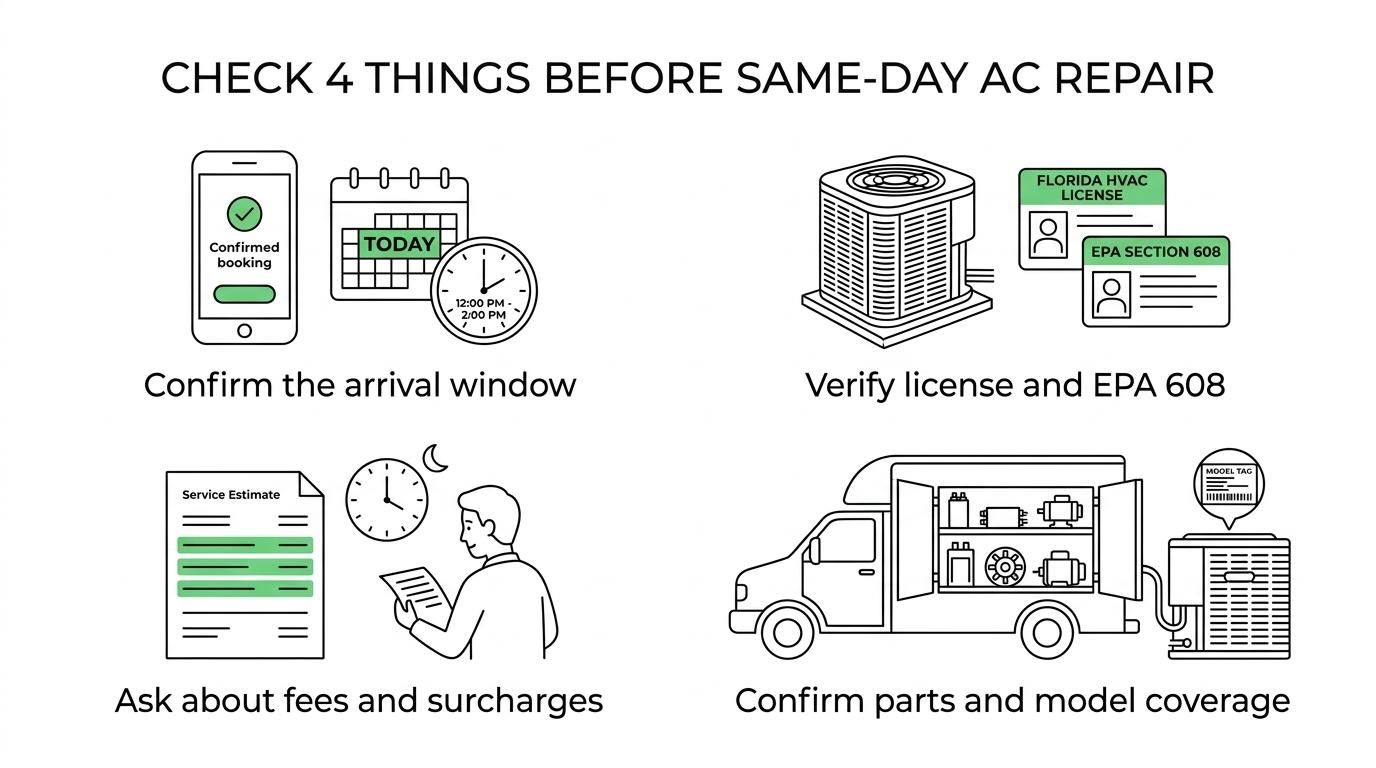
Before you commit, ask the dispatcher or office staff the questions below and write down the answers. If a company avoids basic verification or fee questions, treat that as useful information.
- Can you confirm a same-day arrival window in writing?
- What is your Florida HVAC license number?
- If refrigerant work is needed, will the technician have EPA Section 608 certification?
- What fees apply today: diagnostic fee, trip charge, or after-hours surcharge?
- Do you service my AC make and model?
- Do your trucks usually carry common repair parts for residential systems?
- If the problem points to replacement instead of repair, can you explain the options before any work starts?
Question 2 and Question 3 matter more than many homeowners realize. A state license checks legal authority to perform regulated HVAC work in Florida, while Section 608 covers refrigerant-related tasks. Those are connected, but they are not the same credential.
How do you verify a Florida HVAC license before the technician arrives?
Use DBPR’s official search portal at MyFloridaLicense.com. Florida homeowners can verify a contractor by name, license number, city, county, or license type before any work starts.
Step 1 is simple: ask the company for its exact business name and license number when you book. Step 2: search the official DBPR portal, not a directory site or social profile. Step 3: match the result to the business information you were given, including location and license type. If details do not line up, pause the appointment until they do.
This is also where many homeowners confuse “licensed, bonded, and insured” with state verification. Insurance matters. Bonding matters. But neither replaces checking the license itself through DBPR. If a dispatcher hesitates to provide the number, that is a fair reason to keep calling other companies.
How do you confirm EPA Section 608 certification for refrigerant work?
Ask before anyone opens the refrigerant circuit. EPA Section 608 certification is required for technicians who maintain, service, repair, or dispose of equipment that could release regulated refrigerants, including most HFC-based residential AC systems.
Step 1: ask whether your symptom is likely to involve refrigerant work. No-cool complaints, icing, leak suspicion, or low-charge discussions often do. Step 2: ask whether the assigned technician holds Section 608 certification. Step 3: ask the tech to confirm that credential on arrival if refrigerant handling becomes part of the repair.
A common mix-up is assuming general HVAC experience covers refrigerant compliance automatically. It does not. Section 608 is a specific EPA certification, and the EPA states those credentials do not expire. If the issue turns out to be a clogged drain line or thermostat setting, Section 608 may not be the deciding factor. If the work touches the refrigerant circuit, it is.
Should you choose same-day repair or emergency after-hours service?
Choose emergency after-hours service when waiting could create a health, safety, or property-damage problem. Choose same-day daytime repair when the system is failing but the home is still stable and the risk is manageable for several hours.
If the AC stops at 9 p.m., the right choice depends on consequences, not just inconvenience. No cooling in a home with vulnerable occupants, active water leakage near ceilings, electrical smells, or repeated breaker trips can justify immediate service. A mildly underperforming unit that still cools enough to keep the home safe may be better handled in the next same-day window.
“Al-Air lists 24/7 call or text support with no after-hours surcharge, so homeowners should ask every company how emergency timing changes the total price.”
One pro tip here: ask whether “emergency” changes only arrival time or also changes repair pricing. Some companies separate the trip fee, diagnostic fee, and after-hours surcharge. If you do not ask upfront, the cheapest phone quote can become the most expensive invoice.
Is repair or replacement the smarter choice for a broken AC?
Repair is smarter when the fault is isolated and the rest of the system is healthy. Replacement deserves a serious look when you have repeated failures, poor airflow, refrigerant leaks, or multiple system defects showing up in one visit.
This is where diagnosis matters more than speed. A capacitor, contactor, clogged drain, or thermostat problem often supports repair. A major leak, compressor damage, or a pattern of repeat no-cool calls can change the math. The DOE’s Building America guidance is useful here because it notes both how common system defects are and how much proper maintenance can reduce energy use, by as much as 50% in some cases.
Ask the technician to explain the problem at the system level, not just the failed part. If the coil is icing, is the root cause airflow, refrigerant charge, or both? If the breaker trips, is it the compressor, wiring, capacitor, or another electrical issue? If one answer leads to two more hidden faults, replacement may become the cleaner option.
- Repair usually fits: a single failed component, clear diagnosis, normal airflow, and no sign of broader refrigerant or duct problems.
- Replacement deserves discussion: recurring breakdowns, major leak-related repairs, or multiple defects discovered during the same call.
- Best next question: ask what condition the blower, coil, drain system, and refrigerant circuit are in before approving major spending.
What information should you send when you book online or by text?
Clear details speed dispatch. Because Al-Air offers phone, text, and online booking, the best booking message includes your address, main symptom, thermostat setting, unit location, and whether there is water, ice, or an electrical concern.
Step 1: describe the symptom in plain language. “AC runs but blows warm air” is better than “system broken.” Step 2: add urgency details, including indoor temperature, leaking water, burning smell, or breaker trips. Step 3: include access notes like gate codes, pets, or whether the indoor air handler is in the attic or garage.
Do not overdiagnose. Saying “I need refrigerant” can send the conversation in the wrong direction if the real issue is airflow or a control failure. A short, accurate symptom report helps the dispatcher send the right technician and prepare for the right kind of visit.
Which AC symptoms usually justify a same-day visit?
Loss of cooling, electrical symptoms, and water leakage usually justify same-day repair. Unusual noises, short cycling, frozen coils, or a system that will not turn on can also move from minor annoyance to equipment damage quickly.
The key is to think in terms of risk. If the symptom can damage the home, worsen the equipment, or make the indoor environment unsafe, same-day service is usually justified. If the issue is mostly comfort-related and stable, you may still want same-day service, but the urgency is lower.
- No cool air: indoor temperature rises fast in Florida, especially in upper floors and closed bedrooms.
- Breaker trips or burning smell: shut the system off and request urgent service.
- Water leaking: protect flooring and ceilings, then ask for same-day diagnosis.
- Ice on the line or coil: turn cooling off to prevent more strain and report the symptom clearly.
- Grinding, buzzing, or banging: stop running the system if the noise is severe.
A final misconception to avoid: “all makes and models” service does not mean every problem gets fixed on the first visit. It means the company is willing to diagnose a wide range of equipment. First-visit repair still depends on parts, access, and whether the real problem is isolated or part of a bigger system issue.