
Indoor air quality can feel invisible right up until it starts shaping everyday life in obvious ways. A room feels sticky even with the thermostat set correctly. Sleep becomes lighter and more interrupted. A mild stuffy nose turns into a pattern. The air may not look dirty, yet it can still affect comfort, rest, and health in measurable ways.
The Environmental Protection Agency defines indoor air quality as the air quality within and around buildings, especially as it relates to the health and comfort of occupants. That definition matters because comfort is not only about temperature. Air movement, moisture, ventilation, and particle levels all influence how a home feels and how people feel inside it.
For homeowners in Central Florida, this topic is especially relevant. Long cooling seasons, outdoor humidity, and tightly closed homes can allow moisture and pollutants to build up indoors unless the HVAC system, ventilation, and humidity control are working together.
Why indoor air quality affects daily comfort
Temperature gets most of the attention, but comfort is a layered experience. Air that is too humid often feels heavier and warmer than the thermostat reading suggests. Air that is too dry can irritate the nose and throat. Poor ventilation can make rooms feel stale, while excess airborne particles can create that dusty, never-quite-fresh feeling that lingers even after cleaning.
The EPA points to three core ideas for improving indoor air quality: control pollution sources, ensure adequate ventilation, and use supplemental filtration or air cleaning when needed. That framework is useful because it explains why comfort issues do not always respond to a lower thermostat setting. If the actual problem is high humidity, weak airflow, or polluted indoor air, cooling alone may not fix it.
Here is a simple way to think about the overlap between comfort, sleep, and health:
| Indoor air quality factor | Comfort impact | Sleep impact | Health concern |
|---|---|---|---|
| High humidity | Sticky rooms, clammy skin, warmer feel | Restlessness, more wake-ups | Mold growth, respiratory irritation |
| Low ventilation | Stale air, lingering odors | Poorer overnight air freshness | Pollutant buildup indoors |
| PM2.5 and fine particles | Dusty feel, irritation | More sleep disruption in research | Lung irritation, asthma symptoms |
| Mold and dampness | Musty odor, persistent discomfort | Worse subjective sleep quality | Coughing, wheezing, congestion |
| Poor filtration | More dust and allergens | Bedroom irritation at night | Ongoing particle exposure |
A comfortable home usually has balanced airflow, steady humidity, and enough fresh-air exchange to prevent pollutants from accumulating. When one of those elements drifts off target, the difference can be felt long before a monitor confirms it.
How humidity and ventilation affect sleep quality
Sleep and air quality are more connected than many people realize. The body sleeps best in an environment that feels stable, quiet, and easy to breathe in. If a bedroom is muggy, stale, or dusty, the body often responds with more tossing, more awakenings, and less restorative sleep.
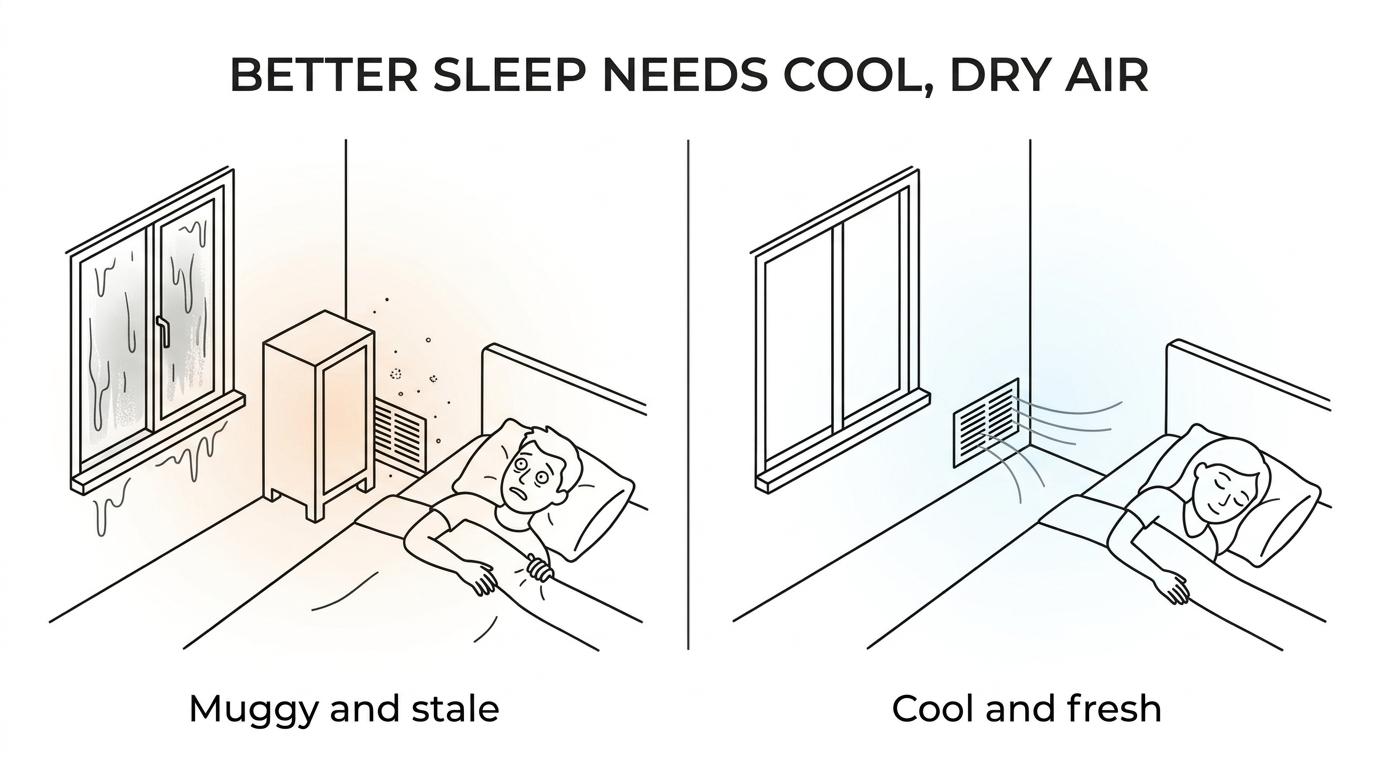
Research supports that link. Recent studies indexed in PubMed found associations between higher humidity, fine particle exposure, carbon dioxide, and lower sleep quality or sleep efficiency. One large study reported that even small increases in relative humidity and PM2.5 were associated with changes in sleep stages and higher arousal measures. That does not mean every rough night is caused by indoor air, but it does show that bedroom conditions can influence sleep in ways people may not immediately suspect.
Ventilation matters here too. When a bedroom remains closed for long periods with limited fresh-air exchange, carbon dioxide and other indoor pollutants can build up. The room may still feel cool, yet the air can seem flat or stale by morning. Many homeowners know that sensation well even if they have never measured it.
After noticing a pattern for a few weeks, many people start to connect poor sleep with the room itself rather than the mattress or bedtime routine.
Common signs that bedroom air may be affecting sleep include:
- Waking up stuffy or congested
- A musty odor near bedding or closets
- Condensation on windows
- Feeling clammy overnight
- Needing to lower the thermostat just to feel comfortable
- More dust than expected on nightstands and vents
The EPA recommends keeping indoor humidity below 60%, with an ideal target of 30% to 50%. The CDC also points to a low indoor humidity range, around 30% to 50%, and advises keeping home humidity no higher than 50% all day long to limit mold growth. In practical terms, that means a bedroom that feels slightly cool, dry enough to avoid dampness, and well ventilated usually supports better rest than one that feels closed up and moist.
How airborne particles and mold affect health
Comfort and sleep are often the first signals. Health effects can show up soon after, especially in homes with moisture problems, poor filtration, or persistent dust and particulate exposure. The EPA notes that indoor air pollution can lead to immediate effects like eye, nose, and throat irritation, fatigue, dizziness, and worsened asthma symptoms.
Mold deserves special attention because it sits at the intersection of moisture, ventilation, and respiratory health. The CDC states that exposure to damp and moldy environments may cause symptoms that include stuffy nose, sore throat, coughing or wheezing, burning eyes, and skin rash. In households with asthma, mold exposure can be even more serious. The CDC also notes that breathing in mold can trigger an asthma attack whether or not the person is allergic to mold.
Fine particles matter as well. PM2.5 is small enough to remain airborne and be inhaled deep into the lungs. These particles can come from outdoor air, cooking, candles, smoking, construction dust, or poor filtration. In many homes, residents do not realize how much indoor PM2.5 rises during everyday activities. If ventilation is weak, those particles can linger longer than expected.
This is one reason air quality concerns often feel inconsistent. A home may seem fine most of the time, then suddenly feel uncomfortable after a rainy week, a heavy cooking day, or a minor water event that never fully dried out.
What homeowners can do to improve indoor air quality
A better indoor environment usually comes from several small improvements working together. One change can help, but the biggest gains tend to come from reducing moisture, improving ventilation, and making sure the HVAC system is filtering and moving air as intended.
A good first step is to check humidity. A simple hygrometer can show whether rooms are staying within the 30% to 50% range most of the day. If humidity regularly climbs above that, the home may need better dehumidification, AC performance checks, or moisture control around bathrooms, kitchens, laundry areas, or crawl spaces.
Useful actions often include:
- Humidity control: Keep relative humidity in the 30% to 50% range, and definitely below 60%
- Ventilation: Run bath fans during and after showers and use kitchen exhaust while cooking
- Filtration: Replace HVAC filters on schedule and use the right filter type for the system
- Moisture response: Dry damp materials within 24 to 48 hours to reduce mold risk
- Source control: Limit indoor smoke, strong chemical products, and unvented combustion sources
- HVAC care: Schedule routine maintenance so airflow, drainage, and cooling performance stay on track
Bedroom indoor air quality habits that support better rest
Keep the bedroom clean, dry, and slightly cooler than the main living space if possible.
That can mean washing bedding regularly, keeping supply and return vents unobstructed, avoiding over-humidifying the room, and watching for early signs of dampness behind furniture or around windows. If a bedroom always feels different from the rest of the house, airflow balance or duct conditions may need a closer look.
Filtration also deserves more attention than it often gets. A high-efficiency filter can help capture particles, but only if the HVAC system can handle it without restricting airflow. That balance matters. Better indoor air should not come at the cost of poor system performance.
Indoor air quality priorities for Central Florida homes
Florida homes face a specific mix of challenges. Outdoor humidity remains high for long stretches of the year, and air conditioning runs often. That cooling demand helps remove some moisture, but not every system controls humidity equally well, especially if it is oversized, aging, short-cycling, or dealing with airflow problems.
In Greater Orlando, Lakeland, and nearby communities, indoor air quality plans work best when they account for local weather rather than relying on one-size-fits-all advice. A home can be cool and still too humid. It can be clean-looking and still have particle issues. It can have a new AC system and still struggle with stale air in bedrooms if ventilation and duct performance were never addressed.
Homeowners in this climate often benefit from paying attention to a few recurring patterns:
- Musty smells after afternoon rain
- Uneven comfort from room to room
- Condensation near vents or windows
- Filters that load up unusually fast
- Persistent humidity despite steady cooling
These are not just comfort complaints. They can point to trapped moisture, weak filtration, or duct condition, poor airflow, or ventilation gaps that affect how the whole house feels.
When HVAC and indoor air quality service makes sense
Some indoor air issues are easy to spot and fix. Others are layered. A homeowner may replace filters and clean visible dust, yet still deal with poor sleep, lingering odors, or a clammy feeling indoors. That is often the point where a professional assessment becomes useful.
An HVAC team with training in indoor air quality can evaluate system airflow, filtration, humidity control, drain performance, ventilation, and duct condition together rather than treating each symptom in isolation. For many homes, that leads to clearer answers and simpler next steps.
A thoughtful service visit should include clear, no-pressure guidance, practical options, and code-compliant work. In a climate like Central Florida’s, local experience matters because moisture control is rarely separate from cooling performance. When those systems work together, the result is not only a better reading on a monitor. It is a home that feels fresher during the day, calmer at night, and healthier over time.