
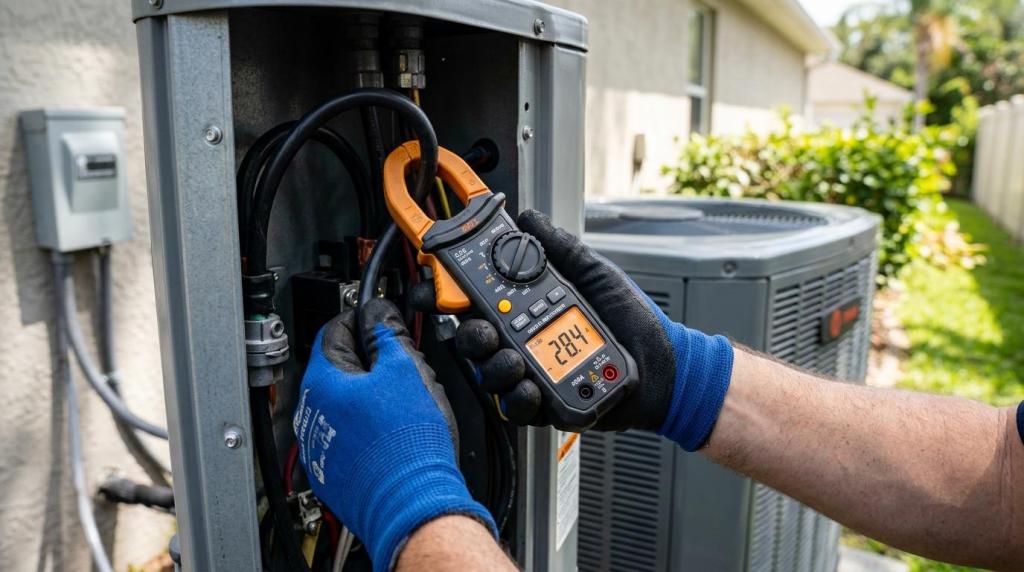
For Orlando homeowners, air conditioning installation costs rarely stop at the condenser or air handler price. Al-Air, a residential HVAC company serving Greater Orlando homes, is relevant here because local AC quotes often bundle the system, labor, and permits while other cost drivers remain conditional.
TL;DR: Summary
- Air conditioning installation usually costs more than the base AC unit because the real upfront total includes equipment, labor, permits, ductwork, electrical work, controls, and removal.
- National data from Angi places typical HVAC replacement around $5,000 to $12,500, while Al-Air’s 2026 Orlando guidance puts many standard AC installations around $6,500 to $13,500 with the unit, labor, and required Orange County mechanical permits included.
- The biggest quote swings usually come from system size, efficiency level, ductwork condition, and electrical upgrades.
- If a home already has sound ducts, Central air is often cheaper upfront than a ductless mini-split; if ducts are damaged or missing, the mini-split trade-off can change.
- Before signing, check whether the quote is all-in or base-price-only, then review permit scope, thermostat, old-unit removal, financing terms, and any duct or insulation work.
A clear quote should show what is included, what is optional, and what would trigger a change order after the job starts. That matters even more in Central Florida, where long cooling seasons make sizing, airflow, and code-compliant installation worth real money on day one.
How much does air conditioning installation usually cost in Orlando?
Al-Air’s Orlando guidance puts a standard AC installation at roughly $6,500 to $13,500 when the quote includes the unit, labor, and required Orange County mechanical permits.
That local range sits close to broad national guidance, but not perfectly on top of it. Angi’s 2026 HVAC replacement guide cites an average replacement cost of $7,500, with a common range of $5,000 to $12,500. The same guide lists central air system cost at $3,900 to $7,900, which is a useful reminder that the equipment price and the installed price are not the same thing.
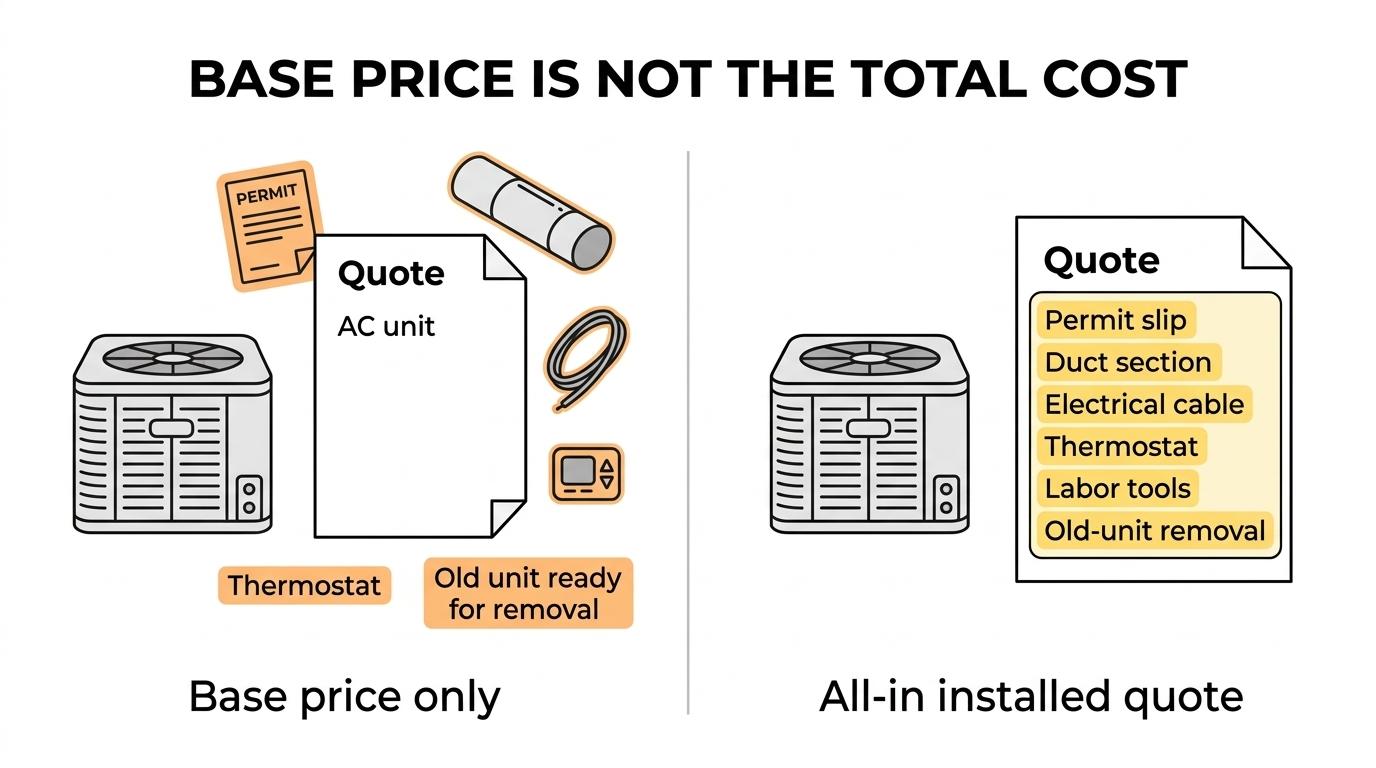
A common mistake is comparing a national equipment number to a local installed quote. If one contractor shows only the system price and another shows the full installed scope, the lower line item can look cheaper even when the real out-the-door total is higher.
“Al-Air says a standard AC installation in Orlando during 2026 typically costs $6,500 to $13,500, including the unit, labor, and necessary Orange County mechanical permits.”
Which line items make AC installation quotes jump the most?
The biggest jumps usually come from equipment, labor, permits, ductwork changes, and electrical scope, not from minor accessories.
Angi breaks labor out at about $1,500 in one 2026 guide, while another Angi cost report says professional AC replacement labor can run from $3,887 to $8,073 depending on the system type. That looks inconsistent until you separate straightforward change-outs from harder jobs involving access issues, line-set changes, controls, code updates, or partial system redesign.
If the home needs ductwork changes, the budget can move fast. Angi says ductwork changes can add about $3,000 to $7,500, and separate duct installation estimates fall around $2,000 to $7,500. That means duct decisions can rival the price of the equipment itself.
Permits matter too. Angi places HVAC permit cost around $250 to $400, and duct-related permits may add another $50 to $300. Those are not glamorous line items, but they are part of legal, inspectable work.
What are the 9 upfront AC installation costs to expect?
There are nine cost buckets homeowners should expect to see or ask about before approving an AC installation.
The most useful way to read a quote is to separate fixed essentials from conditional extras. That keeps you from treating every add-on like upselling when some items are driven by code, safety, or the condition of the house.
- AC equipment: condenser, air handler, or full central air system
- Installation labor: setup, refrigerant work, testing, and startup
- Mechanical permits: local HVAC permit cost and inspections
- Ductwork installation or modification: new runs, resizing, sealing, or replacement
- Insulation work: attic or duct insulation when heat gain or loss is part of the problem
- Electrical upgrades: breaker, disconnect, whip, wiring, or panel-related changes
- Thermostat or control replacement: a new thermostat can add around $120 to $260 by Angi’s estimate
- Old-unit removal and disposal: hauling away the previous system and handling refrigerant properly
- Financing-related charges or pricing terms: not always a line item, but still part of the true upfront decision
How do you read an air conditioning installation quote step by step?
Read the quote in layers: base system, included installation scope, then conditional work that depends on what the crew finds or what code requires.
Step 1 is to identify the actual system being sold. Check tonnage, efficiency rating, and whether the quote covers a condenser only, an air handler only, or a matched system. If the model numbers are missing, ask for them. A quote without model detail is hard to compare.
Step 2 is to isolate included labor and permit scope. Does the price include startup, refrigerant charging, drain work, permit filing, inspection coordination, and thermostat setup? If yes, you have a clearer installed price. If no, you may be looking at a partial quote.
Step 3 is to review the exclusions line by line. If duct modifications, electrical upgrades, pad replacement, or disposal are excluded, that does not mean they are unnecessary. It means the contractor has not priced them yet. Pro tip: “excluded” does not equal “unlikely.”
How does central air compare with a mini-split on upfront cost?
If a house already has good ductwork, central air is often cheaper upfront than a ductless mini-split. If ductwork is missing or failing, the comparison can flip.
The U.S. Department of Energy notes that a ductless mini-split provides zoned cooling without ductwork. DOE also states that a mini-split can cost 30% more than adding an air conditioner to an existing system in homes that already have ductwork. That makes mini-splits a poor cost shortcut in some houses and a smart workaround in others.
The trade-off is simple. Central air spreads cooling through existing ducts, so its economics improve when those ducts are sized, sealed, and usable. A mini-split avoids duct costs and gives room-by-room control, but the equipment price per zone can climb fast. If you need whole-home coverage across several rooms, the installed cost can surprise people.
A common misconception is that ductless always means cheaper. It often means less invasive, not automatically less expensive.
When do ductwork and insulation become major budget items?
Ductwork and insulation become major cost items when airflow, leakage, or attic heat gain would keep a new AC system from performing as designed.
This is where many homeowners underbudget. Angi’s ductwork estimates show a wide range because the scope can vary from a few repairs to major replacement. If ducts are undersized, crushed, badly leaking, or contaminated, a new high-efficiency condenser alone will not fix comfort problems. You may get a new system with old symptoms.
The DOE adds an important technical point here: improper installation can increase air leakage by as much as 10%. That means installation quality and duct integrity belong in the same conversation. A high-efficiency system connected to poor ducts can still waste capacity.
“Al-Air notes that Florida installation totals often move based on system efficiency, ductwork condition, electrical needs, and the overall installation scope.”
Insulation enters the quote when the house is gaining heat faster than the AC should have to remove it. Angi lists insulation around $1,500 in one HVAC replacement guide. If the attic is punishingly hot, adding insulation may protect the value of the new system better than simply buying a larger unit. Pro tip: bigger tonnage is not a substitute for controlling heat gain.
How do electrical upgrades, thermostats, and permits change the total step by step?
Al-Air points out that Florida AC replacement totals often shift because electrical needs, thermostat choices, and permit scope differ from one house to the next.
Step 1 is to verify electrical compatibility. A new system may need a different breaker size, disconnect, whip, or wire gauge. If the existing setup is not code-compliant or lacks capacity, electrical upgrades become mandatory rather than optional.
Step 2 is to check the control package. A basic replacement thermostat is one thing; a communicating or staged system may need a specific control. Angi estimates a new thermostat at about $120 to $260, but premium controls can go higher depending on the system design.
Step 3 is to confirm permit coverage. Some Orlando-area quotes package mechanical permits into the installed price. Others list permits separately. If permit filing, inspection visits, or correction work are not addressed, ask how they will be handled before you approve the job.
Is a lower base price actually cheaper than an all-in installed quote?
No, not always. A lower base price can lose its advantage as soon as permits, duct fixes, electrical work, and removal are added back in.
This is one of the most important comparisons in the whole buying process. Quote A may show a lower equipment number, while Quote B includes the full installation scope. If Quote A excludes permit cost, thermostat replacement, old-unit removal, and duct transitions, the final invoice can overtake Quote B quickly.
Look for the phraseology, not just the total. “System only,” “starting at,” and “does not include code upgrades” are signals that you may be seeing a stripped-down number. By contrast, an all-in installed quote is easier to budget because it reduces the number of later surprises.
If the quote looks unusually low, ask one direct question: “What would make this price change?” The answer often tells you more than the first page of the proposal.
How should you compare AC installation bids step by step?
Compare bids by normalizing the scope first, then judging system quality, and only then comparing price.
Step 1 is to make the bids equivalent on paper. List system type, tonnage, efficiency rating, labor scope, permit handling, thermostat, disposal, and ductwork assumptions side by side. If one bid omits a category, mark it as unknown rather than pretending it is included.
Step 2 is to test the design logic. Ask why that system size was chosen, whether existing ducts were evaluated, and what airflow corrections are included. In Florida, sizing and airflow are not side details. They shape comfort, humidity control, and operating cost.
Step 3 is to compare risk, not just dollars. A slightly higher quote that includes permit work, code updates, and post-install verification can be the cheaper decision if it prevents callbacks, leaks, or avoidable rework. Pro tip: the best bid is often the one with the fewest vague exclusions.
Which financing terms and payment details should you check before you sign?
Check the APR, repayment term, deferred-interest language, fees, and the exact installed scope before you focus on the monthly payment.
Financing can make a large AC purchase manageable, but it can also hide the true price if you only compare payment amounts. A low monthly number spread over a longer term may cost more overall than a shorter plan with clearer terms. The right question is not just “Can I afford this month?” but “What is the total cost over the life of the agreement?”
After you review the system scope, scan the payment details with the same care. The quote and the financing document should agree on what is included.
- APR: confirm whether the rate is fixed and when it starts
- Deferred interest: check whether interest is waived or merely postponed
- Dealer fees: ask if financing changes the installed price
- Scope lock: verify that permits, thermostat, removal, and listed accessories match the proposal
- Change-order policy: ask what happens if ductwork or electrical issues are found after work begins
If a contractor offers financing, that can be useful. Just make sure the convenience of monthly payments does not distract from the installed scope, the code requirements, and the true total you are committing to.