
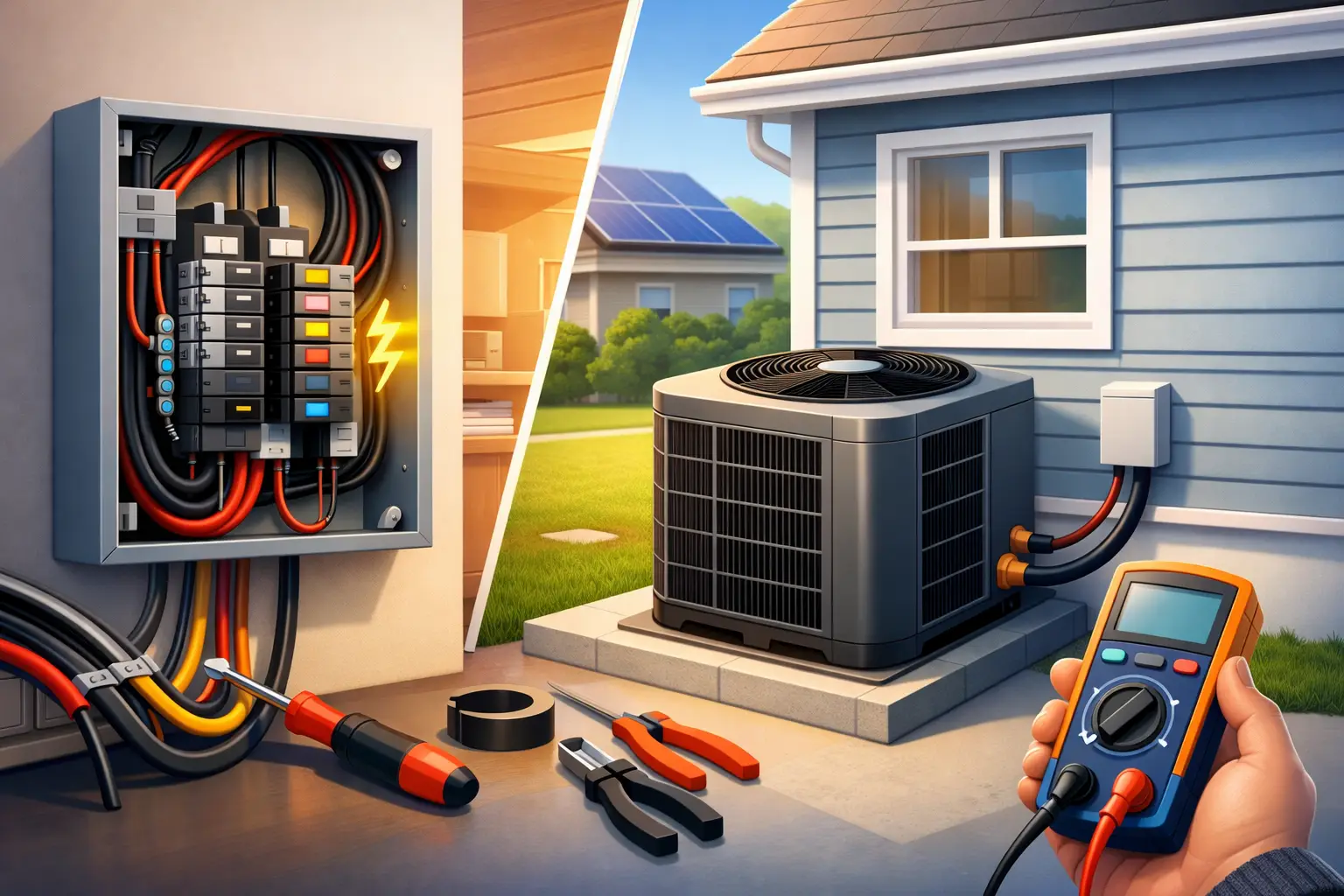
Your old AC finally gave out, you are ready for a replacement, and then the installer says the electrical panel may need attention first. That is where a lot of homeowners get frustrated. A panel upgrade for new AC is not an upsell by default. In many Florida homes, it is the step that makes the system safe, code-compliant, and able to run without tripping breakers every time the heat hits hard.
If you are replacing an aging unit or adding AC to a home that did not have central air before, the electrical side matters just as much as the equipment itself. The AC can be sized correctly, installed neatly, and still become a problem if your panel is maxed out, outdated, or missing the capacity the new system needs.
Why a new AC can trigger panel problems
A newer air conditioner is often more efficient than an older one, but that does not automatically mean your electrical setup is ready for it. The system still needs a dedicated circuit, the right breaker, proper wire sizing, and enough overall panel capacity to handle the load along with the rest of the home.
That is where the issue usually shows up. Many homes around Central Florida and Tampa were built when electrical demand looked very different. Fewer large appliances, no EV charger, less home office equipment, and in some cases a smaller AC system than what the home needs now. Add in a pool pump, updated kitchen, or electric water heater, and the panel can run out of room fast.
An older panel may still be functioning, but functioning is not the same as being the right fit for a new installation. If the service is undersized or the panel is packed with tandem breakers and workarounds, a new AC can be the point where the system finally needs to be brought up to today’s load requirements.
Signs you may need a panel upgrade for new AC
Sometimes the need is obvious. Other times it comes out during the estimate or permit review. If your technician or electrician starts asking about your panel, there is a reason.
A panel upgrade for new AC is more likely when your home has a 100-amp service and several major electric loads already in place. It is also common when the panel is full, when breakers have a history of tripping, or when there are signs of heat damage, corrosion, or outdated equipment that is no longer a good candidate for expansion.
Age matters too. If your panel is decades old, especially if it has known reliability concerns or limited replacement parts, adding a major load is not something to gloss over. The same goes for homes that have had piecemeal additions over the years. A sunroom, garage conversion, or workshop can quietly eat up the capacity that a new AC system now needs.
You may also run into a panel issue if you are upgrading from a smaller system to a larger one, adding heat strips, or installing a heat pump with different electrical requirements. The equipment choice changes the load calculation, and that calculation is what determines whether the existing panel still works.
What the electrician is actually checking
Homeowners often hear that the panel is “not enough” without getting a clear explanation. The real answer comes from load, condition, and code.
First, the electrician looks at service size. A 100-amp service may be enough for some smaller homes, but not always. A larger home with modern appliances and a new HVAC system may need 150 or 200 amps to operate comfortably and safely.
Next comes physical space. Even if the service capacity is adequate, the panel still needs open breaker space for the AC and related components. If the panel is already crowded, there may be no clean way to add the circuit.
Then there is equipment condition. A panel with rust, signs of overheating, double-tapped breakers, or outdated parts is a bad place to attach a brand-new system. The issue is not just whether it can turn on today. It is whether it can handle startup loads and years of operation without becoming a safety concern.
Finally, there is code compliance. New installations often trigger permit requirements, and permitted work gets inspected. If the panel does not meet current standards for the work being done, that can stop the project until the electrical side is corrected.
Can you install the AC first and deal with the panel later?
Usually, that is not the smart move. In some cases, it is not even an option.
If the panel cannot support the new system safely, installing the equipment anyway creates risk from day one. You could end up with nuisance trips, hard starts, overheating breakers, or failed inspection. That means delays, extra labor, and a lot more stress than handling it correctly upfront.
There are situations where the existing panel is technically adequate and no upgrade is needed. That is why this should be evaluated, not assumed. But if a licensed electrician says the panel is undersized, unsafe, or out of room, pushing past that is not saving money. It is usually just postponing the cost while adding avoidable problems.
What a panel upgrade for new AC usually includes
This depends on the home, but most upgrades involve more than swapping one box for another. The work may include replacing the main panel, increasing service capacity, updating grounding and bonding, installing new breakers, and making sure the AC has the correct dedicated circuit and disconnect.
Sometimes the existing meter setup or service entrance equipment also needs attention. In other homes, the issue is simpler and mainly involves replacing an outdated panel with a modern one that has enough capacity and proper protection.
The main point is that the electrical system and HVAC installation should be planned together. That avoids the common headache of one contractor pointing at the other when scheduling, scope, or inspection problems come up. When the same company handles both sides, the process is usually faster and clearer because there is no referral chain and no guessing about who owns what part of the job.
How much does it cost?
This is where honest answers matter. The cost of a panel upgrade tied to a new AC install can vary quite a bit based on the home, the panel size, whether the service needs to be increased, local permitting, and how much correction work is needed to bring everything into compliance.
A straightforward panel replacement is one thing. A full service upgrade with meter work, grounding updates, and additional electrical corrections is another. If the home has older wiring or previous unpermitted modifications, the price can move further.
That does not mean every job turns into a major project. Some homeowners only need a modest electrical update to support the new equipment. Others are already overdue for a panel replacement and the AC project simply brings it to the surface.
The best approach is to get a clear estimate that breaks out what is required now versus what is optional. That helps you understand whether the electrical work is directly tied to the AC install or part of a broader upgrade plan.
Why this matters more in Florida
In Central Florida and the Tampa area, the AC is not a luxury appliance. It is one of the hardest-working systems in the house. That means you do not want it sharing a weak electrical setup, especially during peak summer demand.
Florida homes also see a lot of long AC run times, storm-related power issues, and year-round electrical demand that exposes weak points faster. If your panel is already struggling, a new AC will not hide that. It will show it.
That is why speed matters, but so does doing it right. A rushed install that skips over panel capacity can leave you with a brand-new system and an old electrical bottleneck. Most homeowners would rather solve the full problem once than pay for callbacks and corrections later.
Choosing the right contractor for the job
This is one of those projects where coordination matters as much as workmanship. If your AC contractor says to call an electrician, and the electrician says to circle back to the AC company, you are the one stuck managing timelines, permits, and explanations.
For a job like this, homeowners are usually better served by a company that can evaluate both systems in one visit and tell them clearly what is needed, what is not, and what it will cost. That means no subcontractor shuffle, no mixed messages, and no waiting around while separate trades sort out responsibility.
Al-Air is built for exactly that kind of project because the HVAC and electrical work are handled under one roof by licensed pros who deal with these crossover issues every day.
If you are hearing that your panel may not support a new air conditioner, do not panic and do not ignore it. Ask for a straight answer, a real load evaluation, and a clear scope of work. The right fix should leave you with an AC system that cools reliably, passes inspection, and does not add one more thing to worry about when Florida heat is already doing enough.