
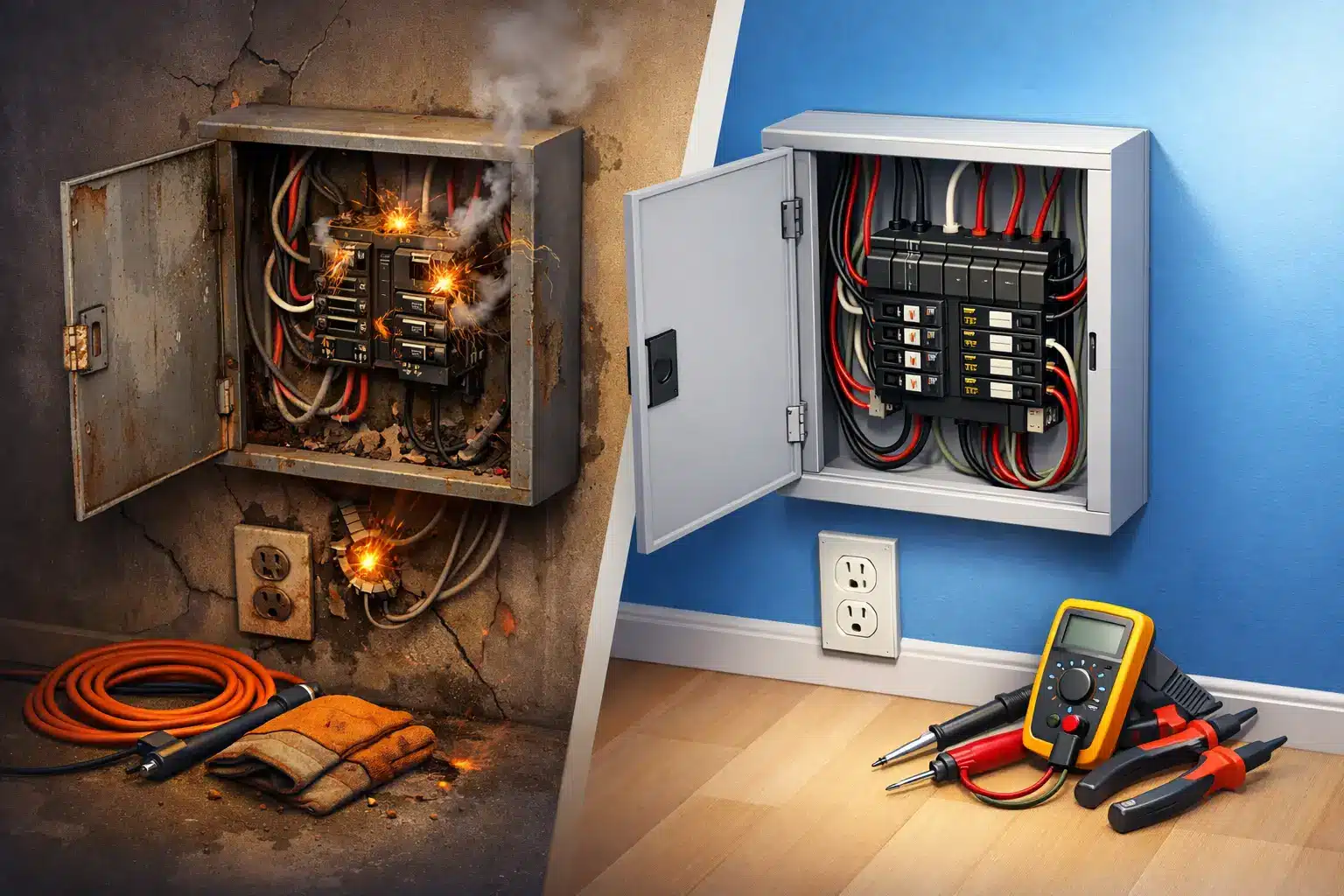
If your lights flicker when the AC kicks on, or a breaker trips every time someone uses the microwave and hair dryer at once, the question gets real fast: is an old electrical panel unsafe? Sometimes yes. Sometimes it is just outdated and overloaded. Either way, an aging panel is not something to ignore, especially in Central Florida homes where cooling systems, pool equipment, and newer appliances put serious demand on the electrical system.
An old panel does not automatically mean your home is in danger. Plenty of panels are simply old but still functioning. The issue is whether that panel can handle your current electrical load safely and whether it has developed wear, damage, corrosion, or known design problems over time. That is where age stops being a number and starts becoming a safety issue.
When is an old electrical panel unsafe?
A panel becomes unsafe when it cannot reliably control and distribute electricity the way it is supposed to. Your panel is the traffic controller for the entire home. When something goes wrong, breakers should trip to prevent wires from overheating, equipment from getting damaged, and fire risks from building up behind walls.
If a panel is worn out, improperly sized, damaged by moisture, or built with components known to fail, it may not trip when it should. That is the real danger. The risk is not just inconvenience. It is the possibility of overheated wiring, melted breakers, arcing, and in some cases electrical fire.
Age matters, but condition matters more. A 25-year-old panel that has been well maintained may be safer than a newer one that has corrosion, loose connections, or bad installation work. Still, older homes often have older service equipment, and that equipment was not designed for the way most families use power today.
Why older panels run into trouble faster
Homes built decades ago had a very different electrical load. They were not designed around multiple refrigerators, large flat-screen TVs, home offices, EV chargers, tankless water heaters, and high-efficiency HVAC systems running hard through long Florida summers.
That mismatch creates strain. A panel that was fine years ago can become a weak point once the house adds a new air conditioner, a pool pump upgrade, or a garage conversion with additional circuits. You may not notice a dramatic failure right away. More often, the warning signs build slowly.
Heat is another factor in Florida. Electrical components do not like excess heat, and neither do they like humidity. In garages, exterior meter locations, and older enclosures, years of environmental wear can lead to rust, corrosion, and degraded breaker performance.
Signs your old electrical panel may be a problem
The obvious warning sign is breakers tripping often. One trip once in a while is not unusual. Repeated tripping means the system is telling you something. It could be a circuit issue, an overloaded branch line, or a panel that is no longer handling normal demand correctly.
Watch for flickering or dimming lights, especially when large equipment starts up. If the AC turns on and the lights dip every time, that does not automatically mean disaster, but it does mean the system deserves a closer look.
Other red flags are more urgent. A panel that feels warm, smells burnt, shows rust, has discoloration around breakers, makes buzzing sounds, or has breakers that will not reset needs professional attention quickly. The same goes for a panel with double-tapped breakers, missing knockouts, loose wiring, or signs of water intrusion.
If you have added major equipment without upgrading the electrical service, that is another common trigger. New AC systems, electric ranges, hot tubs, workshop equipment, and EV chargers can push an old panel past its comfort zone.
Some older panel brands carry higher risk
Not every old panel is unsafe, but some older brands have earned a bad reputation because of known breaker or bus bar issues. Panels associated with Federal Pacific, Zinsco, and certain outdated split-bus setups are often flagged by electricians and home inspectors for good reason. In some of these panels, breakers may fail to trip under fault conditions.
That matters because the breaker is the safety device. If it does not do its job, the wiring can overheat while everything appears normal until it is not.
This is one reason a homeowner should not rely on age alone or on appearance alone. A panel can look clean on the outside and still have a serious internal problem.
Unsafe does not always mean immediate replacement
Here is the honest answer homeowners need: it depends. Not every old panel needs to be replaced on the spot. In some cases, the fix may be a targeted repair, breaker replacement, circuit correction, or load balancing work. In other cases, replacement is the smarter and safer call.
The decision usually comes down to a few factors. First is safety. If the panel has known failure issues, heat damage, corrosion, or signs of arcing, replacement is often the best move. Second is capacity. If the panel is full, undersized, or constantly stressed by current household demand, repairs may only buy time. Third is your plan for the home. If you are adding a new HVAC system, backup power setup, or EV charger, upgrading the panel now can save you from paying for piecemeal work later.
A lot of homeowners try to stretch an old panel because it still technically works. That can be reasonable for a short window in the right circumstances, but there is a difference between avoiding unnecessary replacement and waiting too long on a system that is already showing failure signs.
How panel problems affect HVAC and big appliances
This is where homeowners often get surprised. Electrical panel issues do not stay neatly inside the panel. They show up as house-wide performance problems.
If your panel is struggling, your AC may not get stable power. Motors and compressors do not like voltage issues. Neither do modern appliances with control boards. What starts as a panel problem can turn into nuisance shutdowns, damaged equipment, or expensive service calls that trace back to the same root cause.
That is especially relevant in Florida, where your cooling system is not optional. If a panel is already maxed out, installing a new AC system without addressing electrical capacity can create problems from day one. This is why homeowners often do best with a contractor who understands both sides of the job instead of sending you off to coordinate two separate companies.
What an electrician looks at during an inspection
A proper panel evaluation is not guesswork. An electrician will look at the panel size, breaker condition, wire terminations, grounding and bonding, signs of overheating, moisture damage, service entrance condition, and whether the panel is appropriate for the home’s actual electrical load.
They will also look for code and safety issues that may not be visible to a homeowner. That includes improper breaker types, overloaded circuits, aluminum wiring concerns in some homes, and additions or remodels that were tied in poorly over the years.
This kind of inspection matters because homeowners are often deciding between repair and replacement under stress. Clear answers help. If the panel is safe but outdated, you should hear that. If it is unsafe, you should know why in plain language, along with what needs to happen next.
Repair or replace – what makes the most sense?
Repair makes sense when the core panel is sound and the issue is isolated. Maybe you have one failing breaker, one overloaded circuit, or a connection problem that can be corrected safely. That is a targeted fix.
Replacement makes more sense when the panel has multiple issues, known design defects, no room for expansion, visible damage, or service capacity that no longer matches the home. If your house still has a small service and your lifestyle now depends on central AC, heavier kitchen loads, smart home gear, and garage equipment, replacement is often the cleaner long-term answer.
Budget matters too, and homeowners should not be pressured into more than they need. But it is also worth weighing the cost of repeated repairs, interrupted power, equipment risk, and future upgrade limitations. Financing can make a full replacement easier to handle when safety and capacity are both on the line.
When to act sooner rather than later
If you smell burning, see scorch marks, hear buzzing, notice water in or around the panel, or lose power on multiple circuits unexpectedly, do not wait. Those are same-day issues.
If the panel is old but not showing urgent symptoms, you still should not ignore persistent breaker trips, panel crowding, or upgrade plans that will add load. A calm inspection now is usually cheaper and less stressful than an emergency call after something fails.
For homeowners in Central Florida and Tampa, the practical answer is simple. If you are asking whether your panel is safe, there is probably a reason. Get it checked before summer demand, storm season, or a major equipment install pushes it harder than it can handle.
An old electrical panel is not always unsafe, but guessing is the part that gets expensive. The right move is a clear inspection, an honest explanation, and a fix that matches the real condition of the system. If the panel is fine, you get peace of mind. If it is not, you can handle it before it turns into a bigger problem – and that is always the better day to deal with it.