
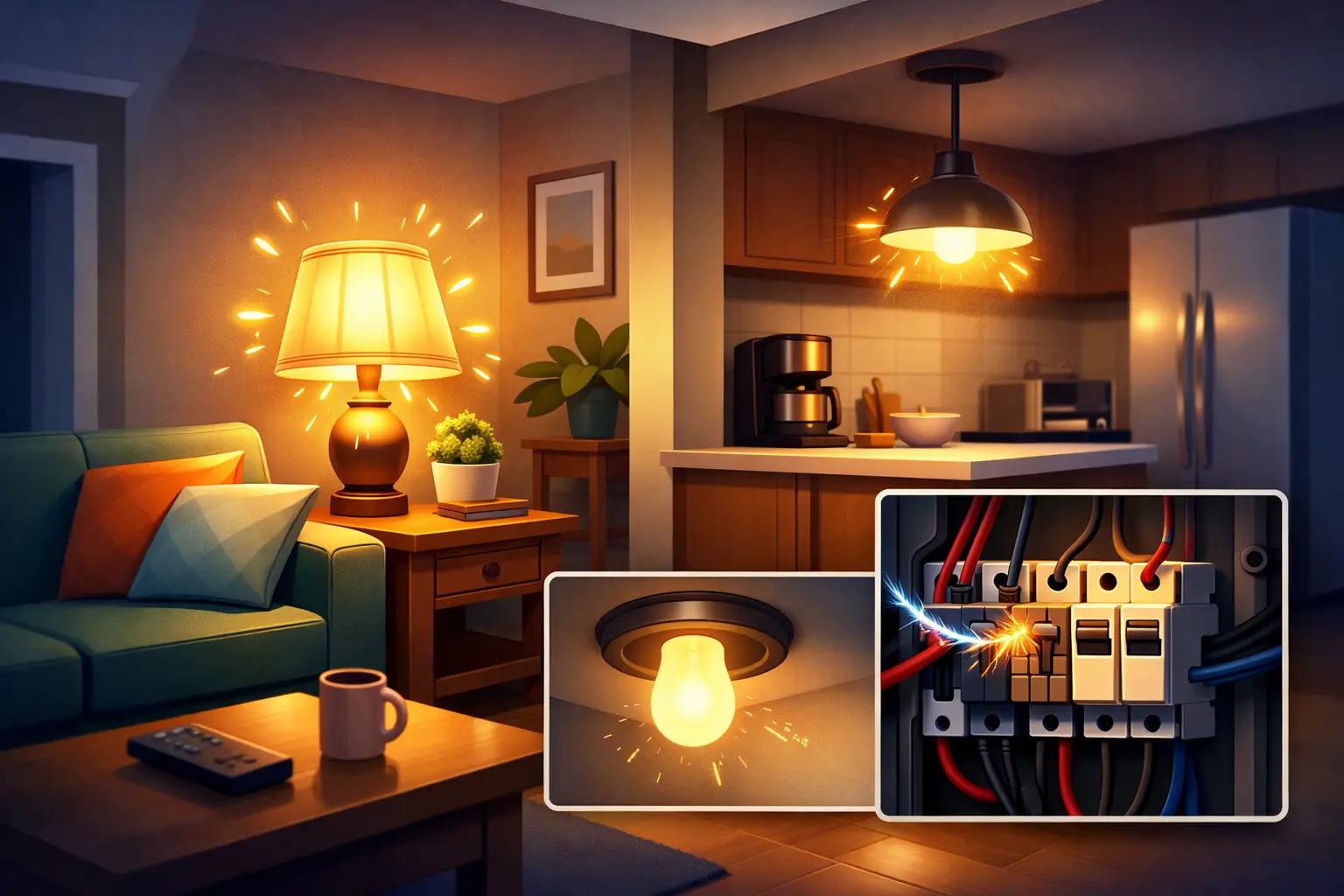
One light that flickers once in a while is annoying. Several lights flickering across the house is a different story. If you are asking why are lights flickering, the answer can be anything from a loose bulb to a wiring issue that needs attention fast.
The key is context. Does it happen in one fixture or multiple rooms? Only when the AC starts up, or all the time? In Florida homes, where cooling systems work hard and electrical loads stay high, those details matter. A small nuisance can point to normal wear, or it can be an early warning that your panel, wiring, or a specific connection is under stress.
Why are lights flickering in one room only?
If the problem is limited to one lamp, one ceiling fan, or one room, start small. A loose bulb is the simplest cause, especially with recessed lights or fixtures that vibrate slightly when doors close or fans run. Some LED bulbs also flicker because they are low quality, incompatible with the dimmer switch, or reaching the end of their life sooner than expected.
The fixture itself can also be the problem. A worn socket, loose wire connection, or failing switch may interrupt power just enough to cause a visible flicker. This is common in older homes and in fixtures that see a lot of daily use, like kitchen lights, bathroom vanity lights, and ceiling fans.
If swapping the bulb does not fix it, and the issue stays tied to one fixture or switch, that is usually a repairable local problem. It is less alarming than whole-home flickering, but it still deserves professional attention if it keeps happening.
Why are lights flickering throughout the house?
When multiple lights flicker at the same time, the issue is usually bigger than a bad bulb. That points toward voltage fluctuation, a failing connection, an overloaded circuit, or a problem at the panel. In some cases, the utility service connection or meter base may be involved.
This is where homeowners should stop guessing. If lights dim or flicker in several rooms, especially when large equipment turns on, your electrical system may be struggling to handle demand. Air conditioners, pool equipment, refrigerators, dryers, and EV chargers all place real load on the system. In a home with an aging panel or loose connections, that demand can show up first as flickering lights.
Sometimes homeowners notice it most in the evening, when the house is doing more at once. That pattern matters. So does any recent electrical work, storm activity, or remodeling.
Common causes of flickering lights
There is no single answer to why lights are flickering, but a few causes come up more than others.
A loose connection is one of the biggest concerns. Electricity needs a solid path. If a wire is loose at the fixture, switch, breaker, panel, or service entrance, power can cut in and out briefly. Besides causing flicker, loose connections can create heat. That moves the issue from inconvenience to safety hazard.
Overloaded circuits are another common cause. If too many devices are drawing power on the same circuit, the voltage can dip when equipment starts up. You may notice this when the microwave runs, the air handler kicks on, or someone starts the dryer. A brief dimming event is not always dangerous, but repeated flickering under load means the circuit and panel should be evaluated.
Dimmer compatibility is a more limited issue, but it happens often with LED upgrades. Not every LED bulb works well with every dimmer. The result can be flickering, buzzing, or uneven brightness. In that case, the fix may be as simple as using compatible bulbs and dimmers.
Panel problems also show up through flickering. Older panels, worn breakers, corrosion, and poor bus bar connections can all affect how power is distributed through the house. If the flicker is widespread or getting worse, the panel deserves attention.
Outside factors can play a role too. Utility service fluctuations, weather-related issues, and damaged service lines can all cause lights to flicker. If neighbors are seeing the same problem, the utility may need to investigate. If it is only your home, the issue is more likely on your side of the system.
When flickering lights are a safety issue
Not every flicker means emergency service, but some signs should move to the top of the list.
If lights flicker along with a burning smell, buzzing from the panel, warm outlets or switches, tripped breakers, or visible sparking, shut off the affected area if you can do so safely and call a licensed electrician right away. The same goes for sudden flickering after storm damage or if part of the house loses power while other parts stay on.
Another red flag is lights that brighten and dim dramatically instead of a quick, minor flicker. That can point to a serious neutral wire issue. Problems with the neutral connection can cause unstable voltage, which can damage appliances and electronics in addition to creating fire risk.
A house should not feel like it is straining to stay powered. If you are noticing repeated symptoms, it is better to get it checked before the problem becomes more expensive.
Flickering lights and your AC system
In Florida, this deserves its own section. It is normal for some lights to dip very slightly for a moment when a large AC compressor starts. That startup load is real. But normal and acceptable are not always the same thing.
If your lights flicker every time the AC turns on, and especially if the flicker is strong or getting worse, it may signal a problem with the unit, the dedicated circuit, or the home’s electrical capacity. A failing capacitor, hard-start issue, undersized wiring, or an aging panel can all contribute.
This is where having one contractor that understands both HVAC and electrical systems helps. Instead of sending you in circles between trades, the right team can look at the load, the panel, and the equipment together. That usually gets you to the real answer faster.
What you can check before calling
There are a few safe observations homeowners can make. Tighten or replace an easy-to-reach bulb. Note whether the flicker happens in one fixture or all over the house. Pay attention to whether it starts when a specific appliance turns on. Check if breakers are tripping or if certain outlets seem affected too.
You can also ask a neighbor if they have noticed the same issue recently. If they have, the utility may be involved. If they have not, the problem is probably within your home.
What you should not do is open the panel, pull devices out of the wall, or try to trace wiring yourself. Flickering lights can come from hidden loose connections, and those are not good DIY surprises.
When to call an electrician
Call if the flickering keeps happening, affects multiple rooms, shows up with other warning signs, or starts after installing a major appliance or new HVAC equipment. Call sooner if your home is older, your panel has not been updated in years, or you are already planning upgrades like a new AC system, generator hookup, or EV charger.
A licensed electrician can test for voltage issues, inspect connections, evaluate circuits, and determine whether the fix is a simple repair or part of a larger upgrade. Sometimes the answer is minor. Sometimes the flicker is the first visible sign that the panel is no longer keeping up with how the home is used.
For homeowners in Central Florida and Tampa, speed matters, but so does getting the right answer the first time. Al-Air handles both electrical and HVAC work in-house, which makes it easier to diagnose issues that cross between the two systems without sending you through referrals or guesswork.
Why fast action usually saves money
Homeowners often wait on flickering lights because the issue feels small. That makes sense. If the lights come back on and everything still works, it is easy to put it off.
But electrical problems usually do not fix themselves. Loose connections tend to worsen. Overloaded circuits keep carrying strain. Aging panels do not get more reliable during another Florida summer. Catching the issue early can mean a targeted repair instead of damaged equipment, emergency downtime, or a bigger rewiring job later.
If your lights have started flickering and you cannot explain why, trust the pattern. One bulb may be nothing. Repeated flickering is your house telling you something has changed, and it is worth listening before a small warning turns into a bigger repair.