
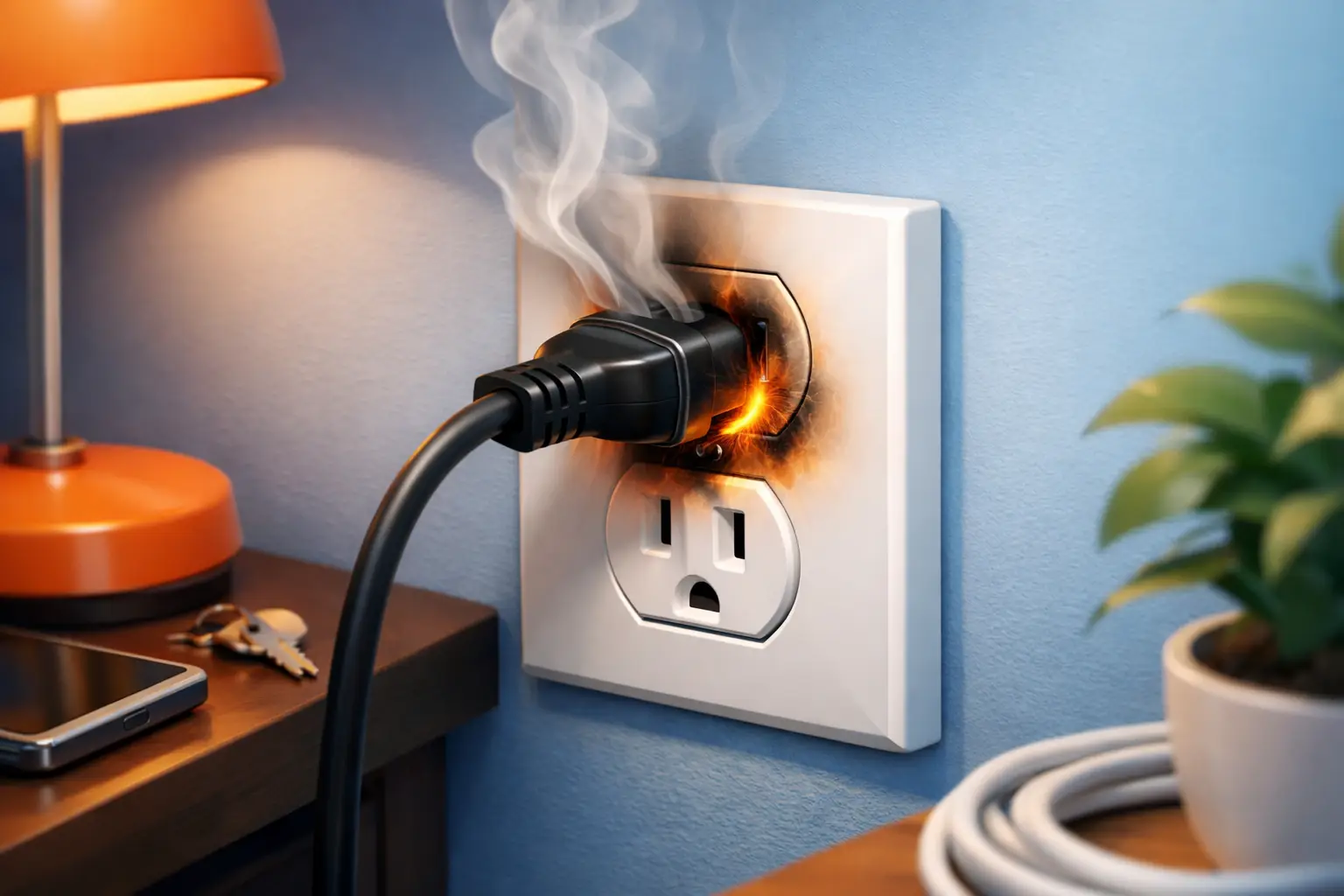
That sharp, hot plastic smell near an outlet usually shows up at the worst time – while you’re making dinner, plugging in a vacuum, or trying to figure out why a room light just flickered. If you’re asking what causes burning outlet smell, treat it as a real electrical warning, not a minor annoyance. Outlets should not smell hot, smoky, or burnt under normal use.
In many homes, that odor means heat is building up where it should not. Sometimes the issue is isolated to one outlet. Sometimes it points to a bigger wiring or panel problem. Either way, the safest move is simple: stop using the outlet, unplug anything connected to it if you can do so safely, and have it checked by a licensed electrician.
What causes burning outlet smell in a home?
A burning outlet smell is usually caused by overheating. That overheating can come from loose wiring, an overloaded circuit, a damaged receptacle, a failing appliance cord, or arcing inside the outlet box. The smell itself often comes from melting insulation, scorched plastic, or wiring components getting too hot.
The exact cause matters because not every repair is the same. In some cases, replacing the outlet solves the issue. In others, the outlet is only the visible symptom, while the real problem is deeper in the wiring, the breaker, or the electrical load on that circuit.
Loose wire connections
This is one of the most common causes. If a wire connection behind the outlet is loose, electricity can jump across tiny gaps instead of flowing cleanly through the connection. That creates heat and sometimes arcing. Over time, the outlet face, wire insulation, and surrounding materials can start to scorch.
Older homes are especially vulnerable, but loose connections can happen in newer homes too. Expansion, contraction, poor installation, or years of heavy use can all wear a connection down.
Overloaded outlet or circuit
An outlet may smell like it’s burning because it is carrying more load than it was meant to handle. Space heaters, air fryers, microwaves, window AC units, hair dryers, and other high-draw appliances can push an outlet or branch circuit too hard, especially if power strips or extension cords are involved.
This does not always trip the breaker right away. Sometimes the outlet heats up first. That is why a burning smell can appear even before a full electrical shutdown happens.
Damaged or worn-out outlet
Outlets do not last forever. If the internal contacts wear out, plugs may fit loosely, and that poor connection can create heat. Cracked receptacles, discoloration on the faceplate, buzzing, or sparks when plugging something in are all signs the outlet itself may be failing.
A worn outlet can seem minor until it isn’t. Once heat damage starts, the condition can get worse fast.
Faulty appliance or cord
Sometimes the outlet is not the original problem. A damaged cord, failing charger, or malfunctioning appliance can overheat at the plug and transfer that heat and smell to the receptacle. If the odor only appears when one specific item is plugged in, that is a clue.
Still, do not assume the outlet is fine. A bad appliance can damage the outlet, and a damaged outlet can damage whatever you plug into it next.
Arcing inside the outlet box
Arcing happens when electricity jumps through the air between connections instead of staying on its intended path. It can produce a burning smell, popping sounds, visible sparks, and serious fire risk. Arcing may result from loose wiring, damaged insulation, corroded terminals, or deteriorated components inside the box.
This is one of the reasons a burning smell should never be ignored or put on a wait-and-see list.
Signs the smell is more than a minor issue
A faint odor right after a brand-new outlet is installed can sometimes be residue from manufacturing or installation, but that should fade quickly. A recurring or stronger smell is different. If you notice heat, noise, or visible damage, the risk goes up.
Watch for warm or hot outlet covers, brown or black marks, flickering lights on the same circuit, breakers that trip repeatedly, buzzing, crackling, or plugs that no longer sit firmly in place. If you see smoke or active sparking, shut off power to that circuit if you can do it safely and call for emergency electrical service.
In Florida homes, heavy AC use can also expose underlying electrical issues. If your system, air handler, or other large equipment is sharing strained circuits or an older panel, the outlet smell may be part of a larger load problem rather than a single bad receptacle.
What you should do right away
First, stop using the outlet. Unplug anything connected to it, but only if the plug is not hot, melted, or stuck. If it looks damaged, leave it alone. Do not keep testing the outlet to see if the smell comes back.
Next, go to your electrical panel and turn off the breaker for that circuit if you know which one it is. If you are not sure, or if the panel is poorly labeled, it is better to be cautious than guess. If the smell is strong, there is visible damage, or the outlet is warm, call an electrician as soon as possible.
Do not spray anything into the outlet. Do not replace it yourself unless you are qualified to work on residential electrical systems. And do not cover up the problem by simply moving your device to another overloaded outlet nearby.
What an electrician will usually check
When a licensed electrician diagnoses a burning outlet smell, the outlet itself is only the starting point. The inspection typically includes the receptacle, wire terminations, box condition, circuit load, breaker performance, and signs of heat damage upstream or downstream on the same run.
If the outlet has been carrying a high-load appliance, the electrician may also check whether the circuit is properly sized for that use. In some homes, the right fix is a straightforward outlet replacement and reconnection of damaged conductors. In others, the safer long-term solution may involve rewiring part of the circuit, replacing a breaker, or upgrading the panel.
That is why speed matters, but so does accuracy. A quick patch on the visible outlet does not help much if the actual issue is recurring overload or deteriorated wiring in the wall.
Can you still use other outlets in the room?
Maybe, but it depends on how the room is wired. Multiple outlets, lights, and switches may share the same circuit. If one outlet is overheating because of a broader circuit problem, nearby outlets may be affected too.
If the breaker has been shut off, leave it off until the problem is inspected. If the breaker is still on and you only know that one outlet smells burnt, avoid using outlets on the same wall or in the same area until a professional confirms the circuit is safe. This is not the time to assume the problem is isolated.
How to prevent burning outlet smells going forward
The best prevention starts with load awareness and regular electrical maintenance. Avoid plugging high-draw appliances into old, loose, or overused outlets. Do not rely on cheap power strips for equipment that needs a dedicated circuit. If plugs wobble, outlets feel warm, or breakers trip often, deal with it early.
For homes with older wiring, aging panels, recent renovations, or growing electrical demand from new HVAC systems, garage appliances, or EV chargers, an inspection is worth it. Modern homes ask a lot more from electrical systems than they did 20 or 30 years ago.
If you are in Central Florida or the Tampa area, this is where using one company that handles both HVAC and electrical work can save time and stress. When load issues involve cooling equipment, panel capacity, or shared circuits, Al-Air can look at the whole picture without sending you into a chain of separate calls.
When to call now, not later
If the outlet is hot, discolored, buzzing, smoking, or has a melted faceplate, call right away. The same goes for a smell that keeps returning, even if the outlet still appears to work. Electrical problems do not need dramatic sparks to be dangerous.
A burning outlet smell is your warning sign. The safest response is to take it seriously the first time, not after the second or third. Catching the problem early usually means a simpler repair, less damage, and a much better day than dealing with an electrical fire scare at home.