
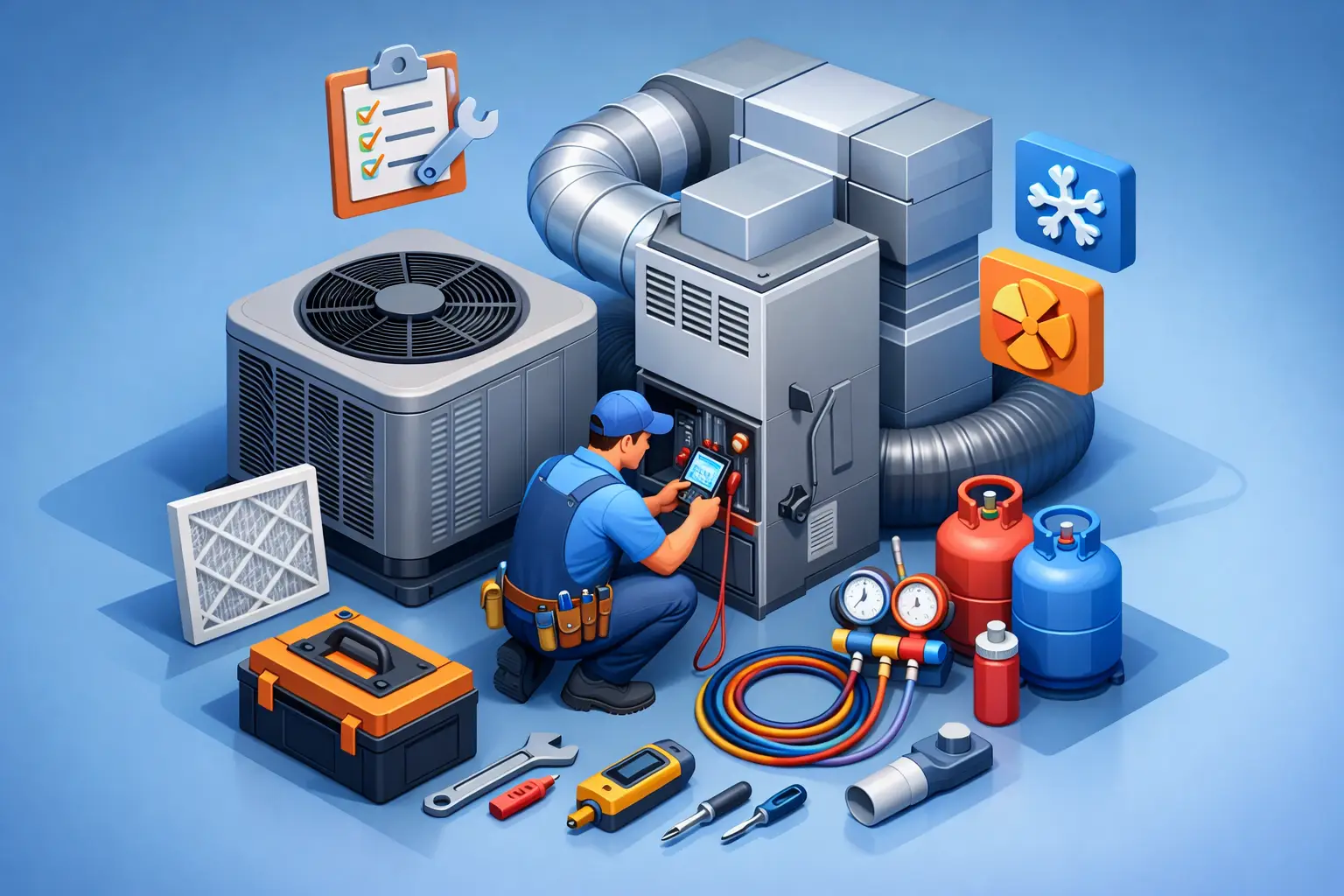
If your AC is still cooling, it is easy to assume everything is fine. In Central Florida, that is usually how small HVAC problems turn into a no-cooling call on the hottest day of the week. When homeowners ask what is included in HVAC maintenance, they are really asking a smart question: what gets checked now so the system does not fail later?
The short answer is that HVAC maintenance is a full system inspection, cleaning, testing, and adjustment visit designed to keep your equipment running safely and efficiently. A real maintenance appointment is not just swapping a filter and spraying off the outdoor unit. It should cover the parts that affect comfort, energy use, drainage, airflow, electrical safety, and wear on major components.
What is included in HVAC maintenance service?
A proper HVAC maintenance visit usually includes both the indoor and outdoor parts of the system. That means your technician is looking at the air handler or furnace area, the evaporator components, the condensate drain system, the thermostat, the blower assembly, and the outside condenser. The goal is simple: catch problems early, improve performance, and reduce the odds of a breakdown when your system is working hardest.
In Florida, where cooling systems run for long stretches of the year, maintenance matters even more. Heavy use means more dirt buildup, more strain on motors and capacitors, and more chances for clogged drains and airflow issues. If the system has any electrical concerns tied to the unit, those should be identified too, especially in homes with older panels or recent equipment upgrades.
Thermostat check and system cycling
Most maintenance visits start with the thermostat and system operation. The technician confirms the thermostat is reading properly, responding to settings, and turning the system on and off as it should. If the thermostat is off by a few degrees or not communicating correctly, the whole system can seem unreliable even when the equipment itself is still in decent shape.
The technician will also watch a cooling cycle to see how the system starts, runs, and shuts down. That helps reveal short cycling, delayed starts, weak airflow, or odd noises that a homeowner may have noticed but not connected to a larger issue.
Air filter inspection
Filter checks are basic, but they are not minor. A dirty filter can choke airflow, raise utility bills, reduce comfort, and put extra stress on the blower motor and evaporator coil. During maintenance, the technician inspects the filter, checks whether the size and type are correct, and recommends replacement if needed.
This is one area where there is some trade-off. A high-MERV filter can improve filtration, but if the system is not designed for it, airflow can suffer. The right filter is not just about catching more dust. It is about balancing indoor air quality with system performance.
Evaporator coil and blower inspection
Inside your home, the evaporator coil and blower are doing much of the hard work. If either one is dirty, your system can lose efficiency fast. Maintenance typically includes inspecting the evaporator coil for buildup, checking the blower wheel and motor, and looking for signs of restricted airflow.
Not every visit includes a full coil pull and deep cleaning, because that depends on accessibility and condition. But a technician should absolutely inspect for dirt, biological growth, freeze patterns, or damage. If the blower is coated with dust, airflow drops and your system has to run longer to hit the same temperature.
Condensate drain line and drain pan check
In Florida, this is one of the most important parts of AC maintenance. Your system removes moisture from the air constantly, and that water has to drain out properly. During maintenance, the drain line and drain pan should be checked for clogs, buildup, standing water, and signs of overflow.
A blocked condensate line can shut the system down or cause water damage around the air handler. That is why a good maintenance visit includes clearing the line when needed and testing that it drains correctly. Homeowners often think of maintenance as preventing mechanical problems, but it also prevents messy water issues that can become expensive fast.
What is included in HVAC maintenance for the outdoor unit?
The condenser outside takes a beating from heat, rain, yard debris, and constant operation. That is why outdoor unit service is more than a quick visual check.
Condenser coil cleaning
The outdoor coil needs to release heat efficiently. When it gets packed with dirt, grass, pollen, or cottonwood, your system has to work harder and longer. Maintenance usually includes cleaning the condenser coil and inspecting the cabinet for blocked airflow or physical damage.
A dirty outdoor coil does not always cause an immediate failure. More often, it causes slow performance loss, higher power bills, and extra strain on the compressor. That is the kind of issue maintenance is meant to catch before it turns into a repair.
Refrigerant and temperature performance checks
A maintenance visit should include checking system temperatures and performance readings to see whether the equipment is cooling within normal range. Depending on the system and what the technician finds, that may include checking refrigerant pressures or measuring superheat and subcooling.
This is where experience matters. Refrigerant is not something you top off like windshield fluid. If levels are low, that usually points to a leak. A good technician does not just add refrigerant and leave. They explain what the readings mean and whether repair is needed.
Capacitor, contactor, and wiring inspection
A lot of no-cooling calls come down to electrical parts. During maintenance, the technician should inspect capacitors, contactors, relays, wire connections, and general electrical condition. Loose or deteriorated connections can cause intermittent problems, poor startup, or total failure.
This step matters even more in older homes or properties with aging electrical infrastructure. HVAC systems rely on stable power, and electrical wear does not fix itself. One advantage of working with a contractor that handles both HVAC and electrical is that if a bigger issue shows up, you are not stuck chasing a second company to sort it out.
Motor and amp draw checks
Fan motors and blower motors should be inspected for wear, operation, and proper amp draw. If a motor is pulling too much power, running hot, or showing signs of failure, that can often be spotted during maintenance before it quits altogether.
Again, maintenance is not magic. It will not prevent every breakdown. But it does raise the chance that worn parts get caught before they fail on a 95-degree afternoon.
Safety and performance checks matter too
Good HVAC maintenance is not only about cleaning. It also includes testing how safely and efficiently the system is operating. That can include checking disconnects, verifying secure panels, inspecting insulation on refrigerant lines, and listening for signs of stress or imbalance.
If the home has heat strips, a furnace, or combined heating and cooling equipment, maintenance should also cover the heating side when seasonally appropriate. In Florida, cooling gets most of the attention, but the full system still needs to be checked as designed.
Ductwork may be reviewed as part of a broader performance assessment too. Not every maintenance visit includes full duct testing, but if there are signs of leakage, restricted airflow, or heavy dust, a technician should mention it. Sometimes the problem is not the AC unit at all. It is the air distribution.
What HVAC maintenance usually does not include
This is where homeowners can get frustrated, because not every company defines maintenance the same way. Standard preventive maintenance usually includes inspection, cleaning, testing, and minor adjustments. It does not always include repair parts, refrigerant recharge, major coil cleaning, duct cleaning, or replacing failed electrical components.
That does not mean the visit is incomplete. It means maintenance is meant to identify problems early, not hide repair costs inside a basic tune-up. The right company should be clear about what is included, what is extra, and what actually needs attention now versus later.
How often should HVAC maintenance be done?
For most homes in Central Florida, twice-a-year service makes sense, especially on systems that run hard for most of the year. One visit before peak cooling season is the minimum most homeowners should consider. Two visits are better if you want stronger reliability, better energy performance, and fewer surprise issues.
Homes with pets, high dust, indoor air quality concerns, older systems, or rental turnover may need closer attention. Light commercial spaces can also need more frequent checks depending on hours of operation and occupancy.
The real value of maintenance
The biggest value in HVAC maintenance is not that it makes your system brand new. It does not. What it does is lower the chances of expensive surprises, help the equipment run closer to its intended efficiency, and give you a clearer picture of what condition the system is actually in.
That matters when you are budgeting for repairs, deciding whether to replace an aging unit, or trying to avoid downtime during Florida heat. A rushed service call after a full breakdown is almost always more stressful than a planned maintenance visit with clear answers.
If you have ever wondered whether maintenance is worth it, the better question is whether you would rather catch a clogged drain, weak capacitor, dirty coil, or airflow problem early, when the fix is usually simpler. That is what a proper maintenance visit is for – fewer surprises, better performance, and more confidence every time the thermostat kicks on.