
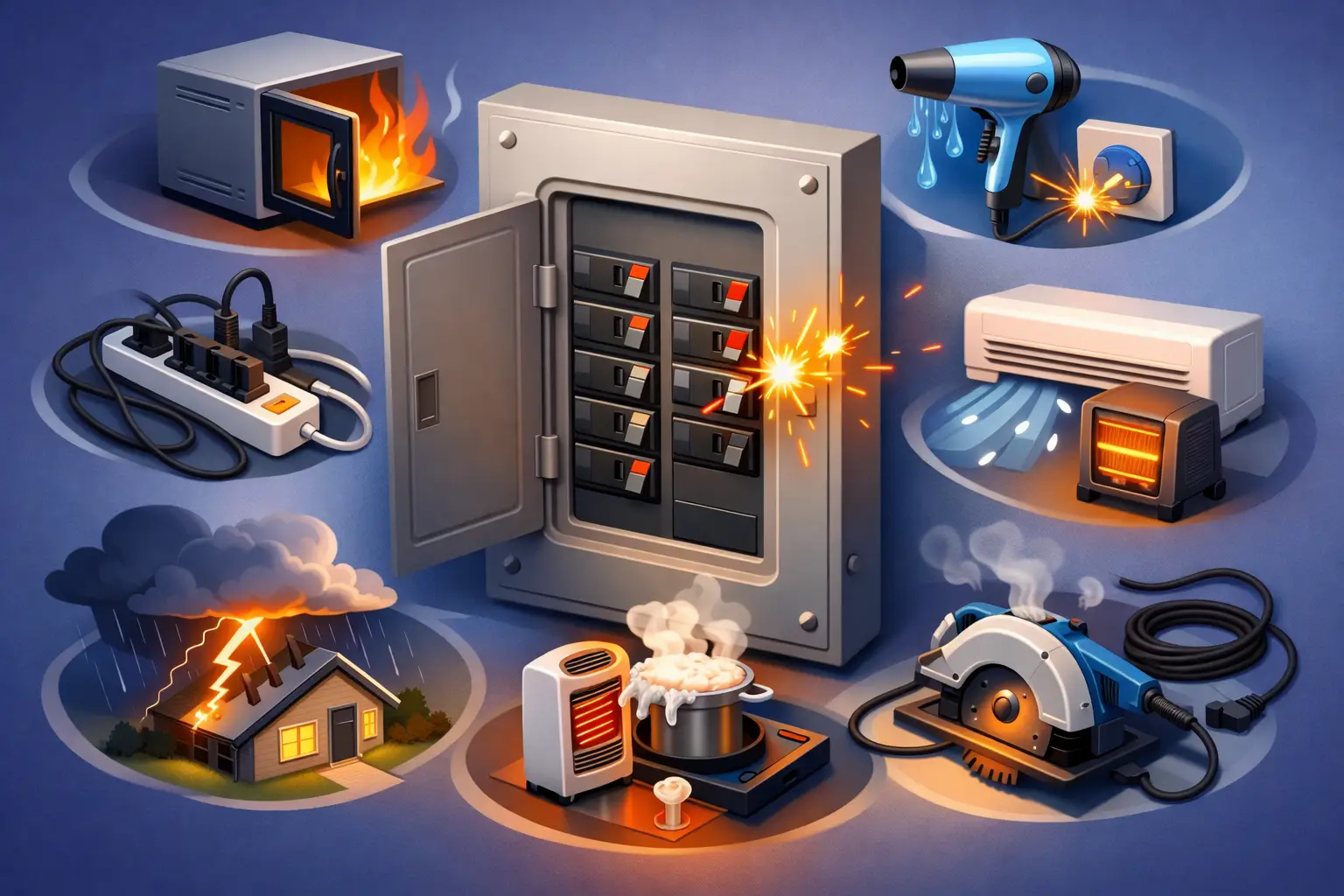
A breaker that trips once during a storm or while plugging in a new appliance might be a fluke. A breaker that keeps tripping is your electrical system telling you something is wrong. When homeowners search for the top causes tripped breakers, they usually want the same thing – a clear answer, fast, and without a lot of technical runaround.
That is exactly how to look at it. A tripped breaker is not the problem by itself. It is a safety device doing its job. The real issue is what caused it to shut off power in the first place, and whether that cause is minor, inconvenient, or dangerous.
The top causes of tripped breakers in homes
Most breaker trips come back to one of a few core problems. Some are simple, like too many devices on one circuit. Others point to wiring faults, failing equipment, or an electrical panel that is no longer keeping up with the way the home is used.
Circuit overloads
This is the most common reason a breaker trips. Every circuit has a limit. When you ask that circuit to power more than it is rated for, the breaker cuts power before wires overheat.
In real homes, overloads often happen in predictable spots. Kitchens are a big one when a microwave, toaster oven, coffee maker, and blender end up sharing the same circuit. Bedrooms and home offices can do the same thing with space heaters, gaming systems, monitors, and chargers. In garages, a freezer plus power tools can push a circuit over the edge.
An overload may trip the breaker right away, or it may take a few minutes if the draw builds gradually. If the breaker only trips when several items run at once, overload is the first thing to consider.
Short circuits
A short circuit is more serious. It happens when a hot wire touches a neutral wire or another path it should not touch. That creates a sudden surge of current, and the breaker trips to prevent damage or fire risk.
Short circuits can come from damaged appliance cords, loose wire connections, aging wiring, or problems inside outlets and switches. Sometimes you will notice a burned smell, discoloration around an outlet, or a breaker that trips the instant you reset it. Those are not wait-and-see symptoms.
This is where homeowners can get stuck. A short might seem like it is tied to one appliance, but the actual problem can be inside the wall or panel. If a breaker will not stay on, stop resetting it and have it checked.
Ground faults
Ground faults are similar to short circuits, but the electricity is traveling somewhere it should not, often into a grounded metal box, appliance housing, or even a damp surface. Bathrooms, kitchens, garages, laundry rooms, and outdoor areas are common trouble spots because moisture raises the risk.
If a breaker trips when using something near water, or if a GFCI outlet keeps shutting off with it, a ground fault may be the issue. Sometimes the cause is a worn appliance. Other times it is a wiring defect, water intrusion, or a receptacle that has started to fail.
Ground faults matter because they can create shock hazards, not just power loss.
Faulty appliances and HVAC equipment
Not every breaker problem starts with the house wiring. Sometimes the appliance itself is the source. A refrigerator with a failing compressor, a dryer with a worn heating element, or a dishwasher with an internal electrical fault can all trip a breaker.
In Florida, air conditioning equipment is a major factor. AC systems work hard for most of the year, and when a motor starts failing, a capacitor weakens, or wiring inside the unit deteriorates, the electrical demand can spike. That can trip the breaker repeatedly, especially during startup.
This is one of those it-depends situations. If one specific appliance causes the problem every time, the appliance is a likely suspect. But if the breaker trips even when that appliance is off, the issue may be the circuit or panel instead.
Loose or damaged wiring
Electrical connections are supposed to be tight and stable. Over time, vibration, heat, age, pests, moisture, or past repair work can leave wires loose, frayed, or damaged. When that happens, the connection can arc, overheat, or intermittently fail.
This type of issue is frustrating because it may come and go. A breaker might trip only during certain times of day, after heavy appliance use, or when a switch is turned on. That inconsistency makes homeowners think the problem is random when it really is not.
Older homes are especially vulnerable, but newer homes are not immune if there was poor workmanship or later remodeling work that added load without upgrading the electrical system.
Aging or weak breakers
Breakers do wear out. They are designed to trip under unsafe conditions, but after years of heat cycles and repeated use, they can become overly sensitive or unreliable. In some cases, an old breaker starts tripping more easily than it should. In others, it may not trip when it should, which is worse.
This is why replacing a breaker is not a DIY guessing game. If a breaker trips often, the answer is not automatically to install a bigger one or swap it out and hope for the best. The circuit load and wire size have to match the breaker rating, and the real cause has to be identified first.
If the panel is older and several circuits are acting up, the issue may go beyond one breaker.
Outdated or overloaded electrical panels
Homes today use more power than many older panels were designed to handle. Add a new AC system, EV charger, workshop equipment, upgraded kitchen appliances, or a home office setup, and the panel may be running out of capacity.
When that happens, you may notice frequent breaker trips across different parts of the house, not just on one circuit. Lights may flicker. Certain breakers may run hot. You may also find there are not enough dedicated circuits for major equipment.
This is common in older Florida homes that have seen years of upgrades without a full electrical review. The panel may not be unsafe just because it is old, but age plus increased demand is where problems start to show.
When a tripped breaker is more than an inconvenience
A single trip after plugging too much into one outlet strip is usually straightforward. Repeated trips, burning smells, buzzing, warm outlets, or a breaker that will not reset are different. Those signs suggest the system is protecting you from something more serious.
The main risk is heat. Electrical faults generate heat behind walls, in outlets, inside appliances, and in the panel itself. You may not see the problem, but the breaker reacts before that hidden heat turns into damaged wiring or a fire hazard.
That is also why resetting the breaker over and over is a bad plan. If the same breaker trips again, it is giving you useful information. Ignoring it does not make the underlying fault go away.
What homeowners can check first
You do not need to tear into the panel to narrow things down. Start by noticing patterns. Does the breaker trip only when one appliance turns on? Only during AC startup? Only in one room? Or only when several devices run together?
You can also unplug recently added appliances and reduce the load on that circuit. If the problem stops, overload or a faulty device may be involved. If the breaker still trips with very little connected, that points more toward wiring, the breaker itself, or the panel.
What you should not do is replace a breaker with a larger one, use extension cords as a permanent fix, or keep forcing a breaker back on. Those shortcuts can turn a manageable repair into a much bigger one.
When it is time to call a licensed electrician
If a breaker trips repeatedly, if you smell burning, if there is visible damage around an outlet or panel, or if your AC or major appliance is tied to the issue, it is time for professional diagnosis. This is especially true if the home has an older panel or if you are already planning upgrades that add electrical demand.
A proper inspection should answer three practical questions: what is causing the trip, whether the condition is unsafe, and whether the fix is a targeted repair or part of a larger capacity issue. That matters because the right solution is not always the most expensive one. Sometimes it is a single faulty breaker. Sometimes it is a bad connection. Sometimes the home needs a panel upgrade to safely support how you actually live in it.
For homeowners in Central Florida and Tampa, this is where having one company that understands both electrical systems and high-demand HVAC equipment can save time and stress. Problems do not always stay in one lane.
If your breakers keep tripping, take that warning seriously. Your electrical system is built to speak up before real damage happens, and the smartest move is to listen while the fix is still simple.