
Finding the right HVAC for your Orlando home usually starts the same way. The old system runs all afternoon, the house still feels sticky, and one room never seems to match the thermostat. Or you're adding a garage conversion, updating a rental, or replacing a unit that's at the end of its run.
In Greater Orlando, HVAC isn't optional comfort. It's part of how your house handles heat, moisture, airflow, and daily livability. Air conditioning matters almost year-round here, and humidity changes which systems perform well and which ones look good on paper but disappoint after installation. That’s why generic advice often misses the mark.
The good news is that the main types of HVAC are easy to understand once you strip away the sales language. Some systems are ideal for homes with existing ducts. Some shine in additions and older houses. Some are premium options that make sense only in specific situations. And a few are poor fits for Central Florida no matter how attractive the brochure sounds.
This guide breaks down nine common system types homeowners ask about in the Orlando area. For each one, you’ll see how it works, where it fits, what the trade-offs are, and when it makes sense to call a contractor like Al-Air. The goal isn’t to push one system for every house. It’s to help you match the equipment to the way your home is built, how long you plan to stay, and how much control you want over comfort and operating costs.
1. Central Air Conditioning Split System
If you walk through a typical Orlando subdivision, this is the system you’ll find most often. Split systems remain the most common setup in residential homes, with an outdoor unit handling heat rejection and an indoor air handler moving conditioned air through ductwork, according to ServiceTitan’s HVAC market overview.
That popularity makes sense locally. A lot of homes in Clermont, Davenport, Kissimmee, and the wider Orlando area were built around central ducts, so replacing a split system is often the most practical move instead of redesigning the whole house around a different approach.
Why it works in Orlando
A central split system does one thing very well when it's designed right. It cools the whole home evenly while pulling moisture out of the air. In Florida, that second part matters almost as much as temperature.
Where these systems go wrong is usually not the condenser. It’s the duct system, poor sizing, weak return airflow, or an attic installation that was never corrected after years of heat exposure and air leakage.
Practical rule: If the house has decent ductwork and you want familiar, whole-home cooling, a split system is still the baseline option to compare everything else against.
The other major factor is efficiency compliance. The Department of Energy’s updated standards now use SEER2, EER2, and HSPF2, and split-system air conditioners in the Southeast must meet specific minimum SEER2 requirements based on capacity, as outlined in Trane’s guide to the new HVAC efficiency metrics.
Best fit and when to call Al-Air
This type fits standard single-family homes best, especially homes built with central returns and supply ducts already in place. If you're replacing an aging unit, start with a sizing review, duct inspection, and static pressure check before choosing equipment.
A few practical signs this is still your best option:
- Existing ducts are salvageable: If the duct layout is sound, replacement is usually more straightforward than switching system types.
- You want one thermostat for the whole house: Central air is simple to operate and easy for most households to live with.
- You’re selling or renovating a conventional home: Buyers and inspectors understand this equipment immediately.
If you’re comparing equipment, Al-Air’s Orlando AC installation buying guide is a useful next step before replacing a standard system.
2. Heat Pumps Air Source
For a lot of Orlando homeowners, the air-source heat pump is the best all-around replacement option right now. It cools in summer, heats in winter, and it does both by moving heat rather than creating it through combustion.
That matters because Florida winters are usually mild enough for this technology to make sense. Air-source heat pumps are the most common heat pump subtype, and they tend to perform well in moderate climates like Florida, especially when the system is properly sized and the controls are set up correctly.

Where heat pumps shine and where they don't
In everyday Orlando use, a heat pump gives you one cabinet outside and one main system for both seasons. That simplifies the setup and can be a strong match for homeowners who want to move away from older electric resistance heating or who don’t have a good reason to keep gas service.
What people often misunderstand is reliability during cold snaps. In Florida’s humid winter conditions, heat pumps can run into defrost-cycle issues, and performance can drop when temperatures dip, especially if the system hasn’t been maintained well. That doesn’t make heat pumps a bad choice here. It means they need realistic expectations, clean coils, working sensors, and backup heat configured correctly.
Heat pumps work very well in Greater Orlando. They just need better setup and maintenance than many homeowners were led to believe.
The replacement market is also shifting in their favor. In one market outlook, heat pumps were identified as the highest-growth heating segment, and upgrade or replacement work was projected to grow at the fastest pace as older systems age out, according to MarketsandMarkets’ HVAC system forecast.
Best fit and when to call Al-Air
An air-source heat pump is a strong fit for full-system replacements, newer homes, and owners who want efficient heating and cooling from one system. It’s also a good match when you’re already replacing the outdoor unit and air handler together.
Call for professional help if:
- Your current electric heat is expensive to run: A heat pump often makes more sense than straight resistance heat.
- You want one system for both seasons: This is the cleanest all-electric path for many Orlando homes.
- Your house has uneven winter performance: The issue may be sizing, controls, or backup heat staging.
If your current unit struggles, Al-Air’s local AC and comfort service team can evaluate whether repair still makes sense or whether a heat pump replacement is the smarter long-term move.
3. Ductless Mini-Split Systems
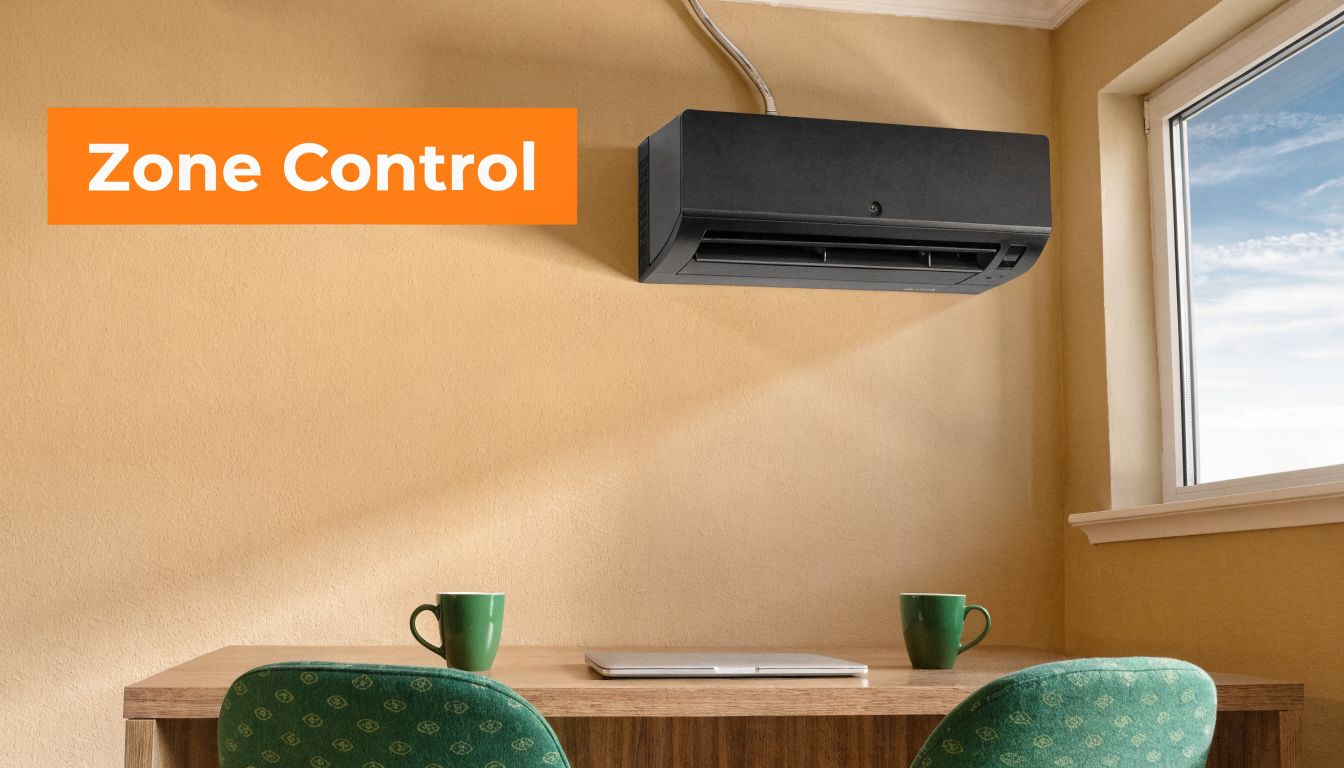
Ductless mini-splits solve a very specific problem, and they solve it well. You need heating and cooling in one room, one addition, one converted garage, one office, or one part of the house where ducts don’t reach properly.
That’s why I recommend them most often for partial-home applications, not automatically as a whole-house replacement. They can absolutely handle larger multi-zone designs, but the best value in Orlando usually shows up when you use them surgically.
The real advantage in Florida homes
Mini-splits avoid duct losses altogether. They also let you cool occupied rooms without forcing the whole house into the same schedule. In remodels, that can be a major advantage.
They’re also one of the better answers for underserved homes where adding or replacing full ducted infrastructure may be difficult. In humid subtropical areas, standard HVAC advice often ignores access and suitability gaps, even though some households are much less likely to have central AC. That’s one reason ductless retrofits deserve more attention in practical housing conversations, as discussed in this overview of HVAC access disparities and system suitability.
What homeowners get wrong
Mini-splits aren't magic. They need good placement, proper condensate management, careful line-set routing, and regular filter cleaning. If the indoor head is pointed badly or oversized for the room, comfort suffers. If the installer treats refrigerant charging casually, you may end up with performance complaints from day one.
They’re usually a smart fit for:
- Room additions: A new bedroom, sunroom, or bonus room without easy duct access.
- Garage conversions and home offices: Spaces with different schedules than the rest of the house.
- Rental zones or in-law suites: Independent control is useful when occupancy changes.
A mini-split often beats extending bad ductwork into a new room. It usually does not beat a well-designed central system for an entire conventional house.
For Orlando homeowners in older houses, renovated properties, or homes with hot-and-cold problem rooms, ductless is one of the most practical types of HVAC to consider.
4. Packaged Systems All-in-One Units
A packaged system puts the main heating and cooling components in one outdoor cabinet instead of splitting them between an outdoor condenser and an indoor air handler. You’ll see these on roof mounts, ground pads, and certain homes where indoor equipment space is limited.
They’re common enough in older Florida properties, small commercial spaces, and some rentals. They’re not usually the first choice for a new custom residential design, but they can be the right answer when the structure leaves you few clean installation options.
When packaged equipment makes sense
If a house doesn’t have an attic setup that works well for an air handler, or if interior equipment space is tight, a packaged unit can simplify layout. One cabinet can make access easier for some service work, especially in straightforward installations.
The downside is exposure. In Florida, outdoor equipment deals with heat, rain, debris, and corrosion pressure. That means maintenance discipline matters. A packaged unit that’s ignored can age hard in our climate.
For homeowners, the practical scenarios usually look like this:
- Older homes with limited interior mechanical space
- Smaller residences or rental properties
- Replacement situations where the house is already built around this equipment style
What to watch before replacing one
Don’t assume like-for-like replacement is always the right move. Sometimes the best choice is to install another packaged system because the home layout demands it. Other times, a switch to a split system makes more sense if you're already reworking ducts or opening up interior space.
Pay close attention to cabinet location, drainage, return-air design, and duct leakage. A packaged system can cool well, but if the ducts connected to it are poor, the homeowner still gets uneven temperatures and high runtimes.
Packaged units are practical systems, not premium systems. They work best when the house forces the decision and the installation is done cleanly.
For Orlando landlords and owners of older homes, they can still be a reasonable option. Just don’t buy one expecting it to solve airflow problems that are really in the duct system.
5. Geothermal Heat Pump Systems
Geothermal is the system many homeowners ask about after hearing the word “efficient.” The concept is solid. Instead of relying only on outdoor air, the system exchanges heat with the ground through buried loops or a ground-coupled setup where temperatures stay more stable.
In the right house, geothermal can deliver very steady comfort and low operating demands over the long haul. In the wrong house, it becomes an expensive science project.

Why most Orlando homeowners don't choose it
The issue usually isn’t whether geothermal works. It’s whether the property, budget, and ownership timeline support it. Loop-field design, excavation, site conditions, and coordination all add complexity that most standard residential replacements don’t require.
For a typical suburban lot in Greater Orlando, that hurdle is real. If the homeowner plans to stay long-term, has enough usable land, and wants a premium system with a long horizon, geothermal deserves discussion. If the main goal is to replace a failing central system quickly and practically, it usually isn’t the first move.
Where it does fit
Geothermal makes more sense in custom homes, large-lot properties, and projects where the owner is already investing in a long-range mechanical plan. It also belongs in the conversation when the homeowner is comparing lifetime system strategy rather than just first cost.
A few signs it may be worth exploring:
- You’re building or doing a major whole-home redesign
- You plan to stay in the house for many years
- Your property can accommodate loop installation
- You want a premium long-term comfort system and understand the upfront complexity
For homeowners thinking beyond a standard replacement, Al-Air’s residential HVAC swap-out service page is a practical starting point for discussing whether a conventional upgrade or a more advanced system path makes more sense.
6. Hybrid Heat Pump Systems
A hybrid system combines a heat pump with backup heating, usually to let the system switch strategies based on outdoor conditions. In Orlando, that gives you efficient cooling and most winter heating from the heat pump, with another heat source available when temperatures dip.
This setup makes more sense than many people realize, especially in homes where the owner wants flexibility. It’s not necessary for every house in Central Florida, but it can be a smart middle ground.
Why hybrids make sense in this climate
Florida winters are usually mild, but they aren’t identical across every neighborhood and every house. Some homes in more exposed areas or in northern parts of the service region feel those colder nights more sharply, especially if insulation or air sealing isn’t great.
A hybrid system helps smooth that out. The heat pump carries the load in normal weather, and the backup source takes over when conditions justify it. This can be useful for owners who want the efficiency benefits of a heat pump without feeling locked into one heating method.
The practical upside is predictability. Property managers and long-term homeowners often like hybrid equipment because it offers options when utility costs, comfort priorities, or weather patterns shift.
What has to be right
Controls matter more here than in a simple cooling-only system. If the balance point, thermostat logic, or sensor setup is sloppy, the house may switch heat sources too early or too often. Then the owner pays for complexity without getting the intended benefit.
This type is worth considering if:
- You’re replacing an older mixed-fuel setup
- You want heat pump efficiency with a backup plan
- You manage a property and want stable winter comfort during short cold spells
Hybrid systems are at their best when the controls are commissioned properly. Bad setup turns a smart system into an expensive one.
For some Greater Orlando homes, especially those transitioning from gas or trying to improve winter comfort without giving up flexibility, this is one of the more overlooked types of HVAC.
7. Evaporative Coolers Swamp Coolers
This is the easy one. For Orlando homes, skip evaporative coolers.
Evaporative systems cool air by passing it across wet media and relying on water evaporation. That approach works in dry climates. Orlando is not a dry climate. We fight outdoor humidity for much of the year, and adding more moisture to the air is the opposite of what most homes need.
Why they fail in Florida
An evaporative cooler depends on dry air to work well. In humid conditions, the cooling effect drops off and indoor comfort gets worse fast. Even when the air temperature changes somewhat, the moisture load can leave the house feeling clammy.
That’s why this equipment may be viable in arid parts of the country and still be a poor fit here. Florida homes need moisture removal, dependable sensible cooling, and systems that hold comfort through long humid afternoons.
The practical advice is simple:
- Don’t install one as a residential cooling system in Orlando
- Don’t let low upfront cost make the decision for you
- Choose equipment built for hot-humid performance instead
What to do instead
If your goal is lower operating cost, compare a properly sized split system, a heat pump, or a mini-split for the part of the house you use most. Those options fit our climate. Evaporative cooling doesn’t.
This is one of those cases where one of the many types of HVAC should be crossed off the list immediately. It saves time, money, and a lot of frustration.
8. Variable Refrigerant Flow VRF Systems
VRF is advanced zoning. One outdoor system connects to multiple indoor units and adjusts refrigerant delivery based on what each zone needs. In plain language, it’s precise, flexible, and usually best reserved for homes or projects that can justify the design and service complexity.
You’ll see VRF more often in light commercial work, modern custom homes, and higher-end residential applications. For the right project, it offers excellent comfort control. For the average tract-home replacement, it’s usually more system than the house needs.
Where VRF earns its keep
VRF shines in homes with multiple occupancy patterns, large open spaces, or distinct wings that don't behave the same thermally. A luxury home with a master wing, office suite, bonus room, and irregular glass exposure is a very different job from a standard three-bedroom house with one central hallway.
The control can be impressive. Zones can respond more precisely than a conventional single-stage setup, and the system can support a cleaner design in homes where bulky duct runs are undesirable.
Here’s a quick look at the equipment style:
Why most homeowners shouldn't start here
VRF requires thoughtful design, skilled commissioning, and qualified future service. That means it’s not just an equipment choice. It’s a long-term maintenance relationship.
For many Orlando homeowners, a high-quality split system or a targeted mini-split design will solve the actual comfort problem with less complexity. VRF belongs in the conversation when the house layout is unusual, the comfort expectations are high, and the owner plans to keep the property long enough to justify the system strategy.
If you have to force VRF to fit the budget, it’s usually the wrong system.
For custom homes in Tampa, Poinciana, Clermont, or Davenport, it can be a very good option. For typical replacement work, it’s often smarter to keep the design simpler.
9. Radiant Heating and Cooling Systems
Radiant systems move heated or cooled water through tubing in floors, walls, or ceilings, changing comfort through surface temperatures rather than blowing air through ducts. The result can feel quiet and even, with none of the draft sensation people sometimes notice from forced air.
That sounds appealing, and in certain custom homes it is. But in Central Florida, radiant systems are rarely a stand-alone answer for residential comfort.
Why radiant is niche in Orlando
Cooling-dominant climates create a moisture challenge. You can’t talk about radiant cooling here without talking about condensation risk, controls, and dehumidification. A radiant surface that isn’t managed carefully can run into moisture problems in a humid house.
That’s the main reason radiant is usually paired with other equipment, not substituted for it. A home may use radiant features for comfort and still rely on an air-based system for humidity control, ventilation, and backup cooling response.
Best use cases
Radiant systems make the most sense in custom homes, major renovations with open walls or new slabs, and projects where the owner wants premium quiet comfort and accepts a more specialized design process.
They fit best when:
- The house is being built or heavily renovated
- The owner wants minimal air movement and quiet operation
- Another system will handle humidity and ventilation properly
For Orlando homeowners, radiant isn’t a mainstream replacement option. It’s a specialty solution. When designed as part of a complete plan, it can work well. When treated like a simple swap for central air, it usually doesn’t.
9 HVAC System Types Comparison
| System | 🔄 Implementation Complexity | 📊 Resource Requirements (cost / space / skills) | ⭐ Expected Outcomes (performance / efficiency) | Ideal Use Cases | ⚡ Key Advantages / 💡 Tips |
|---|---|---|---|---|---|
| Central Air Conditioning (Split System) | Medium, outdoor condenser + ductwork install | Medium, moderate upfront; needs ducts & outdoor space; common contractors | ⭐⭐⭐, reliable whole-home cooling; efficiency varies by SEER | Existing ducted homes needing whole-home cooling in Florida | ⚡ Cost-effective, familiar service. 💡 Seal/insulate ducts; biannual maintenance; consider SEER2 16+. |
| Heat Pumps (Air Source) | Medium, reversible system similar to split; proper sizing required | Medium–High, higher upfront; electrical capacity; works with ducts | ⭐⭐⭐⭐, very efficient heating/cooling; lowers energy use | Energy-conscious homeowners seeking year‑round comfort | ⚡ High efficiency and lower carbon footprint. 💡 Pair with smart thermostat; check utility rebates. |
| Ductless Mini‑Split Systems | Low–Medium, indoor units + refrigerant lines per zone | Medium, higher cost per zone; minimal structural changes; refrigerant handling | ⭐⭐⭐⭐, excellent zoned comfort and high efficiency | Room additions, conversions, homes without ducts, selective zoning | ⚡ Zoned control; avoids duct losses. 💡 Use Wi‑Fi models; clean filters monthly; professional charge. |
| Packaged Systems (All‑in‑One) | Low, single cabinet installation (roof/ground) | Low–Medium, compact footprint; lower initial cost; rooftop access may be needed | ⭐⭐, adequate performance; generally less efficient than modern splits | Small commercial spaces, rental properties, homes with limited indoor space | ⚡ Space-saving, simple replacement. 💡 Schedule annual inspection; keep unit free of debris. |
| Geothermal Heat Pump Systems | Very High, loop field drilling/trenching and complex install | Very High, highest upfront cost; significant yard space; specialized contractors | ⭐⭐⭐⭐⭐, best long-term efficiency and lowest operating costs | High-value homes with land and long-term owners prioritizing efficiency | ⚡ Exceptional efficiency and long lifespan. 💡 Conduct site survey; factor tax credits and lifecycle ROI. |
| Hybrid Heat Pump Systems | High, integration of heat pump + furnace + controls | Medium–High, needs gas line or dual systems; more maintenance points | ⭐⭐⭐⭐, efficient with reliable backup during cold snaps | Homes in transitional climates or where occasional backup heat is desired | ⚡ Cost‑optimized heating with backup. 💡 Set switchover ~40°F; maintain both systems annually. |
| Evaporative Coolers (Swamp Coolers) | Low, simple mechanical setup but requires ventilation | Low, low electricity; uses water; ineffective in humid climates | ⭐, very effective only in dry climates; poor performance in Florida | Arid regions (Arizona, New Mexico); not recommended for Florida | ⚡ Very low operating cost in dry climates. 💡 Skip for Florida; use only in arid environments. |
| Variable Refrigerant Flow (VRF) Systems | Very High, advanced design, complex controls and piping | Very High, high upfront cost; specialized installers and commissioning | ⭐⭐⭐⭐⭐, precise zoning; simultaneous heating/cooling; top efficiency | Luxury/new construction, modern open-plan homes, high-end renovations | ⚡ Exceptional zoning and control. 💡 Pre‑design assessment; budget for specialized maintenance. |
| Radiant Heating and Cooling Systems | Very High, integrated tubing and hydronics; careful design | Very High, costly, hard to retrofit; requires moisture control expertise | ⭐⭐⭐⭐, quiet, even comfort; cooling requires careful configuration in humid climates | Ultra‑premium new builds or full renovations prioritizing quiet, even comfort | ⚡ Quiet, even temperature distribution. 💡 Pair with heat pump; model thermal loads and manage humidity. |
Your Next Step to Year-Round Comfort with Al-Air
Choosing between the main types of HVAC gets easier once you stop looking for a universal “best” system. There isn’t one. The right answer depends on the house you have, the comfort problems you want to solve, and how long you expect to live with the decision.
For many Greater Orlando homeowners, the practical shortlist is straightforward. If the home already has usable ducts and needs dependable whole-home cooling, a central split system is often the cleanest path. If you want heating and cooling from one all-electric system, an air-source heat pump deserves a close look. If the problem is a hot addition, garage conversion, office, or a room that never stays comfortable, a ductless mini-split may solve it with less disruption than extending or rebuilding ductwork.
The more specialized options have their place. Packaged systems can work well where the structure limits indoor equipment space. Hybrid systems can give some homes more flexibility during winter weather swings. Geothermal, VRF, and radiant setups usually make sense only when the property, budget, and long-term ownership plan support a more advanced design.
What doesn’t work is choosing based on brochure language alone. In Orlando, humidity, airflow, duct condition, electrical capacity, drainage, and equipment sizing have just as much impact as the brand name on the cabinet. A good system installed badly will disappoint you. A simpler system installed correctly often performs better than a premium option forced into the wrong house.
A professional assessment is the next step because it answers the questions that matter. Is the ductwork worth keeping. Is the system oversized. Is the humidity problem coming from equipment, leakage, insulation, or controls. Does the electrical panel need attention before a new install. Those are jobsite questions, not internet questions.
When to call Al-Air Corporation
- For a free estimate: If you're replacing an older unit, building an addition, or planning a remodel, Al-Air can evaluate the house and lay out practical options based on how the home is built and how you use it.
- For expert repair: If the system is short-cycling, blowing warm air, making unusual noise, or struggling to keep up during the hottest part of the day, professional diagnosis is the right move before small issues turn into major failures.
- For preventive maintenance: Florida systems work hard. Regular service helps catch airflow, drainage, coil, and electrical issues before peak season puts the equipment under stress.
Al-Air Corporation is a locally owned HVAC and electrical contractor serving homeowners across Greater Orlando, including Clermont, Davenport, Kissimmee, Poinciana, Tampa, Hillsborough, and Pasco counties. The company has more than 14 years of experience and provides residential repairs, maintenance, swap-outs, indoor air quality improvements, and licensed electrical work tied to HVAC upgrades.
If you’re deciding between system types, the most useful next step isn’t guessing. It’s having a technician evaluate the home as a whole and explain what will work in your layout, in this climate, and within your budget.
If your Orlando-area home needs HVAC repair, maintenance, or a full replacement, contact Al-Air Corporation for a free estimate and practical guidance on the system that fits your house.