
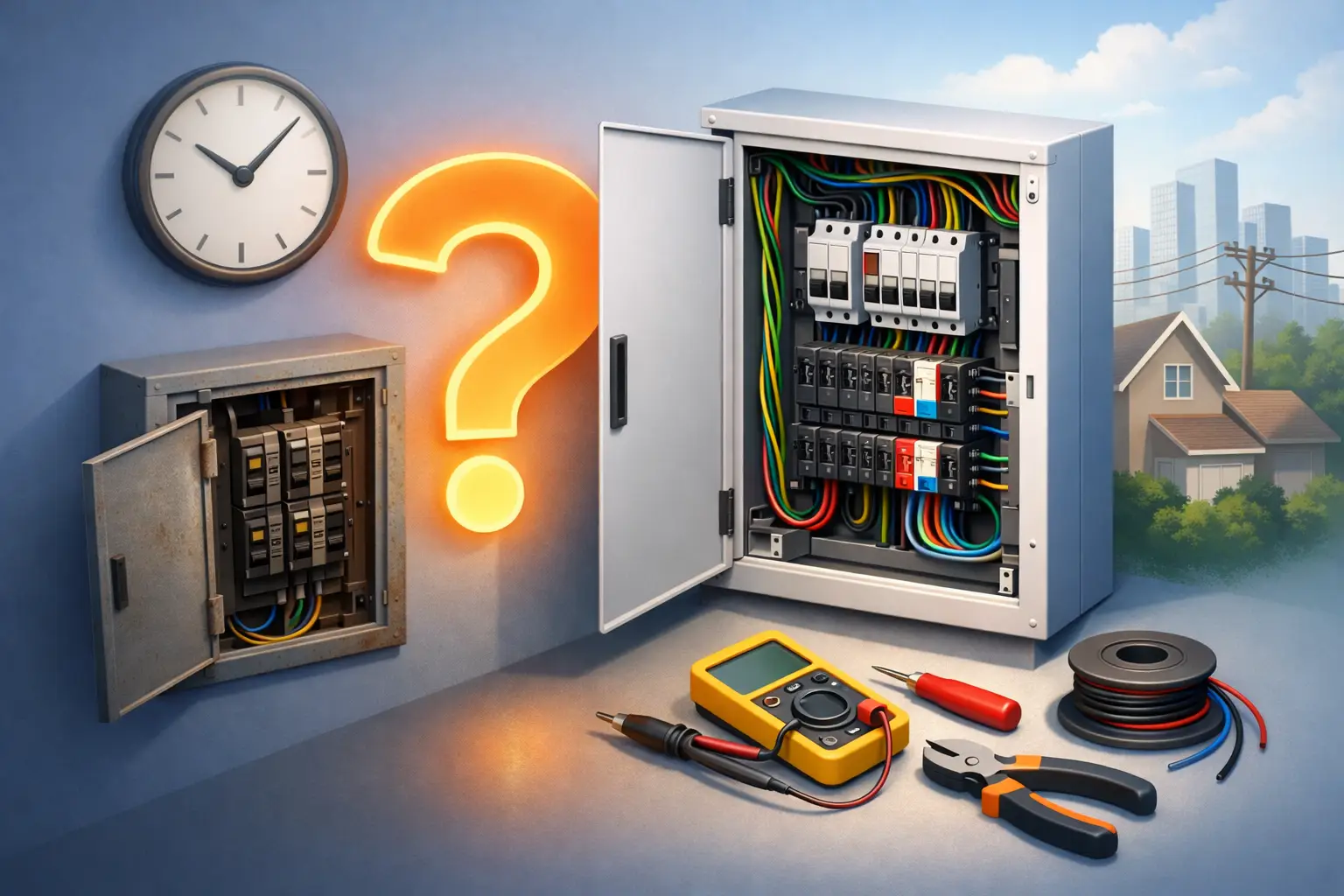
You usually do not think about your panel until something starts acting off. Lights flicker when the AC kicks on, breakers trip during normal use, or an electrician tells you your home is out of room for a new circuit. That is when an electrical panel upgrade stops being a background issue and becomes a real decision about safety, capacity, and whether your home can keep up with how you live now.
In Central Florida and the Tampa area, that question comes up more often than people expect. Homes are running heavy-duty cooling equipment for much of the year. Families are adding appliances, home offices, pool equipment, and EV chargers. Older panels that were fine decades ago can start showing their limits fast. The good news is that most panel upgrades are straightforward when handled early, before a nuisance issue turns into a service call you did not plan for.
What an electrical panel upgrade actually does
Your electrical panel is the control center for the property. It receives power from the utility and distributes it safely through individual circuits. An electrical panel upgrade typically means replacing an outdated, undersized, damaged, or overloaded panel with one that can safely handle your current and future electrical demand.
That can involve increasing amperage, replacing old breakers, adding circuit capacity, updating grounding and bonding, and bringing parts of the system up to current code. The exact scope depends on the age of the home, the condition of the existing equipment, and what you are trying to add. Some homes just need more space for additional circuits. Others need a full service upgrade because the existing panel is no longer safe or practical.
The key point is simple. This is not just about getting newer equipment on the wall. It is about making sure the home has stable, code-compliant power for the systems you rely on every day.
Signs you may need an electrical panel upgrade
Some warning signs are obvious. Others are easy to brush off until they happen more often.
Frequent breaker trips are one of the clearest red flags, especially if they happen during normal use. A breaker that trips once in a while may be doing its job. A panel that cannot support routine household loads is telling you something else. Flickering lights, buzzing sounds near the panel, warm breakers, burning smells, or signs of corrosion also deserve immediate attention.
Age matters too. Many older homes still have panels that were installed for a very different electrical lifestyle. Decades ago, there were fewer large appliances, no EV chargers, fewer electronics, and often smaller HVAC demands. If your panel is older and you are planning a new AC system, major renovation, or added equipment, it makes sense to have it evaluated before work begins.
Another common trigger is simply running out of space. If the panel is full and you need circuits for a hot tub, generator interlock, remodel, or charger installation, an upgrade may be the cleanest and safest path. Trying to force more out of an undersized panel usually leads to more headaches later.
Why AC replacement often leads to panel work
Florida homeowners run into this all the time. You replace an aging air conditioner with a newer, more efficient system, and the electrical side suddenly needs attention too.
That does not always mean the new equipment uses more power overall. In many cases, newer systems are more efficient. But equipment specifications, breaker requirements, disconnects, wiring condition, and available panel capacity still have to line up. If the panel is outdated, maxed out, or in poor shape, it can hold up an HVAC project or create reliability issues after installation.
This is where having one contractor that understands both sides of the job matters. No referrals, no runaround, and no guessing whether the HVAC issue or the electrical issue is causing the delay. When cooling and power infrastructure are tied together, the work needs to be coordinated from the start.
Safety is the first reason to take it seriously
Homeowners often start with the convenience side of the problem. They want fewer tripped breakers or enough room for a new appliance. Those are valid concerns. But safety is the bigger reason not to put this off.
An overloaded or deteriorating panel can increase the risk of overheating, arcing, and equipment damage. Some older panel brands and configurations also have known reliability concerns. That does not mean every old panel is automatically dangerous, but it does mean age and condition should be evaluated by a licensed electrician, not guessed at from a search result or a neighbor’s opinion.
There is also the insurance and resale angle. Outdated electrical equipment can become a sticking point during home sales, inspections, or policy reviews. Upgrading before it becomes a deal problem gives you more control over timing and cost.
What affects the cost of an electrical panel upgrade
Homeowners want a number first, and that is understandable. The honest answer is that cost depends on the job.
The biggest factors are the amperage required, the condition of the existing system, permit and code requirements, whether the meter base or service entrance equipment also needs work, and how many related repairs are uncovered once the panel is opened up. A simple panel replacement is different from a full service upgrade on an older home with grounding issues or damaged wiring.
Accessibility also matters. If the panel location is tight, exterior components are weathered, or the utility coordination is more involved, labor can change. If you are bundling the work with an AC replacement, remodel, or EV charger installation, the total project may be more efficient than doing everything separately.
This is why clear estimates matter. A serious contractor should explain what is included, what may trigger additional work, and whether financing is available for larger upgrades. Nobody likes surprise costs in the middle of an electrical project.
How the process usually works
Most panel upgrades start with an on-site evaluation. The electrician looks at the existing panel, service size, breaker layout, wiring condition, grounding, and the loads you currently have or plan to add. From there, you get a recommendation based on what the home actually needs, not a one-size-fits-all answer.
If an upgrade is the right move, permits and utility coordination are usually part of the process. Power may need to be disconnected temporarily during the replacement. The old panel is removed, new equipment is installed, circuits are transferred, grounding and bonding are verified, and the work is inspected according to local requirements.
For most homeowners, the biggest concern is downtime. A well-run job keeps that window as tight as possible and communicates clearly about what to expect. The work itself is technical, but the customer experience should not feel complicated.
Should you upgrade now or wait?
It depends on what is driving the issue.
If the panel is showing safety concerns, tripping constantly, overheating, or tied to known problem equipment, waiting usually does not make sense. If the panel is functional today but you are planning a new AC system, EV charger, renovation, or home addition, it is smart to address capacity before the rest of the project is underway.
There are also situations where a full upgrade is not necessary yet. If the issue is isolated to one circuit, one breaker, or one equipment connection, a targeted repair may be enough. A trustworthy electrician should tell you that instead of pushing a larger job than you need.
That is the real value of a proper assessment. You want facts, not pressure.
Choosing the right contractor for panel work
An electrical panel upgrade is not the place to roll the dice. You want licensed professionals, code-compliant work, proper permitting, and a company that can explain the job in plain English.
That matters even more when the panel upgrade is connected to HVAC equipment, because poor coordination can delay installation, create inspection issues, or leave you with a system that is technically installed but not set up for long-term reliability. A company like Al-Air that handles both electrical and HVAC in-house can simplify that process for homeowners who do not want to coordinate multiple trades.
Just as important, look for straightforward communication. You should know what problem is being solved, what equipment is being installed, how long the outage should last, and what the total investment looks like before the work starts.
Electrical panel upgrade and the next five years of your home
A good panel upgrade is not flashy, but it does set your home up for what comes next. Better HVAC equipment, EV charging, kitchen upgrades, backup power options, and everyday electrical use all depend on a panel that can support the load safely.
If your home is giving you warning signs, or you already know a major project is coming, it is worth getting answers now instead of waiting for a breaker trip or installation delay to force the issue. The best time to deal with electrical capacity is before your house tells you it has run out of it.