
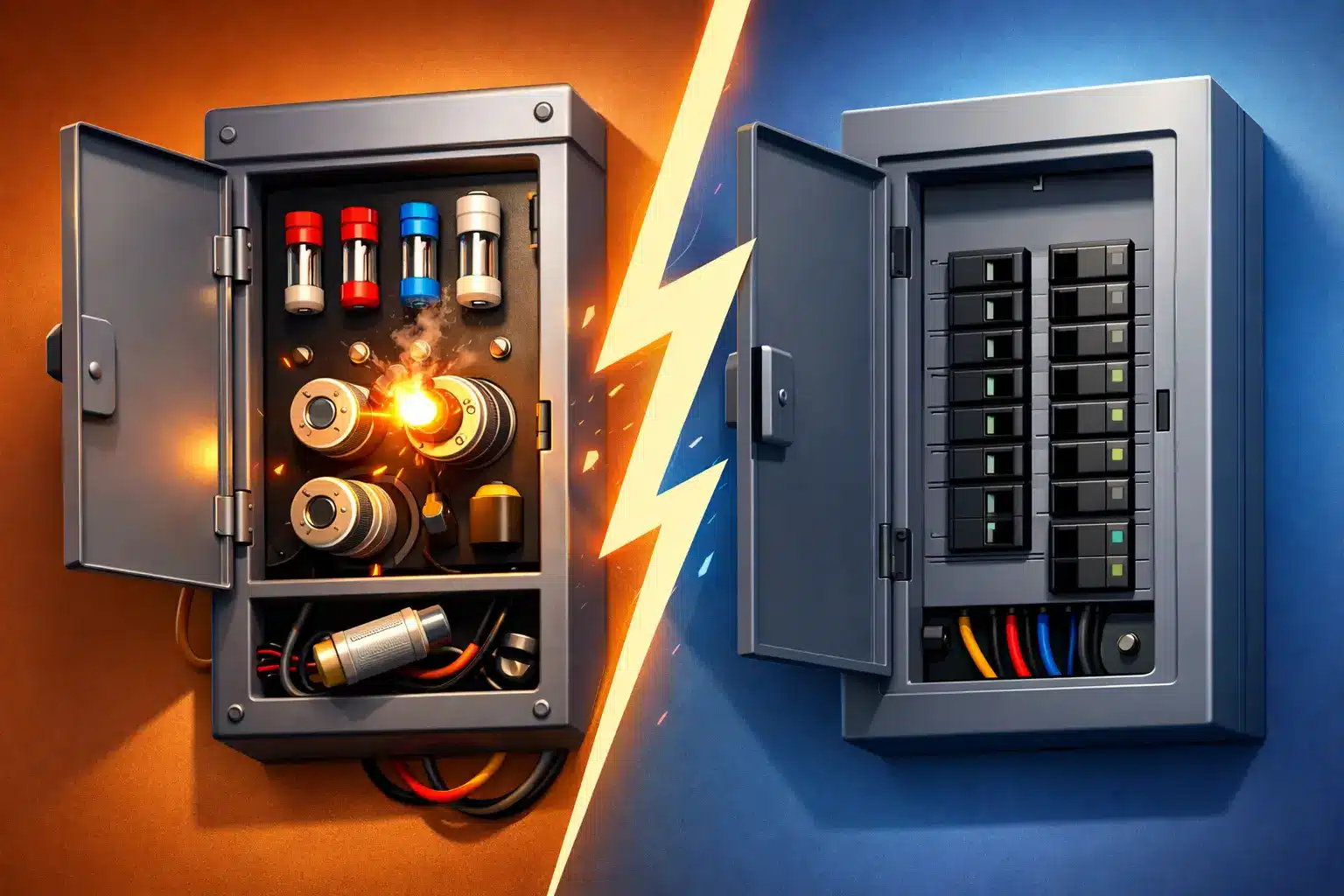
A fuse blows when a circuit is overloaded. A breaker trips. That sounds like a small difference, until your AC shuts down during a Central Florida summer, an outlet starts running hot, or you need power for a new appliance. In the fuse box versus breaker panel decision, the real question is not which system is older. It is whether your electrical system can safely support the way your home runs today.
A fuse box is not automatically dangerous, and a breaker panel is not automatically problem-free. Condition, installation quality, capacity, and the equipment connected to the system all matter. Still, for most homes planning an HVAC replacement, EV charger, remodel, or major appliance upgrade, a modern breaker panel is usually the more practical and flexible option.
Fuse Box Versus Breaker Panel: The Main Difference
Both systems protect your home’s wiring from too much electrical current. When a circuit draws more electricity than the wiring can handle, the protective device interrupts the flow before heat can damage the wire insulation or create a fire risk.
A fuse box uses screw-in or cartridge fuses. Each fuse contains a metal element that melts when current exceeds its rating. Once it blows, it must be replaced with the correct type and size of fuse before the circuit can operate again.
A breaker panel uses resettable circuit breakers. When a circuit overloads or experiences certain fault conditions, the breaker switches off. After the cause is addressed, you can reset it at the panel. Modern panels may also use AFCI and GFCI breakers, which provide added protection against arc faults and shock hazards in locations where they are required.
The basic job is similar. The day-to-day experience and upgrade potential are not.
Why Breaker Panels Work Better for Most Modern Homes
Breaker panels make troubleshooting simpler. If one circuit trips, you can see which breaker is off, identify the area it serves, and reset it after unplugging the overloaded equipment. With a fuse box, replacing a blown fuse can be less convenient, especially when spare fuses are not on hand.
More importantly, breaker panels are designed around modern electrical demands. Homes today may have central air conditioning, heat pumps, electric ranges, pool equipment, home offices, smart devices, large TVs, garage tools, and charging equipment all running from the same service. Older fuse boxes were often installed when a household used far fewer circuits and much less power.
That does not mean every fuse box must be replaced immediately. A well-maintained fuse panel with adequate service capacity may still operate safely. But age can make repairs, insurance approval, home sales, and future upgrades more complicated. Replacement parts may be harder to find, and the panel may not have room for the dedicated circuits newer equipment needs.
Safety Is About More Than the Panel Type
The biggest safety concern with an old fuse box is not simply that it has fuses. It is how the system has been used over time. A common issue is an oversized fuse installed to stop repeated blowing. That can allow too much current through wiring that was never designed to handle it. Another concern is the use of adapters or improvised fixes that bypass the intended protection.
Breaker panels can have problems too. Corrosion, loose connections, water intrusion, overheated breakers, damaged bus bars, and poor past repairs all deserve prompt attention. Some older panel brands and models have known performance concerns, which a licensed electrician can identify during an inspection.
Watch for signs that should not wait:
- Breakers that trip repeatedly, fuses that blow often, or lights that dim when the AC starts
- A burning smell, buzzing, crackling, warmth at the panel, or discoloration around outlets
- Rust, moisture, loose covers, missing labels, or visible damage at the electrical panel
- Frequent reliance on extension cords, power strips, or outlet adapters because there are not enough usable circuits
If you notice heat, smoke, sparking, or a strong burning odor, do not reset the circuit and hope for the best. Turn off power only if it is safe to do so, keep clear of the panel, and call for emergency electrical service.
Capacity Matters When You Add AC, EV Charging, or Appliances
Florida homeowners often find out about panel limitations during an AC replacement. A new high-efficiency system can improve comfort and lower operating costs, but it may also require a properly sized dedicated circuit, disconnect, and electrical capacity. The same is true for an EV charger, electric water heater, induction range, pool heater, hot tub, or addition.
A panel upgrade is not always required just because you are replacing an AC system. The answer depends on the load calculation, the size of your existing electrical service, open breaker space, condition of the panel, and the requirements of the new equipment. In some cases, an electrician can add a circuit or use a subpanel. In others, the service and panel need a larger upgrade to keep the home safe and code-compliant.
This is where a quick visual guess can cost you. An electrician should evaluate the full system, including the service equipment, grounding and bonding, wiring condition, available capacity, and the planned load. No referrals, no runaround, and no installing expensive equipment before confirming the power infrastructure can support it.
What a Panel Upgrade Usually Includes
A true electrical panel upgrade is more than swapping a metal box on the wall. Depending on the home, the work may include a new panelboard, properly sized breakers, updated grounding and bonding, labeling, a new meter base or service equipment, and coordination with the utility if the service rating changes.
Permits and inspections are part of doing the job correctly. They protect you, document the work, and matter when selling, insuring, or renovating the property. A licensed electrician should explain what is included in the estimate, what work may be handled by the utility, and whether wall repair or other site conditions could affect the final scope.
For homeowners comparing costs, there is no honest one-price answer. A straightforward panel replacement is different from increasing service capacity, relocating equipment, correcting old wiring issues, or adding circuits for an AC system and EV charger. The right estimate starts with an on-site evaluation, not a number pulled from a generic online chart.
Can You Keep a Fuse Box?
You may be able to keep a fuse box if it is in good condition, correctly fused, adequately sized for the home’s load, and not creating problems with insurance or planned improvements. Some older homes remain safe with fuse-based systems after proper inspection and repairs.
However, replacement is worth serious consideration when the box is full, the service is undersized, circuits blow repeatedly, modifications have been made over the years, or you are investing in major home equipment. It can also make sense before a renovation rather than after walls are open and schedules are tight.
A breaker panel upgrade is not about replacing something old just because it is old. It is about creating enough safe, dependable power for the home you have now and the improvements you plan next.
Do Not Treat the Panel as a DIY Project
Resetting a tripped breaker is one thing. Opening a panel, replacing fuses with different ratings, adding a breaker, or changing wiring is another. Electrical panels contain energized components even when individual breakers are off. A mistake can cause shock, arc flash, equipment damage, or a hidden fire hazard.
For Central Florida and Tampa homeowners, Al-Air can assess an older fuse box or breaker panel alongside the electrical needs of your AC, lighting, appliances, and planned upgrades. You get a clear explanation of what is urgent, what can wait, and what solution fits the property – without being handed off between separate HVAC and electrical contractors.
Before your next AC replacement, remodel, or new high-demand purchase, have the panel checked first. It is easier to plan a safe upgrade on your schedule than to deal with lost power when the heat is already at its worst.