
If you're asking what size ac unit do i need, you're probably not starting from curiosity. You're starting from frustration.
Your thermostat says one number. Your house feels like another. The system runs through a Florida afternoon, but the back bedroom stays warm, the living room feels sticky, and the air never seems to dry out. A lot of homeowners assume that means the unit is old or low on refrigerant. Sometimes that's true. A lot of the time, the deeper issue is simpler and more expensive. The system was never the right size for the home in the first place.
That problem shows up all over Greater Orlando. I’ve seen houses in Clermont, Davenport, Kissimmee, and older Orlando neighborhoods where the equipment technically “works,” but comfort is still lousy because the sizing was based on square footage alone. Add strong afternoon sun, older windows, leaky ducts, or poor attic insulation, and the math changes fast. Even small upgrades around the house can shift cooling needs. If your home gets hammered by direct sun, it also helps to reduce glare with quality sun screens before assuming you need a larger air conditioner.
The hard truth is this. A bigger system isn't automatically better, and matching the old unit size isn't a safe shortcut. In Florida, getting the size right affects comfort, humidity, utility bills, equipment life, and even whether your electrical panel can safely handle the replacement.
Why Is My House Still Hot? The High Cost of an Improperly Sized AC
A homeowner calls because the AC “won’t stop running.” The house is cool in the morning, rough by midafternoon, and uncomfortable by dinner. Another homeowner has the opposite complaint. The house cools quickly, but it still feels damp, and the system seems to kick on and off all day. Those are two different symptoms, but they often point to the same root problem. Improper sizing.
When an AC is too small, it works like a pickup truck trying to tow more than it should. It keeps pulling, but it never gets ahead. It can run for long stretches, struggle to pull the temperature down, and leave hot spots around the house.
When an AC is too large, it can cool the air too quickly and shut off before it has time to manage humidity. In Florida, that matters. Drying the air is a big part of comfort. A house that is technically cool but still clammy doesn't feel right.
What homeowners usually notice first
- Uneven rooms: One side of the house feels fine while another never catches up.
- Sticky indoor air: The thermostat looks okay, but the home still feels muggy.
- Higher bills than expected: The system is doing extra work, or doing the wrong kind of work.
- More wear on equipment: Constant running or constant cycling both put stress on major parts.
A properly sized AC shouldn't just hit a thermostat setting. It should make the house feel consistently cool and dry.
This is why “my house is still hot” isn't always a repair question. Sometimes it's a sizing question. And if you're replacing a unit, it's the best time to correct it.
Decoding AC Size BTUs Tons and Rules of Thumb
A lot of Orlando homeowners hear terms like “2-ton” or “36,000 BTUs” and assume the sizing process must be highly technical. The core idea is simpler than it sounds. Your house gains heat all day from the sun, the attic, the windows, people, appliances, and air leaks. The air conditioner’s job is to remove that heat at a fast enough rate to keep up.
A BTU measures heat removal. Tonnage is the larger label contractors use to group that cooling capacity. One basic conversion helps make the rest of the conversation easier. 1 ton of cooling equals 12,000 BTUs per hour, as explained in this AC sizing guide from Santa Energy.
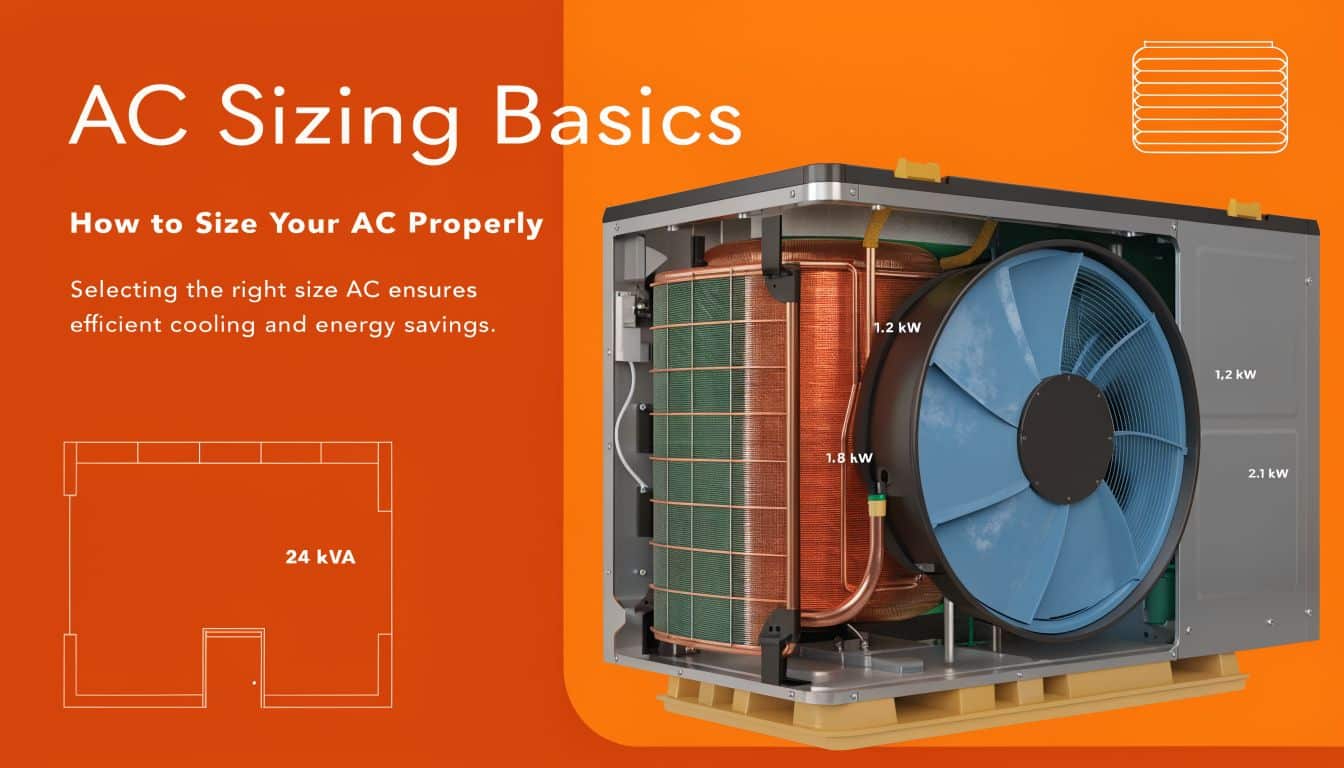
BTUs and tons in plain English
Here is what those labels mean in everyday terms.
- 1.5 tons equals 18,000 BTUs per hour
- 2 tons equals 24,000 BTUs per hour
- 3 tons equals 36,000 BTUs per hour
- 5 tons equals 60,000 BTUs per hour
That number tells you how much heat the equipment can remove in an hour under rated conditions. A bigger number means more cooling capacity. It does not automatically mean better comfort.
That last part trips people up.
A system has to match the house, the climate, and even the power available to run it well. In older Orlando homes, a size change can affect breaker sizing, wire capacity, disconnects, and the overall electrical load on the panel. That is one reason AC sizing should never be treated like picking a larger box off a shelf.
The square footage rule of thumb
You will often see rough sizing charts based on floor area. They can help you get your bearings, especially if you are trying to understand whether your current unit sounds unusually small or large for the home.
Here’s a simple ballpark table.
| Home Square Footage | Estimated AC Size (Tons) | Estimated AC Size (BTUs) |
|---|---|---|
| 800 to 1,000 | 2 | 24,000 |
| 1,200 to 1,500 | 2.5 to 3 | 30,000 to 36,000 |
| 1,500 to 1,800 | 3 | 36,000 |
| 2,000 to 2,500 | 5 | 60,000 |
Charts like this are useful for rough orientation. A final equipment choice takes more work because real houses rarely behave like a textbook example.
For homeowners trying to cut monthly costs while they sort through upgrade options, it also helps to find energy saving advice for the whole house, not just the condenser outside.
Why Florida changes the answer
Square footage gets less reliable in Central Florida because our cooling season is long, the sun is intense, and humidity stays in the conversation almost year-round. Two houses with the same floor area can end up needing different equipment if one has heavy afternoon sun, leaky ducts, poor attic insulation, or older windows.
Here’s a practical way to think about it. A rough chart treats homes like they are all built from the same set of plans. Orlando homes are anything but uniform. A 1960s house in College Park with an older electrical panel, original duct runs, and modest attic insulation behaves very differently from a newer, tighter home in Winter Garden.
That older-home angle matters more than many people realize. If a larger replacement system calls for a higher minimum circuit ampacity or different overcurrent protection, the HVAC decision can spill into electrical work. A contractor who understands both sides can spot the issue before installation day, instead of after the new equipment is sitting in the driveway.
Why homeowners get confused
The terminology is one problem. The bigger problem is that the quick answers sound believable.
- Old unit size can mislead you: Plenty of homes have had the wrong size for years.
- Neighbor comparisons break down fast: Similar square footage does not mean similar heat load.
- Online calculators leave out real-world conditions: They usually miss duct leakage, insulation quality, window performance, and sun exposure.
- Electrical capacity rarely gets discussed early enough: In older homes, the “right size” on paper still has to work with the home’s panel and wiring.
A rough square-foot estimate can point you toward a range. The right answer comes from measuring how your specific home gains heat, how your ducts and insulation perform, and whether your electrical system can support the equipment safely.
Beyond Square Footage Factors That Really Determine Your AC Size
Two homes can both measure 2,000 square feet and need different AC sizes. That's not sales talk. That's how heat load works in practice.
The home isn't just a box. It has a roof that absorbs heat, windows that let in sunlight, ducts that may leak air, insulation that may help or fail, and people and appliances adding heat indoors. That's why any serious answer to what size ac unit do i need has to move past floor area.

Insulation and air leakage
A house with solid attic insulation and tight construction holds conditioned air better than a drafty house. That changes the cooling load in a major way.
If cool air escapes through gaps around doors, attic penetrations, or poorly sealed ducts, the AC has to replace that lost cooling over and over. In older homes, this is one of the biggest hidden reasons a system seems underpowered.
Windows and sun exposure
Windows do more than let in light. They bring in heat.
South-facing and west-facing glass can put a heavy load on rooms during the hottest parts of the day. Older single-pane windows usually perform differently from newer double-pane windows. A family room with large afternoon sun exposure in Clermont can need noticeably more cooling than a same-sized shaded room on the north side of the house.
Ceiling height and room volume
Square footage only measures floor area. It doesn't tell you how much air is in the house.
A home with higher ceilings contains more air volume to cool. Open foyers, vaulted ceilings, and large great rooms can throw off simple sizing charts because the system has to handle more than just the footprint.
To make this easier to visualize, watch how load factors stack together in a real sizing discussion.
Occupants, appliances, and ductwork
People generate heat. So do ovens, cooktops, televisions, computers, and other electronics. That doesn't mean every extra appliance changes your tonnage by itself, but it does mean lived-in homes behave differently than an empty shell.
Ductwork matters just as much. Leaky ducts in a hot attic can waste cooled air before it ever reaches the rooms that need it.
- Occupancy: A full house runs warmer than a vacant one.
- Kitchen load: Cooking adds heat right when the AC is already working hard.
- Duct condition: Torn, disconnected, or poorly insulated ducts change how well conditioned air gets delivered.
- Layout: Long duct runs and awkward room arrangements can create weak airflow in certain areas.
The AC doesn't cool square footage. It cools the actual heat load created by your home's construction, exposure, air leakage, and daily use.
Why online estimates keep missing homes
Homeowners often get trapped. They use a calculator, plug in the floor area, and get a nice clean answer. But calculators don't walk your attic, inspect your ductwork, measure your windows, or notice that your bonus room roasts in the afternoon.
If you're also trying to lower operating costs before replacing equipment, it's worth taking time to find energy saving advice that covers practical home improvements. Better sealing, shading, and insulation can change what size system makes sense.
The Gold Standard Understanding a Manual J Load Calculation
A homeowner in Orlando replaces an old three-ton system with another three-ton system because that is what the house had before. The new unit turns on, cools some rooms better than others, and still struggles on the hottest afternoons. The problem may not be the brand or the thermostat. The problem may be that nobody measured what the house really needs.
Manual J is the method HVAC professionals use to calculate that need. It is the accepted residential load calculation process for sizing air conditioning based on the home itself, not a rough rule tied to square footage alone. As explained by American Standard’s overview of Manual J load calculations, the process looks at the structure, insulation, windows, ducts, ceiling height, and local climate to estimate how much heat the home gains and how much cooling it must remove.
A good comparison is a shoe fitting. Two people can be the same height and still need different sizes because foot shape, width, and support needs are different. Houses work the same way. Two Orlando homes with the same floor area can need very different AC sizes because they gain heat differently and hold conditioned air differently.
What a technician actually measures
A proper Manual J starts with the details that rough estimates skip.
- Room-by-room dimensions: How space is divided changes the load and airflow needs.
- Window size and orientation: West-facing glass in Florida can add a lot of afternoon heat.
- Insulation levels: Attic and wall insulation affect how quickly heat pushes indoors.
- Duct performance: Leaks, poor insulation, and bad layout can change delivered cooling.
- Ceiling height: A vaulted family room does not behave like an 8-foot bedroom.
- Air leakage: Outside air sneaking in through gaps makes the system work harder.
Some contractors also pair the load calculation with a close look at the existing equipment, duct system, and replacement options during residential HVAC swap-out planning. That matters because sizing is only part of the job. The system still has to deliver air properly and fit the home it serves.
Why Manual J matters in real life
This calculation gives you a home-specific answer. It helps explain why one room is always warmer, why an older addition never feels comfortable, or why a replacement system should be smaller or larger than the old one.
It also protects your budget.
If the equipment is oversized, you can end up paying for capacity the house does not need. If it is undersized, you pay in long run times, harder summer afternoons, and more wear on the system. Manual J reduces that guesswork by turning the house into a set of measurable loads instead of assumptions.
That point is especially important in older Orlando homes. Many were built before today’s insulation standards, window performance, and duct sealing practices. Some also have electrical systems that were never designed for modern HVAC loads. A careful load calculation helps avoid choosing equipment that creates trouble on both sides of the job. Cooling performance and electrical demand.
Practical rule: If a contractor skips measuring the home and bases the recommendation on square footage or the old unit size, you still do not have a reliable answer.
Why rules of thumb fall short
Rules of thumb can start a conversation. They should not decide what gets installed.
A chart cannot see sun exposure on the back bedrooms, attic heat above the living room, or air leakage around old windows. It also cannot tell you whether the home’s electrical service can support the equipment being proposed, which is a real concern in many older houses around Central Florida. That is one reason a combined HVAC and electrical contractor can spot issues a basic sizing estimate misses.
Manual J is the gold standard because it replaces shortcuts with measurement. In a Florida home, that often means better comfort, lower operating costs, fewer surprises during installation, and a system that fits both the house and the power available to run it.
Common Sizing Mistakes and Their Costly Consequences
A family replaces an old AC with a bigger one because the house always felt warm in the afternoon. A few weeks later, the bedrooms feel chilly, the air feels sticky, the system keeps clicking on and off, and the electric bill climbs. I see versions of that story all over Orlando.

Why oversized units cause trouble
A larger AC sounds safer, but cooling a Florida home is not only about dropping the thermostat number. The system also has to run long enough to remove moisture.
An oversized unit works like a car that lurches from stoplight to stoplight instead of cruising at a steady speed. It blasts cold air, satisfies the thermostat fast, then shuts off before it has done much dehumidifying. Bryant explains that oversized systems often short cycle, which increases wear and can waste energy in the process, according to Bryant’s guide to sizing air conditioners.
That is why a house can feel cool and clammy at the same time. In Orlando, that is miserable.
Why undersized units create a different kind of problem
A system that is too small usually does the opposite. It runs for long stretches, struggles during the hottest hours, and leaves certain rooms lagging behind.
People often assume nonstop operation means the unit is working hard and doing its job. Sometimes it is working hard because it never had enough capacity for the house in the first place. That steady strain can mean higher operating costs, more wear over time, and comfort that still falls short.
The expensive mistake behind both problems
Oversized and undersized systems usually come from the same bad shortcut. Someone guesses from square footage, copies the old unit size, or picks a bigger model to avoid complaints.
The old equipment may have been wrong from day one. Add new windows, duct issues, insulation changes, or years of wear, and a like-for-like swap can miss the mark again. If you are comparing replacement options, it helps to review residential HVAC swap-outs with a contractor who looks at the whole house, not just the nameplate.
That matters even more in older Orlando homes. A wrong sizing choice can affect more than comfort and utility bills. It can also push the installation toward equipment with different electrical demands, which is one reason sizing should never be treated as a quick guess.
The two mistakes side by side
| Mistake | What You Notice | What It Leads To |
|---|---|---|
| Oversized AC | Quick cooling, damp feeling, frequent starts and stops | Poor humidity control, more wear, wasted energy |
| Undersized AC | Long run times, trouble reaching setpoint, hot rooms | More strain, higher operating costs, weaker comfort |
The right size keeps temperature and humidity under control without forcing the system, or your electrical setup, to do more than the house really needs.
The Hidden Factor Your Homes Electrical System Capacity
A lot of Orlando homeowners find this out at the worst possible moment. The new AC has been chosen, installation day is on the calendar, and then the crew opens the panel and sees a second problem. The house may need electrical work before the new system can run safely.
Can your electrical system handle the new unit?
In older homes, that question matters just as much as tonnage. Air conditioners do not run in isolation. They share panel space and available capacity with the oven, water heater, dryer, pool equipment, and sometimes an EV charger. If the AC size changes, the electrical demand can change with it.
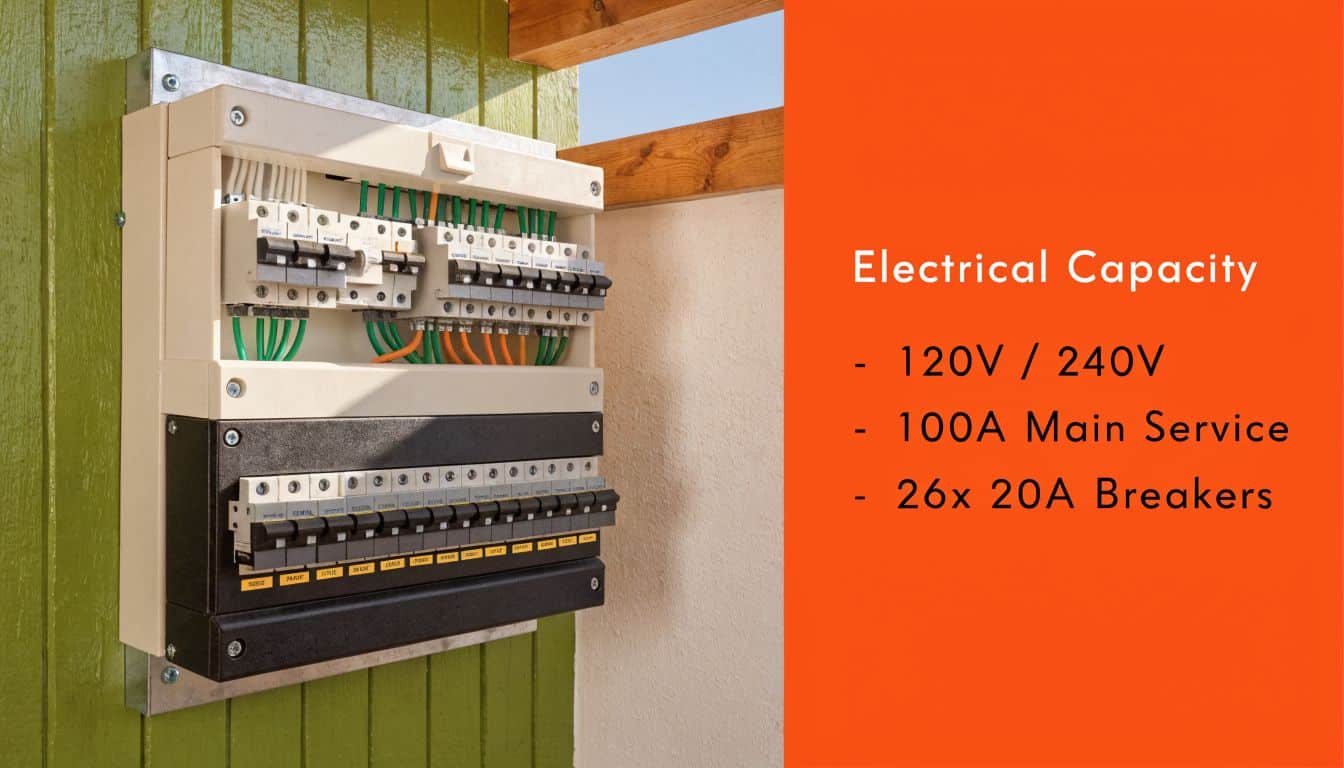
What the panel has to support
Your breaker panel works like a traffic manager. Every major appliance needs its own lane and enough room to move power safely. A replacement AC system may call for a different circuit size, different breaker requirements, or more available capacity than the old equipment used.
According to AC Direct’s discussion of AC sizing and electrical requirements, some larger modern systems can require substantial dedicated electrical service. In a home with an older 100A panel, or even a crowded 200A panel, that can create real installation constraints.
That is why a sizing decision can affect more than comfort. It can shape whether the existing panel, breakers, wiring, and disconnect are still a proper match for the equipment being proposed.
Why older Florida homes run into this more often
Many older Orlando homes have been upgraded one project at a time. The kitchen gets remodeled. A pool pump is added. Maybe a tankless water heater or car charger comes later. Each upgrade takes another bite out of the panel's available capacity.
Then the AC replacement comes along.
If the contractor only looks at square footage and tonnage, they can miss the bigger picture. A slightly larger system on paper may seem harmless, but the electrical side may already be close to its limit. That is one reason a combined HVAC and electrical contractor brings extra value. Al-Air can look at the cooling load and the home's power supply together, instead of treating them like separate boxes to check.
Problems that can happen when nobody checks
- Tripped breakers: The system calls for cooling and the panel struggles to support startup and operation.
- Installation delays: Equipment gets selected first, then the electrical work shows up as a surprise.
- Inspection problems: The job may need changes before it meets code.
- Budget overruns: What looked like a straightforward AC replacement turns into an HVAC and electrical project.
If the home needs more capacity, planning an electrical panel upgrade for a new air conditioning system before installation can save time, reduce surprises, and help the equipment run on a system that is actually ready for it.
A new air conditioner adds a serious electrical demand to the house. The cooling system and the panel need to fit each other the same way the equipment needs to fit the home.
Get It Right Your Next Steps for a Perfectly Sized AC in Orlando
By the time most homeowners ask what size ac unit do i need, they're hoping for a clean one-line answer. Something like, “You need a three-ton,” and that's the end of it.
Real homes don't work that way. Not in Orlando, not in Clermont, and not in any Florida market where heat, humidity, sun exposure, and long cooling seasons make shortcuts risky. Square footage helps you start the conversation. It doesn't finish it.
What to do before replacing your AC
Start with the home, not the equipment.
- Look at comfort problems first: Hot rooms, damp indoor air, and constant cycling are clues.
- Treat charts as rough estimates: They can point you in a range, but they can't size your house accurately.
- Ask for a Manual J calculation: That's the method that uses actual measurements instead of assumptions.
- Check the electrical side too: A replacement should be safe, code-compliant, and properly supported by the panel.
What “right size” really gives you
A properly sized system does more than cool. It fits the home's actual load, runs the way it should, and supports better day-to-day comfort.
That usually means:
- More even temperatures
- Better humidity control
- Less unnecessary strain on major components
- Fewer surprises during replacement
- More confidence that the installation matches the house
If you're still researching replacement options, this detailed Orlando AC installation buying guide can help you think through the process before making a decision.
The biggest mistake to avoid
Don't replace your current unit by matching the old tonnage and calling it done.
The old system may have been oversized. It may have been undersized. The house may have changed since it was installed. New windows, insulation upgrades, room additions, duct issues, and electrical changes all affect what makes sense now.
The best outcome comes from looking at the whole picture. Cooling load, humidity performance, duct delivery, and electrical capacity all have to work together. When they do, the house feels better and the replacement makes sense for the long term.
If your current AC leaves you asking why the house still feels hot, sticky, or uneven, don't guess. Get the home measured correctly and get the electrical side reviewed at the same time. That's how you avoid buying the wrong system twice.
If you're replacing an AC in Greater Orlando and want the job sized correctly from the start, contact Al-Air Corporation. Their team handles both HVAC and electrical work, which means they can evaluate your cooling load, inspect your panel capacity, and give you a clear path forward before installation begins. That kind of one-stop review helps you avoid comfort problems, code surprises, and costly do-overs.