
By 7:30 in the evening, a lot of Orlando homes hit the same frustrating point. The sun is lower, but the house still feels heavy. The upstairs is warm, the air feels stale, and your AC seems to be stuck in an endless loop between “almost comfortable” and “still not quite there.”
That’s where homeowners start asking a smart question. If the day’s heat is trapped inside the house, is there a better way to flush it out than running air conditioning nonstop?
There is. For the right home, and used at the right times, a whole house fan can be a practical tool for moving out built-up heat, bringing in fresher air, and reducing how much work your AC has to do. The key is understanding what it really does, when it works best in Florida, and where people often get unrealistic expectations.
Tired of Your Stuffy Florida Home Even After Sunset?
A familiar Florida evening goes like this. Dinner is done, the dishwasher is running, and the house still feels like it has the whole day trapped inside it. The walls are warm. The bedrooms feel a little close. Someone opens the back door for a second and says, “It feels better outside than in here.”
That feeling catches a lot of homeowners off guard. You pay to cool the house all day, but once the outdoor heat starts backing off, the indoor air can still feel stale and stuffy. The AC may lower temperature, but it doesn’t always give you that fresh-air feeling.
A whole house fan is designed for that exact moment.
Instead of cooling the house the same way an air conditioner does, it works more like a controlled breeze for the entire home. You open selected windows, turn the fan on, and it pulls outdoor air through the living space while pushing hot indoor air up into the attic and out through the vents. The result can feel less like “mechanical cooling” and more like finally getting the house to breathe again.
For Orlando homeowners, that distinction matters. The benefits of whole house fan systems aren’t just about lowering a utility bill. They’re also about comfort that feels more natural, especially during those evening and overnight windows when outdoor conditions start to cooperate.
A whole house fan isn’t trying to replace every part of your cooling system. It solves a very specific problem well, trapped heat and stale indoor air after a long Florida day.
Used wisely, it can become the middle ground between two choices many homeowners dislike. You don’t have to leave the AC grinding away all night, and you don’t have to sit in a muggy, stale house hoping a ceiling fan will somehow fix it.
How a Whole House Fan Transforms Your Home's Airflow
A whole house fan changes the direction and purpose of airflow in your home. Instead of recirculating the same indoor air, it creates a steady path that pulls air through the rooms where you live and pushes built-up heat out through the attic.

What it actually does
Most whole house fans sit in the ceiling below the attic. When the fan turns on, it pulls indoor air upward. That pull lowers the air pressure inside the living space just enough to draw outdoor air in through the windows you choose to open.
The path is simple:
- Outdoor air enters through open windows.
- That air travels across the rooms in your home.
- Warmer indoor air moves up into the attic.
- Attic vents send it outside.
The important part is the path. Air needs a place to enter, a route through the house, and enough attic venting to leave. If one of those pieces is missing, the fan cannot do its job well.
That is why the house can feel fresher so quickly. You are replacing indoor air, not just stirring it.
A whole house fan works like giving your home a clear exit and entrance
A ceiling fan makes your skin feel cooler because it moves air around you. A whole house fan changes the air in the house itself.
A simple way to picture it is a car that has been sitting in the Florida sun. Rolling one window down helps a little. Opening the doors clears the trapped heat much faster. A whole house fan creates that same kind of release across the home, but in a controlled way that you guide with open windows.
Strategy matters in Orlando. Open a window in the bedroom, and you invite airflow through the bedroom. Open one near the living room, and that area gets the better breeze. The fan will follow the path you give it.
Practical rule: Open windows in the rooms where you want the strongest airflow, and crack them enough to let air move without throwing every window wide open.
That control is one reason homeowners like these systems. You can shape where the air travels instead of hoping the house cools evenly on its own.
Whole house fan versus attic fan
These two systems often get lumped together, but they solve different problems.
A whole house fan moves air through your living space and then into the attic. An attic fan mainly removes hot air from the attic itself. It can help attic temperatures, but it does not create that strong whole-home flush of indoor air.
Here is the practical difference for a Florida homeowner:
- Whole house fan: Best for clearing stale indoor air and pulling in better outdoor air during the right evening or early morning conditions.
- Attic fan: Best for reducing heat trapped in the attic, which may help the home indirectly.
If you have ever looked up airflow and cleaner circulation habits for the home, some outside resources can still be helpful. This Baltimore air duct cleaning guide is one example that shows why clean, open air pathways matter when you want air to move the way it should.
If you want to compare a whole house fan with broader cooling and ventilation upgrades, our guide to residential HVAC options in Orlando can help you sort out what fits your home.
Unpacking the Five Major Benefits for Florida Homeowners
For a Florida homeowner, the value of a whole house fan shows up in the hours when the house feels tired. Dinner is over, the sun is down, but the air indoors still feels warm, stale, and a little sticky. Used at the right time, a whole house fan can help reset that feeling much faster than waiting for the house to cool on its own.

Faster relief from trapped indoor air
The first benefit is comfort you can feel quickly.
A whole house fan works like opening the drain on stuffy indoor air. Instead of letting heat, odors, and stale air sit inside your rooms, the fan pulls that air up and out while drawing in outside air through selected open windows. On a better Orlando evening or early morning, that can make a closed-up home feel livelier and easier to sit in.
That kind of comfort is different from air conditioning. AC lowers temperature and removes moisture. A whole house fan creates movement and air exchange. If your home feels heavy after cooking, showering, cleaning, or hosting guests, that fresh-air effect is often the first thing you notice.
Lower cooling costs during the right hours
This is usually the benefit homeowners ask about first.
A whole house fan generally costs less to run than central AC because it is spinning a fan motor instead of running a compressor-based cooling system. In plain terms, it is using a lighter tool for a lighter job. When outdoor conditions are good enough, especially late at night or during milder stretches of the year, that can reduce how often you need to rely on your AC.
The Florida detail matters here. Savings are not usually about replacing air conditioning all day long. They come from using the fan during the specific windows when outside air is worth bringing in. That realistic expectation is what keeps the system useful instead of disappointing.
Fresher indoor air and fewer lingering odors
Many homeowners end up loving this benefit even more than the energy side.
Air that sits inside all day tends to collect smells and feel flat. A whole house fan helps clear out the things that linger, such as:
- cooking odors from fish, frying, garlic, or spices
- pet smells that settle into a closed house
- stale air after a busy evening indoors
- leftover fumes from paints, cleaners, or other household products
That fresh-air flush can make the house feel reset, almost like airing out a room after a rainstorm passes. If you want broader context on ventilation and indoor freshness, this article on strategies for better home and business air is a helpful read.
Less wear on your central AC
Your air conditioner does not have to do every cooling job by itself.
When a whole house fan can handle part of your evening comfort, your AC may run less during those hours. That can help reduce unnecessary runtime, especially in shoulder-season weather when the house feels stuffy but does not need full mechanical cooling. A simple way to picture it is giving your AC a few innings off instead of asking it to pitch the whole game.
That does not guarantee fewer repairs, but it can reduce some of the daily workload on the system.
A lower-energy option when Florida weather cooperates
Some homeowners want every comfort choice to use less electricity when possible. A whole house fan gives you that option.
It does not create cold air. It uses outdoor air and airflow to improve comfort when conditions line up in your favor. In Orlando, that usually means evenings, overnight hours, and milder parts of the year. During those times, the fan can be a practical lower-energy alternative to running central AC alone.
Here is the day-to-day view of the five main benefits:
| Benefit | What it means day to day |
|---|---|
| Quicker relief from stuffy air | Your home can feel less trapped and more comfortable in a shorter time |
| Lower cooling costs in the right conditions | You may be able to use AC less during cooler evening or early morning hours |
| Fresher indoor air | Odors, stale air, and indoor fumes clear out faster |
| Reduced AC workload | Your central system gets a break when outside air is suitable |
| Lower energy use | You can choose a lighter cooling option when Florida weather allows it |
A Realistic Look at Whole House Fans in Orlando's Climate
You get home after a long Orlando summer day. The sun is finally going down, but the house still feels like it has been holding heat in the walls and ceilings for hours. The AC has been running, yet the air can still feel stale. That is the kind of moment when homeowners start asking whether a whole house fan would help here.
The honest answer is yes, in the right window.
A whole house fan fits Florida best as a timing-based tool, not an all-day cooling system. It helps most when outdoor air starts feeling better than indoor air. In Orlando, that usually means later evenings, overnight hours, early mornings, and the milder stretches between seasons. In the middle of a humid summer afternoon, your central AC is still doing the heavy lifting.

The Florida catch
A whole house fan only helps if the outdoor air gives you something better to bring inside. That sounds obvious, but it is the part many generic guides gloss over.
Orlando has two challenges. First, summer nights often stay warm. Second, the air can still be humid even after sunset. So the question is not only, "Is it nighttime?" The better question is, "Does the outdoor air feel like relief?"
That is why realistic expectations matter so much in Central Florida. A whole house fan can clear trapped heat and stale indoor air very well. It does not cool and dry the air the way an AC system does. If your goal is crisp, dehumidified air during peak summer weather, a fan alone will not give you that. If you are weighing bigger cooling upgrades too, our Orlando AC installation buying guide can help you compare the long-term fit.
The homes that benefit most know when to use it
The best results usually come from homeowners who treat the fan like a smart shortcut, not a replacement for everything else.
Here are the times when it tends to make the most sense in Orlando:
- After sunset, once outdoor air starts feeling lighter: Good for flushing out heat that built up during the day.
- Overnight, when temperatures dip enough to help the house let go of stored heat: Often the strongest use window.
- Early morning, before the sun starts heating the structure again: Helpful for a final air exchange before the day ramps up.
- Spring and fall stretches with milder nights: Often the most comfortable season for whole house fan use in Florida.
A simple way to judge it is this. If stepping outside feels more comfortable than standing in your closed-up house, the fan may be worth using. If outside feels hot and sticky, keep the windows closed and let the AC handle it.
Humidity changes the answer, but it does not always rule the fan out
Humidity matters here more than it would in a dry climate like Arizona. That is why Florida homeowners sometimes hear mixed advice.
Moving air can still improve comfort, even when conditions are not perfect. A slightly cooler outdoor temperature, plus stronger airflow through the house, may feel good enough for sleeping or for airing out the home at night. But there is a limit. If outdoor air feels muggy and heavy, the fan may trade one kind of discomfort for another.
This table gives a practical way to decide:
| Situation | Likely best move |
|---|---|
| Hot, humid afternoon | Use central AC |
| Warm evening with some outdoor relief | Whole house fan may help |
| Cooler overnight period | Whole house fan often works well |
| Mild spring or fall weather | Whole house fan can be one of your best comfort tools |
Used at the right time, a whole house fan can make an Orlando home feel fresher, less trapped, and more comfortable. Used at the wrong time, it can pull in warm, damp air that leaves you wondering what all the hype was about. That is the Florida reality, and knowing that upfront helps you get the value without the disappointment.
Whole House Fan vs Attic Fan vs Central AC Compared
Choosing between these three can feel confusing at first, especially because they all deal with heat. The simplest way to sort them out is to match each one to its job.
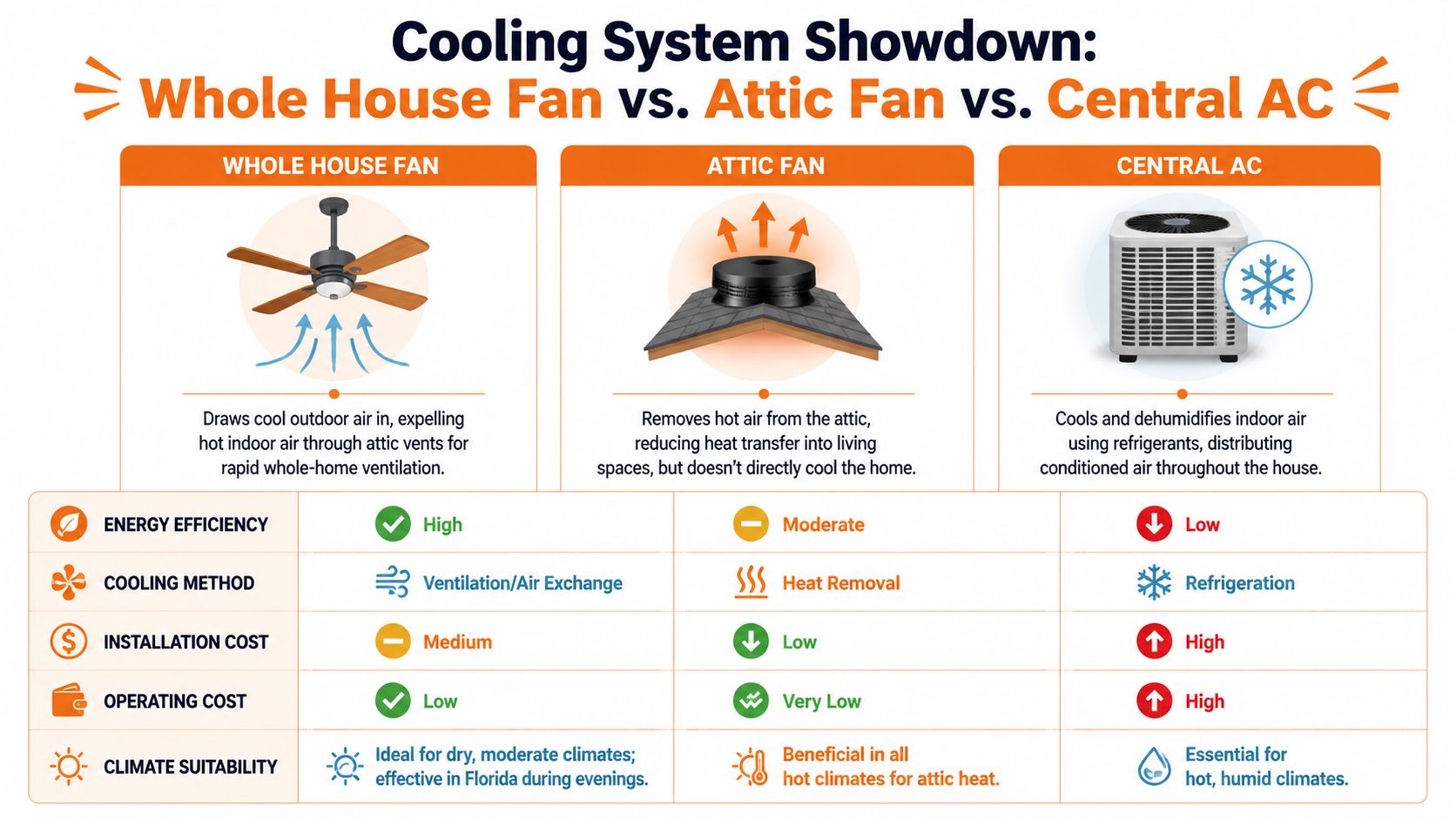
Home Cooling Systems At a Glance
| Feature | Whole House Fan | Attic Fan | Central Air Conditioning |
|---|---|---|---|
| Primary function | Ventilates the living space with outdoor air | Removes heat from the attic | Cools and dehumidifies indoor air |
| Cooling method | Air exchange and airflow | Attic heat removal | Refrigeration through HVAC equipment |
| Best use case | Evenings, nights, shoulder seasons | Reducing attic heat load | Peak heat and humidity |
| Indoor fresh-air effect | Strong | Minimal direct effect in living areas | Limited unless paired with ventilation |
| Role in Florida | Helpful in specific windows | Helpful support tool | Main comfort system for most homes |
What each system actually does
A whole house fan pulls cooler outdoor air in through open windows and pushes warm indoor air up into the attic and out through attic vents. It works like opening the house up and giving it a strong set of lungs. In Orlando, that can feel great on a better evening or during a milder stretch of weather. It does not lower humidity the way AC does, so timing matters.
An attic fan has a narrower job. It cools the attic space, not the rooms where you sit, sleep, and live. That can help reduce some of the heat building above your ceiling, but it usually does not create that noticeable rush of fresh air through the house that a whole house fan can.
A central AC system cools the air and removes moisture from it. That makes it the system Florida homeowners depend on during sticky afternoons, rainy-season humidity, and those nights when outside air still feels damp after dark.
Why Florida homes often need more than one approach
This is the part many generic guides miss. In a dry climate, a whole house fan can carry more of the cooling load. In Central Florida, humidity changes the equation.
A whole house fan and central AC are not direct replacements for each other. One is a ventilation tool. The other is a temperature and humidity control system. An attic fan sits in the background as a support tool that may help reduce attic heat, but it does not take the place of either one.
That is why the best answer for many Orlando homeowners is based on use, not rivalry. Use the whole house fan when outdoor air is helpful. Use central AC when the air outside feels like a wet towel. Use an attic fan, if appropriate for the home, to help with attic heat rather than indoor comfort itself.
Cost perspective without mixing up the roles
Whole house fans usually cost less to install than central AC. That lower upfront cost can make them attractive, especially if your goal is better ventilation and less AC use during the right weather windows. But lower cost does not mean same function.
If you are comparing a fan upgrade against replacing a failing cooling system, it helps to review this Orlando AC installation buying guide before deciding. For many homes, the smartest setup is not choosing one winner. It is giving each system the job it handles best.
What to Know Before Installing a Whole House Fan
An assumption of simplicity can lead some homeowners into trouble. A whole house fan sounds simple, so it’s easy to assume installation is simple too.
It isn’t.
Venting is not optional
For a whole house fan to work correctly, the attic has to be able to release the air the fan is pushing into it. If the attic can’t vent that air fast enough, the system chokes itself.
According to this whole house fan safety and installation reference, a whole house fan typically needs attic venting equal to twice the square footage of the fan's shutter area. That same guidance warns that poor venting can create negative pressure, reduce airflow, and even pull dangerous exhaust gases back into the home from fuel-burning appliances.
That’s not a minor performance issue. That’s a safety issue.
The home has to be assessed as a system
A good installation looks beyond the fan itself. The installer needs to think through how the house breathes, how the attic vents, and how the existing HVAC system is laid out.
A professional assessment usually focuses on things like:
- Fan sizing: The airflow has to match the home’s layout and volume.
- Attic vent capacity: The attic has to release the air the fan moves.
- Electrical safety: The wiring and controls need to be installed correctly.
- Appliance backdraft risk: Fuel-burning equipment has to be considered carefully.
- Integration with current HVAC equipment: Return paths, duct layout, and equipment placement all matter.
If a home has a modern variable-capacity AC system, zoning, or smart controls, that doesn’t automatically rule out a whole house fan. It does mean someone should evaluate how all those pieces interact.
Florida homes need practical planning
In Orlando-area homes, installation planning also needs common-sense thinking about everyday use. Which windows will people open? Which rooms need the best airflow? Will the homeowners use it mainly at night? Is attic access straightforward? Is there a way to close and seal the opening well when the fan isn’t in use?
Those questions affect whether the fan becomes a favorite feature or something that sounded good on paper and rarely gets used.
Maintenance is usually light, but setup has to be right
The good news is that once a whole house fan is installed properly, maintenance is generally simple. Homeowners usually just need basic cleaning and routine checks to keep louvers and moving parts in good shape.
The hard part is the beginning. Installation quality determines noise, airflow, comfort, and safety.
Good whole house fan performance starts in the attic, not at the wall switch.
That’s why this is one of those home upgrades where expertise matters more than the equipment label.
Experience a Cooler, Fresher Home with Al-Air
A whole house fan can be a smart addition to a Florida home when you use it for what it does best. It can help clear out trapped heat, bring in fresher air, reduce some AC runtime, and give you another comfort option during evenings, overnight hours, and shoulder-season weather.
It also works best with honest expectations. In Orlando, a whole house fan isn’t your answer for every hot and humid hour. It’s part of a smarter cooling strategy. Use the fan when outdoor air gives you an advantage. Use central AC when Florida weather demands dehumidified cooling.
If you’d like help figuring out whether your home is a good fit, the next step is simple. Reach out to Al-Air Corporation for a free, no-obligation estimate and a clear assessment of your home’s ventilation, attic setup, and cooling goals.
Frequently Asked Questions About Whole House Fans
FAQ
| Question | Answer |
|---|---|
| Can a whole house fan replace central AC in Orlando? | Usually not by itself. In this climate, central AC is still the main system for hot, humid stretches. A whole house fan is most useful during favorable evening, overnight, and shoulder-season conditions. |
| Do I have to open windows when using it? | Yes. The fan needs open windows so outdoor air can enter the house. Without that path, airflow won’t work the way it should. |
| Will it help with cooking smells and stale air? | Yes, that’s one of the most noticeable everyday benefits. A whole house fan can move odors and closed-up indoor air out of the home much faster than simply recirculating air. |
| Is this a good DIY project? | It’s better treated as a professional installation. Venting, electrical work, airflow design, and safety around fuel-burning appliances all need to be checked carefully. |
A whole house fan can be a great fit when the home, attic, and climate window all line up. The best results come from proper sizing, proper venting, and realistic expectations about how it will work in Florida.
If your home feels stuffy after sunset or your AC never seems to get a break, Al-Air Corporation can help you evaluate whether a whole house fan makes sense for your layout and cooling habits. You’ll get straightforward advice, clear options, and a practical path to a cooler, fresher home.