
Set your thermostat to 78°F when you’re home, and treat that as the baseline recommended air conditioning temperature. In Orlando, that number is the right starting point, but humidity is why it can still feel uncomfortable, so the key is learning how to pair that setting with the way your system removes moisture.
If you’re reading this while the house feels sticky, the AC seems to run forever, and someone in the family keeps dropping the thermostat lower and lower, you’re dealing with the exact problem Florida homeowners face every summer. The thermostat number matters, but in Greater Orlando, comfort isn’t just about temperature. It’s about humidity, run time, airflow, and whether your system is doing its full job.
I’ve seen plenty of homes where the thermostat says one thing and the house feels completely different. A Florida home at 78°F can feel fine when the air is dry enough. The same home at 78°F can feel miserable when moisture is hanging in the air. That’s why generic national advice only gets you halfway there.
The Official 78-Degree Rule Explained
The official benchmark is simple. The U.S. Department of Energy recommends 78°F when you’re home, and for every 1°F you raise the temperature, you can save 3 to 5% on cooling costs. That guidance matters because 88% of U.S. households have air conditioning, and residential cooling adds up to $29 billion annually, according to this DOE-based summary from Air Serv.

Why 78°F works
Think of your AC like a truck engine. If you floor it all day, it burns more fuel and wears out faster. If it runs in its efficient range, it does the job without unnecessary strain. Your air conditioner works the same way.
At 78°F, the system has room to cool the house without fighting an impossible battle against outdoor heat every minute of the day. That’s the sweet spot between comfort and efficiency. Go much lower, and the system has to work harder and longer than most homeowners realize.
The key point is this: 78°F isn’t a random number. It’s a benchmark built around energy use, comfort, and how cooling systems perform in real homes.
Practical rule: If your current habit is keeping the house at 71°F all day, don’t jump straight to 78°F overnight. Move the setting up gradually and let your body adjust while you improve humidity control.
What homeowners get wrong
A lot of people hear “set it to 78” and assume that means every house will feel perfect at 78. That’s not true. It means 78°F is the national efficiency target. It gives you the best starting point if your system is operating correctly and your home isn’t loaded with humidity or air leakage.
That’s also why system condition matters. If airflow is weak, filters are dirty, or the equipment isn’t maintained, even the best thermostat setting won’t deliver good comfort. Regular service makes the official recommendation effective in practice. If you want the HVAC basics dialed in before you start chasing thermostat settings, it helps to understand the core parts of a residential HVAC system and service approach.
Finding Your Ideal Temperature Day and Night
Most homeowners don’t need one fixed setting all day long. They need a plan that matches how the house is used. That means one temperature for when you’re home and awake, another for when you’re sleeping, and a higher setting when the house is empty.
Recommended settings at a glance
| Situation | Recommended Temperature (Fahrenheit) | Primary Goal |
|---|---|---|
| Home and awake | 78°F | Balance comfort and efficiency |
| Sleeping | 82°F | Reduce nighttime cooling use |
| Away from home | 85°F | Cut unnecessary runtime while you’re out |
That table is the cleanest starting point for a Florida house. It keeps you close to the national efficiency benchmark while giving the system some breathing room when comfort demands are lower.
How to use those settings
When you’re home and moving around, 78°F is the target I’d recommend first. Not because everyone loves that number immediately, but because it gives you a solid baseline before you start changing other variables.
At night, many homeowners assume they should drive the thermostat down. I think that’s backward if your goal is efficiency. The sleep setting of 82°F is an energy-focused target tied to the broader guidance noted in the verified data. If that sounds warm, it’s a sign you should pay closer attention to humidity, ceiling fan use, bedding, and airflow in the bedroom, not just slam the thermostat lower.
When you leave the house, stop cooling an empty building like it’s occupied. 85°F is the right move for most Florida homeowners who want savings without abandoning humidity control completely.
Don’t turn your house into a refrigerator before leaving and then shut everything way down. Let the thermostat do steady work instead of forcing big swings.
A practical way to set your home
If you want a simple daily setup, use this order:
- Morning and daytime at home: Hold at 78°F.
- Overnight: Try 82°F if your home stays comfortable.
- Workday or errands: Raise it to 85°F instead of turning the system off.
If 82°F at night doesn’t feel realistic in your home, don’t panic and drop everything into the low 70s. Adjust carefully and pay attention to how dry the house feels. In Florida, the number on the wall doesn’t tell the whole story.
Why Florida Humidity Changes Everything
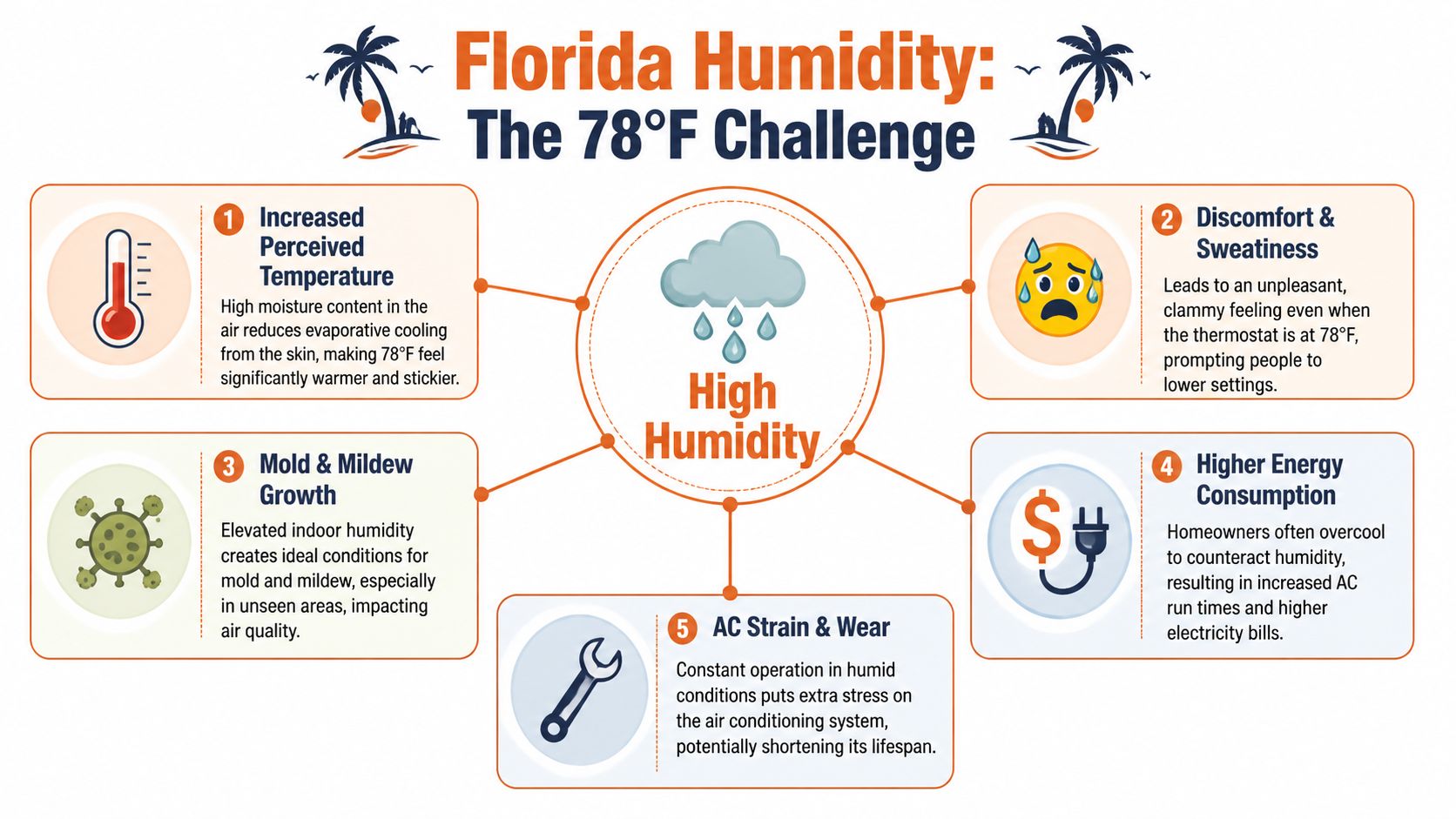
Here’s the part national advice usually skips. In Greater Orlando, relative humidity can exceed 70%, and that changes how any recommended air conditioning temperature feels inside your home. Moist air makes it harder for your body to cool itself, so a thermostat setting that should feel decent can still feel sticky and oppressive.
Temperature and comfort are not the same thing
Florida homeowners run into the same trap over and over. The house feels muggy, so they keep lowering the thermostat. The problem is that muggy air doesn’t always mean the house needs a much lower temperature. It often means the system isn’t removing moisture effectively.
To pull moisture out of the air, the system has to cool the air to its dew point, which is around 55°F in the verified guidance for humid climates. That’s what allows the AC to dehumidify instead of just blow cool-ish air around. Bryant’s guidance for summer thermostat settings notes that in hot, humid areas like Orlando, lowering the thermostat below 70°F when it’s 95°F outside can freeze evaporator coils and lead to 10 to 20% efficiency loss, as explained in this Bryant article on summer AC settings.
Why low settings backfire in Orlando
A lot of people think lower always equals better. It doesn’t. In Florida, setting the thermostat too low can create a chain reaction:
- Longer strain on the equipment instead of smarter moisture removal
- Frozen evaporator coils when the system is pushed too hard
- Poor comfort because the house still feels clammy
- Higher repair risk when the coil ices over and airflow drops
The worst part is that homeowners think the low setting is helping while the system is moving in the wrong direction.
If your home feels wet and sticky, the first question shouldn’t be “How low can I set the thermostat?” It should be “Is my AC actually removing humidity?”
What works better
In Orlando, comfort comes from a combination of temperature and dehumidification. That means your thermostat setting needs to support proper run cycles, not sabotage them. If the house feels muggy at 78°F, the answer might be maintenance, airflow correction, duct issues, or dedicated dehumidification. It’s often not “set it to 68 and hope.”
Mastering Your Thermostat for Total Comfort
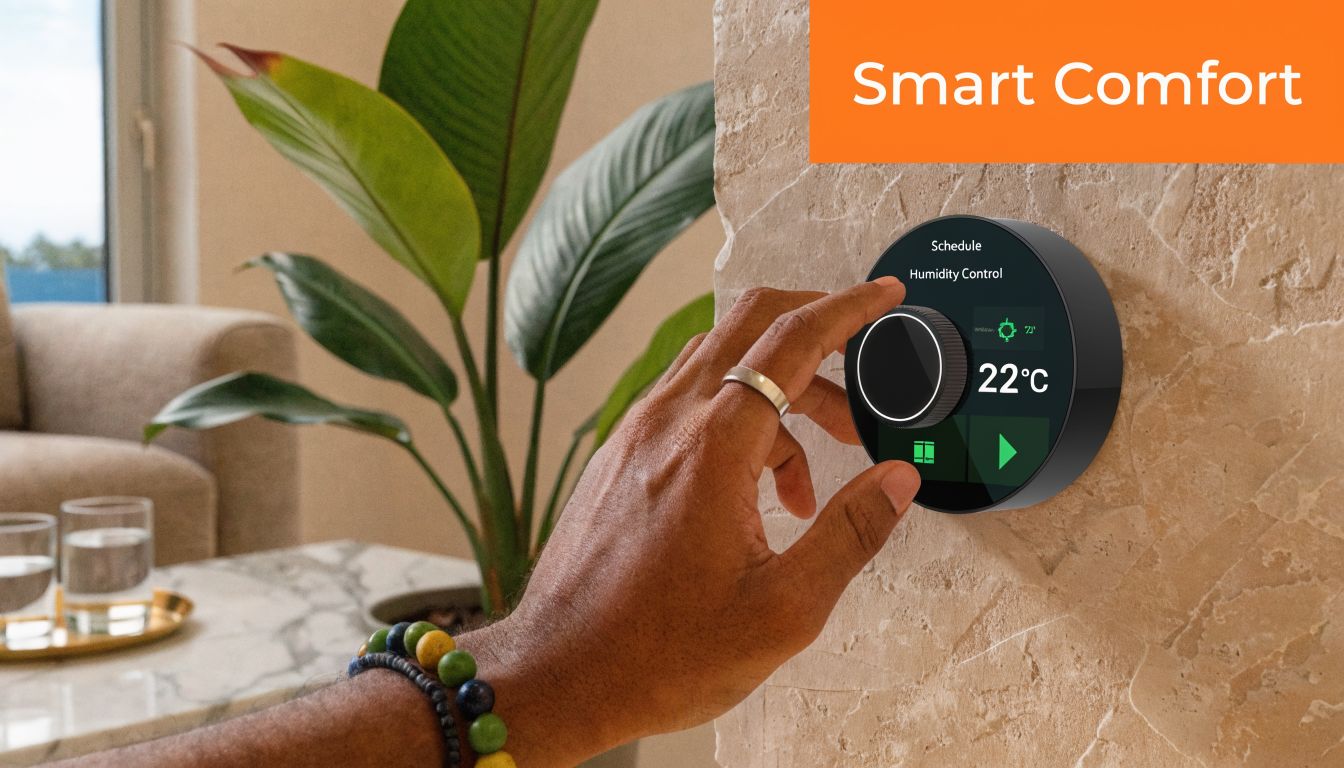
Your thermostat shouldn’t be treated like an on-off switch with one magic number. In Florida, it’s a control tool. Use it to manage comfort over the course of the day instead of reacting every time the house feels a little warm.
Use scheduling, not constant manual changes
If you keep bumping the thermostat down every time the house feels damp, you’re making the system chase your discomfort instead of following a plan. A programmable or smart thermostat gives you a much better result because it keeps temperatures consistent and reduces those panic adjustments.
A solid Florida schedule is simple:
- Wake-up and daytime occupied hours: Keep it steady.
- Afternoon humidity peaks: Avoid overcorrecting with dramatic drops.
- Evening and overnight: Let the programmed setting take over instead of manually changing it room by room.
If you’re remodeling or building a more integrated setup, a qualified home automation consultant can help tie thermostat schedules, sensors, and other comfort controls together in a way that fits how your household lives.
Check if your system is delivering what the thermostat asks for
A thermostat can only command the system. It can’t fix poor airflow or low refrigerant.
You can do one useful check yourself with a digital thermometer. The temperature difference between the air entering the return grille and the air leaving a supply vent should be 14 to 20°F. If it’s below 14°F, a dirty filter may be reducing airflow by 5 to 10°F. If it’s over 20°F, low refrigerant is often the issue. Either condition can cause 20 to 30% efficiency losses, according to ENERGY STAR design temperature guidance.
A thermostat problem and a system problem can feel identical from the couch. That’s why checking the temperature split matters.
Here’s a helpful walkthrough on thermostat habits and cooling strategy:
My recommendation for Orlando homeowners
Start with a schedule and leave it alone long enough to judge it fairly. Don’t keep chasing comfort with constant manual overrides. If the house still feels wrong after that, assume the issue is humidity control, airflow, or equipment performance, not your inability to find the perfect number.
Quick Actions to Boost AC Efficiency
Thermostat settings matter, but they’re only part of the job. Florida homeowners get better results when they reduce the heat and moisture load the AC has to fight inside the house.
Small changes that support your AC
- Change the air filter on time: A clogged filter chokes airflow. When airflow drops, comfort drops with it, and the system has a harder time removing moisture.
- Keep supply vents and return grilles open and clear: Don’t block them with furniture, rugs, or drapes. Your AC can’t cool rooms properly if the air path is restricted.
- Use ceiling fans in occupied rooms: Fans don’t lower the thermostat reading, but they can make the room feel more comfortable so you’re less tempted to lower the setting.
- Block solar heat gain: Afternoon sun pounds Florida windows. Curtains, shades, and especially professional home window tinting can cut down the heat load your AC has to handle.
- Seal the obvious leaks: Gaps around doors, attic access points, and windows let hot humid air creep in all day.
Don’t ignore maintenance
A well-set thermostat can’t rescue a neglected system. Routine tune-ups keep airflow, coils, drains, and controls in shape so the equipment can deliver comfort. If you want the system cleaned and checked before the worst heat shows up, regular AC maintenance service is the smart move.
One more opinion from the field: homeowners often spend too much time debating the thermostat and not enough time fixing the house conditions around it. Clean air movement and less heat gain usually make the recommended air conditioning temperature feel much more reasonable.
When to Call Al-Air for Service and Upgrades
Some problems aren’t thermostat problems at all. They’re mechanical problems pretending to be comfort problems.
If your system runs for long stretches, the house still feels warm, or some rooms never seem right, stop assuming the answer is to lower the setpoint. In Orlando heat, one of the most important health checks is the temperature split between return and supply air. That target is 14 to 20°F, and when the differential is off, energy use can climb by 3% per degree of deviation. That same verified guidance notes the compressor accounts for 12% of all U.S. home electricity usage, which is why poor system performance gets expensive fast, as described in this explanation of ideal AC supply temperature and system strain.

Signs you need professional help
Call for service if you notice any of these:
- The AC runs constantly: It may be undersized, dirty, low on refrigerant, or losing airflow.
- Rooms feel uneven: That often points to duct, airflow, or balancing issues.
- You measure a bad temperature split: If your quick check falls outside the proper range, the system needs diagnosis.
- You hear new noises: Buzzing, rattling, or hard starts usually mean the equipment is under stress.
- Humidity stays high indoors: If the house feels clammy while the unit runs, it’s not controlling moisture correctly.
Repair, maintenance, or replacement
Not every issue means you need a new system. Sometimes the fix is a filter, blower issue, coil cleaning, refrigerant correction, or drain problem. Other times, an aging unit in a Florida home keeps costing more because it’s not keeping up anymore.
If you’re trying to decide whether your system needs service, a tune-up, or a bigger upgrade path, this local Orlando AC service and comfort guide is a useful next read.
If your house only feels comfortable when the thermostat is set unusually low, that’s usually evidence of a system or humidity problem, not proof that your family is impossible to please.
Frequently Asked Air Conditioning Questions
Should I turn the AC off when I leave for a few hours
No. Raise the setting instead. In Florida, shutting it off completely can let heat and moisture build up too much. A higher away setting is the better move because the house won’t get punished by extreme indoor conditions.
Why does my house feel humid even when the AC is running
Because cooling and dehumidifying aren’t always happening effectively at the same time. The system may have airflow trouble, a dirty filter, a drain issue, low refrigerant, duct leakage, or short cycling. If the thermostat reaches the target but the house still feels sticky, the moisture problem hasn’t been solved.
Will closing vents in unused rooms save money
Usually no. In most residential systems, closing vents can disrupt airflow and pressure balance. That can make the system work harder instead of smarter.
What’s the best recommended air conditioning temperature for most Orlando homes
Start at 78°F when occupied, use a higher setting when away, and focus hard on humidity control. That’s the combination that usually delivers the best balance of comfort and efficiency.
Is a lower thermostat setting the fastest way to cool the house
No. Your AC cools at the rate it cools. Setting it drastically lower doesn’t make it cool faster. It only tells the system to run longer.
If your home in Greater Orlando feels sticky at 78°F, runs nonstop, or never seems comfortable no matter what you set on the thermostat, it’s time for a real diagnosis. Al-Air Corporation helps homeowners with AC repair, maintenance, replacements, duct cleaning, and indoor air quality solutions that make the recommended air conditioning temperature function effectively in Florida.