
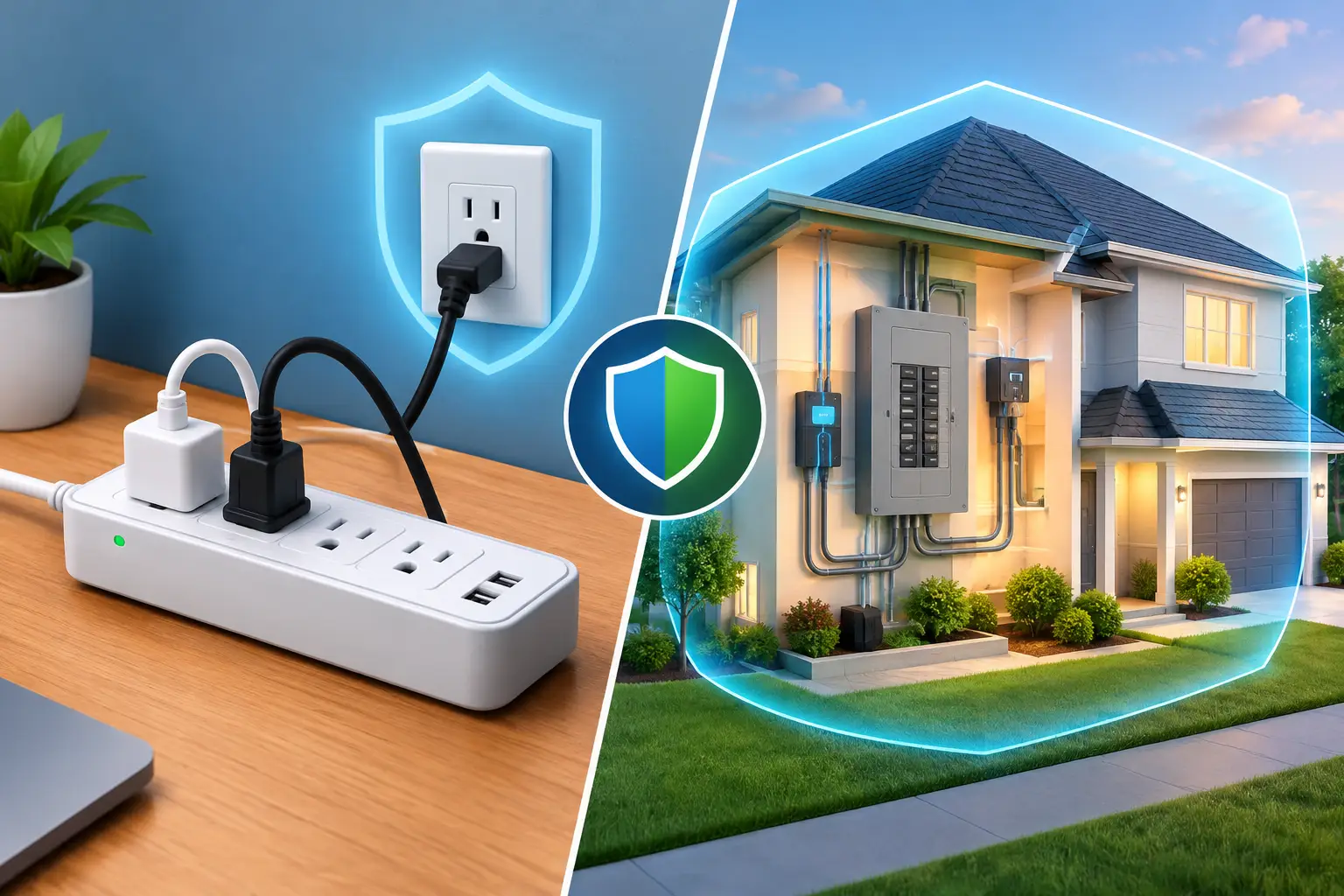
A single lightning storm can do more than flicker the lights. It can damage a smart thermostat, garage-door opener, refrigerator board, router, or the control electronics inside an AC system. When homeowners compare a surge protector vs whole house solution, the real question is not which one is better in every situation. It is which equipment needs protection, where surges can enter, and whether your electrical panel is ready for the job.
For many Central Florida and Tampa-area homes, the best answer is layered protection: a properly installed whole-house surge protective device at the panel, plus quality point-of-use protection for sensitive electronics. That does not mean every home needs to buy every device on the shelf. It means protecting the systems that would be expensive, disruptive, or unsafe to replace after a voltage spike.
Surge Protector vs Whole House: The Core Difference
A plug-in surge protector is designed to protect equipment connected directly to it. Think televisions, computers, gaming systems, routers, office equipment, and phone chargers. It sits at the outlet and helps divert excess voltage away from the devices plugged into that strip.
Whole-house surge protection is installed at or near your main electrical panel by a licensed electrician. Its job is to reduce surges before they travel deeper into the home’s wiring. That gives broad protection to hardwired equipment that cannot plug into a power strip, including your air conditioner, appliances, lighting controls, garage-door opener, and some smart-home equipment.
Neither option makes a home invincible to every electrical event. A direct lightning strike, severe wiring problem, or major utility issue can cause damage beyond what a surge device can handle. Still, quality surge protection can greatly reduce the risk from the smaller, more common voltage spikes that wear down electronics over time.
Why Florida Homes Have More at Stake
Florida’s lightning season is not a minor inconvenience. Repeated thunderstorms, utility interruptions, downed lines, and quick power restoration can all create voltage fluctuations. Even a surge you never notice can stress circuit boards and electronic controls.
That matters because modern homes contain more sensitive electronics than ever. Your HVAC system may use an electronic control board, variable-speed components, communicating thermostat, or condensate safety device. Kitchen appliances, washers, dryers, pool equipment, security systems, and EV chargers also depend on electronics that can be costly to diagnose and replace.
There is another source many homeowners overlook: surges created inside the home. Motors turning on and off in refrigerators, air conditioners, pumps, and power tools can create small spikes. A whole-house device helps at the panel, while point-of-use protection offers another line of defense close to sensitive equipment.
What a Plug-In Surge Protector Does Well
A plug-in surge protector is useful when it is a real surge-protective device, not just a power strip with extra outlets. It is a practical choice for electronics that are easy to plug in and expensive to replace, especially in a home office or entertainment center.
It also gives you flexibility. If you replace a television or rearrange an office, the protection moves with the equipment. For renters or homeowners who are not ready for panel work, a quality plug-in unit is an accessible first step.
But it has clear limits. It only protects what is connected to it. It cannot protect your central AC, dishwasher, range, hardwired lighting, electrical panel, or the outlets throughout the home. It also cannot correct a loose connection, overloaded circuit, outdated panel, or grounding issue.
Not every strip labeled as a “power strip” includes surge protection. Look for clear surge-protection labeling and a joule rating, which indicates how much energy the device can absorb over its life. A higher number is not the only factor, but cheap, unlisted strips are not where you want to cut corners. Replace a surge protector if its protection indicator shows it is no longer working, after a significant surge event, or when it is visibly damaged.
What Whole-House Surge Protection Does Well
A whole-house surge protective device protects at the source – your electrical service panel. It is designed to divert excess voltage safely to the grounding system before that energy spreads through branch circuits.
Its biggest advantage is coverage. One panel-mounted device can help protect many systems at once, including equipment that cannot use a plug-in strip. For Florida homeowners with central air, smart appliances, pool equipment, or a growing number of connected devices, that broad coverage is often worth considering.
Whole-house protection is also a sensible addition during an electrical panel upgrade, AC replacement, generator-related work, or EV charger installation. When an electrician already has access to the panel, it is a good time to evaluate whether the panel has space, proper grounding, and the capacity to support the home’s current electrical needs.
The trade-off is that installation is not a DIY project. The electrician needs to select a compatible device, install it correctly, and verify that the panel and grounding system are in sound condition. A surge device is only as dependable as the electrical system it is connected to.
Why Layered Protection Usually Makes Sense
The choice does not always have to be surge protector or whole-house protection. They handle different parts of the problem.
A whole-house device provides the first level of protection for the electrical system. Plug-in surge protectors add a second level for delicate electronics. For example, the panel device can help reduce a surge entering through the service, while a quality protector at the outlet adds protection for a computer, television, or router.
This approach is especially practical for homes with expensive HVAC equipment. Whole-house protection can help protect the system at the panel level, while a dedicated HVAC surge protector may be recommended for certain outdoor units or control components. The right setup depends on the equipment, manufacturer guidance, and the home’s wiring.
Do not assume more devices always means better protection. The goal is a correctly designed system, not a pile of gadgets. A licensed electrician can identify whether your home’s biggest risk is external surges, inadequate grounding, an aging panel, crowded circuits, or all of the above.
When Whole-House Protection May Not Be Enough
Whole-house surge protection is valuable, but it is not a substitute for basic electrical repairs. If breakers trip often, lights dim when the AC starts, outlets feel warm, or your panel shows rust, corrosion, or damage, address those issues first.
Older panels can create concerns beyond surge protection. Some may lack room for a surge device. Others may have grounding or bonding deficiencies that need correction. In homes with a Federal Pacific, Zinsco, or other known problematic panel, an electrician may recommend a panel replacement rather than adding accessories to outdated equipment.
Also consider the path surges can take. Electrical lines are one route, but cable, phone, and data lines can introduce surges too. If your home has connected equipment through multiple systems, ask how those systems should be protected and bonded. No referrals, no runaround – a qualified electrician should explain what applies to your house and what does not.
How to Decide What Your Home Needs
Start with what you would hate to lose during the next storm. If your concern is a computer, television, router, or gaming setup, start with quality point-of-use surge protection. If you are concerned about an AC system, appliances, pool equipment, smart-home controls, and electronics across the entire property, whole-house protection deserves a closer look.
Next, consider the condition of the electrical panel. A newer, properly sized panel with clean wiring may be ready for a surge protective device. An older panel with limited capacity, corrosion, or signs of overheating needs a professional inspection before any upgrade is added.
Finally, factor in timing. If you are already planning HVAC replacement, a panel upgrade, a generator connection, or EV charger readiness, coordinate the electrical work. Handling related upgrades together can reduce repeat visits and help ensure the equipment works safely as a system.
What to Expect From Professional Installation
A professional installation should begin with a look at your panel, service size, available breaker space, grounding, and the equipment you want to protect. You should get a clear explanation of the recommended device and the work required before installation begins.
The installer should also check for warning signs that change the scope of work, such as damaged bus bars, loose conductors, moisture intrusion, or an overloaded panel. Skipping those details to install the cheapest device quickly is not a bargain.
At Al-Air, in-house master electricians can evaluate surge protection alongside panel condition and HVAC equipment, so you are not coordinating separate contractors for related problems. The goal is straightforward: protect what matters, correct what is unsafe, and avoid paying for work your home does not need.
A surge protector is a useful tool. Whole-house protection is a stronger foundation. If thunderstorms, aging electrical equipment, or costly connected systems have you concerned, a panel evaluation can replace guesswork with a clear plan before the next outage tests your home.