
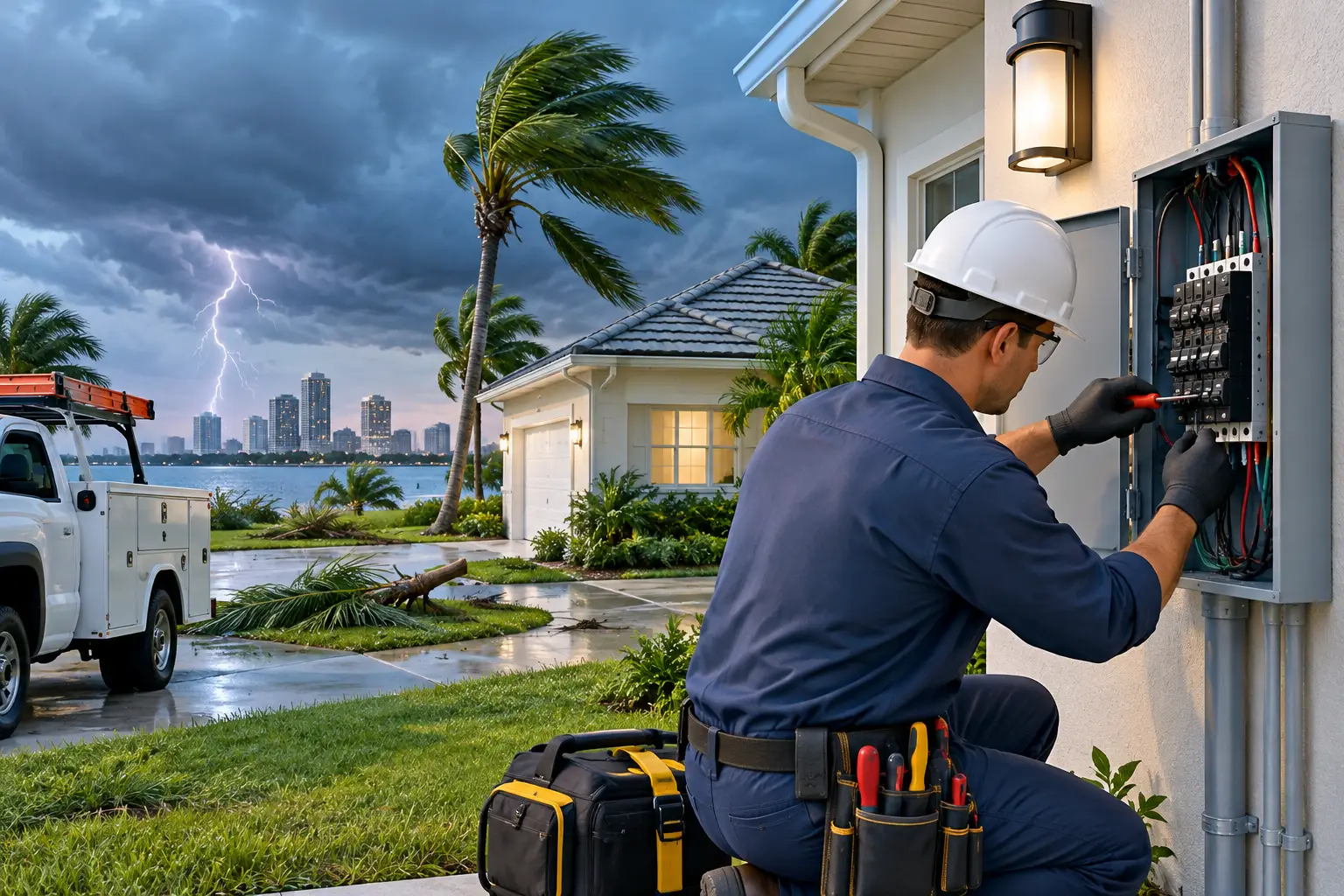
A hard storm can be gone in 30 minutes and still leave a home with flickering lights, a dead AC system, tripped breakers, or a panel that does not feel right. This storm electrical repair case study shows how a fast, methodical response can separate a manageable repair from a dangerous situation that keeps getting worse.
This representative Central Florida service scenario is based on the types of storm-related electrical calls homeowners make after heavy rain, lightning, and wind move through the Tampa area. Every home is different, but the process matters: make the area safe, find the real source of the failure, explain the options clearly, and repair the problem without passing the homeowner from one contractor to another.
Storm Electrical Repair Case Study: The Call
The homeowner called shortly after an afternoon storm dropped heavy rain and nearby lightning. The power had blinked several times during the storm. When it came back, half the house was working, but the central AC would not start. Several outlets in the garage and kitchen were dead, and one breaker in the panel would not reset.
The homeowner had already done the reasonable first step: checked the panel. But a breaker that trips immediately or will not stay on is not something to force. Repeatedly resetting it can make a damaged circuit, appliance, or panel component worse. With Florida heat building inside the home and food in the refrigerator at risk, this was not a repair that could wait for a vague appointment window.
A licensed electrician arrived, listened to what happened before and after the outage, and began with safety checks. The goal was not to guess which part had failed. It was to determine whether the problem started at the utility connection, the main panel, an affected branch circuit, the AC disconnect, or equipment inside the home.
What the inspection found
The home had not taken a direct lightning strike. Instead, the storm had caused a voltage event that damaged a breaker serving part of the home and affected the electrical connection feeding the outdoor AC equipment. The panel also showed signs of age that mattered to the repair, including corrosion around a few components and limited space for future circuit additions.
That distinction was important. Replacing only the tripped breaker may have restored power temporarily, but it would not have answered why the AC was still not receiving the proper power supply. On the other hand, recommending a complete panel replacement without testing the affected circuits would have been premature.
The electrician isolated the failed circuit, tested the panel components and inspected the AC disconnect and wiring. Because the home relied on both electrical and HVAC systems to get comfortable again, handling the evaluation under one roof prevented the usual runaround: an electrician says to call an AC company, then the AC company says to call an electrician back.
The Repair Plan: Safe First, Then Practical
The homeowner received a straightforward explanation of what was urgent and what could be planned. The immediate repair involved replacing the damaged breaker, correcting the compromised connection at the outdoor equipment, and testing the circuit under load. Once the electrical feed was stable, the AC system could be evaluated for any storm-related damage before being restarted.
The technician also explained the panel condition honestly. It was still serviceable after the immediate repair, but corrosion and limited capacity meant the homeowner should consider a panel upgrade before adding major loads such as an EV charger, a new heat pump, or expanded outdoor lighting. That recommendation came with options, not pressure.
For many homeowners, this is where trust is either built or lost. A storm can expose an existing weakness, but not every weakness requires a full replacement that same day. The right answer depends on the panel’s condition, safety concerns, available capacity, the age of the equipment, and what the homeowner plans to add in the near future.
In this case, the urgent work was completed first. The homeowner received a clear estimate for the larger upgrade as a separate decision, with financing available if they chose to move forward later. No hidden fees. No scare tactics. No confusing handoff between companies.
Why the AC could not simply be restarted
When an AC will not come back after an outage, homeowners naturally want it running as soon as possible. In Florida, that is understandable. But restarting equipment before verifying the electrical supply can create bigger problems, especially when a surge, loose connection, or damaged disconnect is involved.
The electrical side has to be stable first. That means confirming correct voltage, checking protective devices, and making sure wiring and connections are not overheated, loose, or damaged. After that, the HVAC equipment can be assessed with a clearer picture of what happened.
This is one reason a contractor with both electrical and HVAC expertise can save time after a storm. The homeowner gets a coordinated answer instead of competing opinions. Al-Air handles both sides of the problem with in-house professionals, so there is no referral chain and no subcontractor guessing where responsibility begins.
What Homeowners Should Do After Storm-Related Electrical Trouble
If a storm leaves part of your home without power, the first priority is safety, not troubleshooting every outlet yourself. Turn off or unplug sensitive electronics if power is unstable, and avoid standing water near electrical equipment. If you see sparks, smell burning insulation, hear buzzing from the panel, or notice heat at an outlet or breaker, keep clear and call for emergency electrical service.
A few signs deserve a same-day professional inspection even if the power comes back:
- Breakers that trip repeatedly or refuse to reset
- Flickering or dimming lights in more than one room
- A burning smell, buzzing sound, or warm electrical panel
- An AC system that will not start after an outage
- Water near the panel, meter, outdoor disconnect, or electrical outlets
Do not assume a working light means the electrical system is fine. Storm damage can affect one circuit, one connection, or a piece of equipment without knocking out the entire house. A quick inspection can identify whether the issue is isolated or part of a larger problem.
The Cost Question: Repair, Upgrade, or Wait?
Storm electrical repair costs vary because the cause varies. Replacing a failed breaker or repairing a damaged connection is very different from replacing a surge-damaged panel, rewiring a wet circuit, or correcting a utility-side issue. A proper diagnosis protects you from paying for the wrong repair first.
Waiting can make sense when the system is safe, the issue is documented, and a larger project is not immediately necessary. Waiting does not make sense when there are signs of overheating, water intrusion, recurring trips, or an AC system that cannot operate safely. Those are situations where delaying the repair can cost more than acting quickly.
Ask for a clear explanation of the immediate fix, the condition of the surrounding equipment, and whether any recommended upgrade is urgent or simply a smart future plan. A professional should be able to answer those questions in plain language.
A Better Outcome Starts With the Right First Call
The best result from a storm electrical problem is not just getting the lights back on. It is knowing why they went out, what was repaired, and whether your home is ready for the next round of Florida weather. When power, panel, and AC concerns show up together, a fast local team that can address both can take a stressful situation off your plate.
If something feels off after a storm, trust that instinct. Shut down what is unsafe, avoid repeated breaker resets, and get a licensed professional to look at the whole picture before a small electrical issue becomes the next emergency.