
Your AC quits in the middle of a sticky Orlando afternoon. The house starts warming up fast, the humidity creeps in, and your first move is the same one almost everyone makes. You grab your phone and type hvac services near me.
That search is a good start. It just isn't enough on its own.
In Greater Orlando, homeowners have a lot of choices, and that's exactly why a little screening matters before you book a visit. You're not just trying to get cold air back today. You're trying to avoid overpaying, avoid a bad diagnosis, and avoid calling someone else out in two weeks to fix the first company's mistakes.
Starting Your Search for Local HVAC Experts in Orlando
If you're starting with Google, that's normal. Just don't stop at the first ad or the first map listing.
According to Orlando HVAC contractor market data, there were 793 HVAC contractors in Orlando as of April 1, 2026. That tells you two things right away. First, help is available. Second, the market is crowded enough that weak companies can hide behind flashy ads, generic promises, and rushed sales tactics.
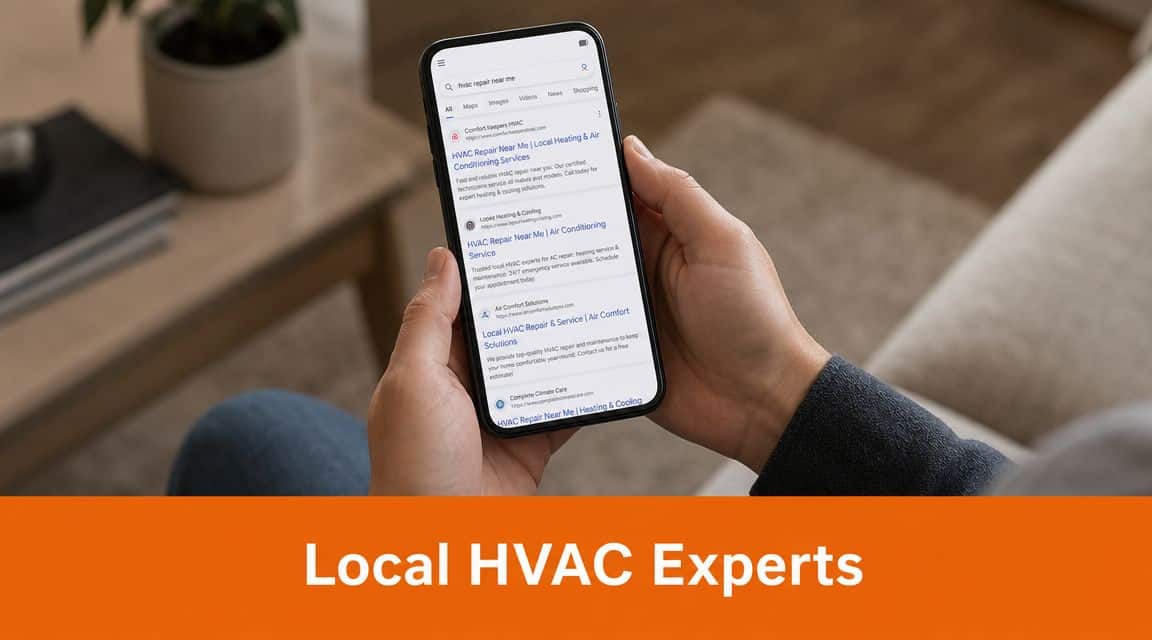
What to scan for in search results
Before you click, look for trust signals in the listing itself and on the company website.
- Service area details. A real local company usually names the neighborhoods, cities, or counties it serves.
- Emergency availability. In Florida heat, same-day or after-hours coverage matters when a system dies.
- Years in business. Longevity doesn't guarantee quality, but it does tell you the company has survived in a competitive market.
- Clear service categories. Repair, maintenance, replacement, ductwork, and air quality should be easy to find.
- A physical presence. You want a business that looks reachable, not a lead-gen page that forwards your call somewhere else.
A strong website won't just say “we fix AC.” It'll show you whether the company handles the kind of call you have. No cooling. Weak airflow. Water around the air handler. Uneven rooms. High humidity. Strange odors. Those details matter.
Build a shortlist, don't make a snap pick
The smart move is to build a list of three to five companies and compare them. That gives you enough room to spot differences in communication, availability, and how they explain your problem.
Practical rule: If a company's website is vague about where it works, what it repairs, and how to reach a real person, keep looking.
Neighborhood referrals help a lot here. Ask nearby homeowners, your realtor, a property manager, or your neighborhood Facebook or Nextdoor group who they've used for a repair, tune-up, or replacement. Local referrals are useful in Orlando because homes vary a lot by age, duct layout, insulation, attic conditions, and storm exposure.
If you want a comparison guide focused on the local market, this breakdown of how to compare air conditioning companies in Orlando is a useful next step.
Orlando-specific things that should influence your search
Central Florida isn't gentle on HVAC equipment. Long cooling seasons, heavy humidity, and storm season all put stress on systems.
That's why the right contractor isn't just the one who can replace a capacitor tonight. It's the one who understands condensate issues, airflow restrictions, duct leakage, oversized or undersized systems, and how storm prep affects outdoor equipment and electrical components. If a company treats every service call like a simple parts swap, keep it off your shortlist.
How to Vet HVAC Contractors and Verify Credentials
Once you've got a shortlist, the next step is separating the polished marketers from the companies that actually know what they're doing.
A lot of homeowners stop at reviews. Reviews matter, but they're only one piece. You also need to verify licensing, insurance, and whether the company has the technical depth to handle more than a basic repair.

Start with credentials that are non-negotiable
When a company says it's licensed and insured, verify it. Don't just take that line at face value.
Use Florida's DBPR portal to confirm the contractor license is active. Then ask for proof of insurance. Liability coverage and workers' compensation matter because they protect you if something goes wrong on the job or someone gets hurt on your property.
Also ask whether the technicians hold industry certifications such as NATE. Certification isn't magic, but it can be a useful signal that the company takes training seriously.
Read reviews like a technician would
Don't get distracted by a perfect-looking star rating. Read the comments for patterns.
Look for signs of:
- Good diagnosis. Customers say the tech explained the issue clearly and fixed the actual problem.
- Professional conduct. On-time arrival, respectful communication, clean work area.
- Estimate clarity. The invoice matched the quoted work and didn't change without explanation.
- Post-repair follow-through. The company returned calls and handled warranty concerns.
Be careful with reviews that say only “great service” or “fast and friendly.” Those don't tell you much. What helps is seeing repeated comments about accurate troubleshooting, clear options, and no pressure to replace equipment without evidence.
A lot of Orlando-area contractors now handle more than heating and cooling. According to Pro-Tech Air Conditioning & Plumbing Service, some providers advertise 24/7 emergency AC, heating, plumbing, and electrical service, which reflects how many companies now approach home systems as connected rather than isolated. That broad capability can help when the problem crosses trades, such as a condensate issue tied to drainage, or an HVAC failure tied to an electrical fault.
To help you think through the screening process, watch this quick overview before you book anyone.
Questions to ask during vetting
You don't need an interrogation. You need a few direct questions and straight answers.
| Check | What you want to hear | What should concern you |
|---|---|---|
| License | They provide the number quickly | They dodge or say it isn't necessary |
| Insurance | They can send proof | They sound annoyed you asked |
| Service scope | They explain what they do in-house | Everything seems subcontracted |
| Emergency support | They explain after-hours process clearly | Vague promises with no details |
| Experience | They describe common local issues confidently | They only speak in sales language |
A reliable contractor won't act offended when you ask for proof. Good companies expect homeowners to verify.
Key Questions to Ask Before You Commit
Once a company passes the basic screening, get them on the phone. The conversation tells you a lot.
Some companies sound great online and fall apart the minute you ask practical questions. Others may not have the slickest website, but they answer clearly, stay patient, and tell you exactly how they handle service calls. That usually means more than polished branding.
Ask about your actual equipment and problem
Start with your system, not their sales pitch.
Tell them the brand if you know it, the age if you know it, and what the system is doing. Then ask questions like:
- Have your technicians worked on this brand and type of system?
- If the unit is older, do you still service it or mainly push replacement?
- Do you check airflow, thermostat operation, and duct-related issues before recommending major parts?
Good answers sound specific. A weak answer is broad and evasive, or jumps straight to “you probably need a new unit” before anyone has looked at the system.
Ask how they handle scheduling, urgency, and pricing
Orlando homeowners often call when the house is already uncomfortable. That pressure makes it easier to agree too fast.
Use a few questions to slow the process down:
- How do you handle emergency calls after normal business hours?
- Is there a diagnostic fee, and does it apply toward repair?
- Do you quote repairs in writing before doing the work?
- Do you bill flat-rate, hourly, or by task?
You're not looking for one perfect pricing model. You're looking for transparency. If they can't explain how charges work in plain language, the invoice probably won't get clearer later.
Ask about warranties and what happens after the repair
Often, homeowners face a recurring problem. The repair gets done, the same issue returns, and suddenly nobody wants to own the outcome.
Ask:
- What warranty do you offer on labor?
- Are parts warranties handled through you or the manufacturer?
- If the repair doesn't solve the issue, what is the next step?
- Will the technician show me the failed part or explain the test result?
If a company resists basic questions about warranty, pricing, or process, that's your answer already.
One more local point. Ask whether they inspect anything related to storm readiness when they're on site. In Central Florida, hurricane season isn't separate from HVAC reality. Outdoor units, disconnects, drainage paths, and electrical connections all deserve a look when severe weather is part of the yearly routine.
Decoding Estimates and Making the Repair vs Replace Decision
A professional estimate should help you decide. It shouldn't confuse you into saying yes.
When an HVAC quote is vague, the homeowner usually loses. Either the company left itself room to change the price later, or it skipped the diagnostic work needed to define the repair correctly. Both are bad signs.
What a solid estimate should include
The estimate doesn't need to be fancy. It does need to be clear.
Look for these basics:
- Diagnosis summary. What failed, or what testing suggests is failing.
- Scope of work. What part will be replaced, repaired, cleaned, sealed, or adjusted.
- Labor and parts clarity. Enough detail to understand what you're paying for.
- Warranty terms. Parts, labor, or both.
- Next-step conditions. Whether more damage could be found once the repair starts.
If you're comparing multiple bids, compare the scope before you compare the price. One company may be quoting a part swap only. Another may be including related work such as cleaning, testing controls, or correcting an airflow issue that caused the original failure.
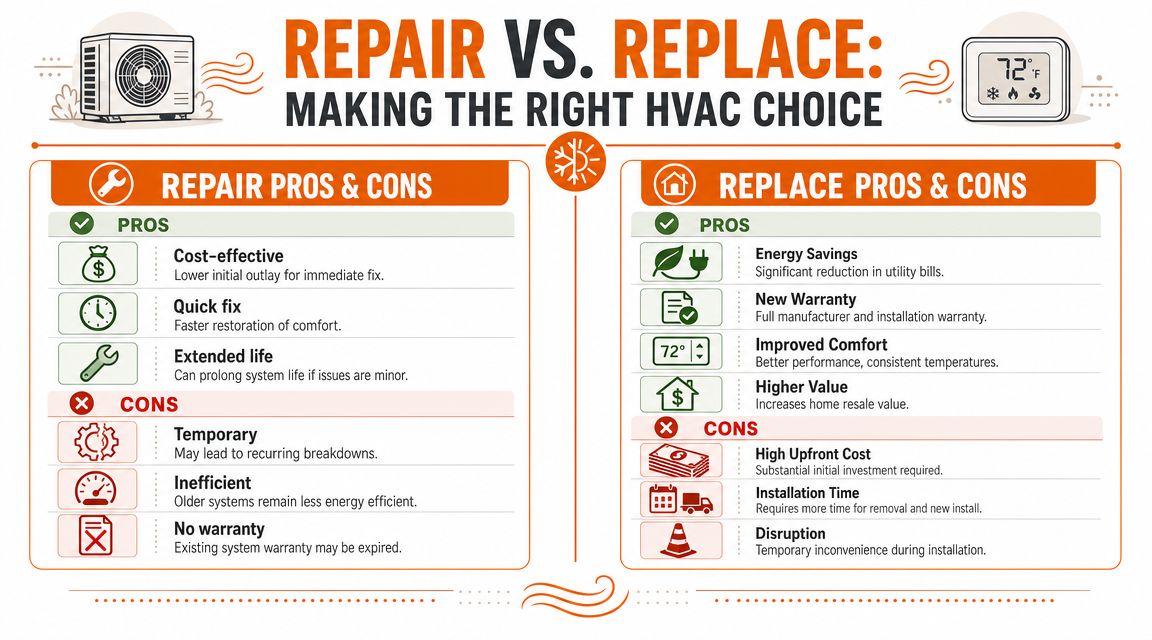
Repair sometimes makes sense. Sometimes it doesn't.
Not every expensive repair means replacement. Not every old system should be repaired either.
According to the U.S. Department of Energy guidance cited here, air conditioners typically last about 15 to 20 years. That same source notes that central AC replacement can range roughly from $5,000 to $12,000+, while many repairs range from a few hundred dollars to over $1,500 depending on the fault. It also points out that a 12 to 18 year-old unit with recurring failures can be a stronger replacement candidate because efficiency drops over time.
That matters a lot in Orlando. Long cooling seasons punish tired equipment.
A practical repair versus replace framework
Use this simple lens when you're reviewing the quote.
| Situation | Repair is usually more reasonable | Replacement deserves serious consideration |
|---|---|---|
| System age | Newer equipment with isolated issue | Older equipment nearing end of expected life |
| Breakdown history | First major repair | Recurring failures across multiple seasons |
| Efficiency | System still performs well | Comfort and operating cost keep drifting the wrong way |
| Refrigerant and parts | Parts are available and repair is straightforward | Parts are difficult, expensive, or tied to aging equipment |
| Home plans | You need a short-term solution | You plan to stay and want more dependable comfort |
If you're unsure whether a coil issue is repairable or replacement is the better move, this guide on AC coil replacement options gives homeowners a more focused look at that decision.
Don't approve a full replacement just because the repair is inconvenient. But don't keep feeding money into an old system that keeps proving it can't handle another Florida summer.
A good contractor should be able to explain both paths. If they only present one option, especially on the first visit, slow down and get another estimate.
Beyond Breakdowns Proactive Maintenance and Air Quality
Most homeowners search hvac services near me after something stops working. That's understandable. It's also the expensive way to manage comfort in Central Florida.
In Orlando, a lot of comfort complaints start before the unit fails. The house feels muggy. One bedroom runs warm. Allergies seem worse inside. There's a musty smell when the system starts. Bills creep up, but the thermostat setting hasn't changed. Those are HVAC problems too, even if the equipment still turns on.
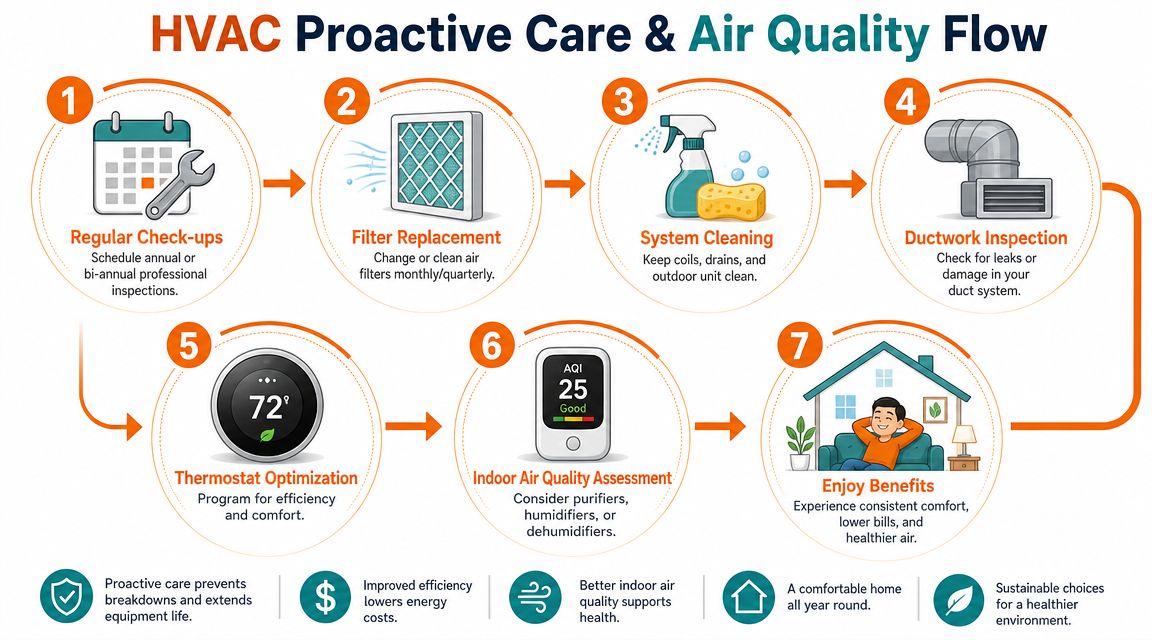
What maintenance should actually cover
Preventive maintenance has value when it's diagnostic, not cosmetic.
According to this HVAC repair and air quality reference, the EPA says typical homes lose 20% to 30% of conditioned air through duct leaks, and the American Lung Association emphasizes that indoor particulate pollution and humidity can worsen respiratory symptoms. That's a big reason many Florida comfort problems trace back to airflow, duct condition, and moisture control, not just a bad capacitor or low refrigerant.
A good maintenance visit should include:
- Airflow checks. Weak airflow can come from dirty coils, duct restrictions, blower issues, or filter problems.
- Control checks. Thermostat operation and system sequencing need to be verified, not guessed at.
- Duct evaluation. Uneven rooms, dust, and humidity often point back to leakage or poor distribution.
- Drainage review. In Florida humidity, condensate issues can turn into water damage or microbial growth fast.
Indoor air quality isn't a side topic in Orlando
A lot of local homes fight moisture as much as temperature. If the house feels cool but clammy, that's not comfort. If some rooms stay stuffy, if odors linger, or if dust builds up quickly, it's worth asking for a broader system evaluation.
Sometimes the fix is in the HVAC system itself. Sometimes it includes duct sealing, filtration improvements, or humidity control. Sometimes home envelope improvements help the HVAC system do its job better. For example, homeowners trying to reduce solar heat gain may also look at Tampa Bay energy-saving window coverings as part of a wider comfort strategy, especially in rooms that heat up hard in the afternoon.
If you're trying to solve comfort and air concerns together, indoor air quality solutions for Orlando-area homes can include filtration, duct-focused work, and system adjustments based on what the house is doing.
Comfort problems that keep returning usually aren't random. The system is telling you to look deeper than the last failed part.
Why pre-season service pays off in Florida
The worst time to discover a weak blower motor, fouled coil, or drainage problem is during the hottest stretch of the year. That's when equipment runs hardest and appointment slots get tight.
Pre-season maintenance gives a technician time to find smaller issues before they stack together. It also gives you time to prep for storm season. Ask for the outdoor unit condition to be checked, make sure the area around it stays clear, and confirm the system is draining properly before heavy summer weather rolls through.
What to Expect on Service Day and Beyond
A professional HVAC visit has a rhythm to it. You should be able to tell, within the first few minutes, whether the company runs a disciplined service call or a rushed one.
The technician should arrive in a marked vehicle, identify themselves, and ask you to describe the problem before touching anything. If your system has been freezing up, leaking water, short cycling, or blowing warm air only at certain times of day, that history matters. Good diagnostics start with listening.
What a thorough visit looks like
The tech should inspect the system, take measurements, and explain what they're checking. If it's a maintenance call or a deeper troubleshooting visit, the process should be methodical.
According to ABM's Orlando HVAC service guidance, a full preventive-maintenance scope should include every fan, belt, duct, and coil, and technicians should measure supply and return temperature split, static pressure, and coil cleanliness before quoting major repairs. That matters because many comfort problems come from airflow or control issues rather than a major component failure.
Here's what homeowners should expect to see:
- System inspection. Indoor and outdoor components checked, not just the obvious failure point.
- Testing before quoting. Measurements and observations, not pure guesswork.
- Plain-language explanation. The issue described in a way you can follow.
- Respect for the home. Shoe covers, drop cloths if needed, and cleanup after the work.
What to do before and after the technician leaves
Before the appointment, clear access to the thermostat, air handler, attic hatch if applicable, and outdoor unit. Secure pets and write down the symptoms you've noticed. That saves time and reduces missed clues.
After the repair or maintenance is done, review the invoice before filing it away.
Check for:
- What was diagnosed
- What work was completed
- What parts were installed
- Any warranty notes
- Any recommended follow-up
If the company suggests future work, ask whether it's urgent, preventive, or optional. Those aren't the same thing.
The best service call ends with fewer questions than you started with, not more.
Save photos of the equipment model and serial information, keep your invoice, and schedule the next maintenance visit before peak weather if the company earned your trust. A good service relationship is worth keeping when you find it, especially in a market as busy and fragmented as Orlando.
If you need a local team to inspect, repair, maintain, or replace a residential HVAC system in Greater Orlando, Al-Air Corporation provides HVAC and electrical services for homeowners dealing with cooling issues, aging equipment, indoor air quality concerns, and pre-season system prep.