
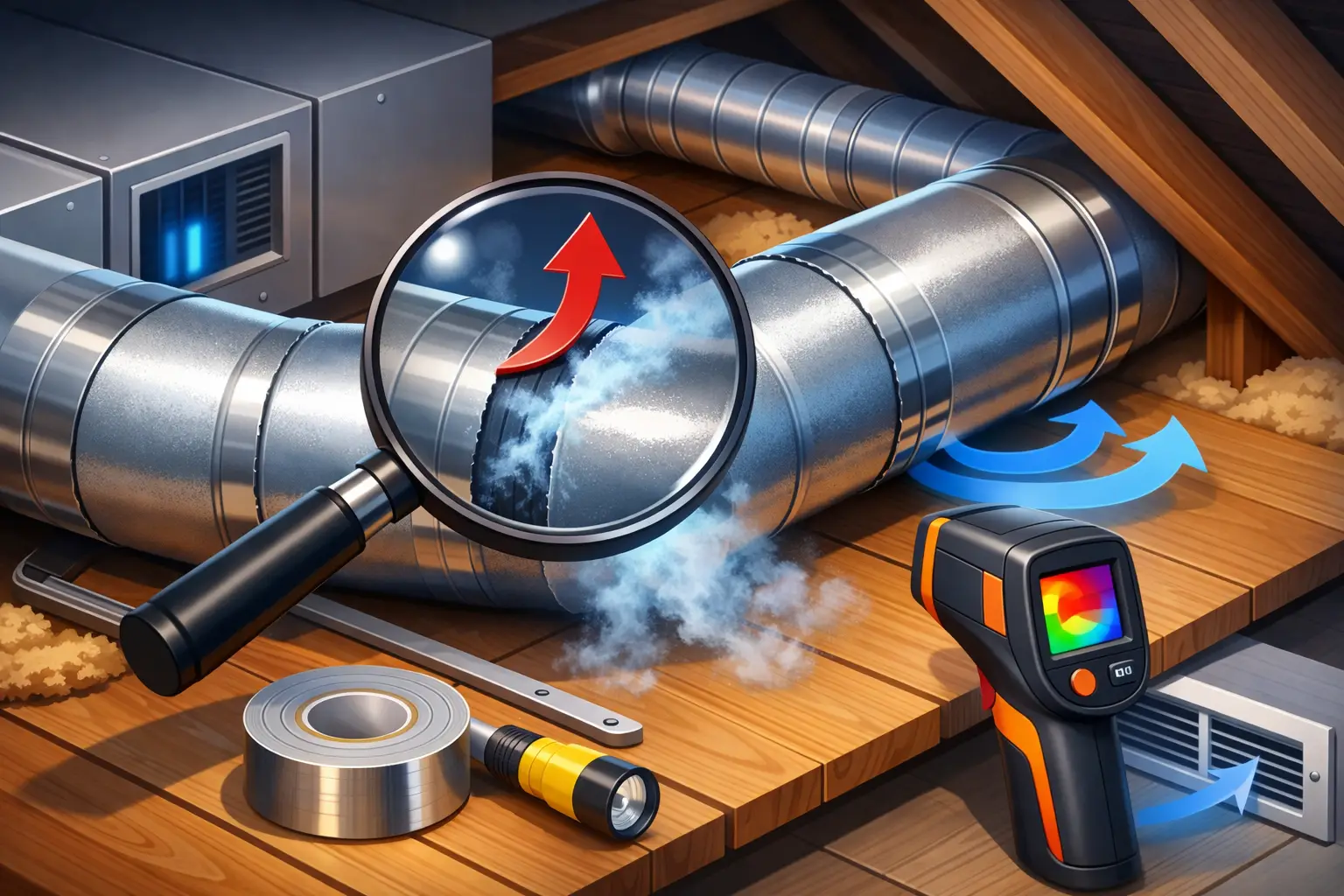
A bedroom that never cools down while the living room feels fine is not always an AC problem. In many Central Florida homes, the system is making cold air just as it should, but leaky ductwork is sending part of it into a hot attic, garage, crawlspace, or wall cavity. Knowing how to spot duct leaks can help you avoid wasting energy, overworking your equipment, and living with rooms that never feel right.
Duct leaks are easy to miss because most of the duct system is out of sight. Still, your home usually gives you clear warning signs. The key is knowing which signs point to the ducts and which may point to another HVAC issue.
Start With Changes in Comfort and Airflow
Uneven temperatures are one of the most common signs of duct leakage. If one room stays warm in the afternoon, even when the thermostat is set low, cooled air may not be reaching that room in the volume it should. Upstairs bedrooms, rooms over garages, and spaces at the far end of the duct run are often where homeowners notice the issue first.
Put your hand near the supply vents while the AC is running. Air should feel steady and reasonably strong. A weak stream from one or two vents can mean a disconnected duct, a crushed flex duct, a loose connection, or a leak along the run. If airflow is weak throughout the house, the cause could also be a dirty filter, a blower issue, an improperly sized system, or closed dampers. That is why a full inspection matters.
Pay attention to how long the AC runs, too. Florida heat and humidity put real demands on any cooling system, but an air conditioner that runs for long stretches without bringing the home to the set temperature may be losing conditioned air before it reaches the rooms you are trying to cool.
Look for These Everyday Signs of Duct Leaks
You do not need to climb into an attic or take apart your HVAC system to notice the early clues. Watch for a pattern rather than relying on one symptom alone.
- Higher electric bills without a clear reason. If your usage habits have not changed but cooling costs keep climbing, leaky ducts may be forcing the system to run longer.
- Hot or cold spots between rooms. Temperature differences can come from insulation, sun exposure, or poor return-air design, but duct leaks are a frequent culprit.
- More dust near vents or around the house. Leaks on the return side of the system can pull dusty attic or crawlspace air into the ductwork and circulate it indoors.
- Musty or attic-like odors when the system starts. A return leak can draw in air from areas where insulation, moisture, or stored materials create odors.
- Excess humidity indoors. Your AC removes moisture as it cools. When duct losses reduce effective cooling, the home can feel sticky even when the thermostat says the temperature is low enough.
None of these signs proves you have a duct leak by itself. Together, they are worth taking seriously, especially if they appear after storm damage, attic work, pest activity, a renovation, or HVAC replacement.
Check the Areas You Can See Safely
Some duct problems are visible from accessible areas, but there is no need to crawl through a tight attic or disturb insulation to investigate. Turn off the system before touching any accessible duct connections, and avoid stepping on ceiling drywall or working around electrical wiring.
If you can safely see ductwork in a garage, utility room, basement, or accessible attic walkway, look for loose joints, sagging flexible ducts, torn insulation, and sections that appear disconnected. Flexible duct should be supported properly, not sharply bent or compressed. A duct that has fallen away from a boot or trunk line can dump a surprising amount of cooled air into an unconditioned space.
Also look for dark streaks or dust buildup around duct seams and joints. Air escaping through a gap can leave a dusty outline over time. On the return side, the pattern may show where the system is pulling unfiltered air inward.
Do not rely on standard cloth duct tape for repairs. Despite the name, it does not hold up well under attic heat and humidity. Professional repairs typically use approved mastic, proper mechanical fasteners, and rated foil tape where appropriate. More importantly, the repair has to address the reason the connection failed in the first place.
Notice What Happens at the Vents
A simple vent check can reveal a lot. With the AC running, compare airflow from similar rooms. You are not looking for laboratory-level precision. You are looking for obvious differences: one room receives a firm stream of air while another barely moves a tissue held near the register.
Listen as well. Whistling, hissing, rattling, or a rushing sound behind a ceiling can indicate air escaping through a gap or moving through a restricted duct. A noisy duct does not automatically mean it is leaking. It could be undersized, poorly supported, or dealing with excessive static pressure. But it is a useful detail to share with an HVAC technician.
Check that supply and return vents are open and not blocked by furniture, rugs, curtains, or storage. A blocked return can create comfort problems that look a lot like duct leakage. This is one of the quick, no-cost checks worth doing before scheduling service.
Why Florida Attics Make Small Leaks Expensive
In Central Florida and the Tampa area, duct leakage has a bigger impact than many homeowners expect. Attic temperatures can climb far above the outdoor temperature, particularly during long summer afternoons. Every leak in that environment loses cooled air into extreme heat.
Leaks can also affect more than the supply ducts. Return ducts operate under negative pressure, meaning they pull air back toward the air handler. When a return duct leaks in a hot, dusty, humid attic, it can pull that unconditioned air into the system. Your AC then has to cool and dehumidify air that never should have entered the system.
That extra strain can lead to longer run times, comfort complaints, more dust, and unnecessary wear on components. It may also make homeowners think they need a larger AC unit when the smarter first step is repairing and sealing the duct system already in place.
Know When a Professional Duct Test Makes Sense
A visual check can uncover an obvious disconnection, but many duct leaks hide at seams, behind insulation, or inside inaccessible areas. If you have persistent uneven cooling, unexplained bills, indoor humidity issues, or weak airflow, professional testing is the practical next move.
An experienced HVAC technician can inspect the accessible duct system, measure airflow and system performance, and identify whether leaks are contributing to the problem. Depending on the situation, testing may include checking duct pressure, examining return connections, inspecting the air handler cabinet, and looking for damaged or poorly installed runs.
This step matters because duct leaks can overlap with other issues. A clogged filter, dirty coil, failing blower motor, refrigerant problem, thermostat issue, or inadequate insulation can all affect comfort. Guessing at the cause can lead to repairs that do not solve the real problem.
A clear diagnosis should include a straightforward explanation of what was found, what repairs are recommended, and what can wait. If duct repair is needed, ask whether the technician found supply leaks, return leaks, disconnected sections, damaged insulation, or poor duct support. Those details help you understand the scope of the work without getting a runaround.
Do Not Ignore a Sudden Change
If a room suddenly loses airflow, your energy bill spikes, or you hear loud air noise after recent work in the attic, act sooner rather than later. A fully disconnected duct can waste a large amount of conditioned air quickly. In Florida’s heat, that can put added stress on an AC system already working hard.
The good news is that duct problems are often fixable without replacing the entire HVAC system. The right repair depends on the duct material, its condition, access, and whether the layout was designed correctly in the first place. Al-Air can assess the full HVAC picture, explain the issue plainly, and handle the repair without sending you from one contractor to another.
A comfortable home should not require setting the thermostat lower and hoping for the best. When airflow, humidity, or room temperatures feel off, trust the pattern. Catching duct leaks early can protect your comfort, your AC system, and your monthly budget.