
You pull the cover plate, ease the device out of the box, and stop.
There’s a black wire, a white wire, and a bare copper ground. The video you watched made this look simple. Standing in front of the setup itself, with old paint on the wall and a breaker panel that may or may not be labeled correctly, the only question that matters is which wire is hot.
That hesitation is good judgment.
A live conductor doesn’t give second chances. If you’re replacing a light fixture, adding a smart switch, or checking an outlet that’s acting unusually, you need more than a guess based on color. In Greater Orlando homes, especially ones that have been remodeled a few times or patched up after storms, the wiring in the wall doesn’t always match the clean examples you see online.
A cautious homeowner can learn the basics of safe identification. But electrical work has zero margin for sloppy assumptions. If the box looks odd, the wiring colors don’t make sense, or the testing doesn’t give you a clear answer, the right move is to stop. If you’re weighing whether a project is in your lane, this guide on choosing the best electricians for residential projects in Orlando is a useful gut check before you go deeper.
That Moment of Doubt Before You Touch a Wire
Most homeowners hit the same wall at the same moment. The fixture is down, the wires are exposed, and confidence disappears the second the colors don’t line up how you expected.
That’s normal.
I’ve seen capable people do careful work until they decide a wire “should be” neutral because it’s white. In a newer, correctly wired box, that may be true. In an older house in Orlando, Kissimmee, Clermont, or Davenport, that assumption can put your hand on a live conductor.
The box never tells the full story
The trouble isn’t the wire in front of you. It’s everything that happened before you opened that box.
A previous owner may have changed a switch. A handyman may have extended a circuit during a kitchen update. A storm repair may have been done fast, then covered back up. Once that happens, color alone stops being a reliable answer.
Practical rule: If you feel unsure for even a second, treat that as a signal to test, not to guess.
That’s the difference between safe electrical work and risky electrical work. The first one verifies. The second one assumes.
Caution is a skill, not a weakness
A lot of DIY mistakes start with overconfidence. The homeowner isn’t reckless. They’re just moving too fast.
The safer mindset is simple:
- Assume the wire is live until you prove otherwise.
- Assume the panel label is wrong until your tester confirms the circuit.
- Assume prior work may be non-standard if the house has age, additions, or renovation history.
If you keep those three assumptions in mind, you’ll make better decisions before you ever pick up a screwdriver.
Decoding Wire Colors Standard and Actual Conditions
In standard U.S. residential wiring, black is the hot wire. It carries live current from the breaker panel to the device. White is neutral, returning current under normal operation. Green or bare copper is ground, there to carry fault current safely if something goes wrong.
That basic color system exists for a reason. In U.S. homes, the black wire became the standard hot conductor under NEC conventions meant to reduce electrocution risks. The same source notes that electrical miswiring contributes to about 51,000 home fires annually, with 14% linked directly to improper hot-neutral identification (dfarq.homeip.net).
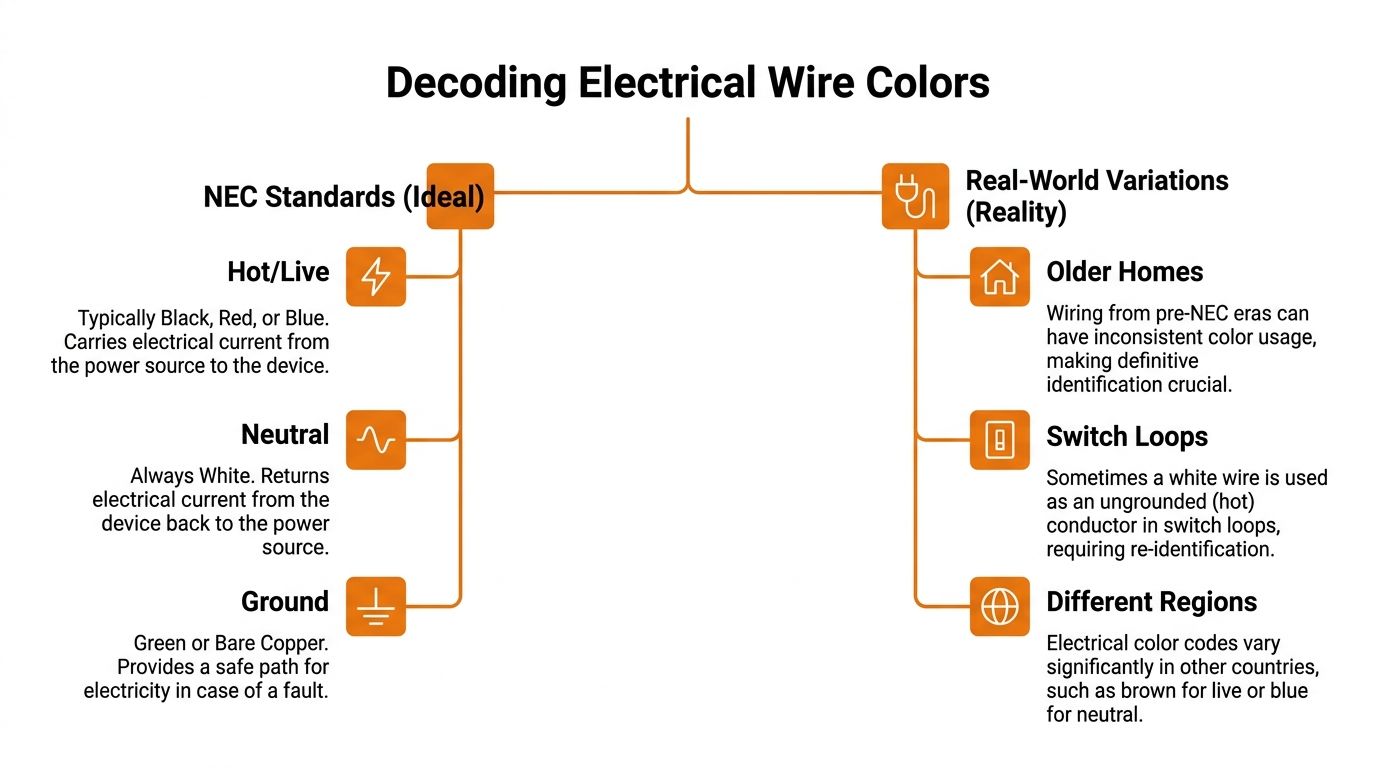
What the textbook says
If you open a code-compliant box, the usual meanings look like this:
| Wire color | Usual job | What it means in practice |
|---|---|---|
| Black | Hot | Live power feeding the device |
| Red | Secondary hot | Often used in switched legs or 240V circuits |
| White | Neutral | Return path under normal operation |
| Green or bare copper | Ground | Safety path during faults |
That’s the map. It’s useful, and every homeowner should know it.
What Orlando-area homes look like
The situation on the ground is messier.
Older Florida homes contain wiring from different eras. One room may have newer cable, the next may have older conductors, and the air handler or condenser circuit may have been modified more than once. On 240V HVAC circuits, black and red are hot, but older setups can include a white wire repurposed as hot if it has been reidentified. When that marking is missing, a homeowner sees “white” and expects neutral. That’s where trouble starts.
Common real-world problems include:
- White wire used as hot: Seen in older switch loops or legacy 240V wiring.
- Tape missing or faded: A wire may have been reidentified years ago, but the tape fell off or was never added.
- DIY remodel leftovers: Conductors may be spliced with little regard for standard color meaning.
- Mixed-era wiring: One box can contain clues from several generations of work.
Color gives you a starting point. It does not give you permission to touch.
The trade-off homeowners need to understand
Color coding makes basic work easier. It speeds up diagnosis when everything is intact and compliant.
But that convenience becomes dangerous when it turns into trust. In Greater Orlando, age, humidity, additions, and post-storm repairs all increase the chance that the visible colors are only part of the story. The safe approach is to read the colors first, then confirm with a tool.
Your Essential Toolkit for Finding a Hot Wire
If color can give you a first impression, then tools have to give you the answer.
For homeowners, two tools matter more. The first is a non-contact voltage tester, called a voltage sniffer. The second is a digital multimeter. They don’t do the same job, and treating them as interchangeable is where people get in trouble.

Field data shows that relying only on wire color in pre-1970s installations or post-renovation work causes identification errors in a significant percentage of cases, which is exactly why voltage testing tools are essential (sincede.com).
The quick tool and the precise tool
A good NCVT is excellent for a first pass.
Use it when you want to know whether an outlet, switch, cable jacket, or conductor is energized before you get close. It’s handy when you’re checking a breaker shutoff, scanning several boxes, or doing a quick safety check before pulling wires farther out.
It’s also the tool many homeowners feel comfortable with first, and that’s fine.
But it has limits.
Humidity, cramped boxes, induced voltage, nearby energized conductors, and older wiring can all muddy the signal. In Central Florida, moisture alone can make a simple “beep means danger” mindset less dependable than people expect.
| Tool | Best use | Strength | Limitation |
|---|---|---|---|
| Non-contact voltage tester | Fast screening | No direct metal contact needed | Can mislead in difficult conditions |
| Digital multimeter | Confirming hot wire identity | Gives an accurate voltage reading | Requires more care and technique |
What a non-contact tester does well
A good NCVT is excellent for a first pass.
Use it when you want to know whether an outlet, switch, cable jacket, or conductor is energized before you get close. It’s handy when you’re checking a breaker shutoff, scanning several boxes, or doing a quick safety check before pulling wires farther out.
It’s also the tool many homeowners feel comfortable with first, and that’s fine.
But it has limits.
Humidity, cramped boxes, induced voltage, nearby energized conductors, and older wiring can all muddy the signal. In Central Florida, moisture alone can make a simple “beep means danger” mindset less dependable than people expect.
What a multimeter does better
A digital multimeter is the tool you use when the answer has to be clear.
Set correctly, it lets you test a suspect conductor against ground and see whether you’re dealing with line voltage. It also helps sort out confusing boxes where multiple conductors are present and only one is hot.
For homeowner electrical work, that extra clarity matters more than speed.
The non-contact tester is for suspicion. The multimeter is for proof.
The smartest setup for a homeowner
If you keep only one testing tool, make it a decent digital multimeter and learn how to use it correctly. If you can keep both, even better.
A practical home kit should include:
- Digital multimeter: Your final word on whether a wire is live.
- Non-contact voltage tester: Good for a fast initial scan.
- Insulated screwdrivers: Better control inside crowded boxes.
- Safety glasses: Small fragments and arc flash don’t announce themselves.
- Flashlight or headlamp: Shadows hide details.
If the job involves guesswork, your toolkit isn’t complete yet.
Safe and Certain Methods to Identify a Live Wire
The safest way to identify a live conductor is to use more than one layer of verification. Start broad. Then get precise. Finally, isolate the circuit so you know what you’re working on.
That sequence works better than jumping straight into contact testing while you’re still unsure about the box.
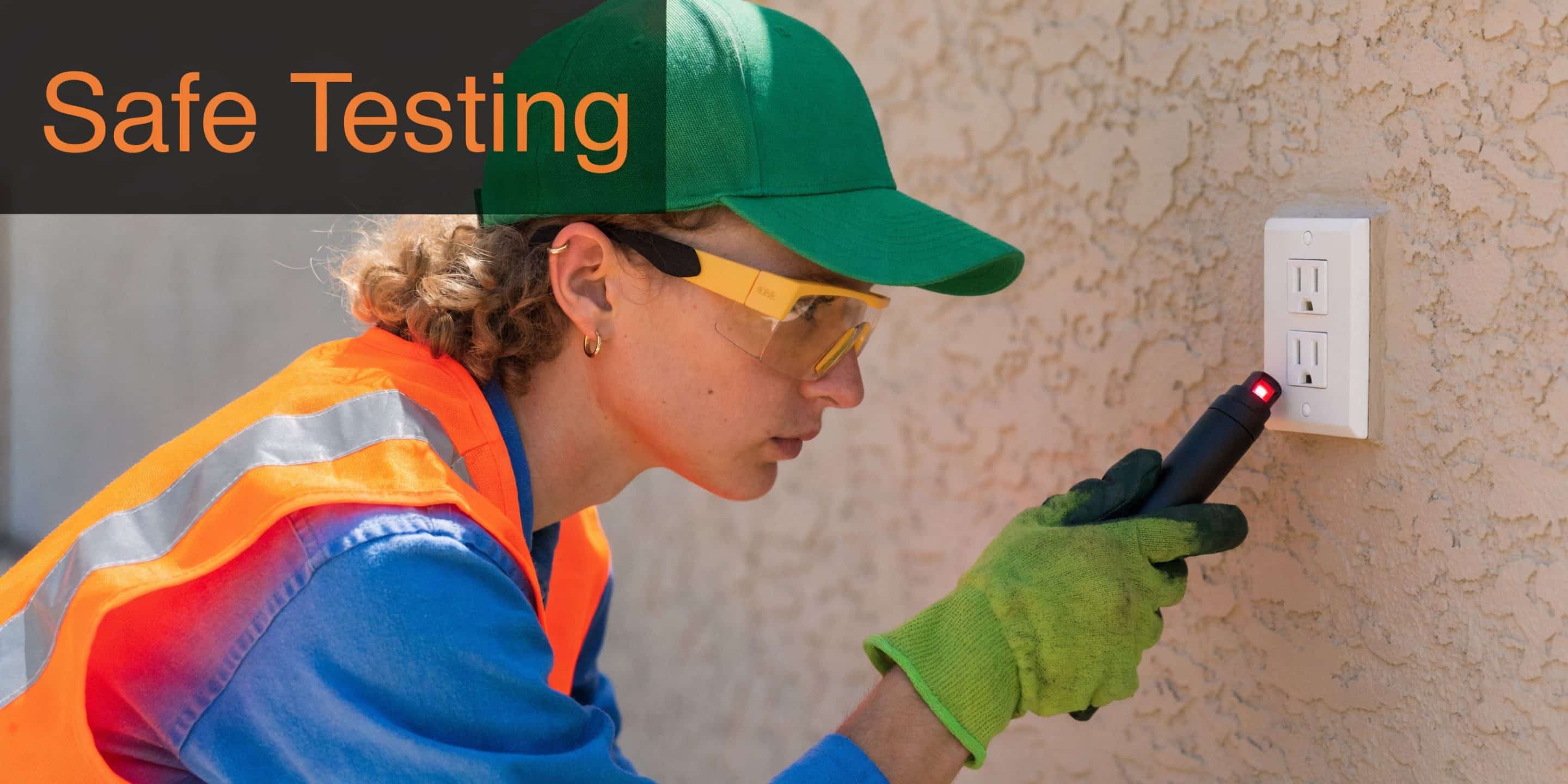
The quick check with a non-contact tester
Start with the least invasive test.
With the circuit still assembled, bring the tester near the face of the switch or receptacle first. Then, once the device is pulled forward carefully, check each insulated conductor without touching bare metal. This tells you whether voltage is present in the area and which wires deserve extra caution.
Use this method as a screen, not a verdict.
If the tester alerts on one wire and stays quiet on another, that gives you a lead. It does not prove the quiet wire is safe to touch. In crowded boxes, nearby energized conductors can influence the reading. In humid conditions, the tool can behave in ways that aren’t obvious to a homeowner.
A few habits improve reliability:
- Keep one hand clear: Don’t brace yourself on metal boxes or plumbing.
- Check every conductor: Don’t stop after the first alert.
- Pause and retest: A rushed pass can miss an intermittent signal.
- Read the tester’s instructions: Different models indicate voltage differently.
The definitive test with a multimeter
When you need to know which wire is hot, this is the method that matters most.
The standard protocol is to set the multimeter to AC voltage mode, place the black probe on ground, and touch the red probe to the suspect wire. In North American homes, a hot wire will read approximately 120 volts (youtube.com).
That sounds simple, but the sequence matters.
Prove the meter before you trust the meter
Before testing the wire in question, verify the multimeter on a known live circuit. That could be a receptacle you know is energized.
Then test the suspect wire.
After you de-energize the circuit, test again to confirm voltage is gone.
That three-part habit matters because meters fail, batteries die, probes loosen, and settings get bumped. If you don’t prove the tool before and after, you’re trusting equipment that may not be working correctly.
Field habit: Test the meter on known power, test the target, then confirm dead after shutdown.
What the reading tells you
A proper reading against ground helps separate assumption from fact.
- About 120V to ground. That conductor is acting as hot in a standard residential branch circuit.
- No meaningful voltage. It may be neutral, switched off, disconnected, or part of a different issue.
- Confusing or unstable reading. Stop and investigate further. Don’t force an interpretation.
Test every wire in the box one at a time. Don’t assume the “obvious” black is the only live conductor. Multi-wire setups, switched legs, and previous modifications can create surprises.
Here’s a visual walkthrough before trying it yourself:
The breaker tracing method that saves headaches
If you’re doing anything beyond basic identification, trace the circuit back to the panel.
Turn off the suspected breaker. Return to the device and retest. If the wire is still live, you’re on the wrong breaker or the box contains more than one circuit. Both scenarios are common enough that they should never surprise you.
A practical homeowner version of circuit tracing looks like this:
- Label as you go: If a breaker controls the box, write it down immediately.
- Watch for shared boxes: One opening can contain switched power, constant power, and unrelated pass-through conductors.
- Retest after every breaker change: Never rely on a panel note alone.
This is slower than following color. It’s also the method that keeps fingers intact.
The Unbreakable Rules of Electrical Safety
There are no optional safety rules in residential electrical work. There are only rules people follow and injuries people regret.
According to the NFPA, electrical accidents from factors like misidentified wires claim over 2,500 lives annually in the U.S. and cause tens of thousands of injuries (youtube.com). That’s why the basics have to be treated as fixed procedure, not helpful suggestions.
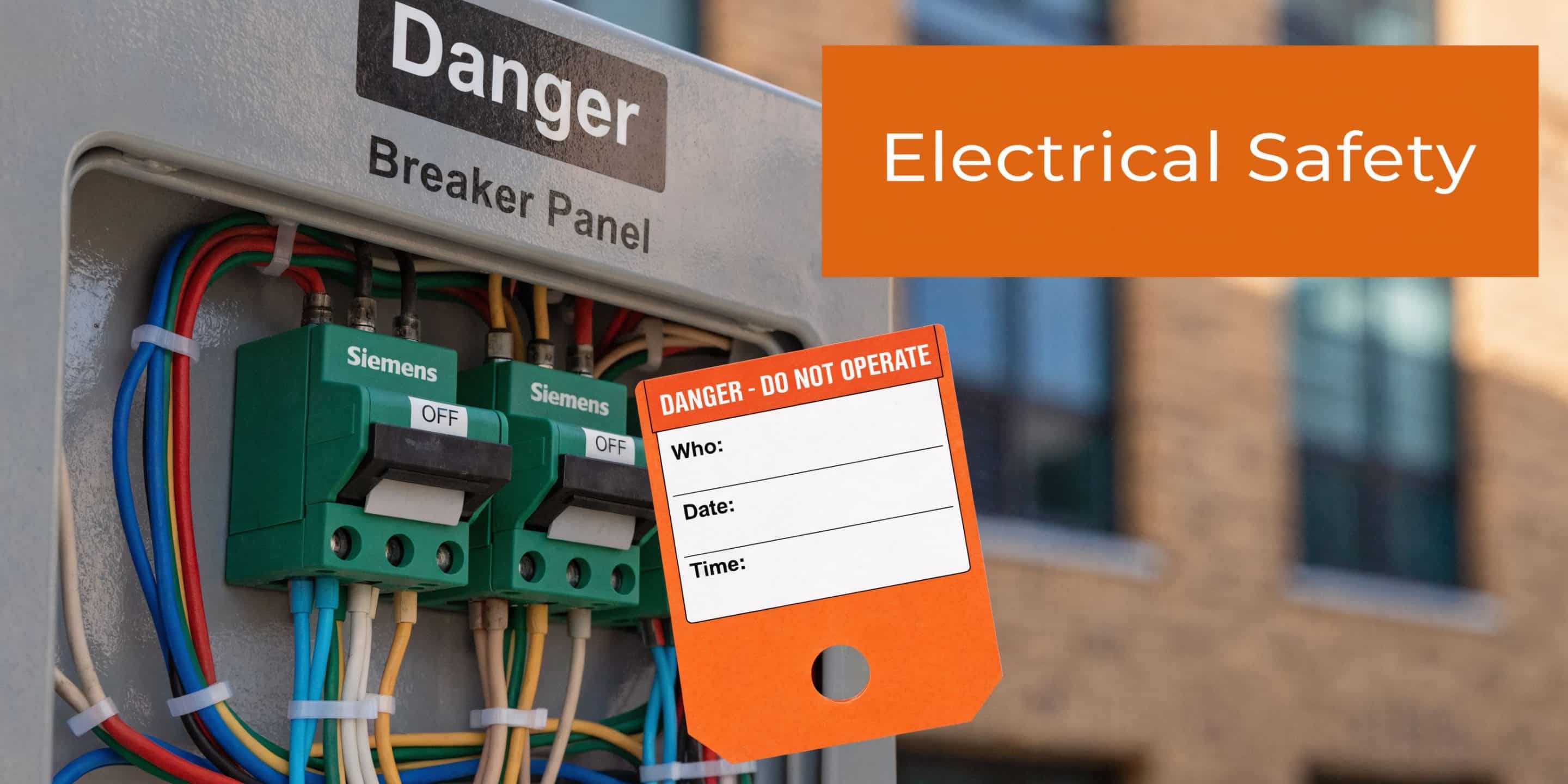
Shut it off and make it stay off
The homeowner version of lockout and tagout is simple.
Turn off the breaker. Verify that power is gone with a tester. Leave a note on the panel so nobody in the house flips it back on while you’re working.
That last step gets skipped all the time. It shouldn’t.
If you want a plain-language reference on basic branch-circuit connections before touching a receptacle, this guide to 120V outlet wiring is useful for understanding how hot, neutral, and ground are supposed to terminate.
Treat every wire as live until proven dead
This is the rule that prevents most bad decisions.
Not “probably off.” Not “the switch is down.” Not “the room went dark.” Proven dead.
That means:
- Use the right tester. A multimeter gives more certainty than guesswork.
- Retest after moving conductors. A wire can shift and reveal a different condition.
- Keep the area dry. Wet hands, damp floors, and sweaty gloves make bad situations worse.
Never touch a conductor because the setup looks familiar. Touch it only after the test says it’s safe.
Don’t work tired, rushed, or distracted
Electrical work punishes divided attention.
If you’re trying to finish before dinner, answer texts, watch a tutorial, and keep a ladder steady at the same time, you’re not working safely. Put the tools down and come back when you can focus.
Wear safety glasses. Use insulated tools. Keep kids and pets away from the work area. If the problem expands from “replace a device” to “figure out what the last owner did,” stop and get qualified help through a licensed electrical service work provider.
Red Flags That Mean It's Time to Call an Orlando Pro
The most useful electrical skill a homeowner can develop is knowing when the job has changed.
At the start, you may be replacing a switch. Ten minutes later, you may be staring at mixed wire colors, brittle insulation, a box packed too tight, and a breaker label that isn’t standard. That’s no longer a simple DIY project. That’s a diagnostic problem.
Signs the project is no longer homeowner-friendly
Stop and call a licensed electrician if you run into any of these:
- Unmarked white or gray conductors acting hot. That’s common in older or altered wiring and needs proper tracing.
- Cracked or brittle insulation. Moving the wire can make a manageable problem worse.
- Scorch marks or melted device screws. Heat damage means the issue may extend beyond the box.
- Multiple cables with no clear logic. The circuit may have been expanded or altered in ways you can’t verify safely.
- Post-storm repair clues. Splices, odd tape, and mismatched materials show up after hurricane-related work.
In older Florida homes, DIY repairs after hurricanes leave non-standard wiring behind, including unmarked white wires used as hot conductors in HVAC circuits. The same source notes that a notable percentage of Greater Orlando service calls reported by Al-Air technicians stem from misidentified hot wires during upgrades, and that humidity can make non-contact testers less reliable in the field (x3tradesmen.com).
Why local conditions matter
A generic national guide won’t tell you much about a damp garage in July, an older air handler disconnect, or a remodeled room addition with mystery wiring.
In Central Florida, homes carry a mix of original work, add-ons, and fast repairs after storms. That’s why a clean answer to “which wire is hot” sometimes requires circuit tracing, load analysis, and inspection experience, not a tester.
On the contractor side, clear documentation matters too. Good shops use systems that keep estimates, scope, and job details organized. If you’re curious how professionals structure that workflow, tools like electrical contractor software give a useful look at how estimating and service planning are handled behind the scenes.
If you lose power unexpectedly, find storm damage, or open a box that isn't standard, the safest next step is an emergency electrician for power outage in Orlando, Kissimmee, and Central FL.
If you’re dealing with uncertain wiring, a confusing breaker panel, or signs of past repair work, Al-Air Corporation can help you get a clear, code-conscious answer without the guesswork. Their licensed electricians and certified technicians serve Greater Orlando with troubleshooting, rewiring, panel upgrades, and emergency electrical support, with free estimates before work begins.