
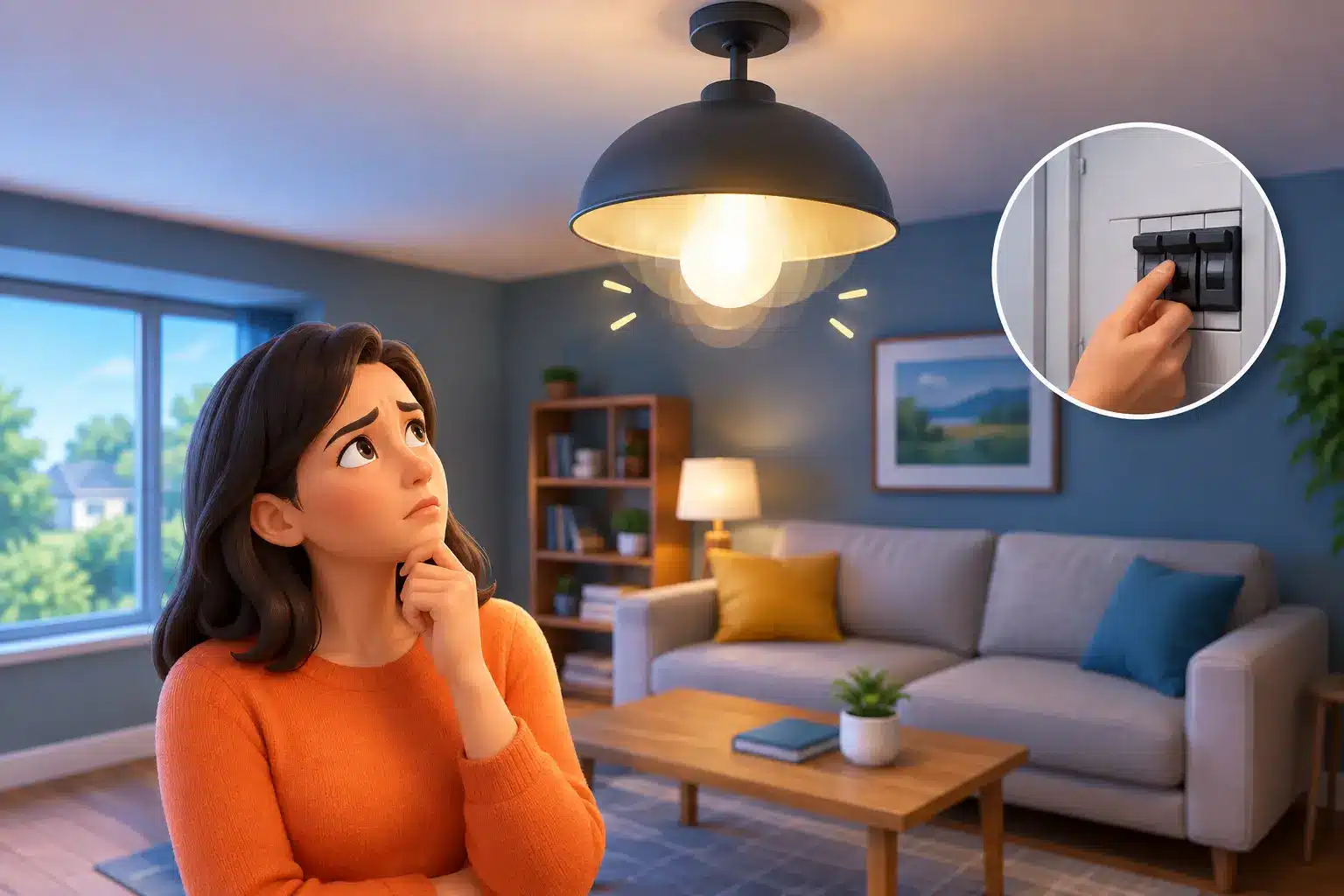
A kitchen light that flickers once when the AC starts may be annoying. A light that keeps dimming, buzzing, or flickering throughout the house is different. Are flickering lights dangerous signs? Sometimes, yes. They can point to a loose connection, an overloaded circuit, a failing panel component, or a power issue that needs prompt attention.
You do not need to panic over every flicker. Florida storms, aging bulbs, and incompatible dimmer switches can all cause minor, isolated problems. But electricity is not a system to guess at. Knowing the difference between a simple fixture issue and a potential fire hazard can protect your home, your equipment, and your family.
When Flickering Lights Are Dangerous Signs
The biggest clue is whether the flickering is isolated or widespread. If one lamp or one light fixture flickers and every other light works normally, the cause may be as simple as a loose bulb, a worn switch, or an LED bulb that does not work well with the dimmer installed.
If lights flicker in several rooms, brighten and dim unpredictably, or react whenever a major appliance turns on, take it more seriously. That pattern can mean the electrical system is under strain or that a connection somewhere is failing. Loose wiring creates resistance and heat. Over time, that heat can damage insulation, outlets, switches, breakers, and electrical connections.
Call for professional electrical service promptly if flickering comes with any of these warning signs:
- A burning smell, hot outlet cover, warm switch, sparks, smoke, or discoloration around an outlet or panel
- Circuit breakers that trip repeatedly or lights that dim heavily when the AC, microwave, dryer, or refrigerator starts
- Buzzing or crackling from a switch, outlet, light fixture, meter area, or electrical panel
- Flickering that affects multiple rooms, especially when it begins suddenly
- A panel that feels warm, shows corrosion, or has signs of water intrusion after a storm
If you smell burning, see smoke, or hear active arcing, turn off power at the main breaker only if you can do so safely. Leave the area and call for emergency help. Do not remove panel covers, touch damaged wiring, or keep resetting a breaker to see if the issue goes away.
Common Reasons Lights Flicker
A loose bulb or failing fixture
Start with the simple possibility. A bulb that is not fully seated can flicker, especially in ceiling fans and fixtures that vibrate. Turn the switch off, let the bulb cool, and tighten it carefully. If the problem continues, replace the bulb with a quality bulb of the correct wattage and type.
If a new bulb still flickers only in that fixture, the fixture socket, wiring connection, or switch may be worn. This is usually a contained repair, but it still deserves attention if the fixture buzzes, smells hot, or flickers more often over time.
LED bulbs and dimmer compatibility
Many older dimmer switches were designed for incandescent bulbs. When LED bulbs are installed on an incompatible dimmer, they may flicker at low settings, hum, or shut off unexpectedly. That is usually not a fire emergency, but it will not correct itself.
The practical fix may be an LED-rated dimmer and compatible bulbs. A licensed electrician can also confirm that the issue is truly the dimmer and not a loose connection behind the switch.
An overloaded circuit
Central Florida homes work hard. Air conditioners run for long stretches, and modern households add computers, televisions, kitchen appliances, pool equipment, garage tools, and EV chargers. If too many high-demand items share a circuit, lights may dip or flicker when equipment starts.
A brief, minor dip when a large motor starts can happen. A sharp or repeated dimming event is not something to ignore, particularly if it occurs when the AC compressor cycles on. The answer is not always a larger breaker. In fact, installing the wrong breaker size can create a serious safety risk. The circuit, wiring, panel capacity, and connected equipment all need to be evaluated together.
Loose wiring or a loose neutral connection
This is one of the more concerning causes. Electrical connections can loosen with age, vibration, heat cycles, storm damage, or previous work that was not completed correctly. A loose neutral connection may cause lights to brighten in one area while dimming in another. That uneven voltage can damage electronics and appliances.
Do not try to tighten wiring inside an outlet box or panel yourself. Even when a breaker is off, there may be energized components nearby. A licensed electrician can test the circuit, locate the failing connection, and make a code-compliant repair.
A worn or undersized electrical panel
Older panels were not built for the electrical demand of many current homes. A panel may struggle when a home adds a new HVAC system, electric range, hot tub, workshop equipment, or EV charger. Corrosion is also a real concern in Florida’s heat and humidity, especially in garages, outdoor equipment areas, and homes exposed to coastal air.
Flickering lights do not automatically mean you need a panel upgrade. Sometimes the problem is one branch circuit or a utility-side connection. But if your panel is outdated, frequently overloaded, or showing physical wear, an inspection can give you a clear answer before a small symptom becomes a larger repair.
Utility power or storm-related problems
If neighbors are seeing the same flickering, or the problem started during high winds or after a storm, the utility supply may be involved. Damage to service lines, transformers, or connections can cause voltage fluctuations that affect an entire block.
Even then, do not assume the issue is outside your home. A storm can damage your service equipment, meter connection, or exterior wiring as well. Report area-wide outages or obvious utility issues to the power company, and have your home’s electrical system checked if the flickering continues after service is restored.
What to Do Before You Call an Electrician
A few safe observations can help narrow down the problem without putting you at risk. Notice whether the flicker occurs in one room or throughout the home. Pay attention to what is running when it happens, such as the air conditioner, washer, microwave, pool pump, or garage door opener.
You can also turn off and unplug nonessential devices on the affected circuit, then see whether the problem changes. Do not open outlets, remove panel covers, or handle exposed wiring. If a breaker has tripped, reset it once after unplugging devices. If it trips again, leave it off and schedule service.
For renters or property managers, document the timing and affected areas. A short video of the flickering can help an electrician understand the symptom, but do not delay a call if there is heat, odor, buzzing, or visible damage.
Why Fast Diagnosis Matters in Florida Homes
Electrical issues often show up under load. In this area, that means the hottest part of the afternoon, when your AC is cycling hard and the home is already drawing significant power. A weak connection may seem fine in the morning, then start flickering when cooling demand rises.
That is also why HVAC and electrical work are often connected. Replacing an AC system, adding a larger unit, or installing new equipment can expose limits in an older circuit or panel. A qualified contractor should look at the full picture rather than treating flickering lights and cooling problems as unrelated service calls.
Al-Air provides electrical troubleshooting with in-house master electricians, so homeowners do not get passed from one contractor to another when a comfort or power issue overlaps. The goal is straightforward: identify the cause, explain the repair clearly, and handle the work safely with no runaround.
Do Not Wait for a Bigger Warning
Most flickering lights are not a reason to evacuate your home. But repeated or widespread flickering is a reason to pay attention. Electrical faults can worsen quietly, and the cost of an inspection is usually far less than the cost of damaged equipment, emergency repairs, or fire-related damage.
If the flicker is paired with heat, burning smells, buzzing, sparks, or repeated breaker trips, treat it as urgent. Otherwise, schedule an electrical inspection soon and get a direct answer. A light should turn on and stay on. If it does not, your home is telling you something worth checking.