
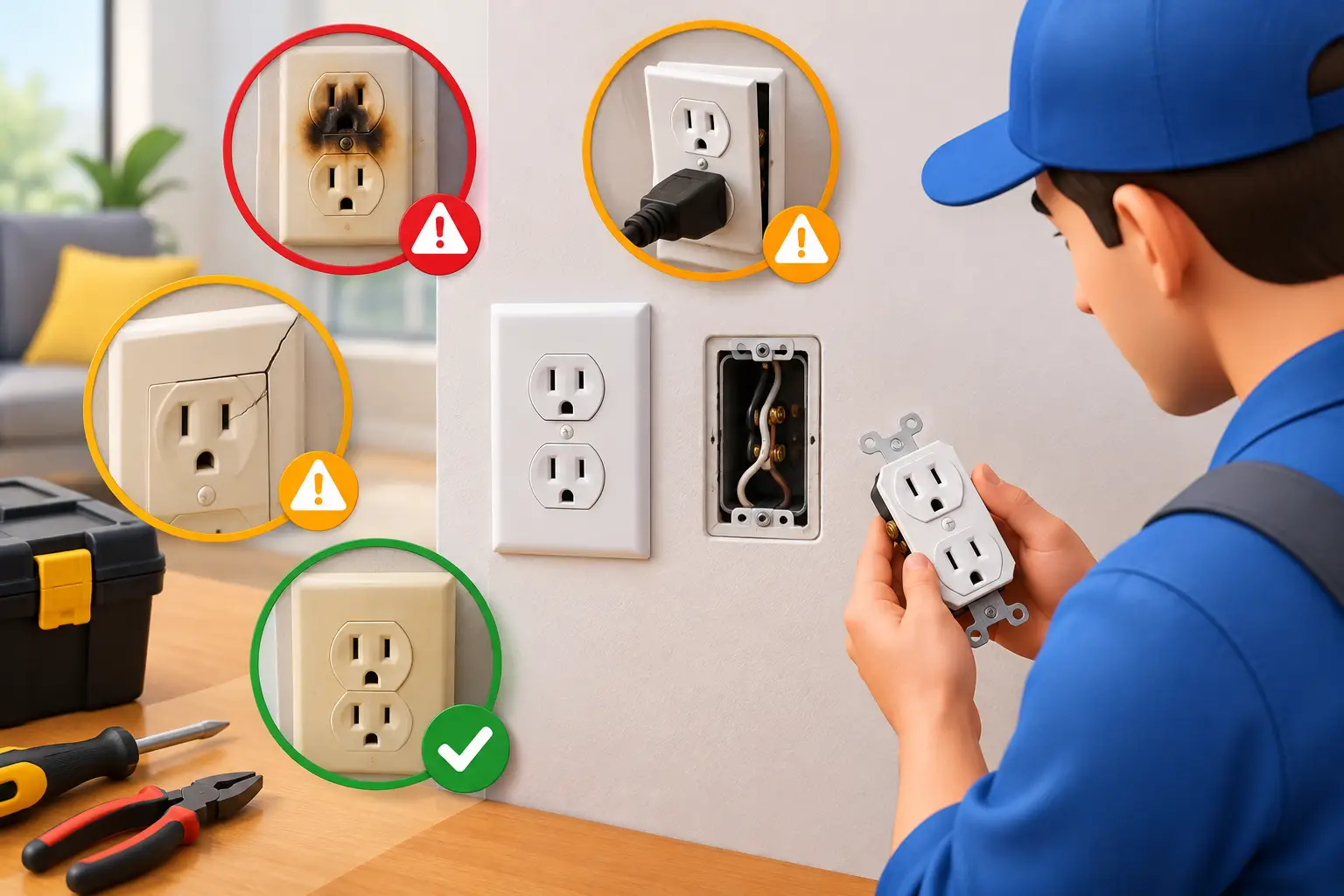
A loose outlet may look like a small annoyance, but it can be the first warning that wiring connections are failing behind the wall. If you are asking when should outlets be replaced, do not wait for a spark, a burning smell, or a breaker trip to take it seriously. In Central Florida homes, outlets work hard supporting air conditioners, kitchen appliances, pool equipment, chargers, and everyday electronics. When one starts acting differently, it deserves a professional look.
When Should Outlets Be Replaced?
An outlet should be replaced when it is damaged, unreliable, outdated for its location, or no longer provides a safe connection for the devices you use. There is no fixed replacement schedule like there is for an HVAC filter. Some outlets last for decades, while others wear out sooner because of frequent use, heat, moisture, or poor past installation.
The key is to pay attention to performance. A working outlet should hold a plug firmly, deliver steady power, and stay cool and quiet. It should not require you to wiggle a cord, reset a breaker repeatedly, or avoid using certain devices in one spot.
If an outlet is failing, replacing only the visible receptacle may not always solve the problem. The issue could be a loose wire connection, damaged wiring, overload, or an electrical panel concern. That is why an electrician should inspect the circuit before treating the outlet as a simple swap.
Signs an Outlet Needs Attention Now
Some outlet problems are inconvenient. Others are clear safety concerns. Call for electrical service promptly if you notice any of these signs:
- The outlet feels warm, looks discolored, has scorch marks, or gives off a burning or fishy odor.
- Plugs fall out easily, sit loosely, or only work when positioned a certain way.
- You see sparks, hear buzzing or crackling, or receive even a mild shock when plugging something in.
- The outlet stops working, intermittently loses power, or trips the breaker when normal equipment is connected.
- A GFCI outlet will not reset, or it resets but immediately trips again.
- The faceplate is cracked, broken, missing, or damaged by impact or moisture.
A brief, tiny spark can happen when a plug is inserted and the device is already switched on. That does not automatically mean the outlet is bad. Repeated sparking, large sparks, heat, odor, or any visible damage is different. Stop using that outlet and have it checked.
Do not cover a problem outlet with tape, rely on a power strip to work around it, or keep testing it with different appliances. Those workarounds can hide an issue while the risk gets worse.
Loose Outlets Are More Than a Nuisance
If a plug slides out of an outlet without much resistance, the internal contact points may be worn. Those contacts are supposed to grip the plug blades tightly. When they do not, electricity can arc across a poor connection, creating heat at the receptacle.
This is common in heavily used locations, such as kitchen counters, bedrooms, living rooms, home offices, and garages. It can also happen with bulky transformer plugs that put constant downward pressure on the outlet.
A loose outlet body is a separate problem. If the entire receptacle moves when you plug something in, the mounting hardware or electrical box may be loose. Do not push it back into place and assume it is fine. The wiring behind it may be under strain.
Older Outlets May Not Meet Today’s Safety Needs
Not every outlet replacement is prompted by failure. Sometimes the outlet works, but it is no longer the right type for the room or the way your household uses power.
Homes with older two-slot outlets, for example, may not have a grounding path. Adapters can make it possible to plug in a three-prong cord, but they do not create grounding. That matters for electronics, appliances, and protection from electrical faults. An electrician can evaluate whether the circuit can be properly grounded or whether a code-compliant GFCI solution is appropriate.
Outlets near water need special attention. Bathrooms, kitchens, garages, laundry areas, exterior locations, and pool-adjacent spaces generally require ground-fault circuit interrupter protection. GFCI outlets are designed to cut power quickly when they detect a ground fault, reducing shock risk. If your home has standard outlets where GFCI protection should be, an upgrade is worth scheduling.
Tamper-resistant outlets are another practical upgrade for homes with young children or visiting grandchildren. Internal shutters help prevent objects from being inserted into one side of the receptacle. They look similar to standard outlets but add a meaningful layer of protection.
Florida Heat, Humidity, and Outdoor Power Matter
Central Florida weather puts extra demands on electrical systems. Humidity can accelerate corrosion in garages, covered patios, exterior boxes, and other damp locations. Outdoor outlets can also be damaged by rain, irrigation, pests, UV exposure, or cracked weather covers.
An exterior outlet should have a weather-resistant receptacle and a cover suited for outdoor use. If it powers landscape lighting, holiday lights, a pressure washer, or pool-related equipment, it may see more use than homeowners realize. A cover that will not close, visible rust, or water inside the box is reason to stop using it until it is inspected.
Garage outlets deserve the same attention. They often serve refrigerators, freezers, tools, battery chargers, and garage door accessories. Adding more devices through extension cords and power strips can overload a circuit that was never designed for a workshop setup. In that case, the right answer may be a new dedicated circuit, not another replacement outlet.
Frequent Trips Can Point Beyond the Outlet
When a breaker trips, it is doing its job by shutting off power before wiring overheats. Resetting it once after a clear overload may be reasonable. Resetting it again and again is not a fix.
The source might be a faulty appliance, a damaged outlet, a loose connection, an overloaded circuit, or a problem farther upstream. The same is true when one outlet goes dead and several others nearby stop working. Outlets are often wired in a series along the same circuit, so the problem may be at a different receptacle or junction point.
Older homes can have additional challenges, including aging wiring, ungrounded circuits, aluminum wiring, or panels that are already near capacity. If you are planning a new AC system, EV charger, hot tub, induction range, or workshop equipment, have the electrical system evaluated before adding the load. It is far less stressful to plan an upgrade than to discover the limitation after installation day.
Can You Replace an Outlet Yourself?
Replacing an outlet may appear simple, but the work can reveal problems that are not visible at the wall plate. Incorrect wiring, loose terminations, a damaged box, mismatched devices, or an unrecognized circuit issue can create a fire or shock hazard.
A homeowner may be comfortable changing a faceplate. Electrical repairs are different, especially when there are signs of heat, moisture, repeated tripping, or old wiring. A licensed electrician can identify the cause, verify proper grounding and polarity, make the repair to current standards, and explain whether a larger upgrade is actually needed.
That approach also prevents unnecessary work. Not every outlet issue means your house needs a full rewire or panel replacement. Sometimes the repair is straightforward. When a broader correction is needed, you should get a clear explanation and estimate before work begins – no referrals, no runaround.
What to Do Before an Electrician Arrives
If an outlet is hot, smoking, sparking repeatedly, or smells burnt, stop using it immediately. Turn off the breaker if you can identify the correct one safely, and keep people away from the area. If there is active smoke or fire, call emergency services first.
For less urgent problems, make a note of what was plugged in when the issue occurred and whether other outlets or lights on the same wall are affected. That information helps narrow down the cause. Avoid plugging high-demand appliances into the outlet again just to see whether it fails.
At Al-Air, our in-house master electricians handle outlet repairs, safety upgrades, circuit troubleshooting, and larger electrical projects under one roof. You get a direct assessment of the problem, not a vague guess or a handoff to another contractor.
A dependable outlet should be easy to forget about. If yours is loose, hot, unreliable, outdated, or exposed to moisture, treat that as your cue to get it checked before a small electrical issue becomes a much bigger disruption.