
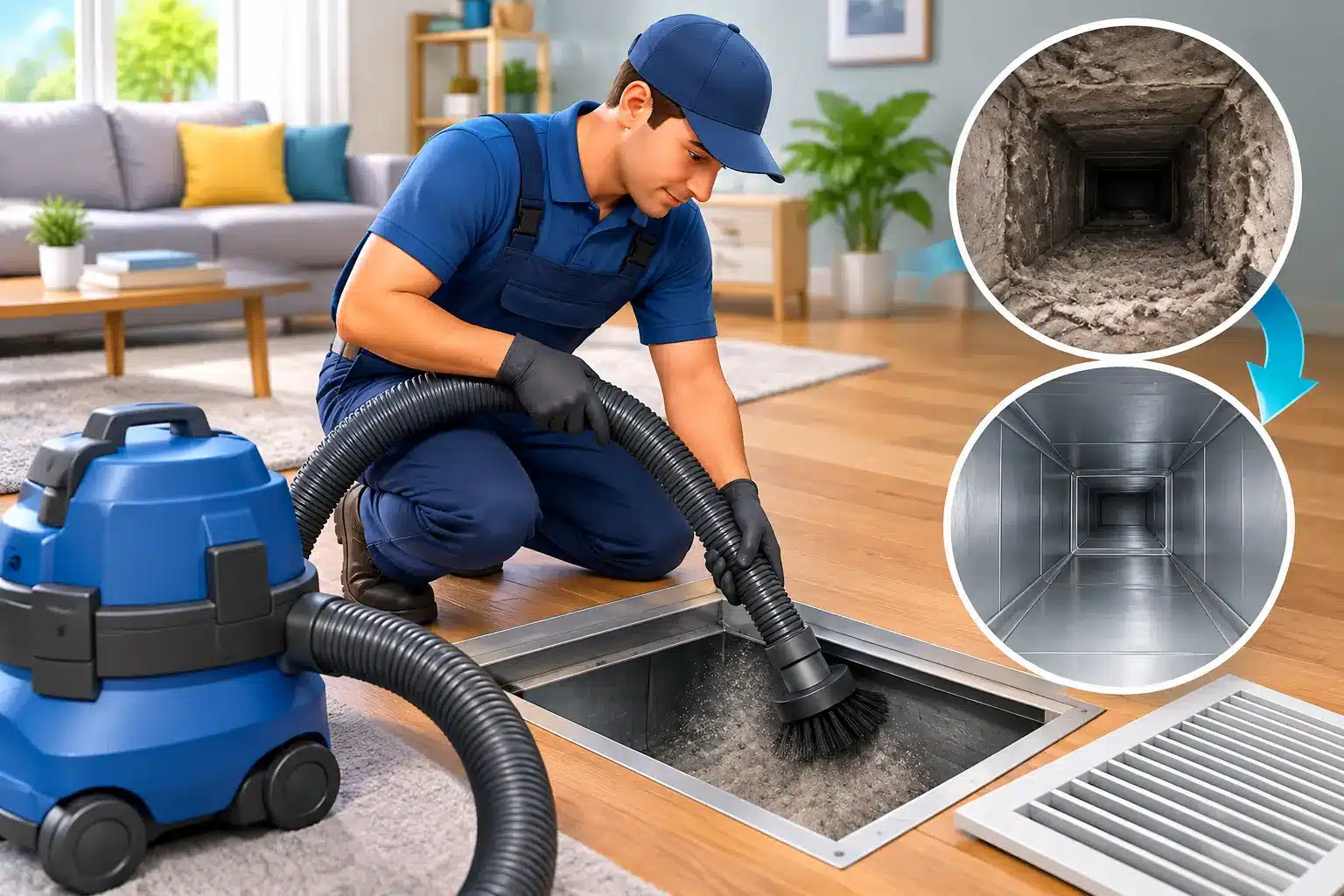
If you wipe a table in the morning and see a fresh layer of dust by dinner, your air ducts may be part of the problem. Homeowners often want to reduce dust with duct cleaning, especially in Central Florida, where AC systems run hard for much of the year. A proper cleaning can help when dust has built up inside the system, but it is not a magic fix for every dusty room.
The straightforward answer is this: duct cleaning can lower the amount of dust that gets recirculated through your home. It works best when it is paired with the right filter, a maintained HVAC system, and a clear look at where the dust is actually coming from.
Can Duct Cleaning Reduce Dust in Your Home?
Your HVAC system pulls air through return vents, filters it, cools it, and sends it back through supply ducts. Along the way, dust, pet hair, construction debris, and other particles can collect in return ducts, supply ducts, registers, and around the blower compartment.
When that buildup is disturbed by normal airflow, some of it can move back into your living spaces. Cleaning the ducts removes accumulated material so there is less sitting in the system. If your home has visible debris around vents, dusty returns, recent renovation work, pets, or years of heavy AC use, you may notice a real difference after a professional cleaning.
Still, ducts are only one possible source. Dust also comes in through doors and windows, settles from clothing and bedding fibers, enters on shoes, and builds up from pet dander. Florida homes can also pull in outdoor particles through small air leaks or poorly sealed duct connections in attics, garages, and wall cavities.
That is why a trustworthy contractor should not promise that duct cleaning will make dust disappear forever. The goal is to remove one meaningful source of recirculated debris and identify other issues that may be feeding the problem.
Signs Your Ducts May Be Adding to the Dust
A little dust is normal. These signs suggest it is worth having the HVAC system checked rather than just dusting more often:
- Dust blows or collects quickly around supply registers.
- Return vents look heavily coated even after routine cleaning.
- You see debris, pet hair, or dark buildup just inside accessible vents.
- Your home was recently remodeled, repaired, or affected by drywall work.
- Rooms get dusty at different rates, especially near certain vents.
- The AC filter becomes loaded unusually fast.
- You have noticed musty odors, reduced airflow, or more frequent allergy irritation indoors.
None of these signs automatically means the ducts need cleaning. A clogged filter, dirty blower wheel, leaky return duct, or poor filtration setup can create similar symptoms. The right first step is an inspection that looks at the full system, not a quick sales pitch based on a dusty vent cover.
What Professional Duct Cleaning Should Include
Good duct cleaning is more than vacuuming the first few feet behind a register. The technician should access the duct system properly, use containment and negative-pressure equipment to collect loosened debris, and clean the accessible supply and return runs without damaging flexible ducts or connections.
The job may also include cleaning registers, grilles, the return area, and other accessible HVAC components. If the blower compartment or evaporator area is dirty, those parts should be evaluated separately. They are critical to airflow, but they require the right method and care.
Before work begins, ask what is included, what areas are accessible, and whether there are additional concerns such as duct damage, loose insulation, moisture, or microbial growth. Clear answers matter. You should know what work is recommended, why it is recommended, and what it will cost before anyone starts.
Be cautious with extremely low duct-cleaning offers that turn into pressure for expensive add-ons once a crew arrives. A professional inspection can uncover legitimate issues, but you should never be pushed into treatments you do not understand. No runaround, no vague charges, and no scare tactics.
Duct Cleaning Helps Most After These Situations
Duct cleaning has the strongest case when there is a clear reason debris may be inside the system. Renovation is a common example. Drywall dust, sawdust, insulation fibers, and other fine materials can travel farther than most homeowners expect, particularly if the system ran during the project.
It can also make sense after moving into an older home with an unknown maintenance history, following a pest issue that has been properly resolved, or when a home has had heavy pet shedding for years. If occupants are sensitive to dust, removing visible buildup can be a practical part of an indoor air quality plan.
On the other hand, a relatively new home with sealed ducts, regular filter changes, and no unusual dust issue may not need cleaning on a fixed schedule. There is no honest one-size-fits-all interval. The condition of the home, HVAC use, pets, renovations, and filter habits all matter.
Keep Dust From Coming Back So Fast
Once ducts are cleaned, a few basic habits help protect the result. Start with the air filter. Use the filter size and rating recommended for your system, and change it on schedule. A higher-rated filter can capture smaller particles, but too restrictive a filter can reduce airflow if the system is not designed for it. This is one area where stronger is not always better.
Keep supply and return vents open and unobstructed. Closing too many vents or blocking returns with furniture can affect airflow and cause certain areas to collect more dust. Vacuum return grilles and supply covers gently as part of normal housekeeping, but do not push objects deep into duct openings.
For homes with pets, vacuuming rugs, upholstered furniture, and pet bedding regularly matters as much as HVAC maintenance. Hard flooring can make dust more visible, but carpet and fabric can hold particles until foot traffic sends them back into the air.
Humidity control also matters in Florida. High indoor humidity can make a home feel stale and contribute to moisture-related concerns, while an AC system that is not running or draining correctly may need service. Preventive maintenance helps confirm that the equipment is filtering, cooling, draining, and moving air the way it should.
Finally, consider duct leakage. A return duct leak in an attic, garage, or other unconditioned area can pull dusty air into the system before it reaches the filter. Cleaning the ducts without fixing that leak may provide only temporary relief. If a technician finds damaged, disconnected, or poorly sealed ductwork, repair may be the better investment.
When Dust Is Really an HVAC Maintenance Problem
Many dust complaints start at the filter but do not end there. A dirty blower compartment can reduce airflow. An improperly fitted filter can allow air to bypass the filter entirely. A return grille that is too small for the system can make filtration less effective. In some homes, the duct design itself creates uneven airflow and leaves certain rooms feeling dusty or stuffy.
That is why it helps to work with a contractor that can diagnose the whole picture. Al-Air can assess duct cleanliness alongside HVAC performance, filter fit, airflow, and duct condition, so you are not paying for a partial fix while the underlying issue remains.
If you also notice weak cooling, hot rooms, rising energy bills, or AC cycling problems, mention those details when scheduling service. Dust may be the visible frustration, but it can sometimes point to a comfort or equipment issue that deserves attention.
A Cleaner System Starts With a Clear Diagnosis
Duct cleaning is a practical way to remove years of accumulated debris when there is evidence it is inside your HVAC system. It can help reduce the dust that circulates through the house, improve the cleanliness of vents and returns, and give you a better baseline for ongoing maintenance.
But the best result comes from treating duct cleaning as one part of the solution. Use the right filter, change it consistently, address leaks and airflow problems, and keep up with routine HVAC service. When a home keeps getting dusty, a careful diagnosis beats another round of wiping surfaces every day.