
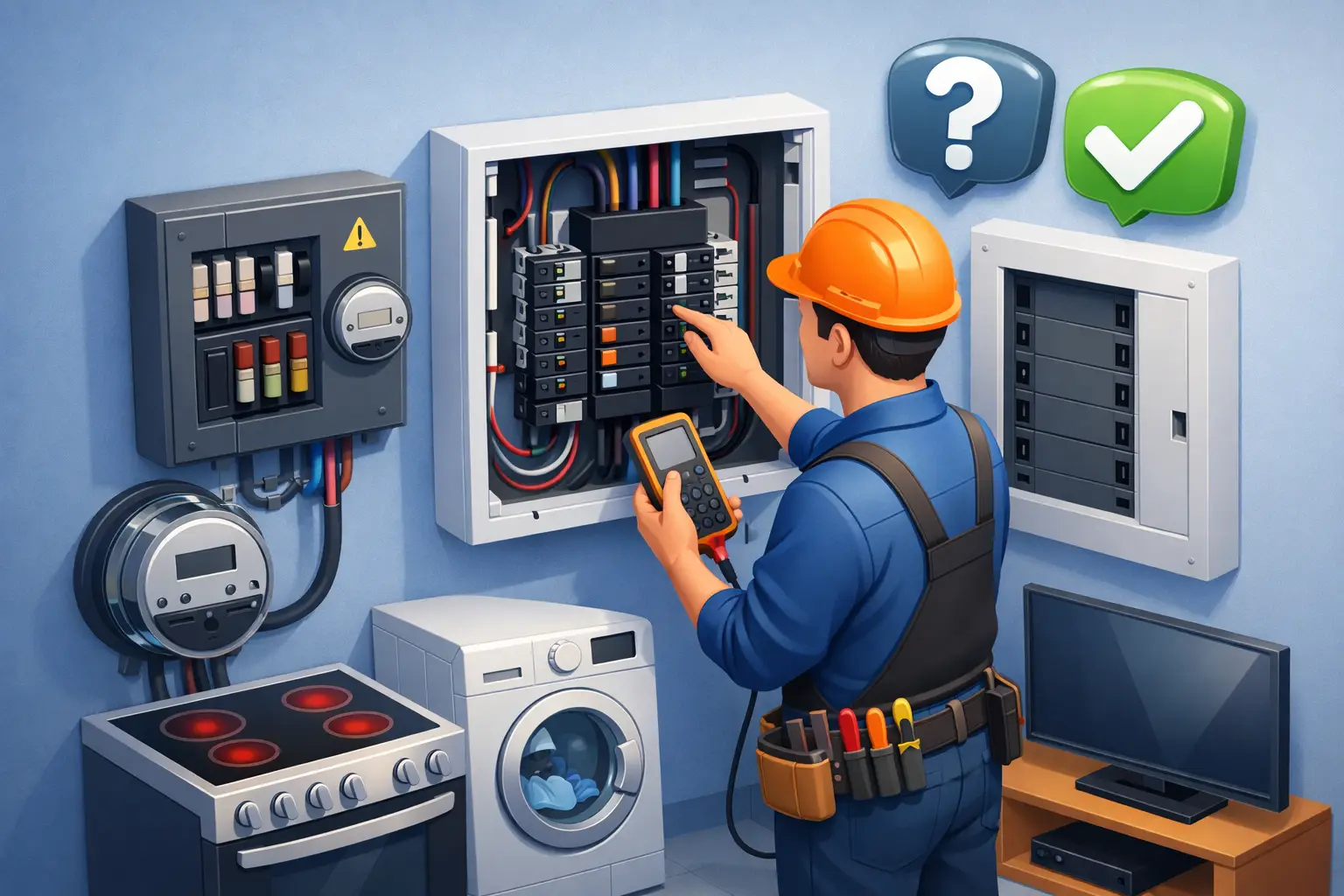
A new AC system, an EV charger, or one breaker that will not stay on can all raise the same question: how do you know when a panel upgrade is needed? In Central Florida, where air conditioning works hard for much of the year, your electrical panel has to carry more than lights and outlets. It has to support the equipment that keeps your home comfortable, safe, and running.
A panel upgrade is not something to guess at, and it is not automatically required because a home is older. The right answer depends on the panel’s condition, its available capacity, the appliances you use, and the work you plan to add. A licensed electrician can inspect the system, perform a load calculation, and give you a clear recommendation without the runaround.
The Warning Signs You Should Not Ignore
Your panel is the traffic controller for your home’s electrical system. When it is overloaded, damaged, outdated, or poorly matched to your needs, the warning signs often show up around the house before a total failure occurs.
Watch for these issues, especially if they happen more than once:
- Breakers trip regularly when normal appliances are running.
- Lights dim or flicker when the AC starts, a microwave runs, or a larger appliance cycles on.
- Your panel feels warm, makes buzzing sounds, smells burnt, or shows rust, discoloration, or corrosion.
- You rely on extension cords, power strips, or outlet adapters because the home does not have enough usable circuits.
- You have a fuse box, a known problem panel brand, or a panel that has no room for additional breakers.
A tripped breaker is not always proof that you need a new panel. It may point to a bad appliance, a loose connection, a worn breaker, or a circuit that simply needs attention. But repeated trips are the panel doing its job and telling you something needs to be checked. Resetting a breaker again and again is not a fix.
Heat, burning smells, crackling, or visible damage are more urgent. Turn off power if it is safe to do so, avoid touching the panel, and call a qualified electrician. Electrical problems can escalate quickly, and no homeowner should have to sort out a potentially unsafe panel alone.
When a Panel Upgrade Is Needed for More Power
The most common reason for an upgrade is simple: your home needs more electrical capacity than the existing service can safely provide. Many older homes were built around 100-amp service, sometimes less. That may have been enough before central AC, pool equipment, modern kitchen appliances, home offices, and electric vehicle charging became common household loads.
Today, a 200-amp service is often the practical standard for homes planning major electrical additions. It does not mean every home must move to 200 amps. A smaller home with gas appliances and modest electrical demand may be fine with its current service. The decision should come from a professional load calculation, not a sales pitch or a neighbor’s experience.
An electrician looks at more than the number printed on the main breaker. They consider the home’s square footage, HVAC equipment, electric range or dryer, water heater, pool pump, spa, EV charger, and expected future loads. They also inspect the service equipment, wiring, grounding, panel condition, and available breaker space.
This matters because adding a new circuit is not always the same as adding capacity. A panel may have empty slots but still lack enough service capacity for a major new load. On the other hand, a crowded panel may be able to support a properly installed subpanel in certain situations. The right path depends on the full system.
A New AC System Can Change the Electrical Picture
For Florida homeowners, HVAC work is often where panel limitations become obvious. A new high-efficiency AC system may use power differently than the equipment it replaces. Heat pumps, air handlers, electric heat strips, condensers, and required disconnects all need to be evaluated correctly.
If you are replacing an aging AC unit, it makes sense to assess the electrical panel at the same time. That avoids scheduling one contractor for cooling work and another for electrical corrections after the fact. At Al-Air, in-house HVAC and electrical teams can coordinate the details, so there are no referrals and no handoffs when the project calls for both.
The goal is not to oversize the panel just because you are buying new HVAC equipment. It is to make sure the equipment has a safe, code-compliant power supply and that your home is ready for the load it actually carries.
EV Chargers, Pools, and Home Additions Add Up
A Level 2 EV charger can place a significant, continuous demand on a home’s electrical system. So can a pool heater, hot tub, electric dryer, induction range, workshop equipment, or an addition with new rooms and cooling equipment. Each upgrade may sound manageable by itself. Together, they can push an older service beyond what it was designed to handle.
Planning ahead is usually less expensive and less stressful than discovering a capacity issue after the new equipment arrives. If an EV charger or major appliance is on your wish list, ask for a panel and load evaluation before installation day. You will know what the home can support, what needs to change, and what the project will cost before work starts.
Older Panels Need a Closer Look
Age alone does not condemn an electrical panel, but older equipment deserves a careful inspection. Some panels have been associated with reliability or safety concerns, including certain Federal Pacific Electric and Zinsco products. If you have one of these panels, or a fuse box, do not rely on a visual guess from across the room. Have a licensed electrician identify the equipment and inspect its condition.
Florida’s heat and humidity also matter. Panels installed in garages, exterior locations, or areas exposed to moisture can develop corrosion over time. Rust, water intrusion, loose connections, and damaged breakers can affect how safely the panel performs even when the service size seems adequate.
An upgrade may involve replacing the panel itself, the meter equipment, service entrance components, grounding, or other parts of the electrical system. Permits and inspections may be required. That is why this is not a job for a handyman or a quick breaker swap. Proper work protects your home, supports your insurance and resale needs, and gives you a system built for the equipment you depend on.
What Happens During a Panel Upgrade Evaluation
A straightforward evaluation should leave you with answers, not more confusion. The electrician should inspect the panel and service, ask about your current electrical use and future plans, check for safety concerns, and determine whether the panel has the capacity and physical space for the work you need.
If an upgrade is recommended, you should receive a clear explanation of why. Maybe the panel is damaged. Maybe it is full and cannot accept additional circuits. Maybe the load calculation shows that your planned EV charger and new AC equipment would exceed the available capacity. Or maybe a smaller repair or subpanel is enough.
Cost depends on the scope. A simple panel replacement is different from a full service upgrade that requires meter work, new service conductors, permits, coordination with the utility, and corrections to older wiring. Be wary of anyone who gives a one-size-fits-all answer without seeing the property. A clear estimate should spell out what is included and what the electrician found.
Do Not Wait for a Complete Power Failure
Most homeowners do not think about their electrical panel until something stops working. That is understandable, but an electrical upgrade is easier to plan when you are not dealing with a hot house, a failed AC system, or an urgent safety concern.
If breakers are tripping, the panel looks damaged, or you are planning an AC replacement, EV charger, pool equipment, or remodel, schedule an inspection now. A qualified local electrician can tell you whether your panel is ready, what needs attention, and whether financing can help make a larger project manageable. Getting a straight answer early gives you more control over the timing, budget, and safety of your home.