
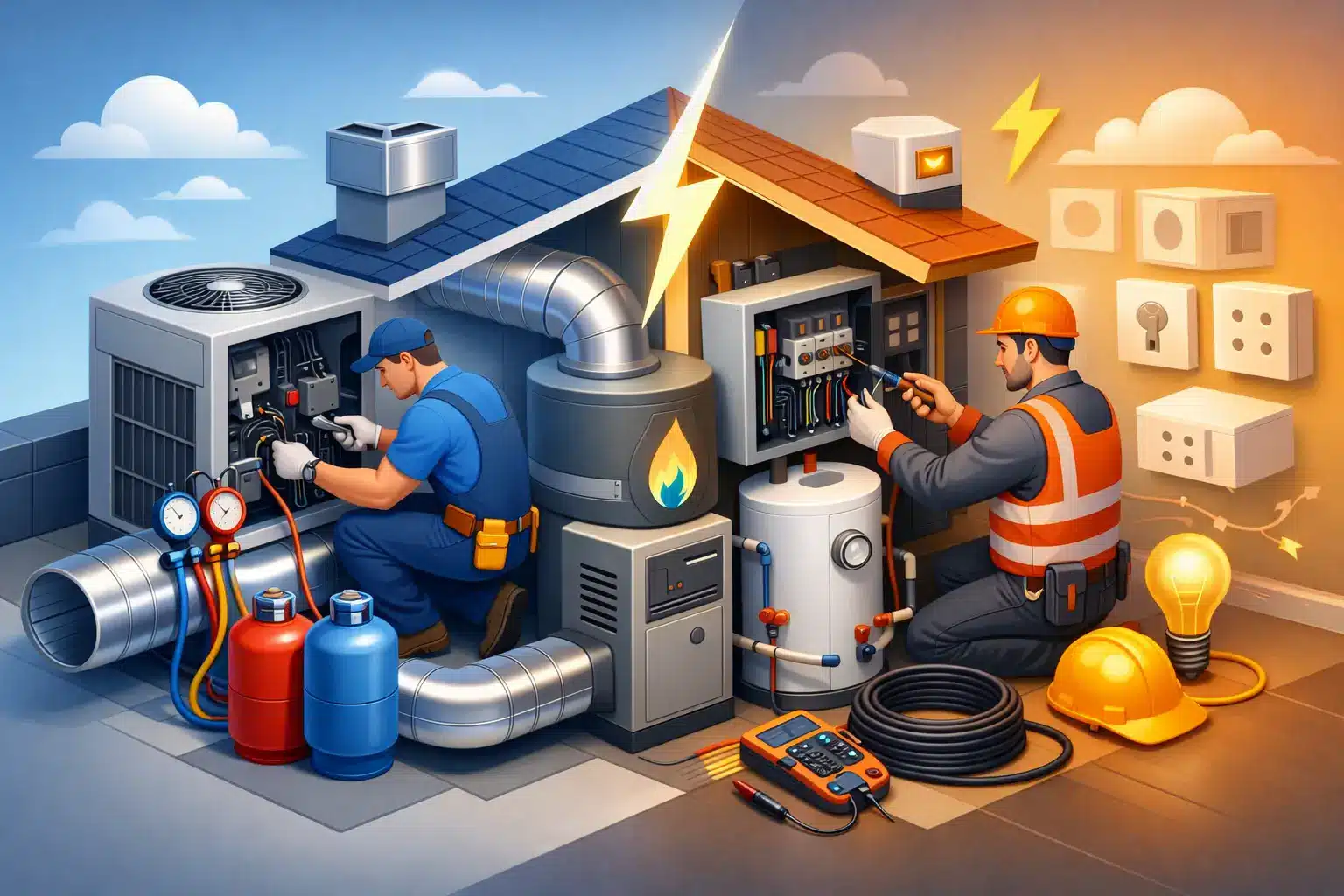
When your AC quits in a Central Florida summer, the problem may not stop at the air conditioner. A failing capacitor, overloaded circuit, aging disconnect, or undersized electrical panel can all affect how your system performs. That is where an HVAC and electrical contractor makes life easier: one qualified team can diagnose the full problem, explain what is happening, and get the work moving without referrals or a week of phone calls.
For homeowners, the value is simple. Your cooling system and your electrical system work together every day. Treating them as completely separate can create delays, duplicate visits, and expensive surprises halfway through a repair or replacement.
Your AC Depends on More Than the AC Unit
An air conditioner is one of the largest electrical loads in most homes. It relies on a properly sized breaker, safe wiring, a disconnect box, and enough panel capacity to start and run reliably. If one of those pieces is compromised, replacing an AC part alone may not solve the real issue.
This comes up often in older homes around Central Florida and Tampa. The AC may be working harder than ever, while the home’s electrical equipment was designed decades ago for fewer appliances, fewer electronics, and no plans for an EV charger, pool equipment, or a larger replacement system. A panel that has kept up for years can suddenly show its limits when the time comes to install a new high-efficiency heat pump or central air system.
A contractor that handles both trades can look at the whole setup before work begins. That means checking whether the existing circuit is suitable, whether the disconnect is safe, and whether the panel has the capacity for the equipment being recommended. It is a straightforward way to avoid hearing, after an installation is already underway, that another contractor now needs to be scheduled.
When You Need HVAC and Electrical Service Together
Not every service call needs two specialties. A clogged drain line or dirty filter is usually an HVAC-only issue. A loose outlet or broken light fixture is usually electrical-only work. But some projects naturally overlap, and that is where one team is especially useful.
AC replacement and panel capacity
A new AC system can improve comfort and lower operating costs, but it still needs a safe electrical foundation. If your panel is full, outdated, damaged, or unable to support the new equipment, an electrical upgrade may need to be part of the plan. Handling both scopes through one contractor keeps the schedule cleaner and the responsibility clear.
The right answer depends on the home. Not every AC replacement requires a panel upgrade, and a good contractor should not treat one as automatic. The panel should be inspected, the load should be considered, and the recommendation should be explained in plain language before you commit.
Breakers that trip when the AC starts
A breaker that trips repeatedly is not something to ignore, especially during peak cooling season. The cause could be an electrical issue, such as a weak breaker or damaged wiring. It could also be tied to the HVAC equipment, including a failing compressor, motor, or capacitor that is drawing abnormal current.
Calling two separate companies can lead to a frustrating handoff: one says the AC is the problem, the other says the electrical system is the problem. A combined team can test both sides of the issue and narrow it down faster.
Home upgrades that add electrical demand
New lighting, a remodeled kitchen, pool equipment, a hot tub, or EV charger readiness can all change the demands on your electrical system. If you are also considering a new AC system, it makes sense to plan those loads together rather than upgrade in pieces without a clear picture.
This is not about overspending on equipment you do not need. It is about making informed choices before an overloaded panel, flickering lights, or nuisance breaker trips force an urgent decision.
Ductwork, air quality, and power concerns
Duct cleaning and indoor air quality work are mostly HVAC services, but electrical safety still matters in the overall home. Homes with poor airflow can make occupants rely more heavily on portable fans, window units, or space heaters during an occasional cold snap. Those temporary fixes add load to outlets and circuits that may already be stressed.
A permanent fix is usually safer than asking the home’s electrical system to carry a collection of temporary solutions. Better airflow, properly maintained equipment, and safe electrical infrastructure support each other.
What a Good Contractor Should Check Before Recommending Work
Home service decisions can feel rushed when the house is hot, the lights are flickering, or a breaker will not stay on. Fast service matters, but fast should not mean careless. Before recommending a major repair or replacement, the contractor should inspect the equipment, identify the actual concern, and give you a clear path forward.
For HVAC work, that usually means checking system performance, age, condition, refrigerant-related concerns, airflow, and visible wear. For electrical work, it means looking at the panel, breaker condition, circuit demands, grounding, wiring condition where accessible, and code-related safety issues.
You should also receive an estimate before the work starts. Ask what is included, what could change the price, whether permits are needed, and whether the technician performing the electrical work is qualified to do it. If the answer is vague, that is a reason to pause.
A lower initial price is not always the better value if it leaves out necessary electrical work, relies on subcontractor handoffs, or creates another service call a few days later. On the other hand, not every concern requires a full replacement. Sometimes a focused repair, maintenance visit, or targeted circuit upgrade is the sensible choice. The goal is to fix the problem safely, not sell the biggest job.
Why One Point of Responsibility Matters
Coordinating contractors is more work than it sounds. You may have to explain the same issue multiple times, wait for separate estimates, manage competing schedules, and figure out who is responsible when one part of the job affects another.
With an HVAC and electrical contractor, the job can be planned as one project. The team can coordinate equipment requirements, electrical upgrades, permits when needed, installation timing, and final testing. You have one company to call, one clear scope of work, and fewer opportunities for details to get lost between trades.
That accountability matters most during urgent situations. If the AC fails on a 95-degree afternoon, you do not want to spend the day being told to call someone else. You want a professional who can identify whether the issue is mechanical, electrical, or both, then tell you what happens next.
At Al-Air, that means in-house master electricians and HVAC professionals working under one roof, not passing customers from one outside company to another. For Central Florida and Tampa homeowners, it is a practical difference when comfort and safety are both on the line.
Questions Worth Asking Before You Schedule
A reputable contractor should make it easy to get straight answers. Ask whether they handle both HVAC and electrical work in-house, whether emergency service carries an extra charge, and whether they provide written estimates. For larger projects, ask about financing, timing, permits, warranties, and what the final testing process looks like.
It is also fair to ask what happens if the technician finds an additional issue. Homes can hold surprises, especially older homes with prior DIY work or undocumented changes. You should not expect a contractor to predict every hidden condition, but you should expect clear communication before additional work is performed.
Do Not Wait for a Small Warning to Become a Full Shutdown
Warm air from the vents, frequent breaker trips, a buzzing panel, burning odors, lights that dim when the AC starts, or an aging system that needs repeated repairs are all reasons to schedule an inspection. Some issues are minor. Others are early warnings that the home’s cooling and electrical systems are no longer working as they should.
The best time to make a plan is before the hottest day of the year or a late-night electrical failure forces your hand. A qualified local team can help you understand what needs attention now, what can be planned for later, and how to keep your home comfortable, powered, and safe without the runaround.