
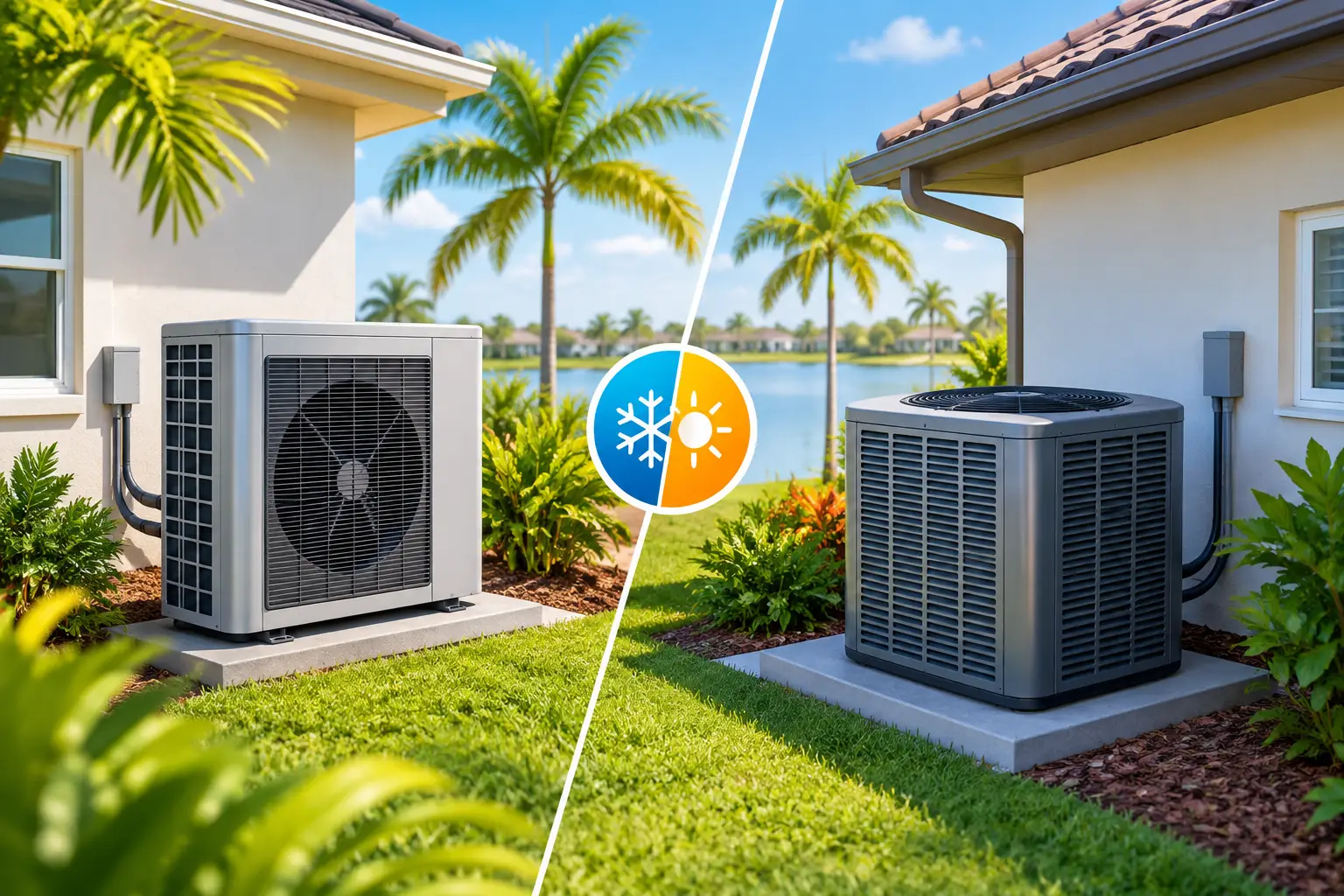
A heat pump replacement should not come down to which unit has the biggest efficiency number or the lowest price on a quote. In Central Florida, the right heat pump comparison starts with a simpler question: which system will keep your home cool, dry, and dependable through a long summer without creating electrical or budget problems later?
Heat pumps are the standard choice for many Florida homes because one system provides both cooling and heating. But not all systems perform the same in a humid climate, and the wrong size or installation can leave you with high bills, uneven temperatures, and a house that still feels damp. Here is what to compare before you commit.
Heat Pump Comparison: Start With Your Home, Not the Box
Every manufacturer offers multiple equipment tiers, and every model sheet can make a system look impressive. That does not mean it is the right fit for your home. A dependable recommendation should account for your square footage, ductwork, insulation, window exposure, ceiling height, household size, and the condition of your electrical system.
In Florida, cooling capacity and humidity control carry more weight than heating performance. Your system will work hard for much of the year, often during afternoons when outdoor temperatures and humidity are both high. A properly selected heat pump needs to pull heat from the home while running long enough to remove moisture from the air.
That is why bigger is not automatically better. An oversized system may cool the thermostat area quickly and shut off too soon. The result can be rooms that feel clammy, temperature swings, and poor comfort even when the thermostat says 74 degrees. An undersized system can run constantly during peak heat and struggle to catch up. Correct sizing is not guesswork. It should be based on the house and its actual cooling load.
If a contractor gives you a replacement recommendation without asking about hot rooms, high utility bills, moisture, duct issues, or recent renovations, slow down. A new system is a major investment. You deserve a clear explanation of why that size and configuration make sense.
Efficiency Ratings: What You Are Actually Paying For
Heat pumps are commonly compared by SEER2, EER2, and HSPF2 ratings. You do not need to memorize every testing standard, but you should know what those ratings mean for your decision.
SEER2 measures seasonal cooling efficiency. In Central Florida, this is usually the number homeowners notice most because cooling is the dominant expense. A higher SEER2 rating generally means lower energy use over a cooling season, but the savings must justify the higher upfront cost.
EER2 measures efficiency under a more demanding set of conditions, including hotter outdoor temperatures. Since Florida systems see plenty of hot weather, EER2 is worth asking about. HSPF2 measures heating efficiency. It still matters, but it is usually not the deciding factor for a Tampa or Central Florida replacement unless you have specific heating concerns.
The highest-rated system is not always the best value. A premium variable-speed unit can provide excellent comfort, quieter operation, and stronger humidity control. It also costs more to purchase and may involve more complex repairs down the road. A reliable mid-efficiency system may be the smarter choice for a rental property, a home you expect to sell soon, or a household focused on controlling the upfront investment.
The right question is not, “Which one is best?” It is, “Which one gives this home the right balance of comfort, operating cost, and long-term value?”
Single-Stage, Two-Stage, and Variable-Speed Systems
The compressor type has a major effect on how a heat pump feels in daily use.
A single-stage system runs at full capacity whenever it is on. It is often the most budget-friendly option and can work well in a smaller home with solid ductwork and straightforward comfort needs. The trade-off is less precise temperature and humidity control.
A two-stage system can operate at a lower setting for much of the day and step up when outdoor temperatures climb. Longer, lower-output cycles can improve comfort and moisture removal. It is a practical middle ground for many Florida homeowners.
A variable-speed system adjusts output in smaller increments to match what the home needs. It typically runs longer and more quietly at lower speeds, helping maintain steadier temperatures and better humidity control. For homes with uneven rooms, persistent humidity, or homeowners who want premium comfort, that can be a meaningful upgrade. The upfront cost is higher, so it makes the most sense when the comfort benefits match the budget.
Ducted Heat Pumps vs. Ductless Mini-Splits
Most Florida homes use a central ducted heat pump. If your ducts are in good shape and designed appropriately, replacing the central system is usually the cleanest path. It keeps the familiar whole-home layout and uses existing registers, thermostat wiring, and air distribution components where appropriate.
But ductwork should not be ignored just because a new outdoor unit is being installed. Leaky, undersized, dirty, or poorly balanced ducts can limit the performance of even excellent equipment. If one bedroom is always hot, the problem may be airflow, not the heat pump itself. A quality replacement review should look beyond the equipment cabinet.
Ductless mini-splits are useful when adding comfort to a garage conversion, room addition, enclosed patio, detached space, or a part of the home that never cools properly. They do not require a full duct system and allow individual room control. However, they are not automatically the right whole-home answer. Indoor wall units may not suit every homeowner, and multi-zone systems need thoughtful design to avoid unnecessary complexity.
For some homes, the best answer is not choosing one over the other. A central heat pump may handle the main living area while a ductless unit solves a difficult addition or bonus room. No referrals, no runaround – HVAC and electrical planning should work together when the project calls for both.
Compare Installation Quality and Electrical Readiness
A heat pump is only as dependable as the installation behind it. Refrigerant charge, airflow setup, condensate drainage, equipment location, duct connections, and thermostat configuration all affect performance. A low quote that skips these details can become the expensive option once comfort problems or repeat repairs begin.
Electrical readiness matters too. A new heat pump may require a dedicated circuit, disconnect, updated wiring, or changes at the electrical panel. This is especially common in older homes, homes with added appliances, or properties preparing for an EV charger, pool equipment, or renovation work.
Before approving an installation, ask whether the existing panel has available capacity and whether any electrical upgrades are needed. Finding out after the HVAC job is underway creates delays and extra stress. Al-Air can evaluate both sides of the project with HVAC professionals and in-house master electricians, so you are not left coordinating separate contractors when the system needs electrical work.
Upfront Price, Operating Cost, and Financing
A useful quote separates equipment, installation scope, warranty information, and any electrical or ductwork work that is required. It should not leave you guessing what is included or whether a necessary upgrade will appear as a surprise later.
Lower-cost equipment can be a sound decision when the home has simple needs, the budget is tight, and the system is properly sized and installed. Higher-efficiency equipment can make more sense when you plan to stay in the home, run the system heavily, or need stronger humidity control and quieter operation.
Financing can also change the decision. Rather than choosing the cheapest unit because it is the only one that fits a single payment, homeowners can compare monthly payment options against comfort, efficiency, and expected ownership time. The goal is not to stretch the budget for features you will never use. It is to avoid making a rushed replacement decision in the middle of a Florida heat emergency.
Questions Worth Asking Before You Sign
Ask the contractor how the system was sized, which efficiency ratings matter for your home, and whether the quote includes permits, thermostat compatibility, drain work, and startup testing. Ask about the labor warranty as well as the manufacturer equipment warranty. If you have hot rooms or high humidity, ask exactly how the proposed system and duct setup will address them.
Also ask what happens if the electrical panel cannot support the new equipment. A contractor should have a straightforward answer before installation day, not after your old system has been removed.
A good heat pump should fade into the background. It should keep the house comfortable through a July afternoon, manage humidity without constant thermostat adjustments, and give you a clear path for service when something needs attention. That kind of comfort starts with a careful comparison and a contractor willing to explain the work plainly.