
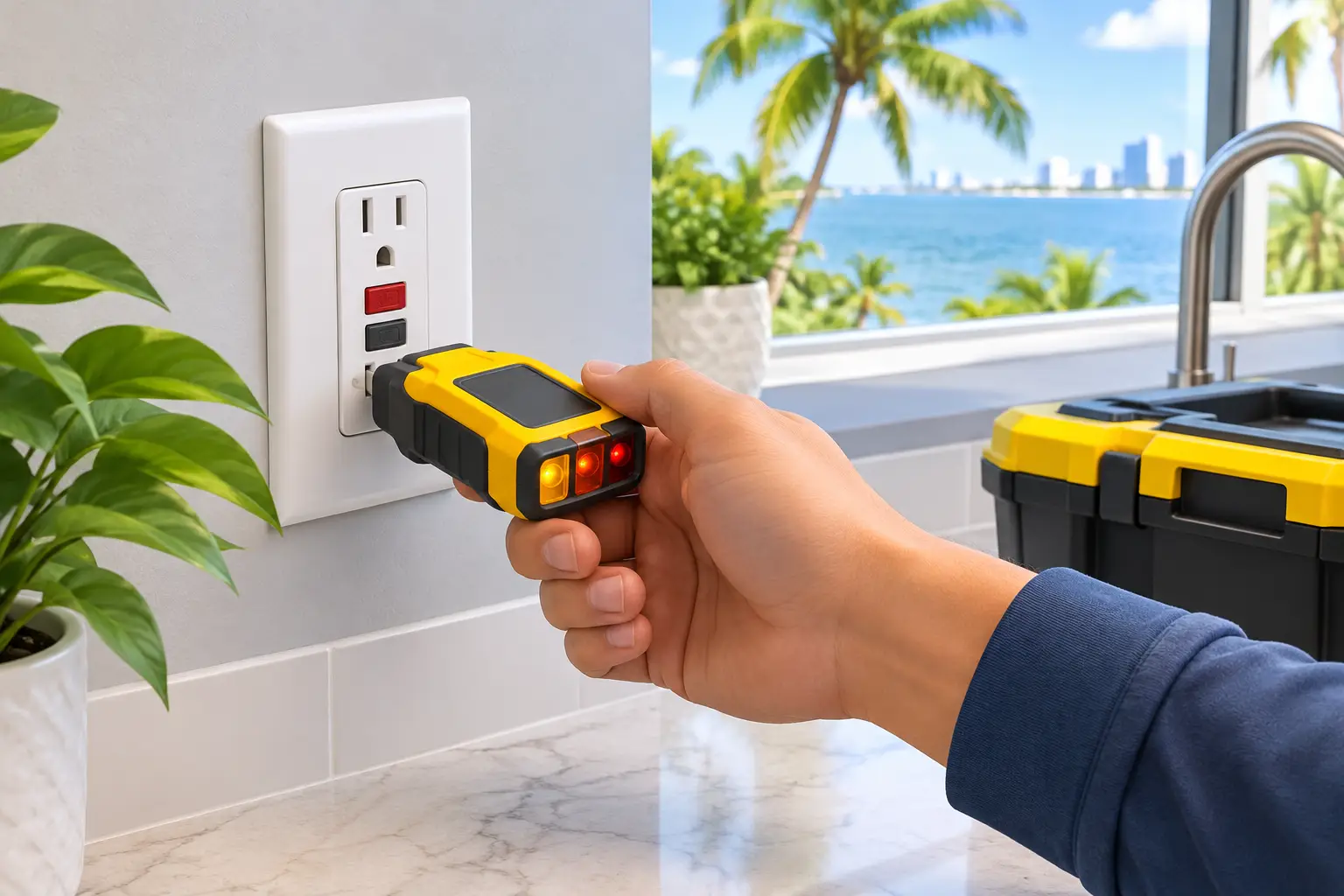
A working GFCI outlet can shut off power fast enough to help prevent a serious electric shock. That is why GFCI outlet testing belongs on the short list of home safety checks, especially in Central Florida homes where humidity, outdoor living areas, pools, garages, and heavy appliance use put electrical systems to work.
The good news is that testing most GFCI outlets takes less than a minute. The catch is that a test button is only useful if you know what the results mean and when a failed test calls for a licensed electrician instead of a quick reset.
What a GFCI Outlet Does
A ground-fault circuit interrupter, usually called a GFCI, monitors the flow of electricity through a circuit. When electricity takes an unintended path, such as through water or a person, the device can detect the imbalance and cut power quickly.
You will usually recognize a GFCI receptacle by the two buttons on its face: TEST and RESET. Some GFCI protection is built into the electrical panel instead of an individual outlet, so not every protected outlet will have buttons. One GFCI outlet may also protect several standard outlets farther down the same circuit.
GFCI protection is commonly required in places where water and electricity can meet. That includes bathrooms, kitchens, garages, laundry areas, outdoor receptacles, crawl spaces, pool equipment areas, and other damp or wet locations. Requirements can vary based on the age of the home, the space, and the electrical code in effect when work was performed. If you are remodeling or adding circuits, current code requirements generally apply to the new work.
How to Perform GFCI Outlet Testing
Start with the outlet in normal operating condition. If a lamp, phone charger, or another low-risk device is plugged in, turn it on so you can confirm when power is lost. Do not use a tool with an exposed blade, a damaged cord, or anything near standing water.
Press the TEST button firmly. You should hear or feel a click, and the plugged-in device should turn off. The RESET button may pop outward. This indicates that the GFCI has tripped and interrupted power as intended.
Next, press the RESET button. It should click back into place, and power should return to the outlet or device. If the outlet protects other locations, check those as well. A bathroom GFCI, for example, may protect an outlet in a nearby garage or on the exterior wall of the house.
That is the basic process, but the result matters:
- If TEST shuts off power and RESET restores it, the GFCI appears to be operating normally.
- If the TEST button will not trip the outlet, or power stays on after you press it, stop using that outlet and schedule an electrical inspection.
- If RESET will not stay in, the GFCI may have no incoming power, a tripped breaker, a wiring problem, moisture exposure, or a failed device.
- If the outlet has no power before testing, check whether another GFCI upstream has tripped or whether the circuit breaker is off. Do not keep forcing the RESET button.
A GFCI receptacle may have an indicator light, but light colors and meanings differ by manufacturer. Read the label on the device if one is present. A light can be helpful, but it does not replace testing the TEST and RESET functions.
How Often Should You Test It?
Most manufacturers recommend monthly testing. Realistically, many homeowners will not maintain a monthly calendar for every receptacle, and that is where a simple routine helps. Test GFCIs when you change HVAC filters, after a major storm, before pool season, or whenever you notice an outlet acting differently.
Monthly checks are still the best habit for outlets exposed to weather, moisture, or frequent use. Outdoor receptacles, garage outlets, bathroom outlets, and kitchen counter outlets deserve the most attention.
A Test Button Is Not a Complete Electrical Inspection
A successful test is reassuring, but it does not prove every part of the circuit is safe. It verifies that the GFCI mechanism can trip and reset. It does not tell you whether the receptacle is loose, whether the wiring is damaged inside the wall, whether the box has water intrusion, or whether the circuit is overloaded.
Plug-in outlet testers can help identify certain wiring issues, but they have limits too. On a GFCI outlet, their test function may not detect every improper wiring condition. A tester also cannot replace diagnosis by a licensed electrician when an outlet is warm, buzzing, discolored, loose, or repeatedly tripping.
This distinction matters in older Florida homes. An outlet may look fine from the front while connections behind it have loosened from years of use, corrosion, heat, or prior work. The right fix depends on what is actually happening at the receptacle, in the box, and at the panel. No guessing, no swapping parts until the problem disappears for a week.
Why a GFCI Keeps Tripping
A GFCI trips because it senses an electrical imbalance. Sometimes that is exactly what it should do. A wet outdoor cover, a failing appliance, a damaged extension cord, or moisture in a receptacle can create a legitimate ground-fault condition.
Other times, the source is less obvious. A refrigerator, freezer, sump pump, pool equipment motor, disposal, washing machine, or older power tool may have internal leakage that trips GFCI protection intermittently. The outlet itself may also be worn out or incorrectly wired.
If a GFCI trips once after heavy rain and resets normally after the area is fully dry, moisture may be the cause. Still, inspect the weatherproof cover and do not ignore recurring trips. If it trips repeatedly, trips immediately after resetting, or trips when a particular appliance is connected, leave it off and have the circuit checked.
Do not solve a nuisance trip by replacing a GFCI outlet with a standard outlet. That removes a safety layer where it is often required. The correct answer is finding the source of the fault and repairing it properly.
When to Call an Electrician Right Away
Some outlet problems should not wait for the next free weekend. Call a licensed electrician if you see scorch marks, melted plastic, cracked covers, corrosion, or water inside an electrical box. The same applies if an outlet feels hot, makes a buzzing sound, smells like burning plastic, or shocks anyone.
Repeated tripping is also a service call, particularly when it affects a refrigerator, garage freezer, pool equipment, HVAC condensate pump, or essential outdoor equipment. Resetting the outlet over and over can hide a developing problem and leave you without power when you need it most.
You should also call for help if multiple outlets lose power and you cannot identify the tripped GFCI or breaker, or if a breaker trips along with the GFCI. That may point to a circuit issue that needs more than a replacement receptacle.
For homes with aging panels, ungrounded outlets, aluminum wiring, recent water damage, or a planned renovation, an electrical safety review is the smarter move. GFCI protection is one piece of a safe electrical system, not the whole system.
A Safer Routine for Florida Homes
Keep outdoor GFCI covers closed when outlets are not in use, and use weather-rated covers designed to protect plugs that remain connected. Avoid running extension cords through wet areas or across driveways and walkways. In bathrooms and kitchens, replace damaged cords promptly and keep plug connections away from sinks, tubs, and standing water.
If you own a pool, spa, outdoor kitchen, or detached workshop, add GFCI checks to your regular property maintenance. These areas combine moisture, metal equipment, and frequent electrical use, so small warning signs deserve prompt attention.
When an outlet fails its test or keeps tripping, Al-Air can diagnose the problem with an in-house electrician and give you a clear path forward. That may be a straightforward receptacle replacement, a wiring repair, a weatherproofing upgrade, or a larger correction at the panel. You should know which one it is before any work begins.
A one-minute test is a small task, but it gives you an early warning when an outlet is no longer doing its job. Press TEST, confirm the power shuts off, press RESET, and take any abnormal result seriously. That is a simple habit with real protection behind it.