
TL;DR: For summer cooling, your ceiling fan blades should spin counterclockwise to push air down, creating a wind-chill effect. This simple switch can make a room feel up to 4 degrees cooler, and when used correctly it can help you raise the thermostat by 4 degrees while reducing air conditioning energy costs by up to 30%.
By late afternoon in Orlando, a lot of homes feel the same. The AC is running, the windows are shut tight, and the house still feels sticky instead of comfortable. You lower the thermostat another notch, but the air feels heavy and the system never seems to get a break.
That’s where ceiling fans can do more than most homeowners expect. Not as decoration, and not as a replacement for air conditioning, but as a simple airflow tool that helps your cooling system work smarter. If your fan is spinning the wrong way for summer, you’re missing easy comfort and paying for cooling you’re not fully feeling.
The Secret to a Cooler Home Is Right Above You
On a hot Orlando day, comfort isn’t just about temperature. Humidity changes everything. A room can read cool on the thermostat and still feel muggy because the air around your skin isn’t moving enough to help sweat evaporate.
That’s why ceiling fans matter more here than they do in drier climates. In many homes, the fan is on, but nobody has checked whether it’s set up for summer. I’ve seen plenty of rooms where the AC is doing its job, but the fan is working against it.
A ceiling fan won’t lower the air temperature by itself. What it can do is improve how the room feels when it’s set correctly and paired with the rest of the house. That includes attic conditions too. If you’re also dealing with heat buildup above the ceiling, it’s worth understanding the benefits of a solar attic fan, because reducing trapped heat upstairs can support overall comfort in Florida homes.
For homeowners who want the cooling system, fan setup, and airflow in the house working together, a good starting point is understanding how your full home HVAC system works together.
A ceiling fan is one of the easiest comfort upgrades already sitting in plain sight. It just has to spin the right way.
The good news is that fan direction for cooling is simple. One small switch, one quick check, and the room usually feels better fast.
Why Counter-Clockwise Fan Direction Creates a Cooling Effect
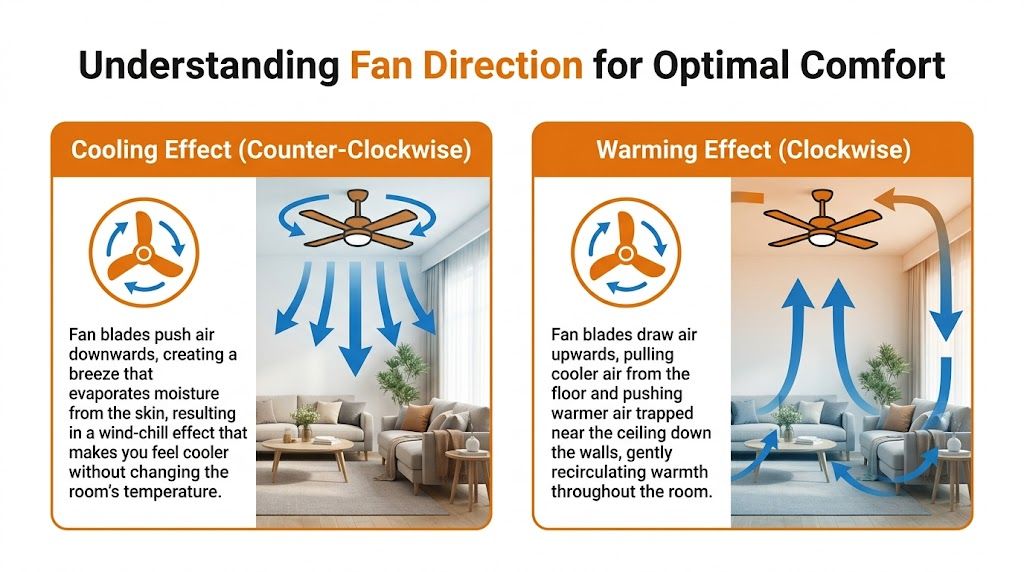
The correct fan direction for cooling in summer is counterclockwise. When the blades spin that way, they create a downdraft that pushes air downward into the room. That moving air doesn’t chill the room itself, but it helps moisture evaporate from your skin faster, which is why you feel cooler.
According to The Home Depot’s guidance on summer and winter ceiling fan direction, a ceiling fan set for summer can make a room feel up to 4 degrees cooler. That same guidance says homeowners can raise the thermostat by 4 degrees while maintaining comfort and reduce air conditioning energy costs by up to 30%.
What your body feels
Your air conditioner changes air temperature. Your ceiling fan changes how that air feels on your skin.
In practical terms, that matters most when you’re sitting still in a bedroom, living room, or office and the space feels stagnant. The breeze from a properly set fan breaks that heavy feeling. In Florida, where people spend long stretches indoors escaping the heat, that skin-level comfort makes a noticeable difference.
What the fan is actually doing
A summer-set fan should create a clear downward breeze when you stand underneath it. If you have to guess whether it’s helping, it probably isn’t set correctly or it isn’t moving enough air.
Here’s the simple logic:
- Counterclockwise rotation: pushes air down into the occupied part of the room
- Moving air across skin: speeds evaporation of moisture
- Faster evaporation: creates the wind-chill effect people interpret as cooling
Practical rule: If you stand under the fan and feel air pressing down on you, the fan is helping with summer comfort.
Why this matters more in Orlando
In Central Florida, your AC often runs hard for long stretches. Anything that lets you stay comfortable without dropping the thermostat further can help. That’s why fan direction for cooling is worth fixing before you assume your system needs a bigger adjustment.
The key point is simple. The fan doesn’t replace the AC. It supports it by making the cooled air feel more effective where people are sitting, sleeping, and living.
A Simple Guide to Reversing Your Ceiling Fan
Changing fan direction usually takes less time than replacing a thermostat battery. The exact method depends on the fan, but the goal is the same. Turn the fan off, switch the direction, then confirm that it’s pushing air downward.
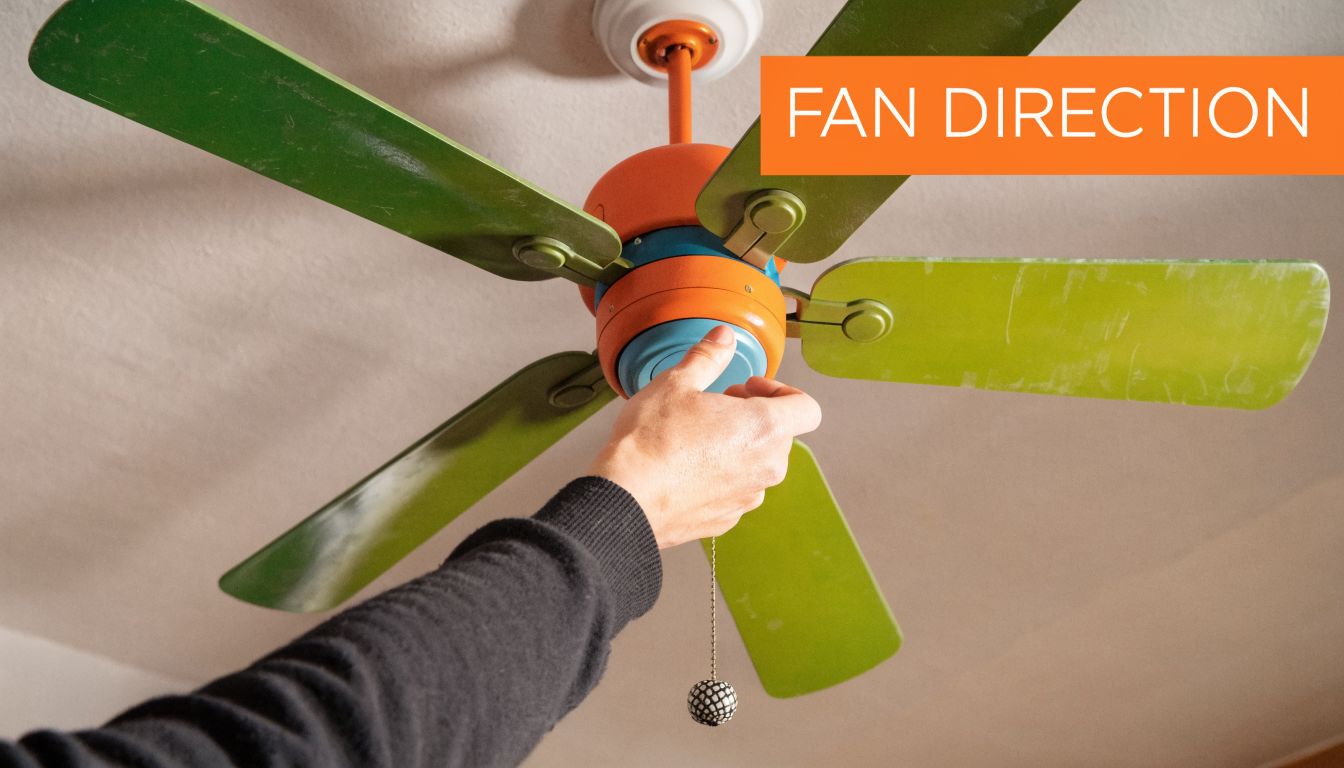
According to the U.S. Department of Energy fan guidance, for optimal summer cooling, set fans to rotate counterclockwise at high speed. That same guidance notes that running the fan clockwise in summer creates an updraft that traps cool air at the ceiling and can increase AC load by 10-15%. It also recommends turning the fan off before flipping the reversing switch on the motor housing.
Fans with a physical reverse switch
This is the most common setup in older and many standard ceiling fans. Look for a small switch on the motor housing, usually just above the blades.
Do this in order:
- Turn the fan off: Wait until the blades stop completely.
- Find the reverse switch: It’s usually a tiny slider or toggle.
- Flip the switch: Set it to the summer position.
- Turn the fan back on high: Then stand underneath it and check for a direct downward breeze.
If you don’t feel that breeze, turn it off and double-check the switch position. Some fan housings make the switch hard to see from the floor.
Fans with a remote control
Many newer fans let you change direction from the remote. Look for a reverse button, a directional icon, or a seasonal mode.
The easiest way to confirm the change isn’t by staring at the blades. It’s by feeling the airflow. In summer mode, the room should feel breezier under the fan instead of still.
If your remote won’t respond, replace the batteries before assuming there’s a motor problem.
Fans with a wall control or smart panel
Some homes use a wall-mounted fan control, and some newer fans tie into a smart panel. In that case, the direction setting may be labeled in a menu rather than on the fan itself.
If your control setup is confusing or you’re updating an older fixture, this guide on how to safely install or re-wire your ceiling fan is a useful reference before anyone starts opening housings or changing controls.
Here’s a quick visual if you want to see the process in action.
The check that settles it
Don’t rely on memory. Don’t rely on blade appearance alone.
Use this quick confirmation:
- Stand under the fan: You should feel air blowing down on you
- Run it on high for summer: That gives the strongest cooling effect
- Notice the room feel: It should seem less stagnant within minutes
If the fan is running and the ceiling feels busy but your body feels nothing, the setup is wrong for summer.
Maximize Comfort by Syncing Fans with Your AC
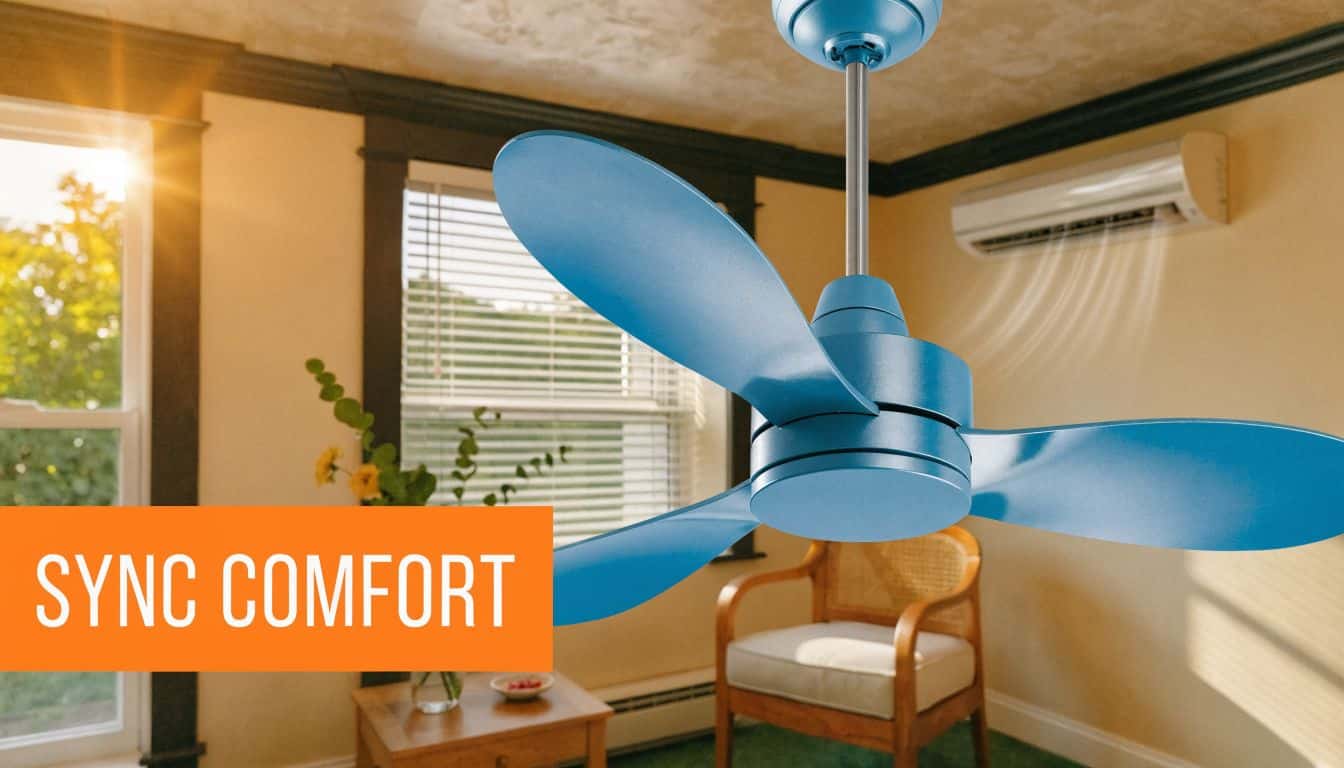
The best results come when the fan and AC work as a team. The AC handles temperature and moisture removal. The fan improves how that conditioned air feels in the room. In Orlando, that second part matters because humidity can blunt the cooling effect people expect from a breeze.
Why humidity changes the result
In high-humidity climates like Orlando, fans don’t always feel as strong as homeowners expect because moisture already hanging in the air makes evaporation less effective. The fan can still help, but it needs enough airflow to matter.
According to Save on Energy’s seasonal ceiling fan guidance, fans with a blade pitch below 12 degrees can fail to move enough air to be effective in humid climates. For better results, look for blade pitch in the 12-16 degree range and consider pairing fan use with a dehumidifier.
What works in a Florida home
If you want fan direction for cooling to pay off in a humid house, focus on the whole setup, not just the switch on the motor.
A practical approach looks like this:
- Set the fan correctly: Summer means counterclockwise with strong downward airflow
- Use the AC to control moisture: If indoor air still feels clammy, humidity may be the actual comfort problem
- Check the fan design: Older decorative fans often move less air than homeowners think
- Add dehumidification when needed: Drier indoor air makes the breeze feel more effective
That’s also why some rooms feel great with a fan and others don’t. A bedroom with decent airflow and balanced humidity can feel comfortable fast. A large living room with a shallow-pitch builder-grade fan may still feel muggy even when the blades are spinning.
When the fan is not the real issue
Sometimes homeowners blame the ceiling fan when the actual problem is the air conditioner’s performance, duct airflow, or indoor humidity control. If the fan is set properly and the room still feels sticky, it’s worth looking at the cooling system itself, especially in a Florida summer. A detailed Orlando AC service and comfort guide can help you sort out whether the issue is fan setup, system performance, or both.
In Orlando homes, comfort usually improves fastest when you treat airflow and humidity as one problem, not two separate ones.
What to Do When Your Fan Is Not Cooling Properly
Even with the right summer setting, a ceiling fan can still underperform. Usually the issue is mechanical, airflow-related, or installation-related. Start with the obvious before assuming you need a replacement.
Here’s a quick troubleshooting table you can scan.
Common Ceiling Fan Problems and Solutions
| Problem | Possible Cause | How to Fix |
|---|---|---|
| Weak airflow | Fan is set correctly but the blades have shallow pitch or the fan is undersized for the room | Confirm the direction first, then check whether the fan is actually moving enough air. In humid climates, a fan with low blade pitch may never feel strong enough. |
| Wobbling | Loose blade screws, unbalanced blades, or mounting issues | Turn the fan off, tighten visible screws, clean each blade, and use a balancing kit if needed. If wobble continues, the mount may need professional inspection. |
| Little cooling effect | High indoor humidity is reducing the breeze effect | Lower indoor moisture levels with the AC or dehumidification, then test comfort again with the fan running. |
| Clicking or scraping noise | Loose hardware or blade alignment issue | Shut the fan off and inspect the blades and housing. If parts are rubbing or alignment looks off, stop using it until repaired. |
| Fan won’t reverse | Faulty switch, dead remote battery, or control issue | Try the wall control or remote first, then inspect the reverse switch. If controls still fail, the fan may need electrical diagnosis. |
| Air feels uneven in the room | Furniture layout, ceiling height, or fan placement is limiting circulation | Make sure the air path under the fan isn’t blocked and consider whether the room needs a different fan size or location. |
A lot of homeowners can handle basic tightening and cleaning on their own. If the fan wobbles badly, makes electrical noises, or still isn’t helping after setup changes, it’s smarter to book a professional visit than keep guessing. For homes where multiple comfort issues overlap, HVAC service calls for airflow and cooling problems can help pinpoint whether the fan, AC, or both are contributing to the problem.
Your Fan Direction Questions Answered
Does this apply to box fans and floor fans too
The same comfort principle applies. Moving air across your skin can make you feel cooler. The difference is that portable fans don’t have a reverse setting for seasonal use the way ceiling fans do.
Should I leave the ceiling fan on when nobody is in the room
No. Fans cool people, not the room itself. If the room is empty, leaving the fan on only uses electricity without improving comfort.
What direction should the fan go in winter
Winter is the opposite setup. The fan should spin clockwise on a low setting so it pulls air upward and gently redistributes warmer air that collects near the ceiling.
What’s the fastest way to tell if my summer setting is right
Stand directly under the fan after changing it. If you feel a noticeable downward breeze, the direction is correct for cooling.
Why does my fan still not feel strong enough
In Orlando homes, humidity, poor fan blade pitch, room size, or AC performance can all limit the result. If the direction is right but comfort still isn’t there, the fan may not be moving enough air or the room may need better moisture control.
If your home still feels sticky, uneven, or expensive to cool even after fixing your fan direction, Al-Air Corporation can help you get the whole system working together. From AC service and maintenance to airflow troubleshooting and electrical work, their team helps Greater Orlando homeowners solve comfort problems the right way.