
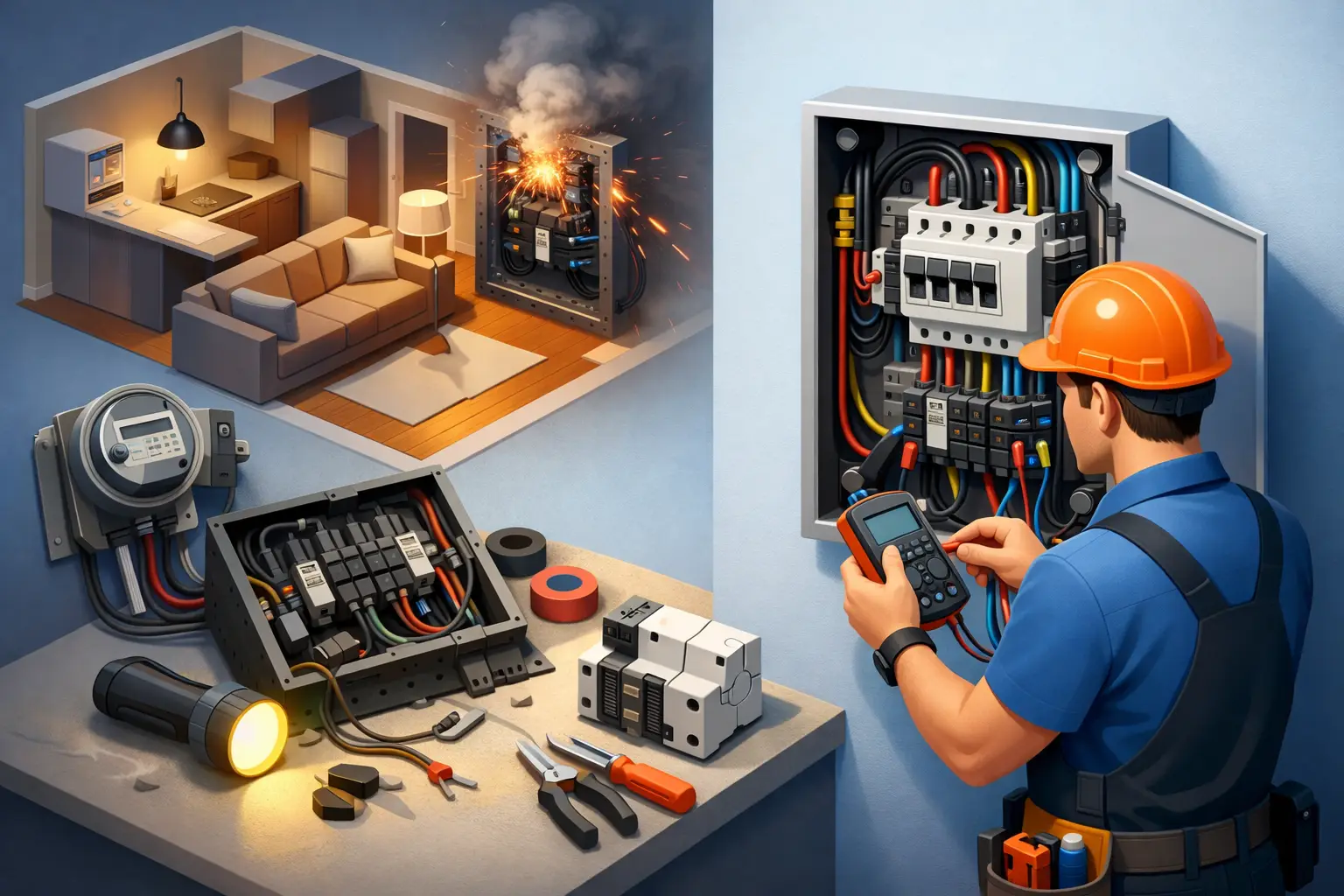
If your breakers trip every time the AC kicks on, your panel is not just being annoying – it may be telling you it is time to ask when replace electrical panel becomes the safer, smarter move. In Central Florida, where cooling systems run hard and homes keep adding new power demands, an outdated panel can turn into a real bottleneck fast.
Most homeowners do not think about the electrical panel until something goes wrong. That makes sense. It sits quietly on the wall, and when everything works, it is easy to ignore. But your panel is the traffic controller for the whole house. When it starts falling behind, the symptoms show up all over the place – flickering lights, hot breakers, limited capacity for new equipment, or repeated nuisance trips that never seem to stop.
This is one of those home decisions where timing matters. Replace too early, and you may spend money before you need to. Wait too long, and you risk safety issues, equipment damage, failed inspections, or a panel that cannot support the upgrades you want.
When to replace electrical panel
The short answer is this: replace the panel when it is unsafe, undersized, damaged, obsolete, or no longer matches the way your home actually uses power.
That sounds broad, because it is. There is no single age where every panel must be changed. Some panels last a long time when properly installed and lightly used. Others need replacement sooner because of corrosion, storm damage, poor original workmanship, or major increases in electrical load.
For most homeowners, the better question is not just how old the panel is. It is whether the panel still does its job safely and reliably for the house you have now.
Clear signs your panel may need replacement
One tripped breaker once in a while does not automatically mean the panel is bad. But repeated electrical issues usually point to either overloaded circuits, a failing panel, or a system that has outgrown its original design.
If your breakers trip often, especially during normal use, that is one of the biggest red flags. This is common in older homes that now run larger AC systems, extra refrigerators, home office equipment, tankless water heaters, or EV chargers. The panel may simply not have enough capacity.
Flickering or dimming lights are another warning sign, especially when large appliances start up. Sometimes the issue is isolated to one circuit. Other times it points back to the panel or service capacity.
You should also pay attention to heat. A panel should never feel hot to the touch, and breakers should not smell burnt. If you notice scorching, discoloration, buzzing, or a burning odor near the panel, treat that as an urgent electrical problem.
Rust or moisture inside or around the panel is also serious. In Florida, humidity and storm exposure can take a toll. Corrosion affects connections, and compromised connections create heat. Heat is where electrical problems get expensive and dangerous.
Then there is the practical problem many homeowners run into during upgrades: there is simply no room left. If your panel is full and you want to add a new AC system, surge protection, a hot tub, or an EV charger, replacement may make more sense than trying to force a workaround.
Older panels and obsolete equipment
Some panels should be evaluated for replacement based on brand or design, not just performance. Certain older panel types have a long history of safety concerns or reliability issues. If your home still has one of those systems, the conversation changes from convenience to risk management.
An electrician can identify whether your panel is considered obsolete, unsupported, or difficult to service safely. Even if it has not failed yet, replacement may be the better call if compatible parts are scarce or the panel has a known track record of breaker failure.
This matters during a home sale too. Buyers, inspectors, and insurance companies may raise concerns about outdated electrical equipment. In some cases, keeping the old panel ends up costing more in delays, repair negotiations, or coverage issues than replacing it on your own schedule.
Capacity problems are more common than most people think
A lot of panel replacements are not about damage. They are about demand.
Homes built decades ago were not designed for how people live now. They were not built around large air handlers, high-efficiency condensers, whole-home electronics, kitchen upgrades, workshop circuits, or vehicle charging. Even if the original panel was acceptable when the house was built, that does not mean it is still enough today.
This is especially true when HVAC equipment changes. A new system may have different electrical requirements than the one it replaces. If the panel is already maxed out, installing modern equipment can become a panel conversation whether you planned for it or not.
That is one reason homeowners appreciate working with a contractor that handles both HVAC and electrical work. When cooling and electrical needs overlap, it helps to have one team look at the whole picture instead of sending you in circles.
When replace electrical panel before it fails
There are times when replacing a panel before total failure is the right move. If you are planning a major remodel, adding square footage, installing an EV charger, replacing an aging AC system, or converting major appliances, it is smart to have the panel evaluated early.
Waiting until the last minute can slow the entire project down. If the panel does not have the capacity or code compliance needed for the new work, the upgrade becomes a gatekeeper. Doing it ahead of time gives you more control over scheduling and budget.
This is also true for homes with recurring electrical quirks that have never been fully resolved. Maybe the lights blink when the air handler starts. Maybe one side of the house trips during summer. Maybe the panel has been patched over the years with tandem breakers and crowded wiring. Those are signs the system may be limping along rather than working well.
You do not need to wait for smoke, sparks, or a full outage to justify a replacement.
Repair or replace?
Sometimes a panel issue can be repaired. A bad breaker, a loose connection, or a localized wiring problem does not always mean the entire panel has to go. That is the trade-off homeowners should understand.
If the panel is relatively modern, properly sized, and otherwise in good shape, targeted repairs may be the sensible option. But if the panel is old, full, damaged, corroded, or tied to broader service limitations, repair can become short-term spending on a long-term problem.
A good electrical assessment should give you a straight answer. Not every issue deserves a full replacement, but not every repair is worth chasing either.
What the replacement decision usually comes down to
For most homeowners, the decision comes down to three things: safety, capacity, and timing.
If the panel is unsafe, replacement should move up the priority list immediately. If the panel is undersized for your actual usage, replacement becomes a practical investment. If you already have another project on the horizon, replacing the panel before that work begins can save time, avoid duplicate labor, and reduce headaches.
Cost matters too, of course. Panel replacement is not a small expense. But neither is repeated troubleshooting, failed add-ons, damaged equipment, or emergency service after a preventable breakdown. Financing can also make the timing easier when the need is clear but the budget is tight.
What to expect from a panel evaluation
A proper evaluation should look at more than the box itself. An electrician should assess the panel condition, available capacity, breaker performance, signs of heat or corrosion, grounding and bonding, and how the home’s major systems are actually using power.
That last part matters. A house with an aging AC system today may have different electrical needs next season if you replace that equipment. The same goes for a garage that may later need a charger, workshop circuits, or additional outlets.
The best recommendations are not based on fear. They are based on what the home needs now and what it is likely to need next.
If you are wondering when replace electrical panel becomes the right move, the answer is usually clearer than people expect once the system is looked at honestly. Frequent breaker trips, heat, corrosion, old or unsupported equipment, and lack of capacity are not small warning signs. They are your house asking for a safer plan.
The good news is you do not have to guess. Get the panel checked before a minor electrical annoyance turns into a bigger disruption, especially in a Florida home where your comfort systems work hard and your power needs rarely shrink. A little clarity now can save you a lot of stress later.